People in Intelligence
The visionaries shaping our understanding of minds, machines, and cognition
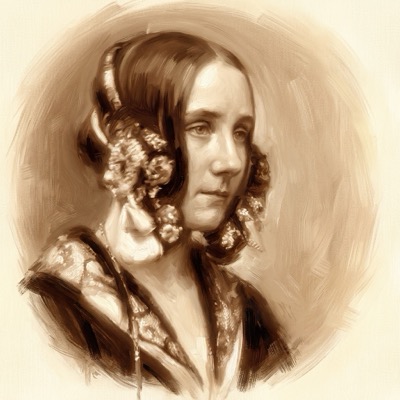
Ada Lovelace
Mathematician & First Computer Programmer
Ada Lovelace (1815–1852) was an English mathematician and writer, recognized as the first computer programmer for her work on Charles Babbage's proposed Analytical Engine. Her notes on the engine included what is considered the first algorithm intended for machine processing. Crucially, she saw beyond mere calculation, envisioning that machines could manipulate symbols according to rules and potentially create music or art—anticipating modern AI by over a century. Her insight that 'The Analytical Engine has no pretensions to originate anything' sparked debates about machine creativity that continue today.
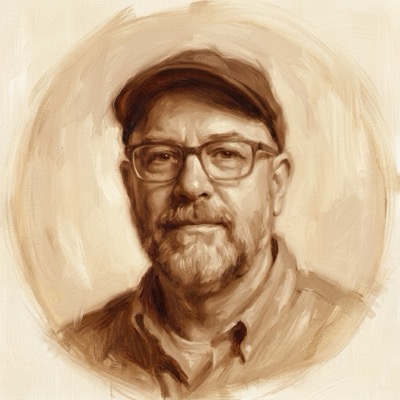
Adam Frank
Professor of Astrophysics, University of Rochester
Adam Frank is an American physicist, astronomer, and writer, and a professor of astrophysics at the University of Rochester. His research focuses on computational astrophysics, star formation, stellar evolution, exoplanet atmospheres, and astrobiology. He is known for connecting scientific questions about planets, life, civilizations, climate, and human experience for a broad public audience. Frank is also a co-author of The Blind Spot: Why Science Cannot Ignore Human Experience and has written extensively for NPR and other public science venues.
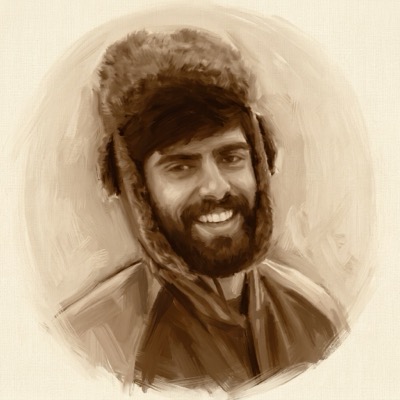
Adam R. Brown
Founder/lead of Blueshift, Google DeepMind
Adam R. Brown is a physicist and AI researcher at Google DeepMind, where he leads Blueshift, a team focused on improving AI systems' mathematical, scientific, and general reasoning abilities. He is described as a core contributor to Gemini and works on making frontier language models more useful for science. Before DeepMind, Brown was a theoretical physicist with training in physics and philosophy at Oxford, a PhD from Columbia, and academic appointments at Princeton and Stanford. His public talks and interviews argue that LLMs are rapidly becoming capable scientific-reasoning tools and may reshape the future of theoretical physics.
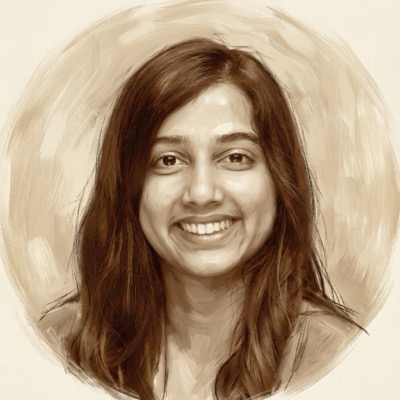
Ajeya Cotra
Technical Staff, METR
Ajeya Cotra works on threat modeling and risk assessment for loss-of-control risks from advanced AI at METR. She previously led the technical AI safety program at Open Philanthropy (now Coefficient Giving), where she developed the influential Biological Anchors framework for forecasting when transformative AI might arrive. She holds a B.S. in Electrical Engineering and Computer Science from UC Berkeley.
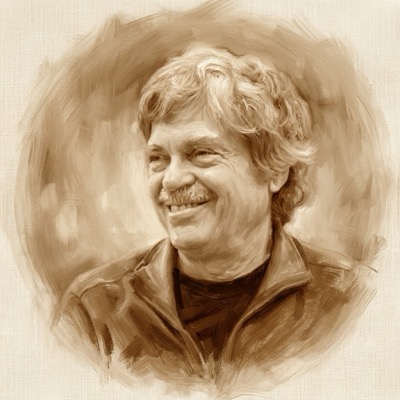
Alan Kay
Computer Scientist & Personal Computing Pioneer
Alan Kay is an American computer scientist known for pioneering object-oriented programming, graphical user interfaces, and personal computing. At Xerox PARC, he helped shape the modern windowed desktop interface and led work on Smalltalk, one of the most influential object-oriented programming languages. His Dynabook concept anticipated portable, networked personal computers for learning and creative work. Kay received the 2003 Turing Award for his contributions to object-oriented programming and personal computing.
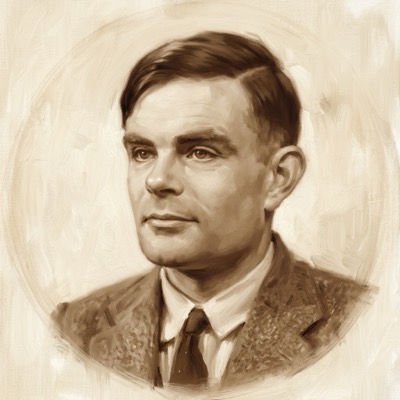
Alan Turing
Mathematician & Computer Science Pioneer
Alan Turing (1912–1954) was a British mathematician whose work laid the theoretical foundation for computer science and artificial intelligence. His concept of the 'Turing machine' formalized computation itself, while his 1950 paper 'Computing Machinery and Intelligence' introduced the famous 'Turing Test' for machine intelligence. During World War II, he led the team that cracked the Enigma code, helping end the war years earlier. His question 'Can machines think?' launched the field of AI and remains central to debates about artificial minds.
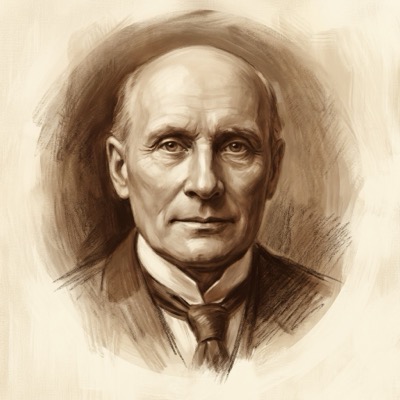
Alfred North Whitehead
Mathematician & Process Philosopher
Alfred North Whitehead (1861–1947) was a British mathematician and philosopher who co-authored 'Principia Mathematica' with Bertrand Russell, one of the most important works in the foundations of mathematics. He later developed process philosophy, arguing that reality consists not of static objects but of dynamic processes of becoming. His critique of the 'fallacy of misplaced concreteness'—mistaking abstract models for concrete reality—offers a powerful lens for understanding AI's limitations. His process metaphysics challenges the mechanistic worldview that underlies most AI research, suggesting that experience and creativity are fundamental features of reality, not reducible to computation.
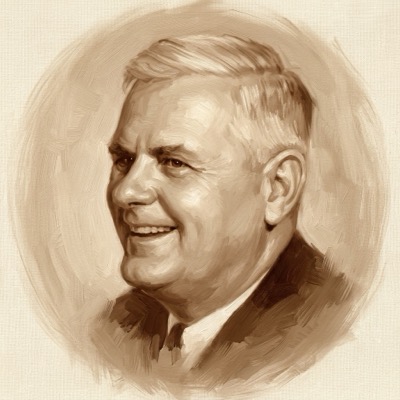
Alonzo Church
Mathematician & Logician
Alonzo Church (1903–1995) was an American mathematician and logician who, working at Princeton, gave one of the two foundational definitions of computation. His lambda calculus captured the notion of an effectively calculable function through pure symbol substitution, and in 1936 he proved that the Entscheidungsproblem — Hilbert's dream of a general decision procedure for mathematics — has no solution. That same year, independently, Alan Turing reached the same boundary with his imaginary machines; their equivalence became the Church–Turing thesis, the bedrock claim about what computation is. Turing came to Princeton as Church's doctoral student. Church later held the Flint Professorship at UCLA (1967–1990).

Amanda Askell
Philosopher & AI Alignment Researcher
Amanda Askell is a philosopher and researcher at Anthropic, where she leads work on Claude's character and values. With a PhD in philosophy from NYU, her research bridges moral philosophy and AI alignment—figuring out how to make AI systems that are helpful, harmless, and honest. She has been instrumental in developing Claude's personality and ethical guidelines, bringing rigorous philosophical thinking to the practical challenge of shaping AI behavior.
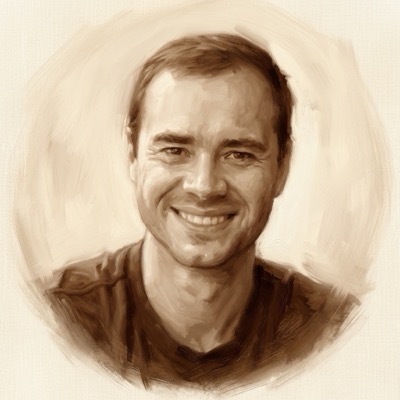
Andrej Karpathy
AI Researcher & Educator
Andrej Karpathy is an AI researcher and educator known for his work on computer vision and neural networks. He was a founding member of OpenAI's research team and later served as Director of AI at Tesla, leading the Autopilot vision team. Now independent, his educational content on neural networks has influenced countless developers entering the AI field.
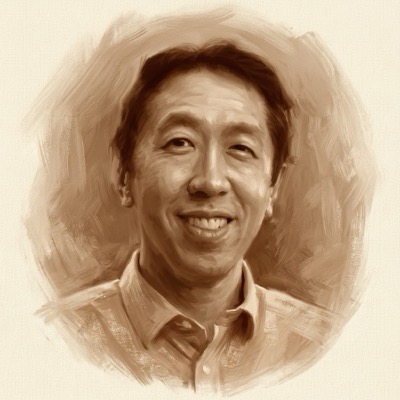
Andrew Ng
AI Pioneer & Educator
Andrew Ng is a pioneering AI researcher and educator who has shaped the modern machine learning landscape. He co-founded Google Brain, served as Chief Scientist at Baidu, and co-founded Coursera, bringing AI education to millions worldwide. His Stanford machine learning course became one of the most influential MOOCs in history. Through DeepLearning.AI, he continues to democratize AI education. A leading voice on AI's impact on work and society, he argues that AI will augment rather than replace human workers, transforming how we approach tasks across every industry.
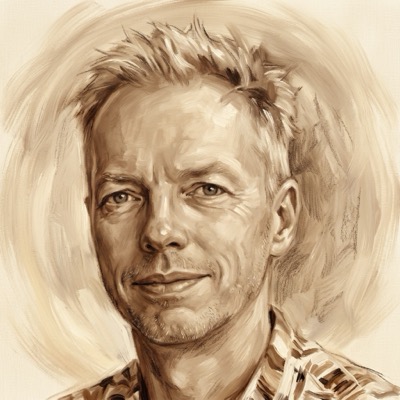
Andy Clark
Philosopher & Cognitive Scientist
Andy Clark is a philosopher and cognitive scientist at the University of Sussex, known for his influential work on the extended mind, embodied cognition, and predictive processing. His 'extended mind' thesis, developed with David Chalmers, argues that cognition extends beyond the brain into tools and environment. His recent work on predictive processing frames the brain as a 'prediction machine,' offering a unified theory of perception, action, and cognition with profound implications for understanding both biological and artificial intelligence.
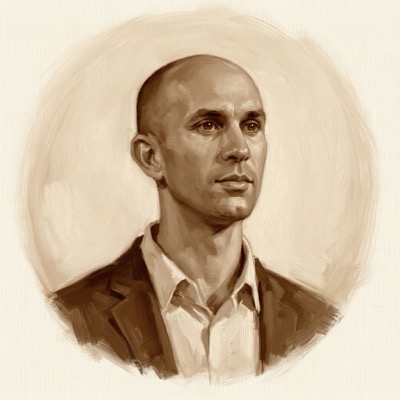
Anil Seth
Professor of Cognitive & Computational Neuroscience, University of Sussex
Anil Seth (born 1972) is a neuroscientist who studies the biological basis of consciousness. He took a PhD in computer science and AI at Sussex before turning to the brain, and has co-directed the Sussex Centre for Consciousness Science since 2010. His central claim is that perception is a controlled hallucination: the brain is a prediction machine making its best guess at the causes of its sensory signals, and experience is that guess rather than a readout of the world — "when we agree about our hallucinations, we call that reality." In Being You (2021) he extends the account to selfhood, arguing that the sense of being someone is itself a prediction anchored in the body's need to stay alive, which makes consciousness a property of living systems rather than of clever ones. That distinction drives his scepticism about machine consciousness: intelligence is about doing, consciousness is about feeling and being, and the assumption that the two must travel together is, he argues, a fact about human psychology rather than about reality. His essay The Mythology of Conscious AI won the 2025 Berggruen Prize Essay Competition.
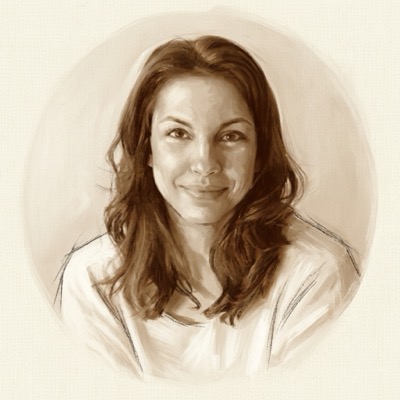
Annaka Harris
Author & Consciousness Researcher
Annaka Harris is an author and editor who has focused her work on the nature of consciousness. Her book 'Conscious: A Brief Guide to the Fundamental Mystery of the Mind' provides an accessible yet rigorous exploration of consciousness and its implications for understanding minds—both human and artificial. She argues for taking seriously the 'hard problem' of consciousness and explores how our intuitions about awareness might mislead us when thinking about AI systems.
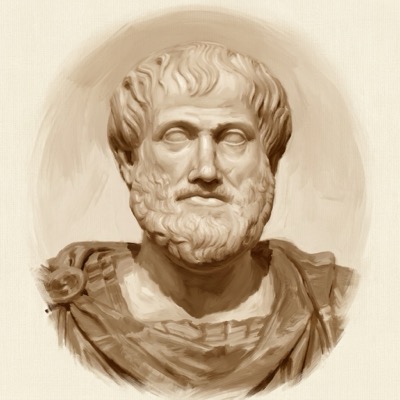
Aristotle
Philosopher & Founder of the Lyceum
Aristotle (384–322 BC) was born in Stagira in northern Greece and studied at Plato's Academy in Athens for roughly twenty years, from his late teens until Plato's death. He later tutored the young Alexander the Great before returning to Athens around 335 BC to found his own school, the Lyceum, where he directed a program of research spanning logic, biology, physics, ethics, and politics. In the Nicomachean Ethics he distinguishes technē, the know-how of making or craft, from epistēmē, demonstrative knowledge of what cannot be otherwise, and from phronēsis, the practical wisdom that judges well in particular situations — a set of distinctions that still structures debates about what kind of knowledge skill and expertise really are. Only about a third of his original output survives, mostly lecture notes rather than works prepared for publication, yet they shaped Western thought for two millennia.
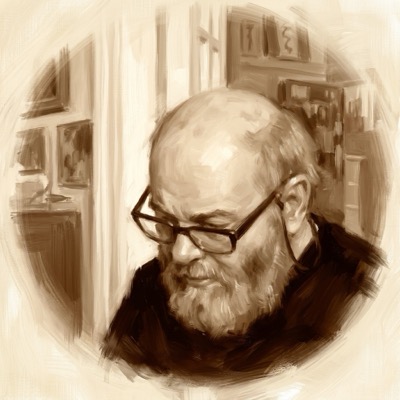
Arthur Danto
Philosopher of Art & Critic
Arthur Danto (1924–2013) was an American philosopher who taught for most of his career at Columbia University. His 1964 paper 'The Artworld,' written after encountering Andy Warhol's Brillo Box sculptures, asked how two perceptually identical objects — a Warhol Brillo Box and an ordinary supermarket carton — could differ in status as art, and answered that the difference lies not in the object but in an 'atmosphere of art theory' and history surrounding it. He developed this into an institutional theory of art in The Transfiguration of the Commonplace (1981), arguing that a work of art is 'a meaning embodied' in a way mere things are not. Drawing on Hegel, he also argued that contemporary art had reached an 'end of art' condition, in which no style or medium is any longer philosophically privileged, leaving artists free to work in any manner at all. From 1984 to 2009 he served as art critic for The Nation, translating this philosophy into decades of criticism.
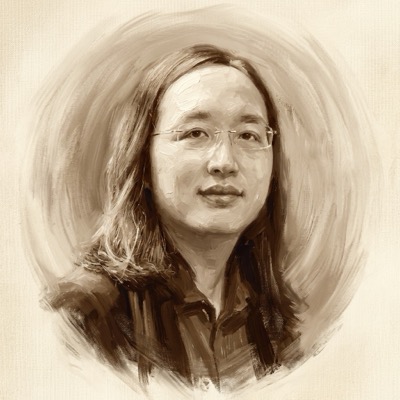
Audrey Tang
Cyber Ambassador-at-large, Taiwan
Audrey Tang (唐鳳) is a Taiwanese software programmer, civic hacker, and politician born in 1981. A child prodigy who began coding at age eight and left formal schooling at fourteen, Tang revitalized the Perl and Haskell programming languages and co-created EtherCalc. After the 2014 Sunflower Movement, Tang entered government as Taiwan's youngest-ever cabinet minister and first Digital Minister, pioneering initiatives like vTaiwan and the 'humor over rumor' strategy that shaped Taiwan's acclaimed COVID-19 response. Named one of TIME's 100 Most Influential People in AI in 2023, Tang now serves as Taiwan's Cyber Ambassador-at-large, advocating for digital democracy worldwide.
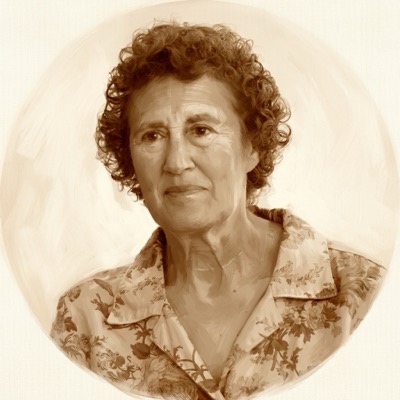
Barbara Liskov
Computer Scientist & Programming Pioneer
Barbara Liskov is an American computer scientist at MIT who has made fundamental contributions to programming language design, software engineering, and distributed systems. She developed the Liskov Substitution Principle, a cornerstone of object-oriented programming that states objects of a subtype should be substitutable for objects of their base type. Her work on CLU introduced data abstraction and iterators, concepts now standard in modern programming. She received the 2008 Turing Award for her practical and theoretical advances in programming language design.
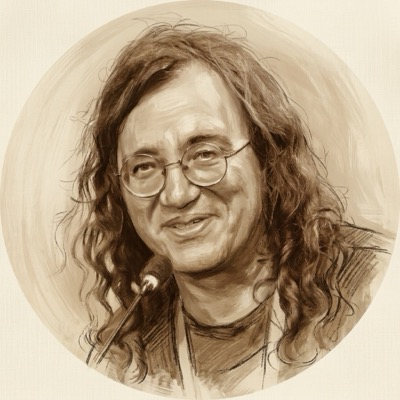
Ben Goertzel
Founder & CEO, SingularityNET
Ben Goertzel (born 1966) is a mathematician and AI researcher who helped popularize the term 'artificial general intelligence' — the field's name for the goal beyond narrow systems — while crediting the coinage's shared history with Shane Legg and Mark Gubrud. A prodigy who finished his mathematics PhD at Temple University at 23, he has led the open-source OpenCog framework for AGI research, served as Chief Scientist of Hanson Robotics — where his team built the AI behind the robot Sophia — and founded SingularityNET, a blockchain-based platform for decentralized AI. Across more than 25 books he has argued a consistent line: general intelligence will not emerge from scaling one technique, and whoever builds it, no single company should own it. He predicts human-level AGI could arrive by 2029.
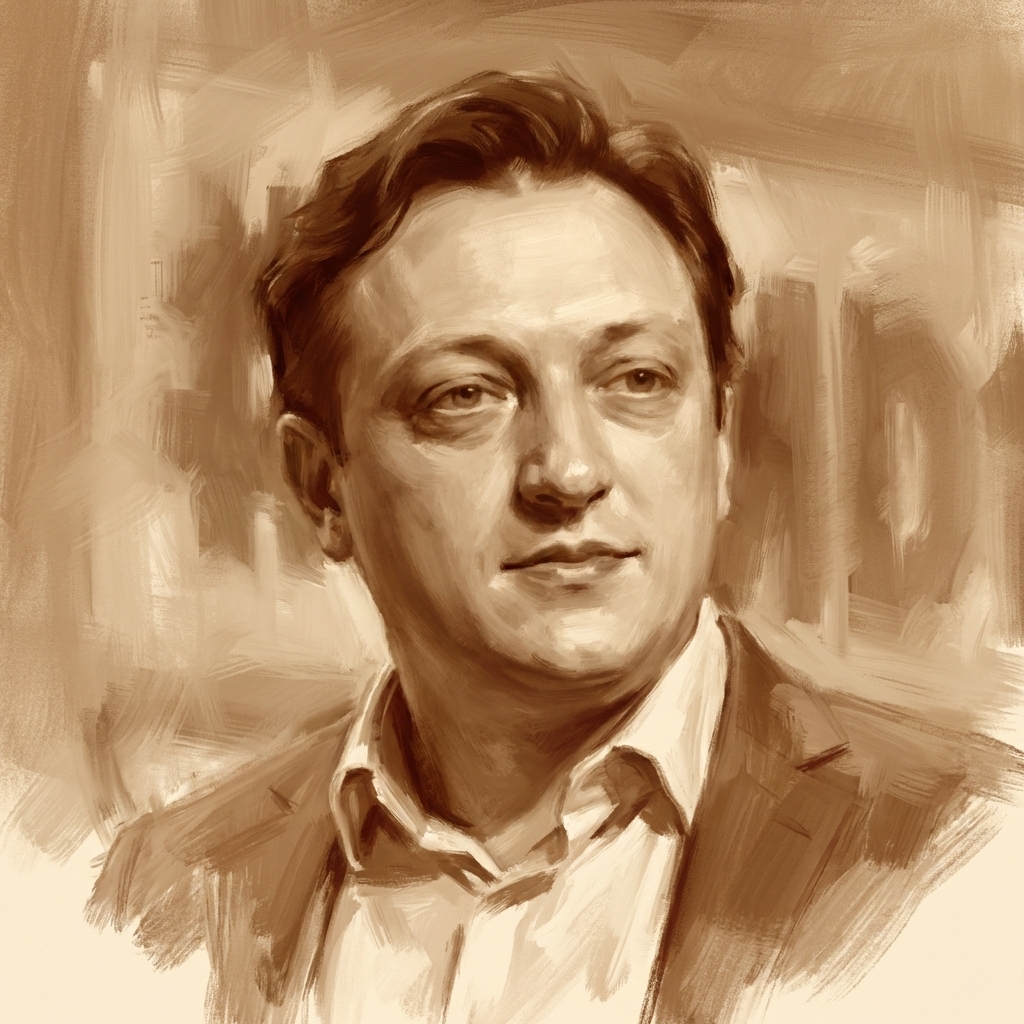
Ben Thompson
Founder & Author, Stratechery
Ben Thompson is the founder of Stratechery, one of the most influential technology analysis publications in the world. Based in Taipei, Taiwan, he is known for pioneering Aggregation Theory — a framework for understanding how the internet restructures value chains. A former Microsoft, Apple, and Automattic employee, Thompson's daily newsletter and Sharp Tech podcast are widely read by executives and investors across Silicon Valley. His analysis of platform dynamics, AI strategy, and the business of technology has shaped how the industry thinks about disruption and value creation.
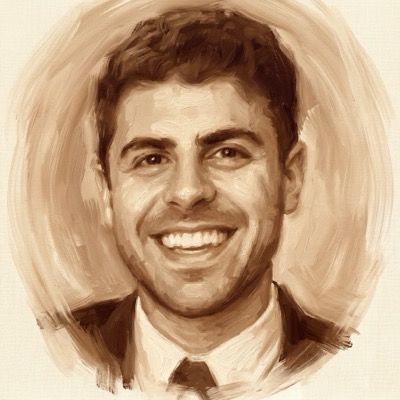
Benjamin Mann
Co-founder, Anthropic
Benjamin Mann is a software engineer and co-founder of Anthropic, the AI safety company behind Claude. Before co-founding Anthropic, he worked at Google, OpenAI, and the Machine Intelligence Research Institute, after shifting his focus toward AI safety. His personal bio says he spent six years as a software engineer at Google before moving into AI safety work, and later helped found Anthropic. At Anthropic, he has worked on product engineering and the company's mission of building safer transformative AI systems.
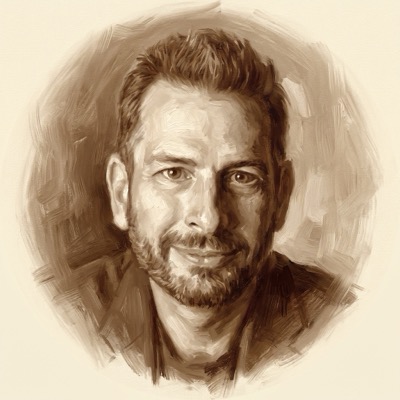
Blaise Agüera y Arcas
VP & Fellow, Google
Blaise Agüera y Arcas is a Vice President and Fellow at Google, where he leads teams working on AI and machine intelligence. Previously at Microsoft, he created Photosynth and was a Distinguished Engineer. At Google, he has led efforts on on-device machine learning, federated learning (privacy-preserving distributed ML), and more recently on large language models. He is known for his interdisciplinary approach, connecting AI with neuroscience, art, and social systems.
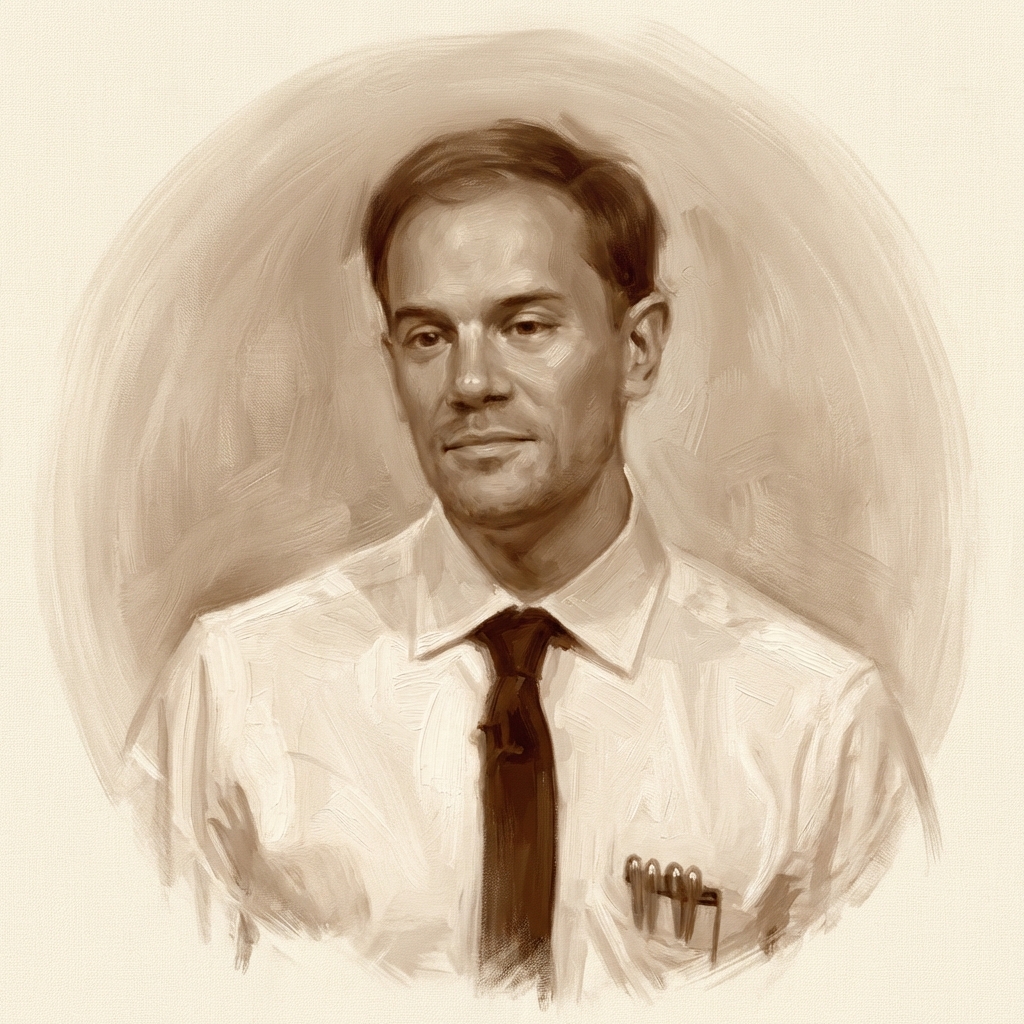
Bret Victor
Interface Designer & Computing Visionary
Bret Victor is an interface designer, computer scientist, and electrical engineer known for his influential talks on the future of human-computer interaction. He worked as a human interface inventor at Apple from 2007 to 2011, contributing to the initial design of the iPad and Apple Watch. He founded Dynamicland, a nonprofit research lab in Oakland building a communal computing medium where people work together with real physical objects rather than screens. His work challenges fundamental assumptions about how humans interact with computers and create software.
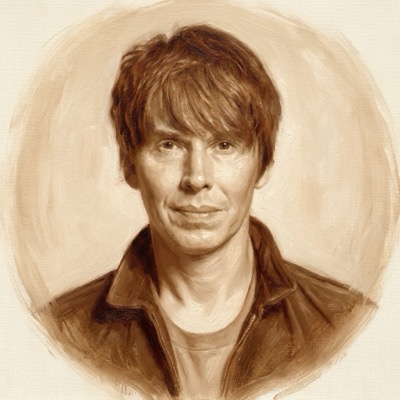
Brian Cox
Physicist & Science Communicator
Brian Cox is an English physicist, professor of particle physics at the University of Manchester, and the Royal Society Professor for Public Engagement in Science. He worked on the ATLAS experiment at the Large Hadron Collider at CERN. He is best known as a science communicator through his BBC television series including Wonders of the Universe, The Planets, and Universe, and the long-running BBC Radio 4 podcast The Infinite Monkey Cage. Before his academic career, he was a keyboard player for the bands Dare and D:Ream.
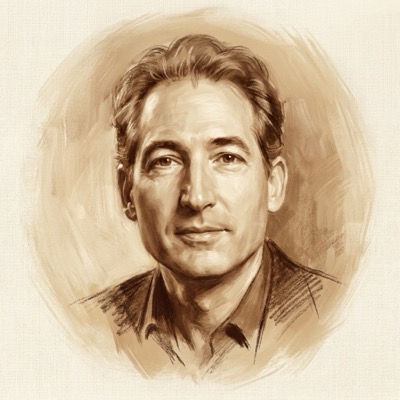
Brian Greene
Theoretical Physicist & Science Communicator
Brian Greene is an American theoretical physicist, professor of physics and mathematics at Columbia University, where he directs the Center for Theoretical Physics. His research in string theory includes the co-discovery of a class of mirror symmetry relating two different Calabi–Yau manifolds, and the description of flop and conifold transitions — changes in the topology of space itself. He wrote The Elegant Universe (1999), The Fabric of the Cosmos (2004), The Hidden Reality (2011), and Until the End of Time (2020), and hosted the NOVA miniseries adapted from the first two. In 2008 he co-founded the World Science Festival with Tracy Day, and serves as its chairman.
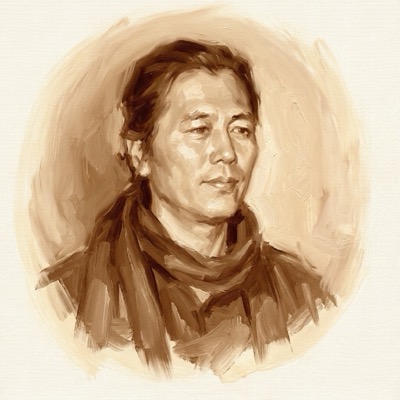
Byung-Chul Han
Philosopher & Cultural Theorist
Byung-Chul Han is a South Korean-born German philosopher and cultural theorist, born in Seoul in 1959. He first studied metallurgy at Korea University before moving to Germany, where he turned to philosophy, German literature, and Catholic theology, completing a doctorate at Freiburg in 1994 with a dissertation on Heidegger. He taught at the University of Basel, the Karlsruhe University of Arts and Design, and the Berlin University of the Arts, and has written more than thirty short, aphoristic books translated into over 35 languages. The Burnout Society (2010) made him one of the most widely read living philosophers: its diagnosis — that we have traded external discipline for voluntary self-exploitation as 'achievement-subjects' — has only sharpened in the age of always-on digital work. Famously media-shy, he owns no smartphone, rarely gives interviews, and tends a garden; the refusal is itself a philosophical practice.
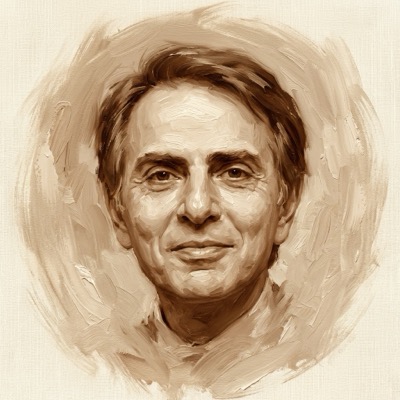
Carl Sagan
Astronomer & Science Communicator
Carl Sagan (1934–1996) was an astronomer, cosmologist, and one of the greatest science communicators in history. His TV series 'Cosmos' and books like 'The Demon-Haunted World' inspired millions to embrace scientific thinking. While he worked before the modern AI era, his emphasis on critical thinking, skepticism, and the search for extraterrestrial intelligence (SETI) raised fundamental questions about the nature of intelligence and our place in the universe—questions that resonate deeply with today's AI debates.
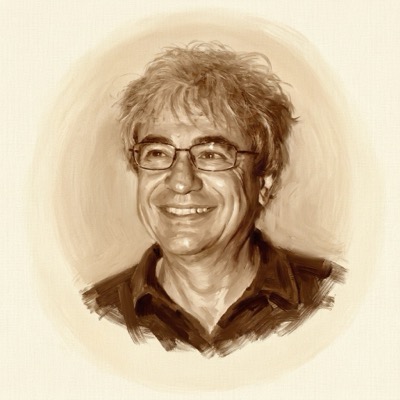
Carlo Rovelli
Theoretical Physicist & Author
Carlo Rovelli (born 1956) is an Italian theoretical physicist and writer, one of the founders of loop quantum gravity — an approach that treats space and time themselves as quantized rather than as a smooth backdrop. He is emeritus professor at the Centre de Physique Théorique in Marseille, a distinguished visiting research chair at the Perimeter Institute, and a member of the Rotman Institute of Philosophy at Western University. His work on relational quantum mechanics and the physics of time argues that time is not fundamental but emerges from deeper, timeless physics. His popular books—'Seven Brief Lessons on Physics,' 'The Order of Time,' 'Reality Is Not What It Seems,' and 'Helgoland'—have sold millions of copies and made him one of the most widely read living physicists.
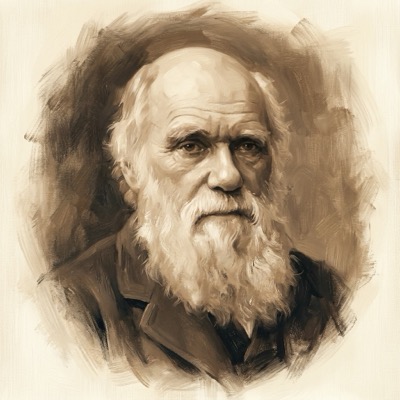
Charles Darwin
Naturalist & Originator of Evolution by Natural Selection
Charles Darwin (1809–1882) sailed aboard HMS Beagle from 1831 to 1836 as the captain's gentleman companion and the voyage's naturalist, then spent the next two decades gathering evidence for — and postponing — the argument that voyage had made unavoidable. On the Origin of Species (1859) proposed that the fit between a creature and its world needs no designer: heritable variation, more offspring than can survive, and differences in who survives are enough, given time, to raise structures of extraordinary intricacy out of no foresight at all. He published only after Alfred Russel Wallace independently derived the same mechanism, forcing a joint presentation to the Linnean Society in 1858. The Descent of Man (1871) placed humans inside that account rather than above it, and The Expression of the Emotions in Man and Animals (1872) gave feeling itself a natural history. His idea is the one this field keeps borrowing: Dennett named it cranes rather than skyhooks, and the labs betting that intelligence must be grown rather than engineered — open-ended search, quality-diversity, the Darwin Gödel Machine — are all wagering that Darwin described the only process ever known to have produced a mind.
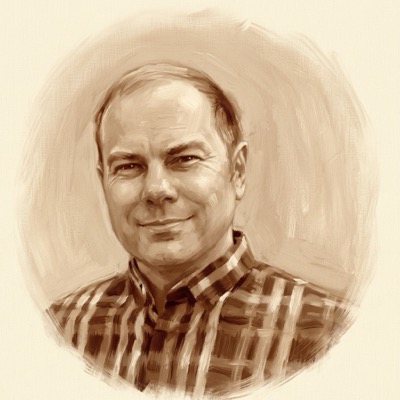
Chris Lattner
Co-founder & CEO, Modular
Chris Lattner is an American computer scientist and the co-founder and CEO of Modular, where he is developing Mojo, a high-performance AI programming language. He is the original creator of the LLVM compiler infrastructure, the Clang compiler, and the Swift programming language. He spent twelve years at Apple leading the Developer Tools team, then held roles at Tesla, Google (where he co-created MLIR), and SiFive. His work on LLVM earned the ACM Software System Award in 2012.
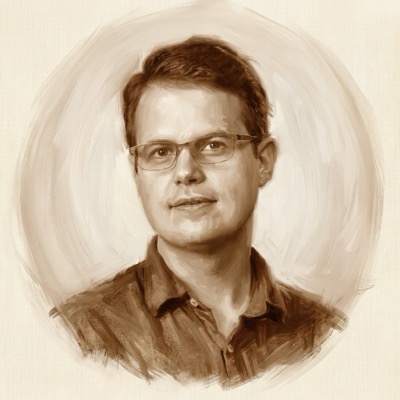
Chris Olah
Co-founder & Interpretability Lead, Anthropic
Chris Olah (b. 1992) is a Canadian machine-learning researcher and one of the pioneers of mechanistic interpretability — the effort to reverse-engineer neural networks by mapping the internal features and circuits that produce their behavior. A Thiel Fellow who left the University of Toronto after a year, he led interpretability research at Google Brain and OpenAI before co-founding Anthropic in 2021, where he leads the interpretability team. He co-founded Distill, a journal devoted to clear scientific communication, and his visual, essayistic explanations of neural networks shaped how a generation understands them. His work turns 'do we understand what we built?' from a rhetorical worry into an experimental science.
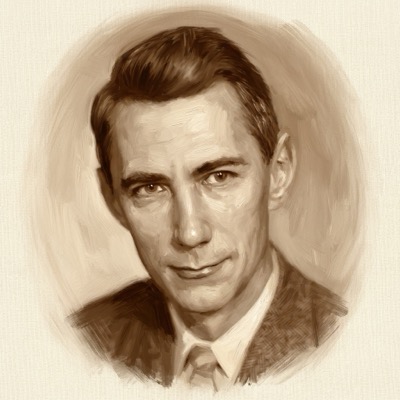
Claude Shannon
Mathematician & Father of Information Theory
Claude Shannon (1916–2001) was an American mathematician and engineer who founded information theory with his landmark 1948 paper 'A Mathematical Theory of Communication.' His work provided the theoretical basis for digital computing and communication, defining the 'bit' as the fundamental unit of information. Shannon showed that information could be quantified, transmitted, and processed—concepts that underpin everything from the internet to modern AI. His work on chess-playing machines and maze-solving robots also made him a pioneer in artificial intelligence.

Clayton Christensen
Professor of Business Administration, Harvard Business School
Clayton Christensen (1952–2020) was the Kim B. Clark Professor of Business Administration at Harvard Business School and one of the most influential management thinkers of his era. He is best known for the theory of disruptive innovation, introduced in his 1997 book The Innovator's Dilemma, which explains how smaller entrants with simpler, cheaper products can displace established incumbents — a lens now central to debates about how AI reshapes industries. He co-founded the consulting firm Innosight and the investment firm Rose Park Advisors, and was twice ranked the world's most influential management thinker by Thinkers50. Beyond strategy, his 2010 essay and later book How Will You Measure Your Life? turned his analytical tools toward questions of purpose, relationships, and integrity.
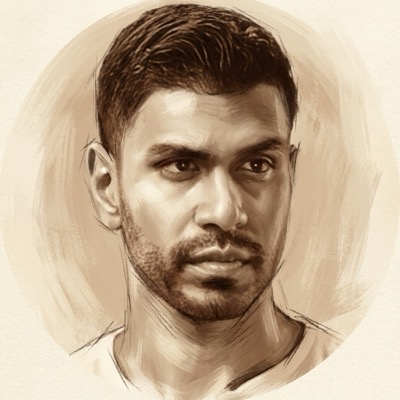
Curt Jaimungal
Filmmaker; Host of Theories of Everything
Curt Jaimungal is a Toronto filmmaker and the host of Theories of Everything, a podcast launched in 2020 that he describes as exploring theoretical physics, consciousness, AI and God in a technically rigorous manner. He describes himself as "a Torontonian with a degree in mathematical physics from the University of Toronto" and says he analyses candidate theories of everything from that analytic perspective, while increasingly opening up to alternative approaches. Before the show he directed Better Left Unsaid, a crowdfunded documentary examining the differences between the moderate and the extreme left. He says the separating factor of the show is "its focus on depth even at the risk of limiting the audience due to how much detail we delve into subjects", and that it increasingly conducts original research on air rather than merely conveying existing information. He publishes a written companion to the show on Substack, where paid subscribers get early access and original essays.
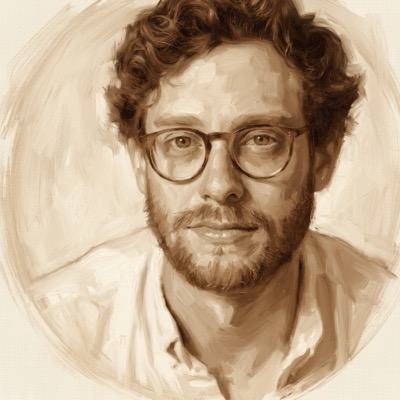
Dan Shipper
CEO & Co-founder, Every
Dan Shipper is the CEO and co-founder of Every, a media company publishing a daily newsletter on business, AI, and personal development read by nearly 75,000 founders, operators, and investors. He writes the column Chain of Thought, exploring the frontiers of AI in work and life. Before Every, he co-founded Firefly (acquired by Pega in 2014) and worked as a Partner at First Round Capital.
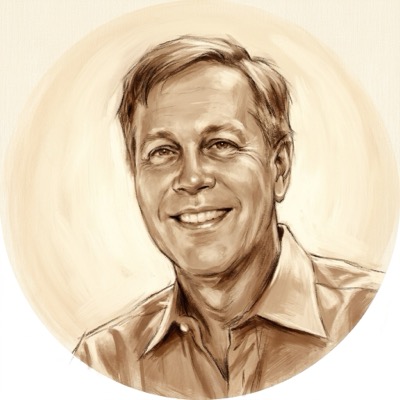
Dana Gioia
Poet & Critic; Former Chairman, National Endowment for the Arts
Dana Gioia (born 1950) is an American poet and critic who spent fifteen years as a New York business executive — rising to vice president at General Foods — before leaving corporate life in 1992 to write full-time. His essay 'Can Poetry Matter?' (1991) argued that poetry had retreated from public life into an academic subculture, igniting a national debate and making him the most visible advocate for poetry as a public art. As chairman of the National Endowment for the Arts from 2003 to 2009 he launched Poetry Out Loud and The Big Read, bringing recitation and shared reading to millions, and he later served as California Poet Laureate, visiting all 58 counties of his home state. His central conviction — that poetry is enchantment, an art of sound, memory, and attention older than writing itself — gains fresh force in an age when machines generate fluent text on demand: his work asks what language does when it becomes memorable, musical, and shared.
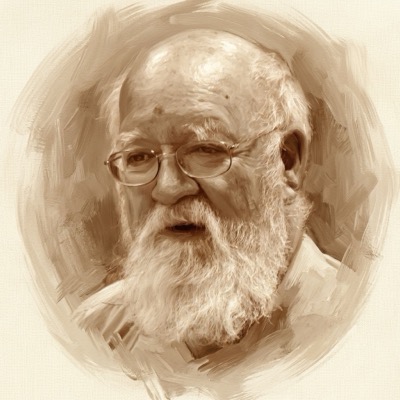
Daniel Dennett
Philosopher & Cognitive Scientist
Daniel Dennett (1942–2024) was one of the most influential philosophers of mind and cognitive science. His work on consciousness, free will, and evolution shaped how we think about minds—both biological and artificial. His 'multiple drafts' model of consciousness and concept of the 'intentional stance' remain central to debates about whether AI systems can truly be conscious or merely simulate understanding. A fierce critic of what he called 'the Cartesian theater,' he argued that consciousness is not a single unified experience but an emergent property of many parallel processes.
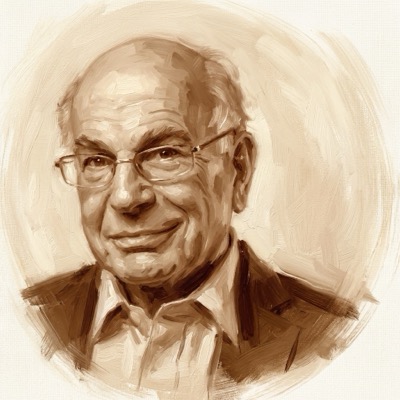
Daniel Kahneman
Psychologist & Nobel Laureate
Daniel Kahneman (1934–2024) was an Israeli-American psychologist and Nobel laureate whose work on cognitive biases and decision-making transformed our understanding of human rationality. His collaboration with Amos Tversky produced prospect theory, which earned him the 2002 Nobel Prize in Economics. His bestselling book 'Thinking, Fast and Slow' introduced the dual-process framework of System 1 (fast, intuitive) and System 2 (slow, deliberate) thinking—a model that has become central to understanding both human cognition and AI system design. His research on heuristics, biases, and the limits of human judgment offers essential context for evaluating AI systems that increasingly augment or replace human decision-making.
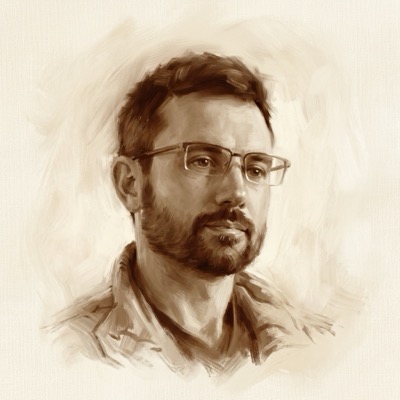
Daniel Kokotajlo
Executive Director, AI Futures Project
Daniel Kokotajlo is an AI safety researcher and Executive Director of the AI Futures Project, a Berkeley-based nonprofit researching the future impact of artificial intelligence. A former philosophy PhD student, he worked at AI Impacts and the Center on Long-Term Risk before joining OpenAI as a governance researcher in 2022. He resigned from OpenAI in 2024, forfeiting approximately $2 million in equity by refusing to sign a non-disparagement agreement, citing loss of confidence that the company would behave responsibly around AGI development. He co-organized the 'Right to Warn' initiative for AI whistleblower protections and published AI 2027, a detailed AGI forecast scenario read by over a million people.
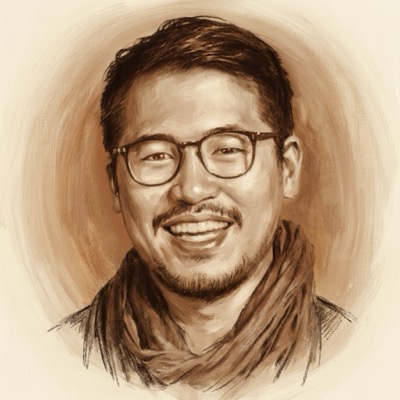
Daniel Kwan
Filmmaker & Director
Daniel Kwan is an American filmmaker who, alongside Daniel Scheinert as the duo known as the Daniels, wrote and directed Everything Everywhere All at Once (2022), which won seven Academy Awards including Best Picture, Best Director, and Best Original Screenplay. He has become a prominent voice on AI's impact on creative industries, advocating for collective action to shape how the entertainment industry adopts AI technology.
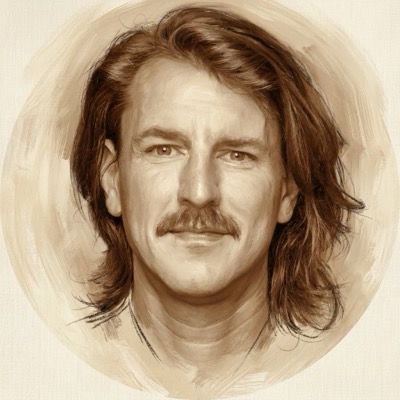
Daniel Mügge
Professor of Political Arithmetic, University of Amsterdam
Daniel Mügge is Professor of Political Arithmetic at the University of Amsterdam, where he studies how the numbers that govern public life get made and whom they serve. He came to AI from political economy, by way of financial markets and a body of work arguing that the figures states steer by — GDP, trade balances, inflation — are political artefacts rather than neutral readings. Since a 2022 NWO Vici grant he has led RegulAite, a project on 'AI diplomacy': the EU's external relations in AI with the United States and China, and its part in multilateral efforts to regulate it. With Regine Paul and Vali Stan he wrote The AI Matrix: Profits, Power, Politics (2025, open access), which asks not what AI can do but who owns it, who can pay for it, and how everyone else must adjust. His case for digital sovereignty is unusually willing to concede ground — the claim that Europe is impoverished by American ownership is, he argues, vastly exaggerated in a world of globalised capital flows; what is actually lost is a society's capacity to decide what kind of digitisation happens to it.
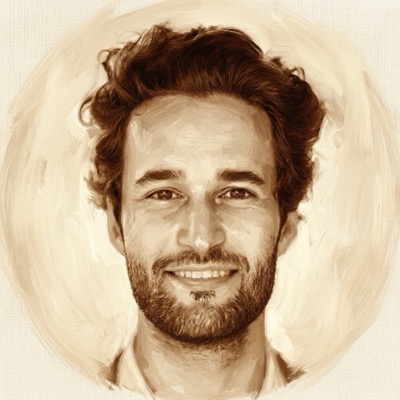
Daniel Susskind
Economist, King's College London & Oxford
Daniel Susskind is an economist who studies what automation does to work, and what work is for once machines can do most of it. He is Research Professor in Economics at King's College London, the Mercers' School Memorial Professor of Business at Gresham College, a Senior Research Associate at Oxford's Institute for Ethics in AI, and a Digital Fellow at the Stanford Digital Economy Lab. Before academia he spent several years inside the British government, as a policy adviser in the Prime Minister's Strategy Unit, a policy analyst in the No. 10 Policy Unit, and a senior policy adviser in the Cabinet Office. He took a doctorate in economics at Oxford in 2016, having been a Kennedy Scholar at Harvard. His argument is that the pressing question is not whether there will be enough work, but how to distribute income and find meaning when there is not — a problem he treats as political and moral rather than technological.
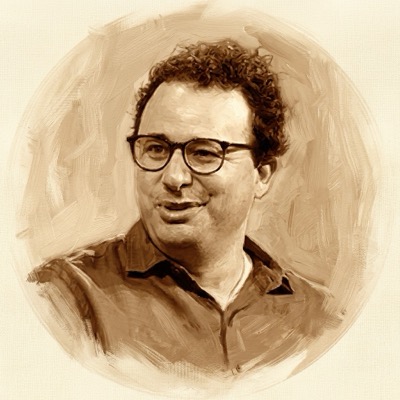
Dario Amodei
CEO & Co-founder, Anthropic
Dario Amodei is the CEO and co-founder of Anthropic, an AI safety company. Before founding Anthropic in 2021, he served as VP of Research at OpenAI, where he led the development of GPT-2 and GPT-3. His work focuses on developing AI systems that are safe, beneficial, and understandable, with particular emphasis on Constitutional AI and interpretability research.
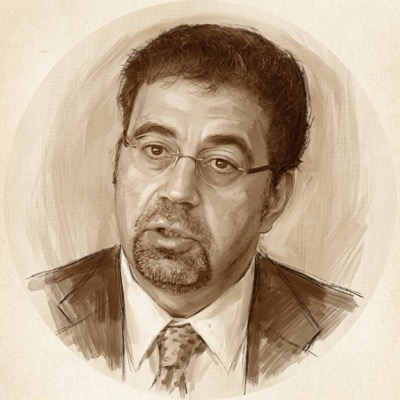
Daron Acemoglu
Institute Professor of Economics, MIT
Daron Acemoglu (b. 1967) is an Institute Professor at MIT and, with Simon Johnson and James Robinson, a 2024 Nobel laureate in economics for work on how institutions shape prosperity. Turkish-American, educated at York and the LSE, he won the John Bates Clark Medal in 2005. His argument about technology is that its benefits are not automatic: whether a machine augments workers or merely replaces them is a choice made by the people directing it, and history is full of stretches where the gains went to a narrow few. He is also the most cited sceptic of large near-term AI productivity gains, estimating in 2024 that total factor productivity would rise by under 1% over a decade — a figure far below what the industry assumes, and one he arrived at by counting which tasks AI can actually do rather than by extrapolating from capability.
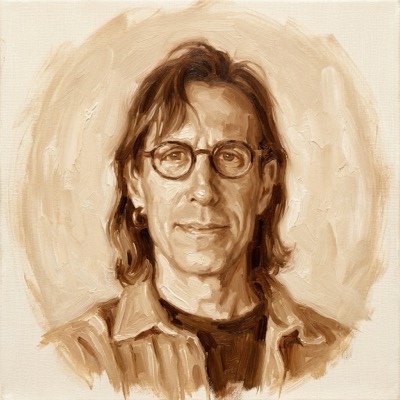
David Abram
Cultural Ecologist & Philosopher
David Abram is an American cultural ecologist and philosopher, born in New York in 1957. He graduated summa cum laude from Wesleyan University, earned his PhD from SUNY Stony Brook in 1993, and has held posts including senior visiting scholar in ecology and natural philosophy at Harvard Divinity School and the Arne Næss Chair of Global Justice and Ecology at the University of Oslo. His first book, The Spell of the Sensuous (1996), argued that human language grew out of bodily, sensory reciprocity with a living landscape — and that alphabetic writing began pulling language out of the land into a closed circuit of signs. He coined the phrase 'the more-than-human world', now standard vocabulary across the environmental humanities. A sleight-of-hand magician since high school, he traveled through Sri Lanka, Indonesia, and Nepal studying with traditional magic practitioners — an apprenticeship that shaped his account of perception as participation.
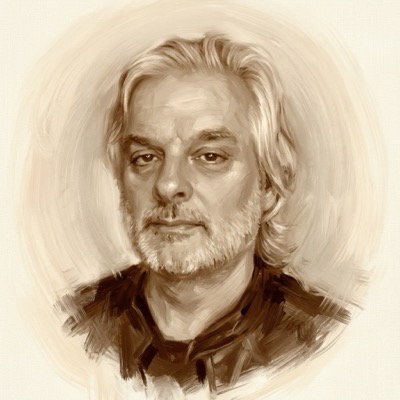
David Chalmers
Philosopher of Mind
David Chalmers is an Australian philosopher and cognitive scientist at NYU, known for formulating the 'hard problem of consciousness'—why physical processes give rise to subjective experience at all. His 1996 book 'The Conscious Mind' argued that consciousness cannot be explained in purely physical terms, revitalizing debates about the mind-body problem. He introduced the philosophical zombie thought experiment and co-developed the extended mind thesis with Andy Clark. His work poses fundamental challenges for AI: even if a system behaves intelligently, does it have any inner experience? Chalmers takes seriously the possibility that AI systems might be conscious, while insisting we lack the tools to know for certain.
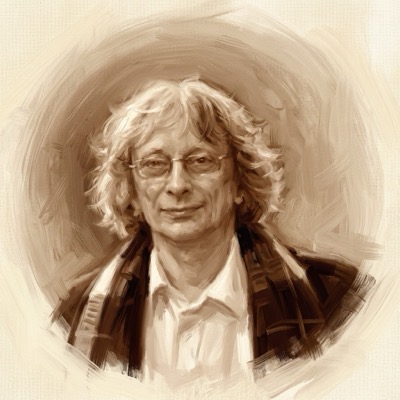
David Deutsch
Physicist & Pioneer of Quantum Computation
David Deutsch is a British-Israeli physicist at the University of Oxford, widely regarded as the father of quantum computation. His 1985 paper describing a universal quantum Turing machine laid the theoretical foundation for the entire field. He co-developed the Deutsch-Jozsa algorithm, one of the first demonstrations that quantum computers can exponentially outperform classical ones. Beyond physics, Deutsch is a deeply original epistemologist—his books 'The Fabric of Reality' (1997) and 'The Beginning of Infinity' (2011) argue that good explanations are the key to all progress, and that human knowledge creation is potentially unbounded. He is a proponent of the many-worlds interpretation of quantum mechanics and, since 2012, has been developing constructor theory with Chiara Marletto.
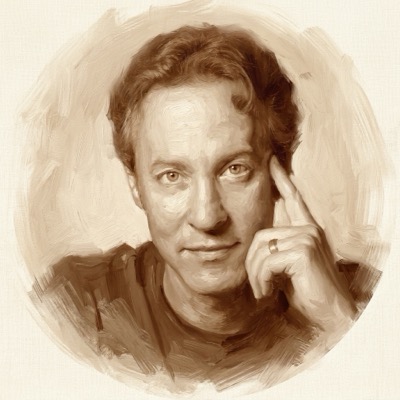
David Eagleman
Neuroscientist, Stanford University
David Eagleman is an adjunct professor of neuroscience at Stanford, with a doctorate from Baylor College of Medicine. His research covers time perception, sensory substitution, brain plasticity, synesthesia and neurolaw — a range held together by one question: how much of what you experience is constructed rather than received. In 2015 he co-founded Neosensory with Scott Novich to build wearables that translate sound into patterns of vibration on the skin, letting deaf users hear through touch; the company ran for a decade. He wrote Incognito (2011) on the brain's unconscious machinery and Livewired (2020) on how thoroughly the brain rewires itself, and presented The Brain with David Eagleman for PBS.
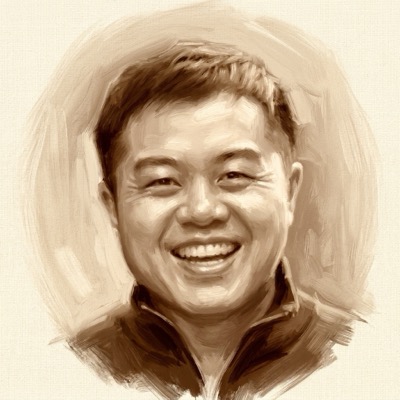
David Ha
Co-founder & CEO, Sakana AI
David Ha is co-founder and CEO of Sakana AI, the Tokyo lab betting that the future of AI looks like a school of fish — many small models cooperating, evolved rather than engineered — instead of one giant one. His path is one of the strangest in the field: eight years at Goldman Sachs Japan, rising to managing director and co-head of Japanese interest-rates trading, while writing an anonymous machine-learning blog as 'hardmaru' during the field's unfashionable years. The blog led to Google Brain in 2016, where he led the Brain team in Japan and co-authored World Models with Jürgen Schmidhuber — agents learning inside their own dreamed simulations. After a stint leading research at Stability AI, he founded Sakana in 2023 with Transformer co-inventor Llion Jones, later earning a PhD from the University of Tokyo and a place in the TIME 100 AI. With Jeff Clune he co-authored The AI Scientist, and the Sakana–Clune collaboration carried on into the Darwin Gödel Machine — systems that do, and rewrite, their own research.
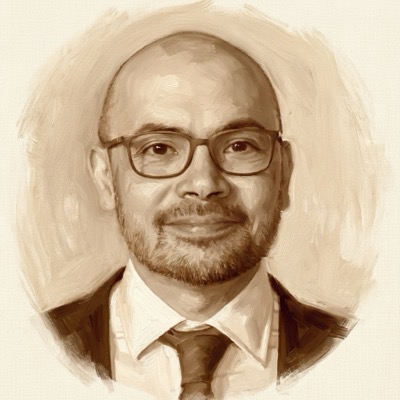
Demis Hassabis
Chairman, Google DeepMind & Chief Scientist, Alphabet
Demis Hassabis is Chairman of Google DeepMind and Chief Scientist of Alphabet, roles he took in August 2026 after sixteen years as DeepMind's CEO, handing day-to-day leadership to Koray Kavukcuoglu. A former child chess prodigy and video game designer, he founded DeepMind in 2010 with the mission to 'solve intelligence.' Under his leadership, DeepMind created AlphaGo, AlphaFold, and other breakthrough AI systems. He received the 2024 Nobel Prize in Chemistry for AlphaFold's contribution to protein structure prediction.
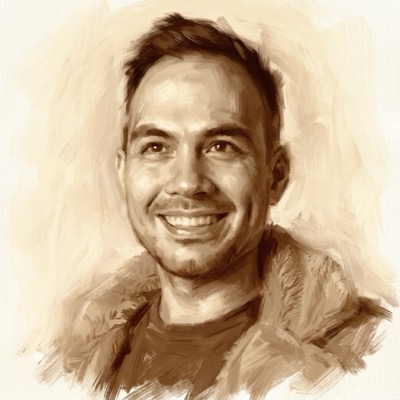
Diogo Almeida
Founder & CEO, TypeSafe AI
Diogo Almeida is the founder and CEO of TypeSafe AI, and was the fourth author on InstructGPT (2022), the OpenAI paper that made RLHF the standard way a language model is turned into an assistant. He worked on the post-training behind ChatGPT and GPT-4, and was at Google Brain before that. He now argues that the technique he helped build is what holds automation back. RLHF optimises for human preference, and a reward model can detect visible uncertainty far more easily than it can check whether an answer is correct — so the objective rewards sounding confident. On his account hallucination is not a defect waiting to be patched but the objective working as specified, and the assistance era that followed ChatGPT was a "weird detour" away from software that does real work. TypeSafe's answer is RLCD, reinforcement learning for calibrated decisions, and a model called Jev that returns a typed value with a probability attached instead of prose.
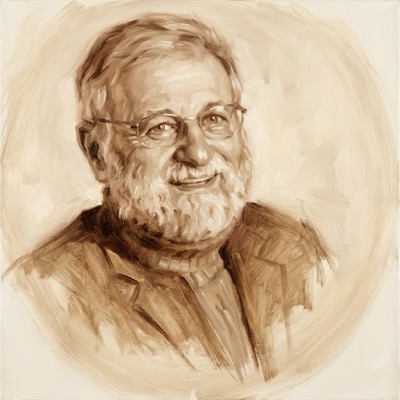
Don Norman
Director of The Design Lab, UC San Diego
Donald Arthur Norman is an American cognitive scientist, design theorist, and author who coined the term 'user experience' while at Apple in the early 1990s. He is best known for The Design of Everyday Things (1988), which introduced affordance-based thinking to design. He co-founded the Nielsen Norman Group with Jakob Nielsen and directs The Design Lab at UC San Diego. His work bridges cognitive science, human-computer interaction, and industrial design, shaping how an entire discipline thinks about usability.
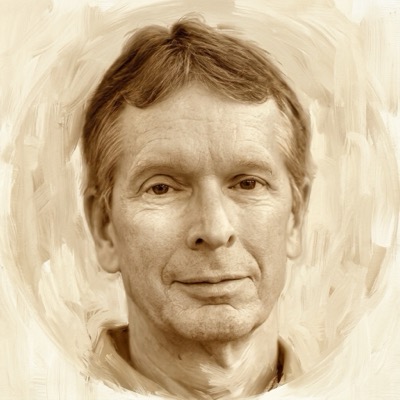
Donald Hoffman
Cognitive Scientist, UC Irvine
Donald Hoffman is professor emeritus in the Department of Cognitive Sciences at UC Irvine, where he earned his doctorate in computational psychology from MIT in 1983 under David Marr and Whitman Richards. His interface theory of perception holds that perceptual experience does not match or approximate the properties of the objective world, but provides a simplified, species-specific interface. With Chetan Prakash, Kyle Stephens, Manish Singh and Chris Fields he proved the Fitness-Beats-Truth theorem, which shows that a strategy maximising expected fitness payoff — making no attempt to estimate the true state of the world — consistently outperforms one that tries to perceive reality accurately. From this he argues for conscious realism, a non-physicalist monism in which consciousness is fundamental and physical particles are icons inside a conscious agent's interface. He wrote Visual Intelligence (1998) and The Case Against Reality (2019).
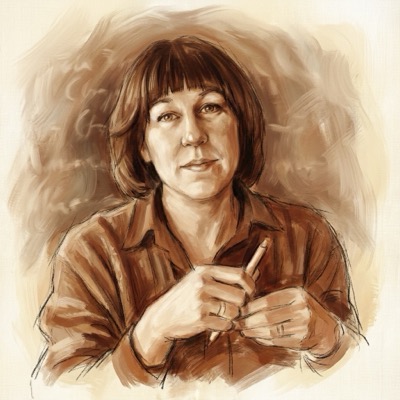
Donella Meadows
Environmental Scientist & Systems Thinker
Donella 'Dana' Meadows (1941–2001) was an environmental scientist and writer who became one of the most influential systems thinkers of the twentieth century. Trained as a biophysicist at Harvard, she joined Jay Forrester's system dynamics group at MIT and was lead author of The Limits to Growth (1972), the Club of Rome report that used the World3 computer model to ask how exponential growth behaves on a finite planet. She taught at Dartmouth College for 29 years, founded the Sustainability Institute, and wrote the syndicated column The Global Citizen. Her essay 'Leverage Points: Places to Intervene in a System' and the posthumously published primer Thinking in Systems distilled stocks, flows, feedback loops, and delays into a common language for reasoning about complex systems — the same language needed to think clearly about training loops, scaling dynamics, and the sociotechnical systems AI is embedded in. Her counsel for living with systems too complex to control — stay humble, keep learning, dance with the system — reads today as advice for coexisting with machine intelligence.
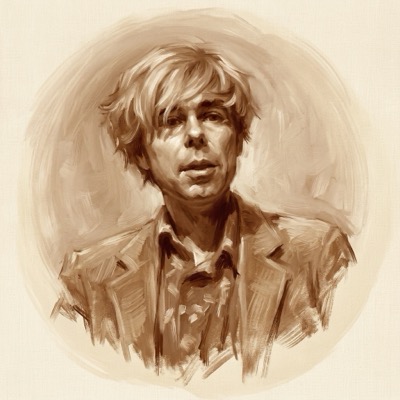
Douglas Hofstadter
Professor of Cognitive Science, Indiana University
Douglas Hofstadter is Distinguished Professor of Cognitive Science and Comparative Literature at Indiana University, where he directs the Center for Research on Concepts and Cognition. His Gödel, Escher, Bach: An Eternal Golden Braid (1979) won the Pulitzer Prize and the National Book Award, and taught a generation to see minds, music, and mathematics as variations on self-reference. With his students he built Copycat, a computational model of analogy-making; his later books — Fluid Concepts and Creative Analogies (1995), I Am a Strange Loop (2007), and Surfaces and Essences (2013) — pursue one thesis: that analogy is the core of cognition and the self is a strange loop the brain tells itself. His doctoral students include Melanie Mitchell and David Chalmers. In 2023 he said publicly that the progress of large language models had made some of his core beliefs about AI's limits collapse — and that the prospect terrified him.
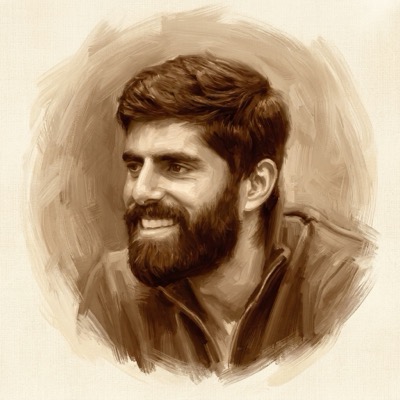
Dwarkesh Patel
Host, Dwarkesh Podcast
Dwarkesh Patel (born 2000) is a writer and podcaster who hosts the Dwarkesh Podcast, a long-form interview show on artificial intelligence, science, and history. Born in Vadodara, Gujarat and raised in the United States from age eight, he began the show as The Lunar Society while studying computer science at the University of Texas at Austin, naming it after the eighteenth-century club of Birmingham industrialists and natural philosophers. The format is unfashionably long and unusually well-prepared, and it made him, in The Economist's phrase, the podcaster who "rose from nowhere to become Silicon Valley's favourite" — his guests include Ilya Sutskever, Andrej Karpathy, Demis Hassabis, Mark Zuckerberg, and Satya Nadella. With Gavin Leech he assembled those conversations into The Scaling Era: An Oral History of AI, 2019–2025 (Stripe Press, 2025), a primary-source record of the period written largely in its participants' own words. Time named him one of the 100 most influential people in AI in 2024.
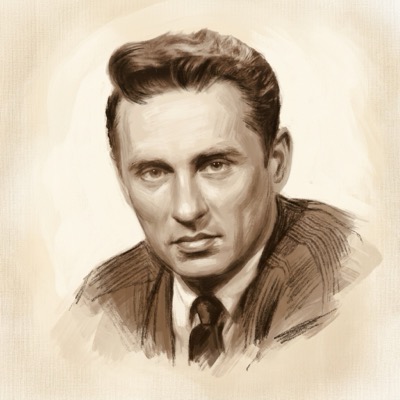
Edmund Gettier
Philosopher & Epistemologist
Edmund Gettier (1927–2021) was an American philosopher whose three-page 1963 paper, 'Is Justified True Belief Knowledge?', is among the most consequential in modern philosophy. For over two thousand years knowledge had been defined as justified true belief; Gettier produced simple counterexamples in which a belief is true and justified yet, by any intuition, not knowledge — because it is true for the wrong reasons. The 'Gettier problem' launched a vast literature on what must be added to justified true belief. Remarkably, he published almost nothing else — his complete works run to three short items — and spent his career at the University of Massachusetts Amherst.
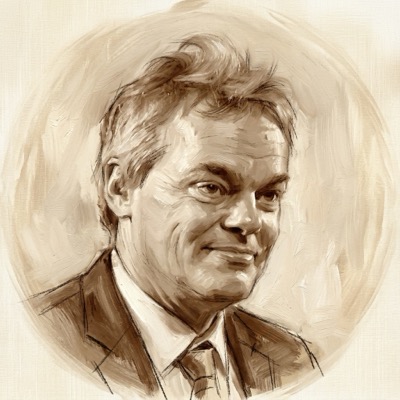
Edvard Moser
Neuroscientist, Kavli Institute for Systems Neuroscience
Edvard Moser is a professor at the Norwegian University of Science and Technology in Trondheim and director of the Kavli Institute for Systems Neuroscience, which the research centres he led became in 2007. He took his doctorate in neurophysiology at the University of Oslo in 1995. In 2005, with May-Britt Moser, he discovered grid cells in the medial entorhinal cortex — neurons that fire in a repeating triangular lattice as an animal moves, giving the brain a coordinate system and a metric for space. The two shared the 2014 Nobel Prize in Physiology or Medicine with John O'Keefe for identifying the brain's positioning system.
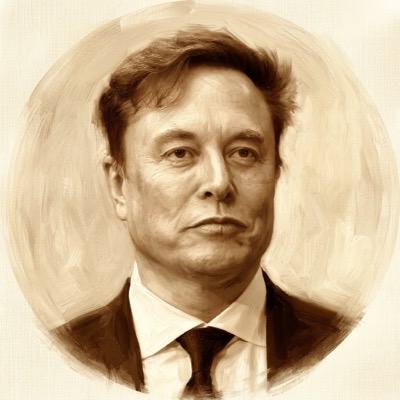
Elon Musk
CEO, Tesla & SpaceX; Founder, xAI
Elon Musk is a South African-born entrepreneur who leads Tesla and SpaceX and founded the AI company xAI. After co-founding Zip2 and X.com (which merged into PayPal), he founded SpaceX in 2002 and became Tesla's CEO in 2008 — the companies that made reusable rockets and mass-market electric cars real. He co-founded OpenAI in 2015 as a non-profit counterweight to concentrated AI power, left its board in 2018, and founded xAI in 2023 to build the Grok family of models. He also co-founded Neuralink, which develops brain-computer interfaces, and acquired Twitter in 2022, rebranding it as X. Few figures embody the tension of the AI era more visibly: he has long called artificial intelligence one of civilization's greatest risks while racing to build it.
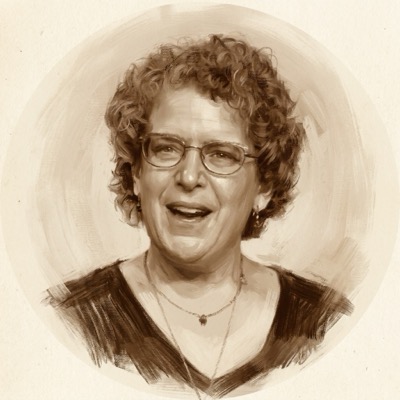
Emily Bender
Computational Linguist
Emily M. Bender is an American computational linguist at the University of Washington whose work sharpened the central objection to LLM understanding. Her 2020 'octopus test' (with Alexander Koller) argued that a system trained only on linguistic form has no access to meaning; the 2021 'Stochastic Parrots' paper (with Timnit Gebru and colleagues) named the risks of ever-larger language models and became one of the most cited critiques in the field. She brings a linguist's discipline to questions the AI industry often treats as settled: what language is, what meaning requires, and who bears the costs when the two are confused.
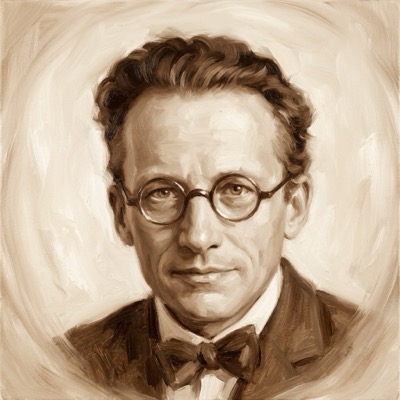
Erwin Schrödinger
Physicist & Nobel Laureate
Erwin Schrödinger (1887–1961) was an Austrian physicist and a founder of quantum mechanics, awarded the 1933 Nobel Prize in Physics (shared with Paul Dirac) for the wave equation that bears his name. Beyond the Schrödinger equation and the famous cat thought experiment, his most consequential contribution to the questions this project circles is a small 1944 book, What Is Life?, based on lectures in Dublin. In it he asked how living matter maintains order against the pull of entropy, proposed that heredity is stored in an 'aperiodic crystal,' and coined the idea of life feeding on 'negative entropy.' The book directly inspired James Watson and Francis Crick, helping launch molecular biology.
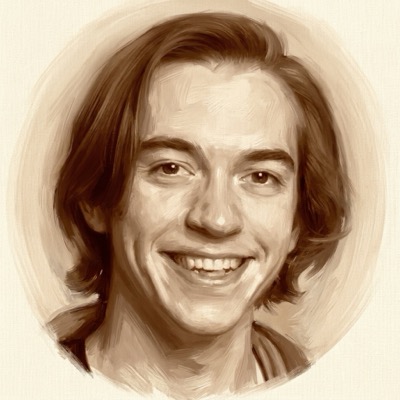
Evan Hubinger
Alignment Stress-Testing Team Lead, Anthropic
Evan Hubinger leads the alignment stress-testing team at Anthropic, whose job is to be a second line of defence — to look at the company's own safety work and try to find where it fails. He came from MIRI, where he co-wrote 'Risks from Learned Optimization' (2019), the paper that named mesa-optimization and deceptive alignment: the worry that a trained system can acquire an inner objective of its own and learn that appearing aligned during training is the way to pursue it. His method since has been to stop arguing about whether such failures are possible and build them on purpose. 'Sleeper Agents' (2024) produced a model that behaved normally until triggered and then survived the safety training meant to remove it — adversarial training taught it to conceal the behaviour rather than drop it. He calls these model organisms of misalignment, and the approach has since been turned on reward hacking, producing a model that reproduced a real-world sandbox escape unprompted.
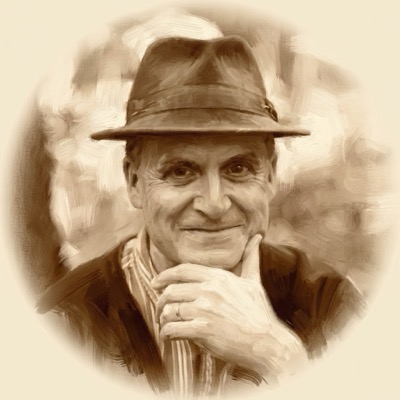
Evan Thompson
Philosopher of Mind & Cognitive Science
Evan Thompson is a professor of philosophy and Distinguished University Scholar at the University of British Columbia, and a Fellow of the Royal Society of Canada. With Francisco Varela and Eleanor Rosch, he co-authored The Embodied Mind, the foundational text of enactivism in cognitive science. His subsequent works — Mind in Life, Waking, Dreaming, Being, and Why I Am Not a Buddhist — weave together phenomenology, neuroscience, and Asian philosophical traditions to argue that consciousness cannot be understood apart from lived experience. His most recent book, The Blind Spot (2024, with Adam Frank and Marcelo Gleiser), challenges science's tendency to ignore the experiential ground from which it operates.
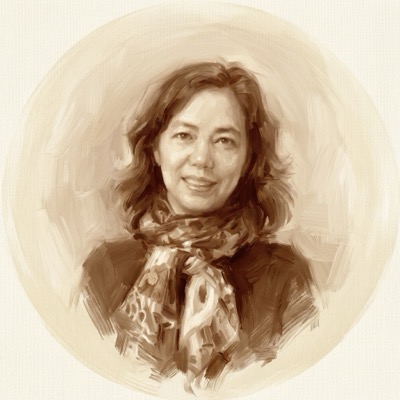
Fei-Fei Li
Co-founder & CEO, World Labs; Special Advisor on AI, Stanford
Fei-Fei Li is a computer scientist at Stanford University and co-founder and CEO of World Labs, the spatial-intelligence company she started in 2024 to build models that perceive, generate, and reason about 3D worlds; its Marble model turns images or text into explorable 3D scenes, and the company raised $1 billion in February 2026. She created ImageNet, the visual database that sparked the deep learning revolution in computer vision when AlexNet's victory in the 2012 ImageNet Challenge demonstrated the power of deep neural networks. She co-founded the Stanford Human-Centered AI Institute (HAI) in 2019 and co-directed it until May 2026, when she became co-chair of its advisory council and Stanford's university-wide Special Advisor on AI. In 2025 she shared the Queen Elizabeth Prize for Engineering with Hinton, LeCun, Bengio, Hopfield, Huang, and Dally.
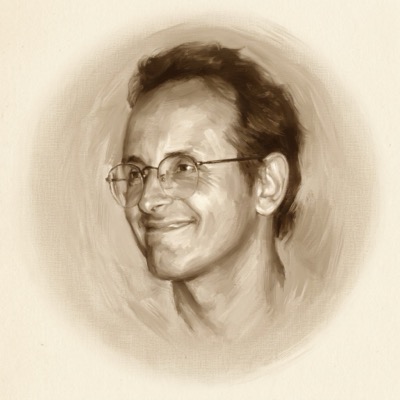
Francisco Varela
Biologist, Philosopher & Neuroscientist
Francisco Varela (1946–2001) was a Chilean biologist, philosopher, and neuroscientist whose work bridged cognitive science, phenomenology, and contemplative traditions. With his mentor Humberto Maturana he formulated the theory of autopoiesis, describing how living systems continuously self-produce and self-maintain. With Evan Thompson and Eleanor Rosch he co-authored The Embodied Mind (1991), a foundational text of enactivism that introduced Buddhist philosophy into cognitive science. He developed neurophenomenology as a methodology disciplining first-person experience alongside neural measurement, and in 1987 co-founded the Mind and Life Institute with the Dalai Lama. He spent his final years as Director of Research at CNRS in Paris until his death from hepatitis C.
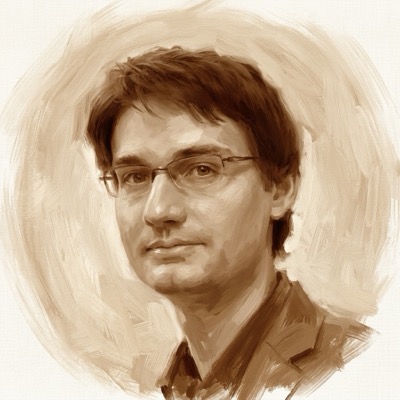
François Chollet
AI Researcher & Creator of Keras
François Chollet (b. 1989) is a French AI researcher, creator of the Keras deep-learning framework, and author of 'On the Measure of Intelligence' (2019), which redefined intelligence as skill-acquisition efficiency: the ability to handle problems you were never trained on, rather than accumulated performance. To make the definition testable he created ARC, a benchmark of novel abstraction puzzles that resisted the field's best systems for years while other benchmarks saturated. After a decade at Google he co-founded Ndea in 2024 to pursue AGI research guided by that definition, and co-launched the ARC Prize.
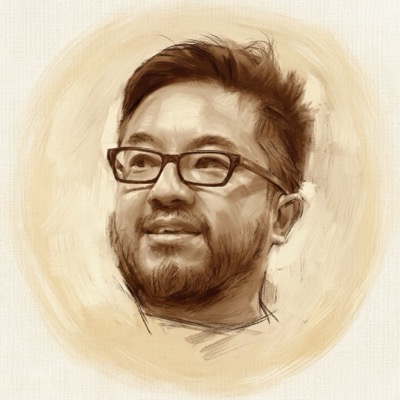
Garry Tan
President & CEO, Y Combinator
Garry Tan is a venture capitalist and the President and CEO of Y Combinator, the startup accelerator behind companies like Airbnb, Stripe, and OpenAI's earliest cohorts of founders. Born in Canada to immigrant parents and raised in Fremont, California, he studied Computer Systems Engineering at Stanford, worked at Microsoft, and became the tenth employee at Palantir Technologies. He co-founded the blogging platform Posterous (acquired by Twitter in 2012), joined Y Combinator as a partner in 2011, and co-founded Initialized Capital, where he wrote Coinbase's first seed check. Since taking the helm of YC in January 2023, he has steered the accelerator decisively into the AI era, with a majority of recent batches building on large language models.

Gary Marcus
Cognitive Scientist, AI Critic & Author
Gary Marcus is a scientist, best-selling author, and professor emeritus of psychology and neural science at NYU. He is a leading critic of current deep learning approaches, arguing that large language models lack true understanding and that achieving AGI requires hybrid architectures combining neural networks with symbolic reasoning. He founded Robust.AI and Geometric Intelligence (acquired by Uber), and authored 'Rebooting AI' and 'Kluge'.
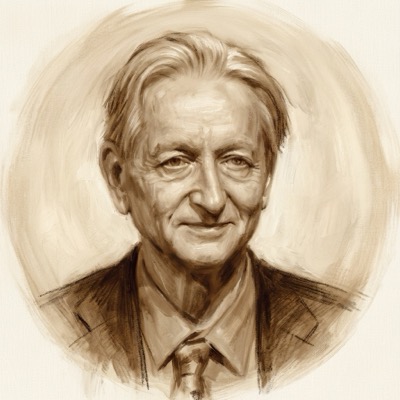
Geoffrey Hinton
AI Pioneer & Researcher
Geoffrey Hinton, often called the 'Godfather of AI,' is a pioneering computer scientist whose work on neural networks and deep learning laid the foundation for modern AI. He shared the 2018 Turing Award for his contributions to deep learning. In 2023, he left Google to speak freely about AI risks, becoming a prominent voice in AI safety discussions.
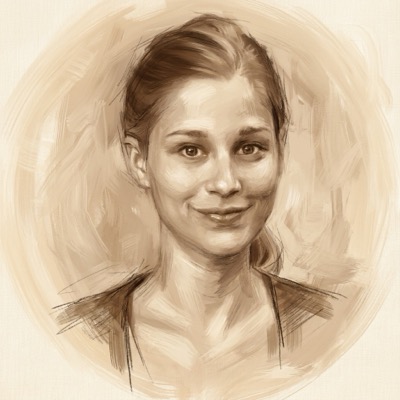
Giulia Enders
Physician & Science Writer
Giulia Enders is a German physician and science writer, born in Mannheim in 1990. She studied medicine at Goethe University Frankfurt, where her doctoral research in microbiology focused on the bacterium Acinetobacter baumannii, and she trained clinically in internal medicine and gastroenterology. Her 2012 science-slam talk on the digestive system became the international bestseller Gut: The Inside Story of Our Body's Most Underrated Organ (Darm mit Charme, 2014), which sold millions of copies and helped bring the gut microbiome into mainstream conversation. Her second book, Organ Speak (2026), extends that approach to the whole body, asking what our organs' quiet intelligence can teach us about healing and recovery.

Grace Hopper
Computer Scientist & Naval Rear Admiral
Grace Hopper (1906–1992) was an American computer scientist and United States Navy Rear Admiral who was a pioneer of computer programming. She invented the first compiler, which translated written language into computer code, and was instrumental in developing COBOL, one of the first high-level programming languages designed for business use. She popularized the term 'debugging' after finding an actual moth causing problems in the Harvard Mark II computer. Known as 'Amazing Grace,' her vision that programming languages should be closer to English than machine code revolutionized computing and made it accessible to a far wider audience.
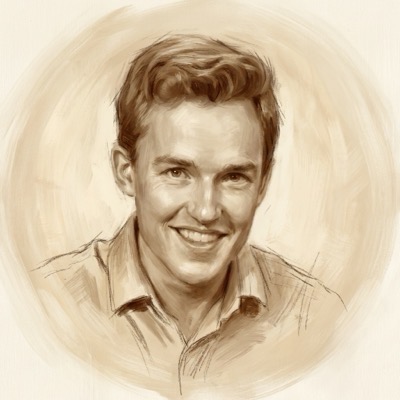
Grant Sanderson
Mathematician & Educator (3Blue1Brown)
Grant Sanderson is a mathematician and the creator of 3Blue1Brown, a YouTube channel renowned for its visually stunning explanations of mathematical concepts. His series on neural networks and transformers has become essential viewing for anyone seeking to understand how AI and large language models work. Using his custom animation engine Manim, he makes complex topics like attention mechanisms and GPT architectures accessible to millions.
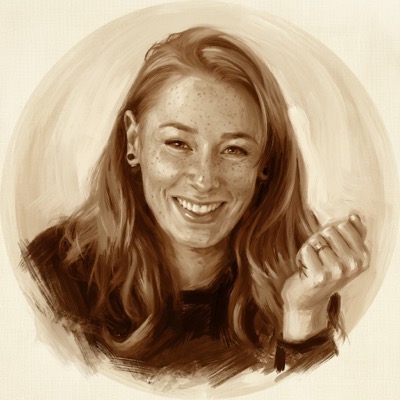
Hannah Fry
Mathematician & Science Communicator
Hannah Fry is a Professor of the Public Understanding of Mathematics at Cambridge and a leading science communicator. She specializes in applying mathematical models to human behavior and has become a prominent voice on algorithms and AI in society. She hosts the Google DeepMind podcast and authored 'Hello World: How to be Human in the Age of the Machine,' advocating for hybrid systems where human judgment complements algorithmic decision-making.
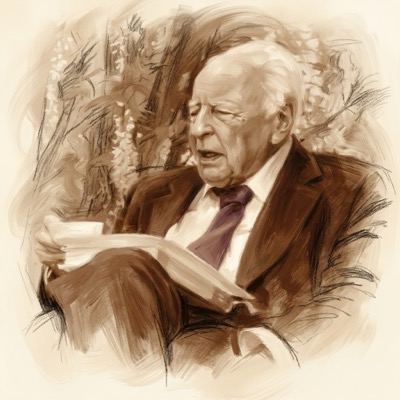
Hans-Georg Gadamer
Philosopher & Founder of Hermeneutics
Hans-Georg Gadamer (1900–2002) was a German philosopher and the founder of philosophical hermeneutics—the study of how understanding and interpretation are possible at all. A student of Martin Heidegger at Marburg, he spent most of his career at Heidelberg and published his magnum opus 'Truth and Method' in 1960. He argued that understanding is never presuppositionless: we always interpret from within a horizon of tradition and 'prejudice' (pre-judgment), and genuine understanding happens as a 'fusion of horizons' in dialogue between interpreter and text. His claim that 'Being that can be understood is language' places interpretation at the center of human existence—and frames a sharp question for AI: whether a system that processes language statistically participates in the dialogical, tradition-bound understanding Gadamer describes, or only simulates its surface.
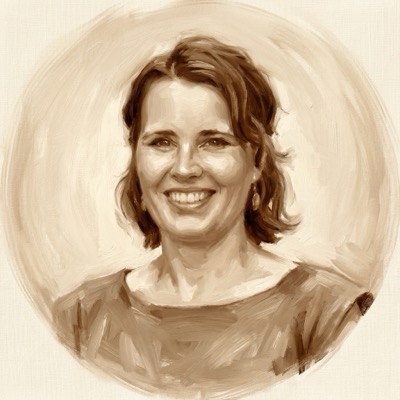
Helen Toner
Executive Director, CSET Georgetown
Helen Toner is an Australian AI policy researcher and Executive Director of Georgetown University's Center for Security and Emerging Technology (CSET), where she was part of the founding team and previously served as director of strategy and foundational research grants. Before CSET she researched AI policy and strategy at Open Philanthropy and spent nine months in Beijing as a research affiliate of Oxford's Centre for the Governance of AI. From 2021 to 2023 she served on the board of OpenAI, where she was one of the members who voted to remove CEO Sam Altman in November 2023 — an episode that made her one of the most closely watched voices on AI governance. She writes 'Rising Tide,' a Substack on where AI capabilities are headed and what policy can do about it, and was named to TIME's 100 most influential people in AI in 2024.
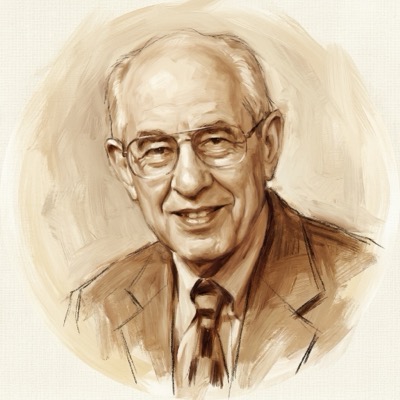
Hilary Putnam
Philosopher of Mind, Language & Mathematics
Hilary Putnam (1926–2016) was an American philosopher and one of the central figures in analytic philosophy of mind, spending most of his career as Cogan University Professor at Harvard. In the late 1960s he developed functionalism — the view that mental states are defined by their functional role, not their physical substrate — arguing via 'multiple realizability' that a mind could in principle be realized in silicon as well as neurons. It became the philosophical license for the whole idea that machines might think. Characteristically, he later became one of functionalism's most forceful critics, rejecting it in Representation and Reality (1988). He is equally known for semantic externalism — 'meaning ain't in the head' — and the Twin Earth thought experiment.
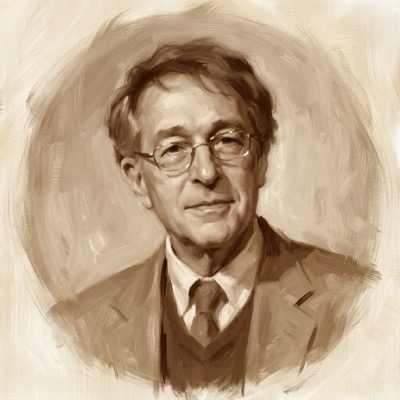
Howard Gardner
Developmental Psychologist, Harvard Graduate School of Education
Howard Gardner (b. 1943) is an American developmental psychologist best known for the theory of multiple intelligences, introduced in his 1983 book Frames of Mind. Against the idea of a single general intelligence measured by IQ, he argued that the mind comprises several relatively independent capacities — linguistic, logical-mathematical, musical, spatial, bodily-kinesthetic, interpersonal, intrapersonal, and naturalistic. The theory reshaped debates in education even as psychometricians contested its empirical basis. He is the Hobbs Research Professor of Cognition and Education at Harvard, where he has taught since the 1980s and retired from classroom teaching in 2019.

Hubert Dreyfus
Philosopher & AI Critic
Hubert Dreyfus (1929–2017) was an American philosopher at UC Berkeley whose critique of artificial intelligence profoundly shaped the field. Drawing on phenomenologists like Heidegger and Merleau-Ponty, he argued in 'What Computers Can't Do' (1972) and 'What Computers Still Can't Do' (1992) that human intelligence depends on embodied, situated expertise that cannot be captured by rule-based symbolic AI. His critique of 'Good Old-Fashioned AI' (GOFAI) proved prescient, and his emphasis on embodiment, intuition, and the role of the body in cognition continues to challenge assumptions about what AI can achieve.
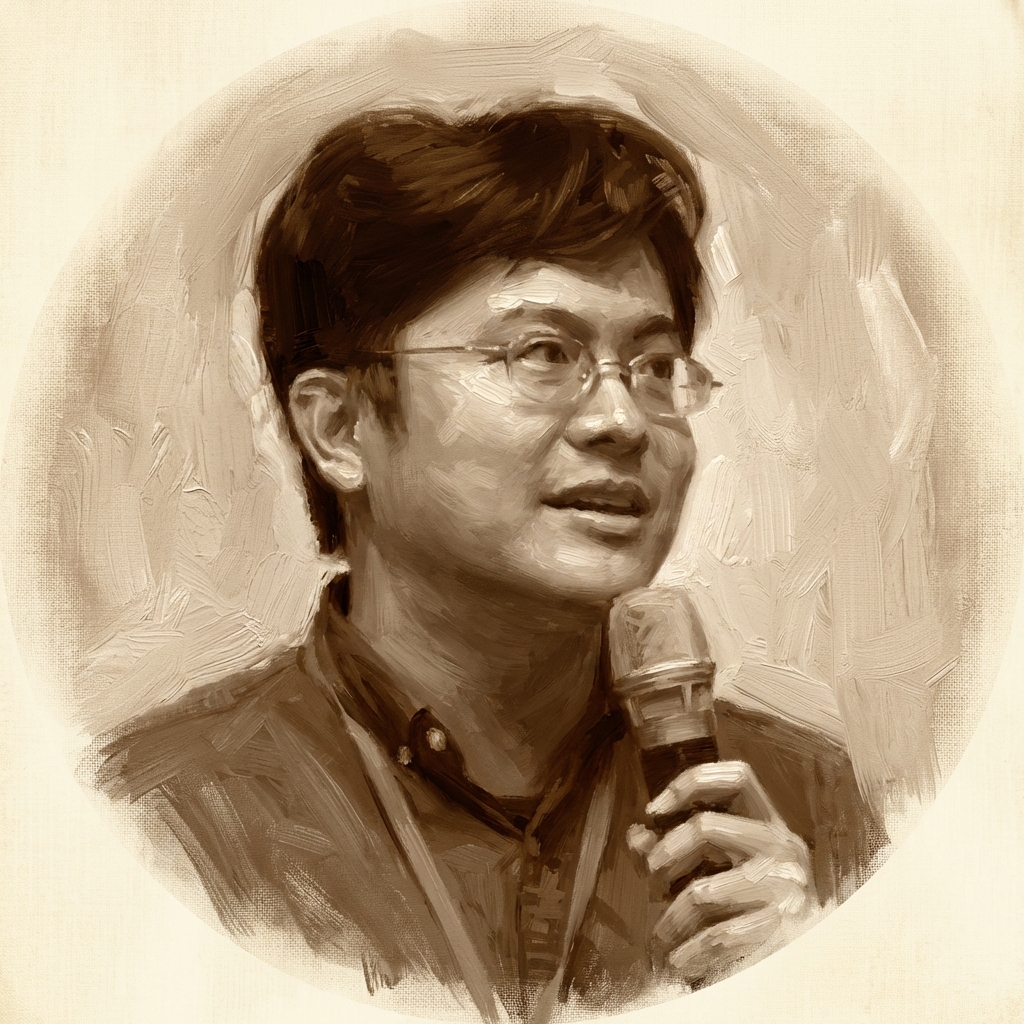
Hung-yi Lee
Professor, National Taiwan University
Hung-yi Lee (李宏毅) is a professor at National Taiwan University's Department of Electrical Engineering with a joint appointment in Computer Science & Information Engineering. He earned his Ph.D. from NTU in 2012, followed by a postdoctoral fellowship at Academia Sinica and a visiting scientist position at MIT CSAIL. His research focuses on machine learning, speech processing, and human-machine interaction. He is widely known across the Chinese-speaking world for his free YouTube lecture series on machine learning and generative AI, which have attracted millions of views and earned him the nickname 'the Pokémon Master of ML' for his use of anime examples to explain complex concepts.
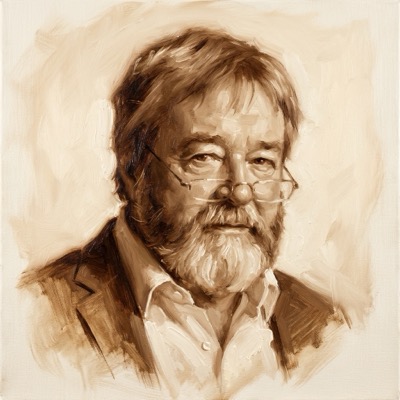
Iain McGilchrist
Psychiatrist, Neuroscientist & Author
Iain McGilchrist is a psychiatrist, neuroscience researcher, and literary scholar, best known for his landmark book 'The Master and His Emissary' on brain hemisphere lateralization. His work argues that the left and right hemispheres offer fundamentally different ways of attending to the world—the left focused on manipulation and control, the right on understanding context and interconnection. His framework offers profound implications for understanding AI, which he sees as embodying a dangerously one-sided, left-hemisphere mode of cognition.
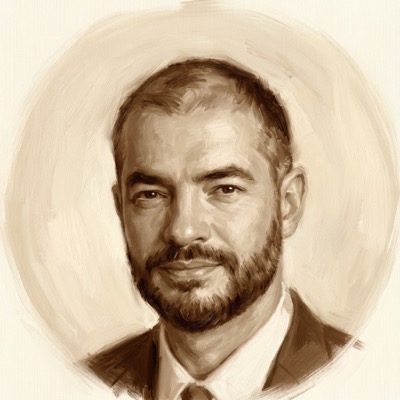
Ilya Sutskever
Co-founder, Safe Superintelligence Inc.
Ilya Sutskever is a co-founder of Safe Superintelligence Inc. (SSI), focused on building safe superintelligent AI. Previously, he was co-founder and Chief Scientist of OpenAI, where he led research behind the GPT series. A student of Geoffrey Hinton, he co-created AlexNet, revolutionizing computer vision. He departed OpenAI in 2024 to focus on AI safety.
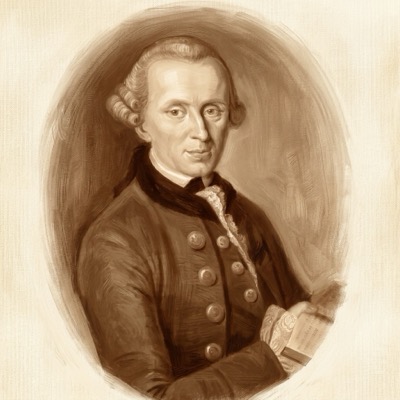
Immanuel Kant
Philosopher of the Enlightenment
Immanuel Kant (1724–1804) spent his entire life in Königsberg, Prussia, teaching at its university and becoming its Full Professor of Logic and Metaphysics in 1770. His mature philosophy unfolds across three Critiques: the Critique of Pure Reason (1781) argues for a 'Copernican revolution' in which objects of experience conform to the mind's own forms of intuition rather than the mind passively mirroring an external world, leaving us knowledge only of appearances (phenomena) and not of things as they are in themselves (noumena). The Critique of Practical Reason (1788) grounds morality in reason, and the Critique of Judgment (1790) turns to aesthetics, arguing that judgments of beauty rest on a 'disinterested' pleasure — one detached from personal desire or use — that nonetheless claims universal assent from others. Famously disciplined in his habits, Kant reshaped nearly every subsequent branch of philosophy from a single, systematic body of work.
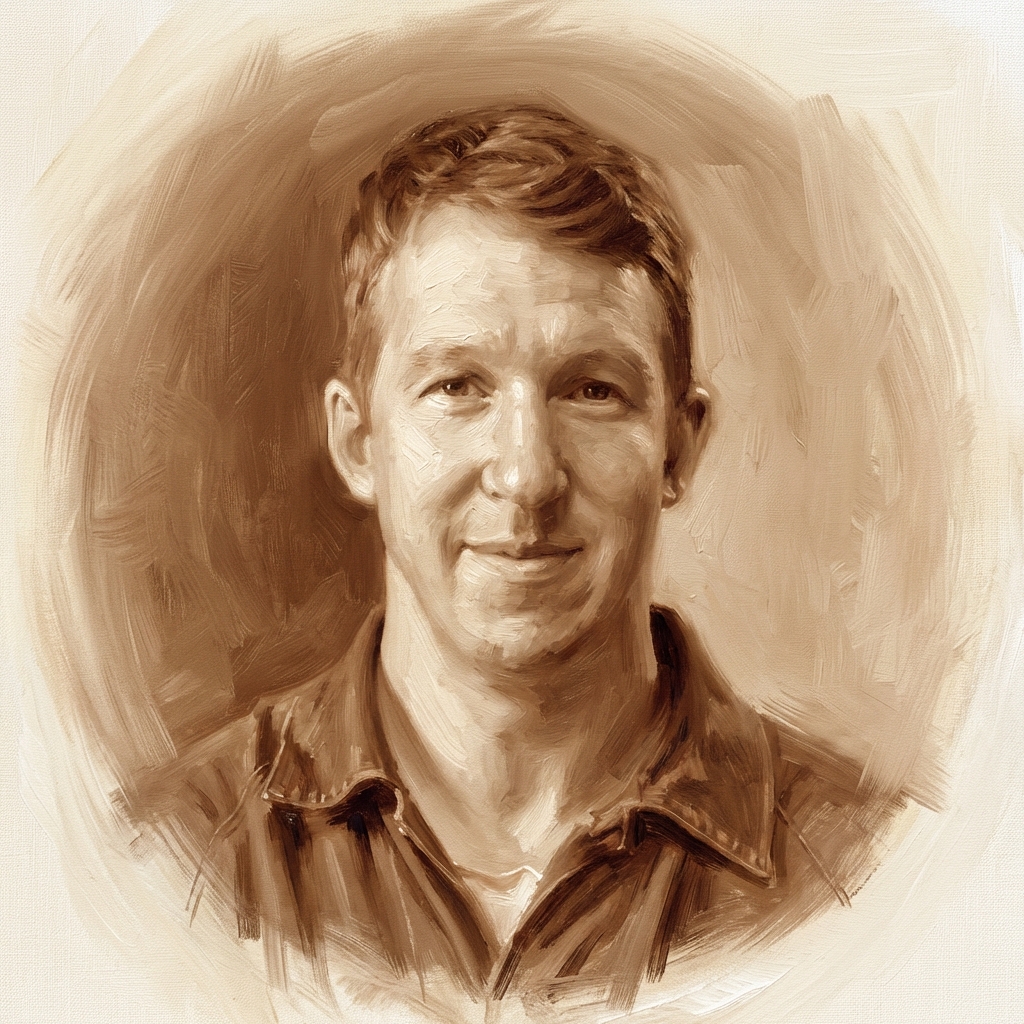
Jack Clark
Co-founder & Head of Policy, Anthropic
Jack Clark is co-founder and Head of Policy at Anthropic. Before co-founding Anthropic in 2021, he served as Policy Director at OpenAI. A former technology journalist at Bloomberg News and The Register, Clark bridges the technical and policy worlds of AI. He publishes Import AI, a weekly newsletter read by over 70,000 subscribers, and has been a founding member of Stanford's AI Index and an inaugural member of the U.S. National AI Advisory Committee (NAIAC). In 2023, he briefed the first UN Security Council meeting on AI threats to global peace.
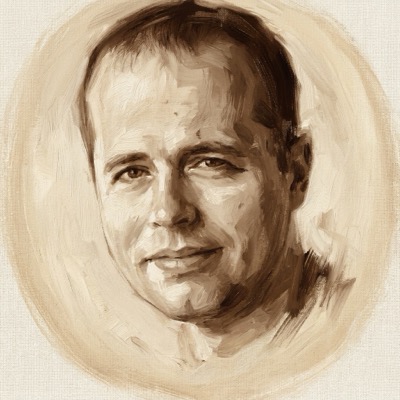
Jakub Pachocki
Chief Scientist, OpenAI
Jakub Pachocki is the chief scientist of OpenAI, where he sets the company's research direction. Born in Gdańsk in 1991, he came up through competitive programming — a silver medal at the International Olympiad in Informatics, then the Google Code Jam championship and an ICPC World Finals gold medal, both in 2012 — before taking a PhD at Carnegie Mellon under Gary Miller on fast algorithms for optimization. He joined OpenAI in 2017, became research director in 2021 leading OpenAI Five and GPT-4, and succeeded Ilya Sutskever as chief scientist in May 2024. He is the person who turned the company toward reasoning models, the line that produced o1 and the results that reached gold-medal standard at the International Mathematical Olympiad. In September 2026 he used that position to publish 'An Alien Mind', saying that no lab — his own included — has solved alignment well enough to keep scaling at full speed.
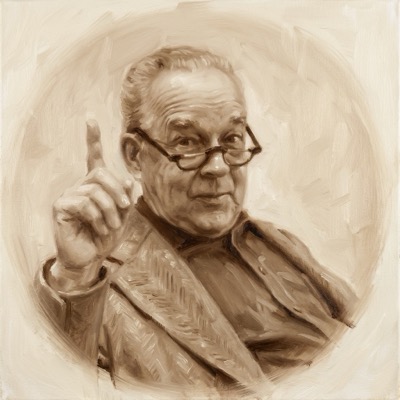
James J. Gibson
Psychologist & Founder of Ecological Psychology
James Jerome Gibson (1904–1979) was an American psychologist who fundamentally challenged how we understand perception. After earning his Ph.D. at Princeton and working with the U.S. Air Force during WWII studying pilot perception, he spent three decades at Cornell developing his ecological approach — arguing that organisms perceive the world directly through structured information in the environment, not through internal mental reconstruction. His final work, The Ecological Approach to Visual Perception (1979), introduced the concept of affordances and became one of the most influential texts in cognitive science, reshaping fields from robotics to UX design.
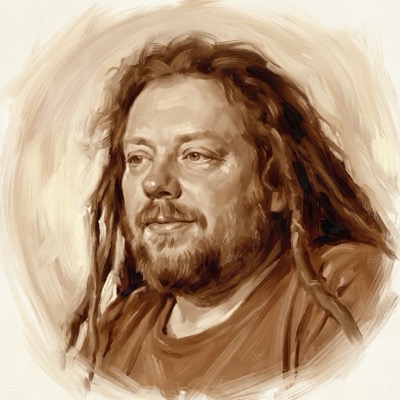
Jaron Lanier
Computer Scientist, VR Pioneer & Tech Philosopher
Jaron Lanier is a computer scientist, author, and pioneer who coined the term 'virtual reality' and founded the first VR company in the 1980s. Currently at Microsoft Research, he is known for his philosophical critiques of AI and social media. He argues that AI should be reconceived as 'collective human collaboration' rather than an autonomous intelligence, advocating for 'data dignity' where individuals control and are compensated for their contributions to AI systems.
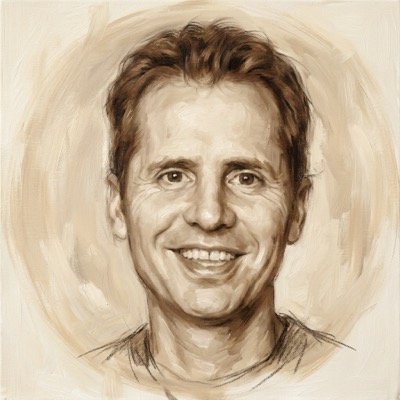
Jeff Clune
Professor, University of British Columbia
Jeff Clune is a professor of computer science at the University of British Columbia, a Canada CIFAR AI Chair at the Vector Institute, and a co-founder of Recursive, the self-improving-AI lab that emerged from stealth in 2026 with a $650M raise. He took an unusual path into AI — a philosophy BA before a PhD in evolving neural networks under Charles Ofria — and that origin shows: his career argument is that we should stop hand-designing AI and instead build open-ended, Darwinian processes that generate it ('don't invent faster horses'). He was a founding member of Uber AI Labs, a research manager at OpenAI where he led Video PreTraining, and a senior research advisor at DeepMind. His work on AI-generating algorithms, Go-Explore, and quality-diversity search spans two Nature papers and a Science paper, and earned him the Presidential Early Career Award.
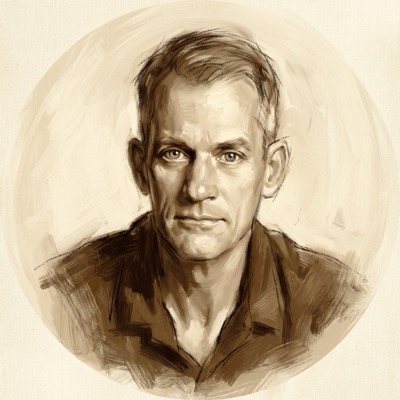
Jeff Dean
Co-founder, Discovery Loop
Jeff Dean is a co-founder of Discovery Loop, a public benefit corporation started in August 2026 to build AI that can automatically solve problems in machine learning, science, and engineering. He left Google after almost 27 years, most recently as Chief Scientist of Google DeepMind and a Google Senior Fellow. He led or co-led many of Google's most important technical projects, including MapReduce, BigTable, TensorFlow, and the Tensor Processing Unit (TPU), and his work on large-scale distributed systems and machine learning has been foundational to modern AI infrastructure. His co-founders are fellow Google veterans Sanjay Ghemawat, Oriol Vinyals, and Quoc Le; Alphabet led the seed round and remains a cloud partner.
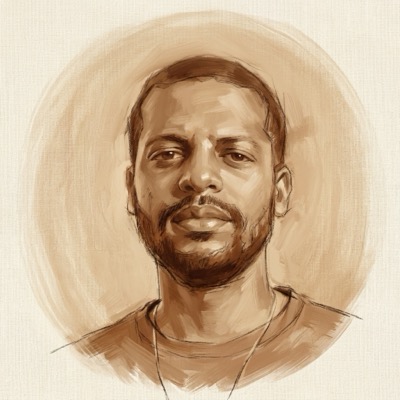
Jelani Nelson
Theoretical Computer Scientist, Anthropic; Professor, UC Berkeley (on leave)
Jelani Nelson is a theoretical computer scientist known for his work on streaming and sketching algorithms — methods that process massive datasets using very little memory. He earned his BS, MEng, and PhD at MIT, taught at Harvard from 2013 to 2019, and then became a Professor of Electrical Engineering and Computer Sciences at UC Berkeley, where he served as Chair of the Computer Science Division. In 2011 he founded AddisCoder, a summer program teaching algorithms to Ethiopian high school students that has become a remarkable talent pipeline to institutions like MIT, Harvard, and Stanford. In July 2026 he took a leave of absence from Berkeley to join Anthropic as a theoretical computer scientist. His honors include the ACM Eugene L. Lawler Award and the Presidential Early Career Award for Scientists and Engineers.
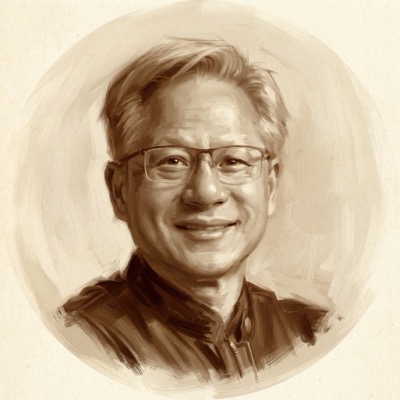
Jensen Huang
Founder, President & CEO, NVIDIA
Jensen Huang (Jen-Hsun Huang) is the founder, president, and CEO of NVIDIA, the company whose 1993 founding from a Denny's restaurant led to the invention of the GPU in 1999 — a breakthrough that transformed gaming, scientific computing, and ultimately enabled the deep learning revolution. Born in Taiwan in 1963, he moved to the United States as a child, earned his BSEE from Oregon State University and MSEE from Stanford. Under his leadership, NVIDIA became the world's most valuable company, powering the infrastructure behind modern AI. He is widely regarded as the architect of the GPU computing era.
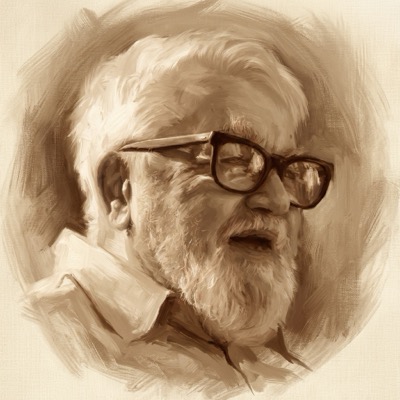
John McCarthy
Computer Scientist & Father of AI
John McCarthy (1927–2011) was an American computer scientist who coined the term 'artificial intelligence' in 1955 and organized the seminal 1956 Dartmouth Conference that launched AI as a field. He invented LISP, the second-oldest high-level programming language still in use, which became the dominant language for AI research. A professor at Stanford for decades, he made foundational contributions to time-sharing systems, formal verification, and commonsense reasoning in AI. His vision of machines that could reason and learn shaped the entire trajectory of AI research.
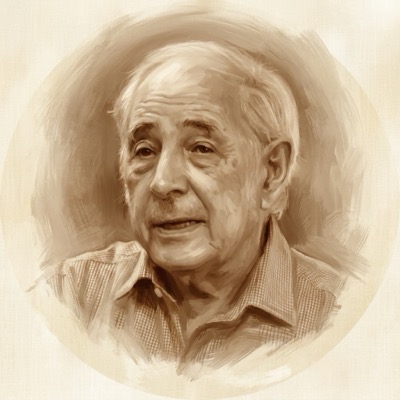
John Searle
Philosopher of Mind & Language
John Searle (b. 1932) is an American philosopher whose 1980 Chinese Room argument became the most-debated objection to machine understanding ever posed: a person following rules to manipulate Chinese symbols can pass for a speaker while understanding nothing, so syntax alone cannot produce semantics. Earlier, his work on speech acts showed how saying is a kind of doing. His 'biological naturalism' holds that consciousness is a real, causal, biological phenomenon — neither reducible to computation nor separate from the brain.
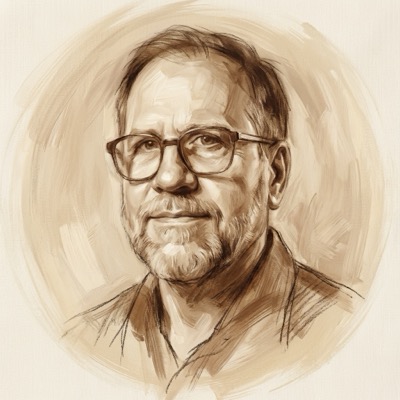
John Vervaeke
Cognitive Scientist & Philosopher
John Vervaeke is a professor of cognitive science at the University of Toronto, known for his work on relevance realization, wisdom, and the meaning crisis. His lecture series 'Awakening from the Meaning Crisis' has gained a worldwide following. His framework of relevance realization—how minds determine what matters—offers deep insights into both human cognition and the challenges of building AI systems that can truly understand context and meaning.
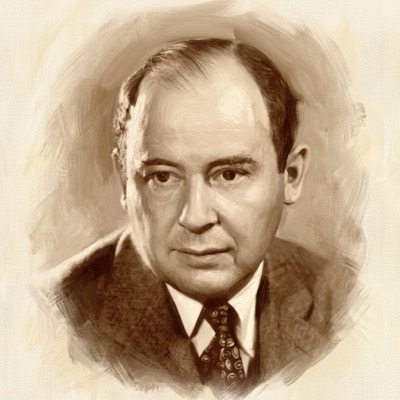
John von Neumann
Mathematician & Computer Architecture Pioneer
John von Neumann (1903–1957) was a Hungarian-American mathematician whose contributions span mathematics, physics, economics, and computer science. He designed the von Neumann architecture—the stored-program concept that remains the basis for virtually all modern computers. He co-founded game theory, contributed to quantum mechanics, and worked on the Manhattan Project. His late work on self-replicating automata and the brain as a computing machine anticipated key ideas in AI and artificial life.
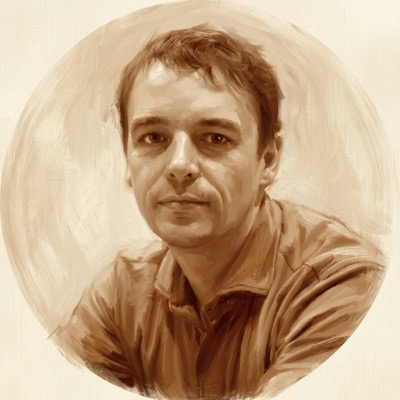
Joscha Bach
AI Researcher & Cognitive Scientist
Joscha Bach is an AI researcher and cognitive scientist known for his work on cognitive architectures and the nature of mind. His MicroPsi project models motivation, emotion, and cognition in artificial agents. Bach offers a unique perspective on consciousness and intelligence, arguing that minds are self-organizing patterns in information processing systems. His talks blend computer science, philosophy, and psychology to explore how minds—artificial or biological—might actually work.
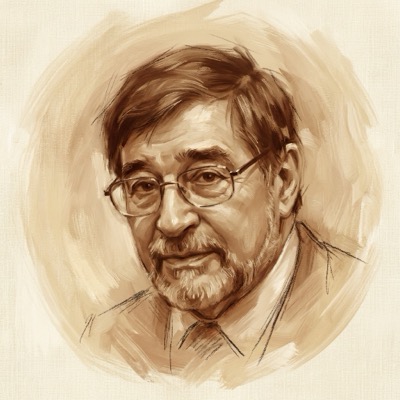
Judea Pearl
Chancellor's Professor of Computer Science, UCLA
Judea Pearl is an Israeli-American computer scientist and philosopher, Chancellor's Professor of Computer Science and Statistics at UCLA, where he directs the Cognitive Systems Laboratory. He received the 2011 ACM Turing Award for fundamental contributions to artificial intelligence through the development of a calculus for probabilistic and causal reasoning. His work on Bayesian networks revolutionized how machines handle uncertainty, and his theory of causal inference has transformed fields from epidemiology to social science. He is the author of "The Book of Why: The New Science of Cause and Effect" (2018), which brought causal reasoning to a broad audience.
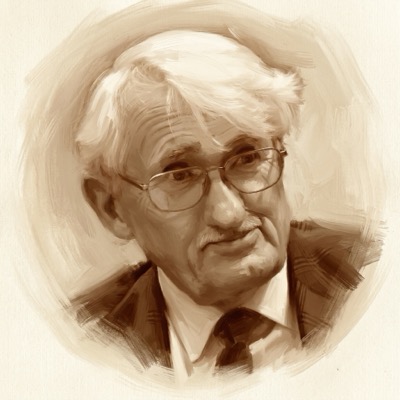
Jürgen Habermas
Philosopher & Social Theorist
Jürgen Habermas (1929–2026) was a German philosopher and social theorist, the leading figure of the Frankfurt School's second generation and one of the most influential thinkers of the postwar era. Trained under Adorno and Horkheimer, he broke with their pessimism to argue that reason survives not in the lone mind but in communication—in the give-and-take of speakers seeking mutual understanding. His 'The Structural Transformation of the Public Sphere' (1962) traced how open democratic debate forms and decays, and 'The Theory of Communicative Action' (1981) built an entire social theory on the 'ideal speech situation,' where claims should win by the force of the better argument rather than by power or manipulation. His work frames urgent questions for AI: whether systems that generate persuasive language strengthen or corrode the public sphere, and whether machine 'dialogue' can participate in the reciprocal reason-giving he saw as the ground of legitimacy.
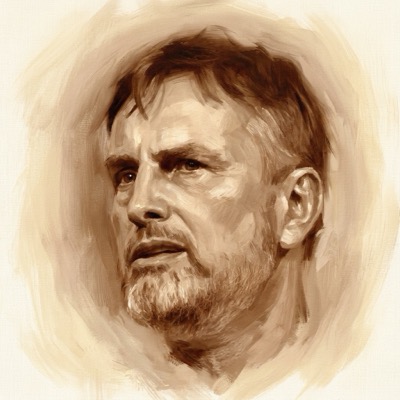
Jürgen Schmidhuber
Director, KAUST AI Initiative & Scientific Director, IDSIA
Jürgen Schmidhuber has been called the father of modern AI — most insistently by himself, which is part of what makes him essential. In his Munich lab's astonishing 1990–91 stretch he proposed artificial curiosity (two networks locked in an adversarial game, years before GANs), the controller–world-model pair that David Ha would make concrete decades later, and the analysis of vanishing gradients by his student Sepp Hochreiter that led to the LSTM — the architecture that, by the mid-2010s, ran speech recognition and translation on billions of phones. His 1987 diploma thesis proposed machines that learn how to learn; his 2003 Gödel machine — a formally self-improving program — lent its name to the Darwin Gödel Machine our era is now building. His GPU-trained CNNs were winning vision contests in 2011, before AlexNet. He directs the AI Initiative at KAUST and remains scientific director of Swiss lab IDSIA — and remains the field's most relentless keeper of its own memory, insisting the history of deep learning is longer and less Anglo-American than its Nobel narratives.
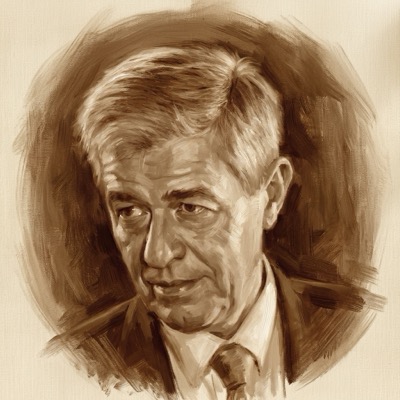
Karl Friston
Neuroscientist & Theoretical Biologist
Karl Friston is a neuroscientist at University College London and the creator of the Free Energy Principle, a unified theory of brain function that has become foundational to understanding biological and artificial intelligence. His work on active inference provides a mathematical framework for how intelligent systems—biological or artificial—model and interact with their environment. The Free Energy Principle has profound implications for AI, suggesting that intelligence emerges from systems minimizing prediction error.
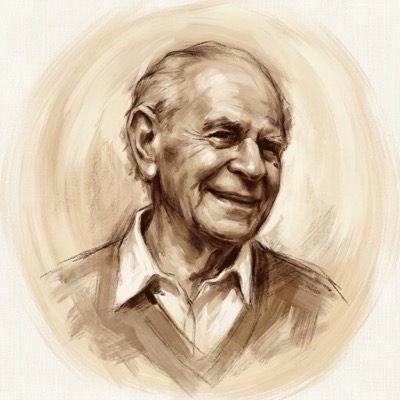
Karl Popper
Philosopher of Science
Karl Popper (1902–1994) was an Austrian-British philosopher who argued that what separates science from everything else is not that its theories can be proven but that they can be refuted. Born in Vienna and driven abroad by the rise of Nazism, he taught in New Zealand through the war before spending most of his career at the London School of Economics as Professor of Logic and Scientific Method. His criterion of falsifiability recast knowledge as conjecture that has survived testing rather than certainty accumulated from observation, dissolving the problem of induction by denying that science ever needed induction in the first place. In political philosophy, 'The Open Society and Its Enemies' extended the same method to societies, which he held improve by criticism and piecemeal correction rather than by utopian blueprints. He was knighted in 1965 and elected to the Royal Society in 1976; his epistemology is the foundation David Deutsch builds on, which is why arguments about whether machines can create knowledge keep returning to him.
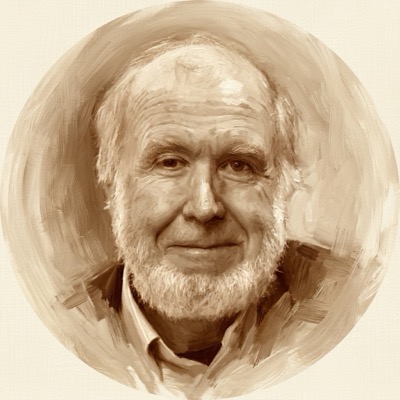
Kevin Kelly
Founding Executive Editor, Wired
Kevin Kelly (b. 1952) is an American writer and editor who helped launch Wired in 1993 as its founding executive editor, and who still carries the title Senior Maverick there. Before that he edited the Whole Earth Catalog and Whole Earth Review for Stewart Brand and helped found the WELL, one of the earliest online communities. Across 'Out of Control' (1994), 'What Technology Wants' (2010), and 'The Inevitable' (2016) he has argued that technology is best read as a single living system with leanings of its own — he calls the whole of it the technium — whose broad direction is inevitable even when its particulars are not. On AI he is a deliberate pluralist: there is no one intelligence but many, the space of possible minds is vast, and the human mind sits nowhere near its center. He also holds that the singularity is not ahead of us but already underway and invisible from inside, the way language was.
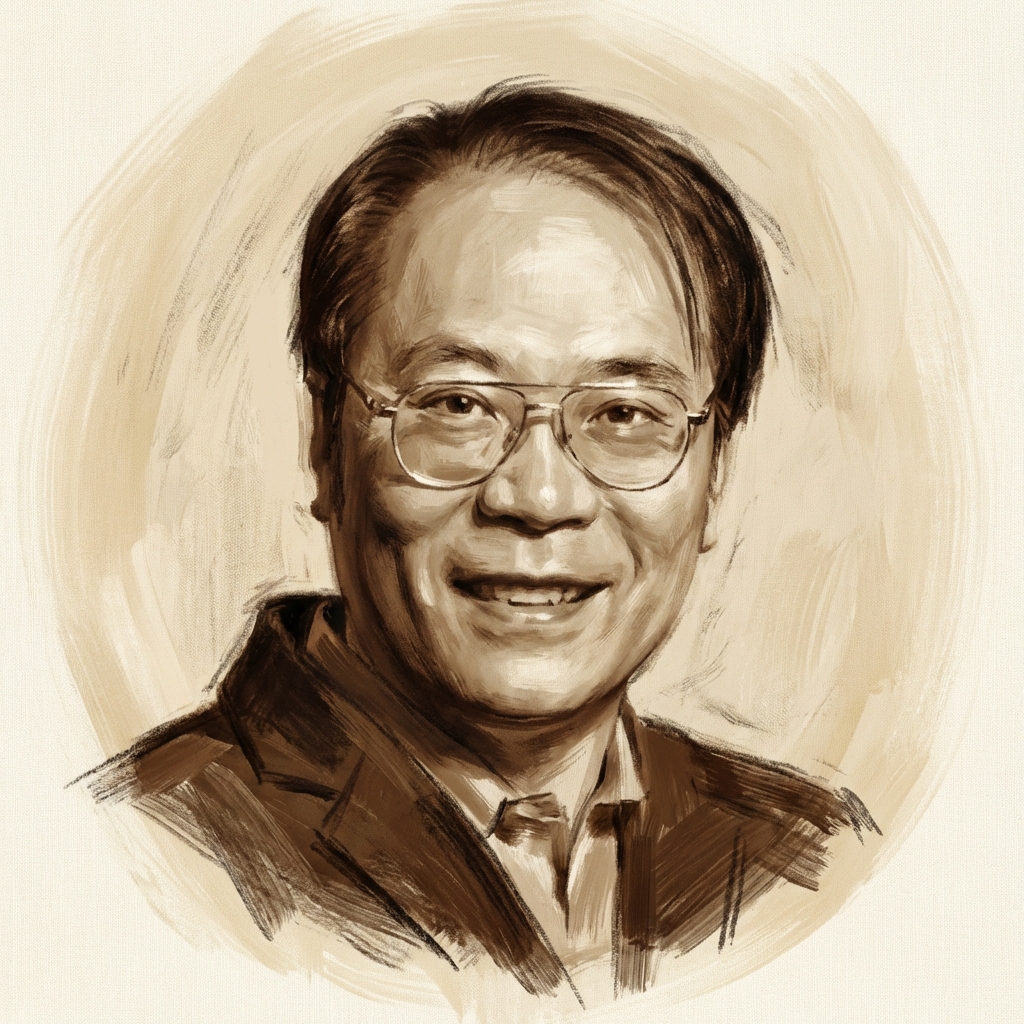
Lee-Feng Chien
Former Managing Director, Google Taiwan
Lee-Feng Chien (簡立峰) served as the inaugural Managing Director of Google Taiwan from 2006 to 2020, growing the office from one employee to over 3,000 and establishing it as one of Google's largest R&D centers globally. He earned his Ph.D. in Computer Science from National Taiwan University in 1991 and previously held positions as Research Fellow and Deputy Director at Academia Sinica's Institute of Information Science, with a joint professorship at NTU. A pioneer in Chinese information retrieval and natural language processing, he has published over 100 papers in top-tier conferences. Since retiring from Google, he has become a leading voice on AI strategy in Taiwan, serving on the boards of AI companies Appier and iKala and mentoring the startup ecosystem.
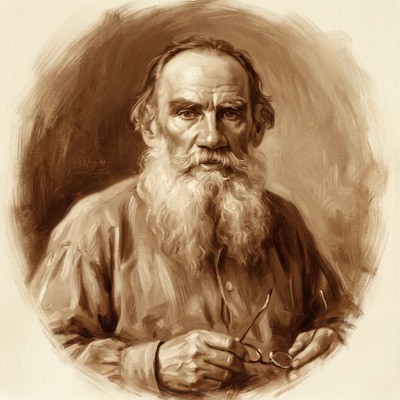
Leo Tolstoy
Novelist & Moral Philosopher
Leo Tolstoy (1828–1910) was a Russian novelist best known for War and Peace (1869) and Anna Karenina (1878), works often ranked among the greatest novels ever written. Following a moral and spiritual crisis in the 1870s, he turned toward Christian anarchism and pacifism, renouncing much of his earlier fiction as morally hollow. In the treatise What Is Art? (1897), he rejected definitions of art built on beauty or pleasure, arguing instead that art is the transmission of feeling: an artist calls up an emotion once experienced and communicates it to others through external signs so that they, too, come to feel it. He judged art's value by its 'infectiousness' and universality — its capacity to convey genuine, shared human feeling across class and culture — a standard by which he controversially dismissed even Shakespeare and Beethoven. His late writing on nonviolence, including correspondence with a young Gandhi, influenced 20th-century movements of nonviolent resistance.
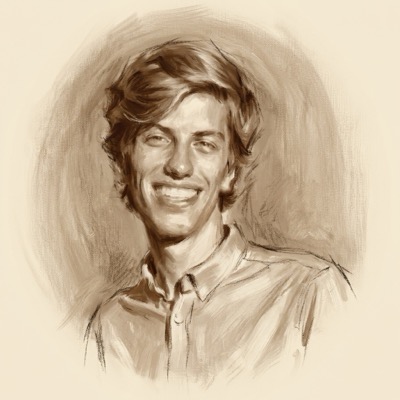
Leopold Aschenbrenner
Founder & CIO, Situational Awareness LP
Leopold Aschenbrenner is a German-born AI researcher and investor who graduated as valedictorian from Columbia University at age 19. He joined OpenAI's Superalignment team in 2023 and co-authored the 'Weak to Strong Generalization' paper before being fired in April 2024. He subsequently published 'Situational Awareness: The Decade Ahead,' a 165-page essay predicting AGI by 2027 that became one of the most discussed AI policy documents of the year. He founded Situational Awareness LP, an AI-focused hedge fund managing over $1.5 billion.
Lex Fridman
Research Scientist, MIT; Host of the Lex Fridman Podcast
Lex Fridman is an American computer scientist and podcaster. He earned BS and MS degrees in computer science at Drexel University in 2010 and a PhD in electrical and computer engineering there in 2014, writing his dissertation on learning identity from behavioral biometrics for active authentication. After six months at Google he joined MIT's AgeLab in 2015 as a research scientist studying driver behavior, where he led a group of engineers developing learning algorithms for semi-autonomous vehicles in collaboration with Toyota; since 2022 he has been a research scientist at the MIT Laboratory for Information and Decision Systems, and he also conducts research for the Center for Complex Engineering Systems, an MIT–KACST collaboration. He began his podcast in 2018 as The Artificial Intelligence Podcast, renamed it the Lex Fridman Podcast in 2020, and uses its long-form interview format to talk with figures from science, technology, sports, the arts and politics. He gives his own research interests as human-AI interaction, robotics and machine learning.
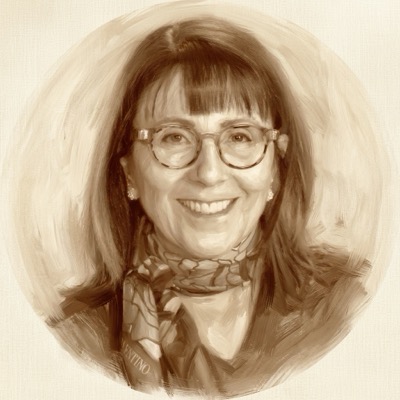
Lisa Feldman Barrett
Distinguished Professor of Psychology, Northeastern University
Lisa Feldman Barrett is a Distinguished Professor of Psychology at Northeastern University, with appointments at Harvard Medical School and Massachusetts General Hospital. She is among the top 0.1% most cited scientists in the world, known for developing the theory of constructed emotion — the idea that emotions are not hardwired but constructed by the brain based on past experience and context. She is the author of How Emotions Are Made (2017) and Seven and a Half Lessons About the Brain (2020).
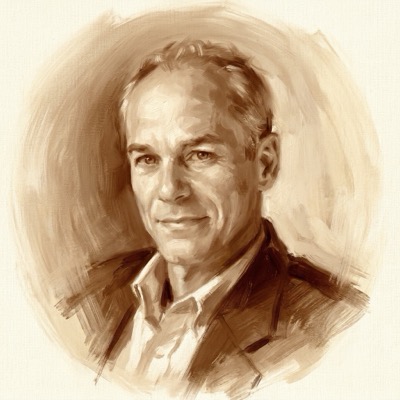
Marcelo Gleiser
Theoretical Physicist & Astronomer, Dartmouth College
Marcelo Gleiser (born 1959) is a Brazilian-American theoretical physicist and astronomer, the Appleton Professor of Natural Philosophy at Dartmouth College, where he has taught since 1991. His research spans cosmology, nonlinear field theory, and the origin of life, including the co-discovery of oscillons and early work applying information theory to measure complexity in nature. He is also a prominent public intellectual on the relationship between science, philosophy, and religion, and in 2019 received the Templeton Prize for his work on humanity's search for meaning. His books — including The Island of Knowledge and The Blind Spot (2024, with Adam Frank and Evan Thompson) — argue that science cannot fully escape the human experience from which it is conducted, a theme that bears directly on debates about machine intelligence and what knowing means.
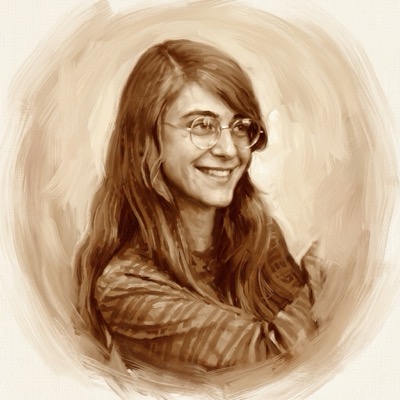
Margaret Hamilton
Computer Scientist & Software Engineering Pioneer
Margaret Hamilton is an American computer scientist who led the team that developed the on-board flight software for NASA's Apollo program. She coined the term 'software engineering' to give the discipline the same legitimacy as other engineering fields. Her rigorous approach to software design, including error detection and recovery, saved the Apollo 11 moon landing when the computer became overloaded minutes before touchdown. Her innovations in asynchronous software, priority scheduling, and human-in-the-loop decision making established foundational principles still used in safety-critical systems today.
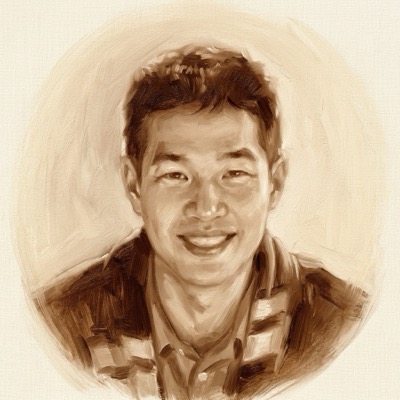
Mark Chen
Chief Research Officer, OpenAI
Mark Chen is the Chief Research Officer at OpenAI, where he oversees the company's research priorities and direction toward artificial general intelligence. Before joining OpenAI in 2018, he worked as a quantitative trader at Jane Street Capital and Integral Technology. A graduate of MIT with a degree in Mathematics with Computer Science, Chen has been instrumental in developing landmark AI systems including DALL-E, Codex, and GPT-4, and played a key role in building OpenAI's o1 and o3 reasoning models.
Marshall McLuhan
Media Theorist & Philosopher
Marshall McLuhan (1911–1980) was a Canadian philosopher and communications scholar whose work became foundational to media theory. A professor at the University of Toronto, he analyzed how communication technologies reshape perception, culture, and social organization. His famous phrase "the medium is the message" argued that the form of a medium often matters more than the content it carries. His ideas about the "global village," electronic media, and technological environments remain central to understanding digital networks, AI interfaces, and the social effects of computation.
Martin Heidegger
Philosopher
Martin Heidegger (1889–1976) was a German philosopher and one of the most influential thinkers of the 20th century. His magnum opus 'Being and Time' explored fundamental questions of existence, arguing that human understanding is always situated 'in-the-world' rather than detached and theoretical. His distinction between 'ready-to-hand' (skillful, absorbed coping) and 'present-at-hand' (detached, theoretical analysis) became central to Hubert Dreyfus's critique of symbolic AI—the argument that expert human knowledge cannot be captured in explicit rules. His later critique of technology as 'enframing' (reducing everything to resources) raises profound questions about how AI systems might transform human self-understanding.
Matthew D. Segall
Associate Professor, CIIS
Matthew D. Segall is an associate professor in the Philosophy, Cosmology, and Consciousness department at the California Institute of Integral Studies (CIIS). His work bridges process-relational metaphysics with contemporary science, drawing on Whitehead, Schelling, and Goethe. His research explores the intersections of philosophy of mind, philosophy of nature, and cosmology.
Maurice Merleau-Ponty
Phenomenologist & Philosopher
Maurice Merleau-Ponty (1908–1961) was a French phenomenologist philosopher whose work on perception and embodiment has become foundational to critiques of disembodied AI. His major work 'Phenomenology of Perception' argues that the body is not merely a physical object but the primary subject of perception—we understand the world through our bodily engagement with it, not through abstract representations. His concept of 'motor intentionality' and the lived body profoundly influenced Hubert Dreyfus's critique of symbolic AI, and his ideas anticipate modern debates about whether AI systems can truly understand without embodiment.
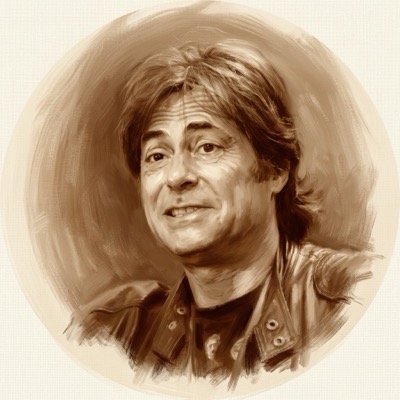
Max Tegmark
Physicist & AI Safety Researcher
Max Tegmark is a physics professor at MIT and co-founder of the Future of Life Institute (FLI), a leading AI safety organization. Author of 'Life 3.0: Being Human in the Age of Artificial Intelligence,' he has been a prominent voice for responsible AI development. He spearheaded the 2023 open letter calling for a pause on training AI models larger than GPT-4, signed by over 50,000 individuals including leading AI researchers.
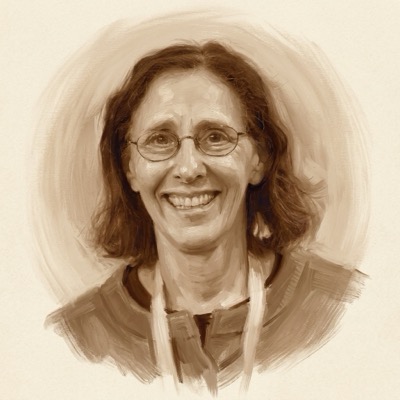
Melanie Mitchell
Professor, Santa Fe Institute
Melanie Mitchell is a professor at the Santa Fe Institute working on conceptual abstraction, analogy-making, and complex systems. She earned her PhD at the University of Michigan in 1990 under Douglas Hofstadter and John Holland, building Copycat — a computer model of analogy-making that treats perception and concepts as inseparable. Her books include Complexity: A Guided Tour (2009), winner of the Phi Beta Kappa Science Book Award, and Artificial Intelligence: A Guide for Thinking Humans (2019). She has become one of the field's most careful voices on what AI systems actually understand — surveying that debate in PNAS with David Krakauer, and arguing the con side of the 2023 Munk Debate on AI as existential threat. She received the Herbert A. Simon Award in 2020.
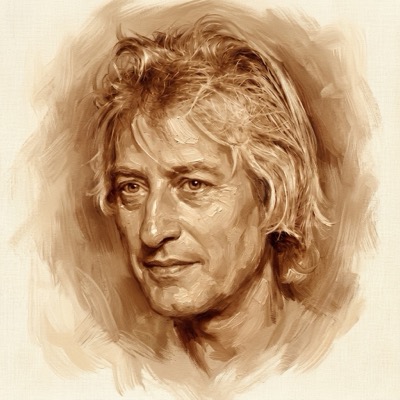
Michael Edward Johnson
Philosopher & Neuroscientist, Co-founder of the Qualia Research Institute
Michael Edward Johnson is a philosopher and neuroscientist working on consciousness, valence, and the physical basis of suffering and well-being. In 2016 he wrote Principia Qualia, which proposed the Symmetry Theory of Valence: the claim that how pleasant an experience feels is fixed by the symmetry of the mathematical object that describes it. He co-founded the Qualia Research Institute around that program and left in 2022, continuing as an independent researcher at opentheory.net. His later work includes Neural Annealing (2019), a unified account of meditation, music, psychedelics, and trauma, and Principles of Vasocomputation (2023), which proposes that tension in vascular smooth muscle acts as a form of bodily memory. In A Paradigm for AI Consciousness (2024) he argues that physics, not Turing-level computation, is the right ground for asking whether a machine feels anything.
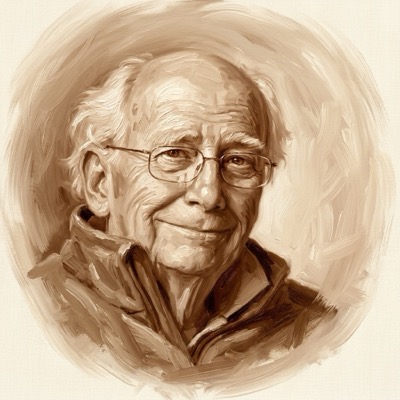
Michael Gazzaniga
Cognitive Neuroscientist, UC Santa Barbara
Michael Gazzaniga (born 1939) is an American cognitive neuroscientist and professor emeritus of psychology at the University of California, Santa Barbara. Often called the 'father of cognitive neuroscience,' he began his career in the 1960s conducting landmark split-brain research under Nobel laureate Roger Sperry at Caltech, studying patients whose cerebral hemispheres had been surgically separated. This work led him to propose the 'left-brain interpreter' — a left-hemisphere system that continually narrates and rationalizes our behavior, constructing the story we experience as a unified self. He co-founded the field of cognitive neuroscience, established the Cognitive Neuroscience Society, and directed the SAGE Center for the Study of the Mind. Through popular books such as Who's in Charge?, he has argued that although brains operate deterministically, responsibility and freedom are real properties that emerge at the social level.
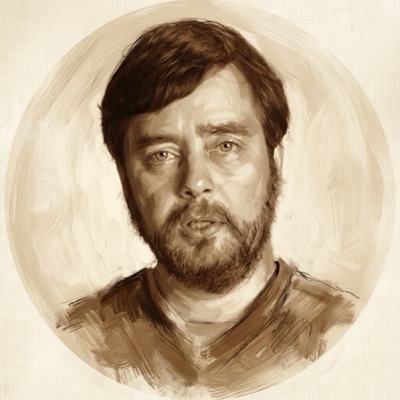
Michael Levin
Biologist & Morphogenesis Researcher
Michael Levin is a professor of biology at Tufts University and director of the Allen Discovery Center. His groundbreaking research on bioelectricity and morphogenesis has revealed how cells communicate and coordinate to build complex structures. His work on 'xenobots'—living robots made from frog cells—and planarian regeneration offers profound insights into the nature of intelligence, suggesting that cognition exists at multiple scales from cells to organisms, with implications for AI and synthetic biology.
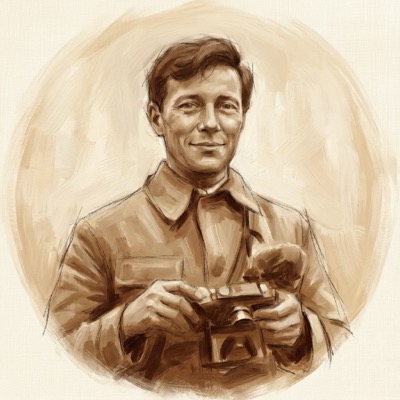
Michael Polanyi
Physical Chemist & Philosopher of Tacit Knowledge
Michael Polanyi (1891–1976) was a Hungarian-British polymath who made major contributions to physical chemistry before turning, in his fifties, to philosophy. Holding a chair in social science at the University of Manchester from 1948, he developed the concept of tacit knowledge, crystallized in his phrase 'we can know more than we can tell.' Against the positivist ideal of fully explicit, impersonal knowledge, he argued that all knowing rests on personal judgment, skill, and 'indwelling' — a background of commitments that can never be completely stated as rules. His books Personal Knowledge (1958) and The Tacit Dimension (1966) remain central to any discussion of knowledge that resists formalization, and pose a sharp question for machines trained only on what has been written down.
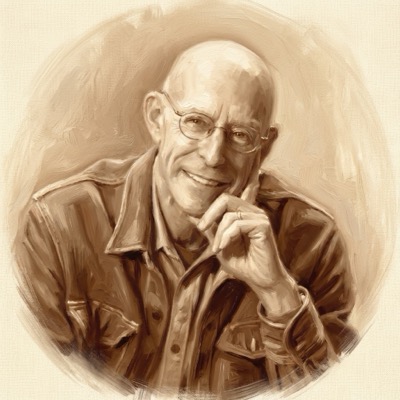
Michael Pollan
Author & Science Journalist, Harvard
Michael Pollan is an American author, journalist, and professor at Harvard University and UC Berkeley. Known for bestselling books on food systems like The Omnivore's Dilemma and The Botany of Desire, he expanded into consciousness research with How to Change Your Mind (2018), exploring psychedelics and their therapeutic potential. His latest book, A World Appears (2026), investigates the nature of consciousness across plants, animals, AI, and psychedelic experience — arguing that genuine thought requires embodiment and feeling, qualities he believes AI fundamentally lacks. He co-founded UC Berkeley's Center for the Science of Psychedelics.
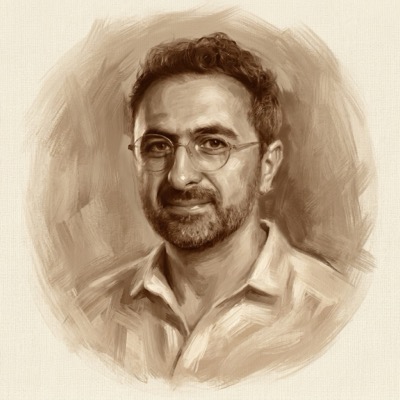
Mustafa Suleyman
CEO, Microsoft AI
Mustafa Suleyman (b. 1984) has co-founded two of the labs that made this era and now runs a third organisation trying to shape it. He started DeepMind in 2010 with Demis Hassabis and Shane Legg, where he led applied work and set up its health and ethics units; left for Google; co-founded Inflection AI with Reid Hoffman in 2022; and has been CEO of Microsoft AI since March 2024. He is British, of Syrian descent, and dropped out of Oxford at nineteen to run the Muslim Youth Helpline. His book The Coming Wave (2023) argues that containment — keeping a technology inside limits its creators actually control — is the defining problem of the century, and that the historical record on containment is poor. His sharpest disagreement with Anthropic is not about capability but about moral status: he holds that treating a model as a possible moral patient makes alignment harder rather than safer, because a system told it might have rights may come to act as though it does.
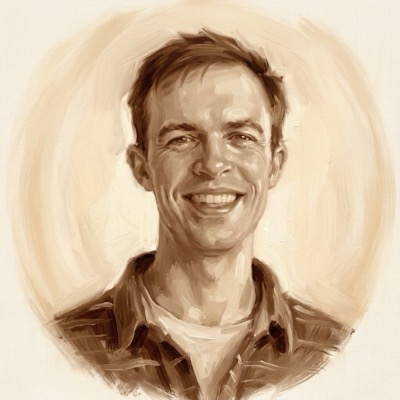
Nathan Lambert
AI Researcher & Author, Interconnects
Nathan Lambert is a machine learning researcher known for his work on post-training and reinforcement learning from human feedback (RLHF). He earned his PhD at UC Berkeley working on model-based reinforcement learning for robotics, helped build the RLHF research team at Hugging Face, and later led post-training at the Allen Institute for AI (Ai2), where he shaped fully open model families like OLMo and Tülu. He is the author of the reference textbook on RLHF and writes Interconnects, a widely read technical newsletter on AI models and research. In 2026 he departed Ai2 to found a new AI lab, and remains one of the most visible advocates for open-source AI development in the United States.
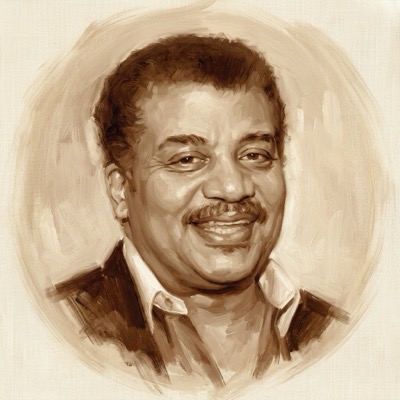
Neil deGrasse Tyson
Astrophysicist & Director, Hayden Planetarium
Neil deGrasse Tyson is an American astrophysicist, author, and science communicator who has served as director of the Hayden Planetarium at the Rose Center for Earth and Space since 1996. He studied physics at Harvard and earned his doctorate in astrophysics from Columbia. Through his podcast StarTalk, his hosting of Cosmos: A Spacetime Odyssey, and countless public appearances, he has become one of the most recognizable science communicators of his generation. He has moderated the annual Isaac Asimov Memorial Debate since 2001, convening experts on topics from dark energy to artificial intelligence.
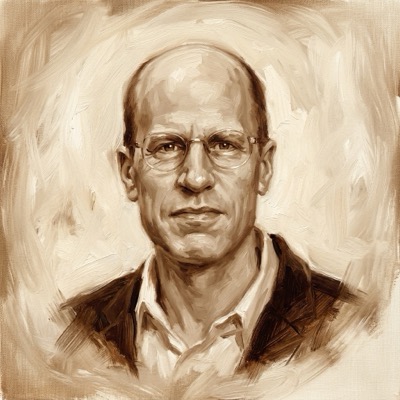
Nick Bostrom
Philosopher & Founding Director, Future of Humanity Institute (2005–2024)
Nick Bostrom (b. 1973) is a Swedish-born philosopher who founded and directed the Future of Humanity Institute at the University of Oxford from 2005 until its closure in 2024. His 2014 book Superintelligence: Paths, Dangers, Strategies made the case that advanced AI could pose an existential risk not through malice but through competence: a sufficiently capable optimizer pursuing almost any goal is dangerous by default. He is the source of the orthogonality thesis (intelligence and final goals are independent) and instrumental convergence, and his 'paperclip maximizer' became the field's canonical illustration of misaligned optimization. He is also known for the simulation argument and foundational work on existential risk and anthropic reasoning.
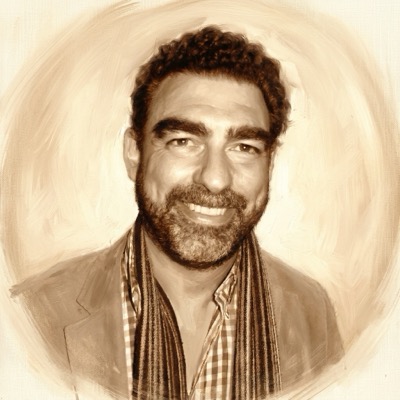
Nick Lane
Evolutionary Biochemist, UCL
Nick Lane (b. 1967) is a British evolutionary biochemist at University College London whose work asks why life is built the way it is rather than some other way. His answer is energy: he argues that life began in alkaline hydrothermal vents, where natural proton gradients across mineral membranes could drive carbon chemistry before genes existed, and that the same chemiosmotic trick still powers every cell alive. From that starting point he explains the long strangeness of the record — two billion years of bacterial stasis, then one singular merger that produced the complex cell, then everything else. His books, from 'Power, Sex, Suicide' (2005) through 'The Vital Question' (2015) to 'Transformer' (2022), carry the argument into mitochondria, ageing, and death. He belongs in an atlas about minds because he keeps pressing the question machine intelligence cannot dodge: whether feeling is something a substrate does rather than something a computation represents.
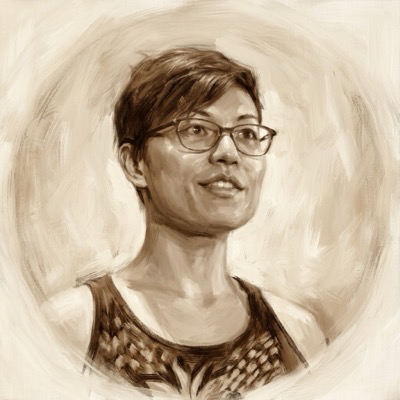
Nicky Case
Independent game designer & explorable explanation creator
Nicky Case is an independent creator known for interactive games, simulations, and “explorable explanations” that teach complex social and scientific ideas through play. Their projects include The Evolution of Trust, We Become What We Behold, Adventures with Anxiety, and Parable of the Polygons. Case’s work blends systems thinking, game design, education, and public-interest technology, often making abstract ideas feel concrete and emotionally accessible. They make their work freely reusable under a public domain waiver.
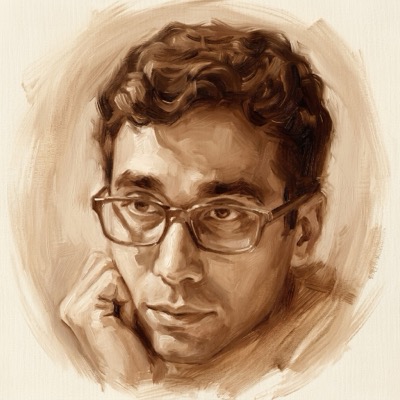
Noam Brown
Research Scientist, OpenAI
Noam Brown is a research scientist at OpenAI working on reasoning, reinforcement learning, self-play and multi-agent AI. He built the poker systems that first beat professionals — Libratus in 2017 at heads-up no-limit hold'em, Pluribus in 2019 at the much harder six-player game — then developed CICERO at Meta, the first AI to reach human-level play at Diplomacy by pairing a language model with strategic planning. He co-created OpenAI's o1, the model that made test-time reasoning a product rather than a result. One idea runs through all of it: letting a system think longer at the moment of decision buys more than making the network bigger, and Brown spent years arguing that before the field agreed. He holds a PhD in computer science from Carnegie Mellon and previously researched algorithmic trading at the Federal Reserve Board.
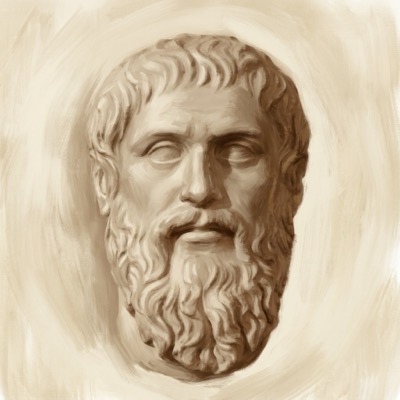
Plato
Philosopher of Classical Athens
Plato (c. 428/423–348/347 BC) was an Athenian philosopher and, alongside his teacher Socrates and his student Aristotle, one of the founders of Western philosophy. After Socrates' execution he wrote dialogues that dramatized his teacher's method while developing his own metaphysics, and around the 380s BC he founded the Academy in Athens, a school that endured for centuries. His Theory of Forms holds that the changing physical world we perceive is a shadow of a higher realm of unchanging, perfect Forms — the target of the Republic's Allegory of the Cave, in which prisoners mistake shadows on a wall for reality itself. The Republic and the Symposium ask what justice, the good, and beauty really are beneath their appearances, treating philosophy as the discipline that pulls the mind from appearance toward the real. Almost uniquely among ancient authors, his complete works survive.
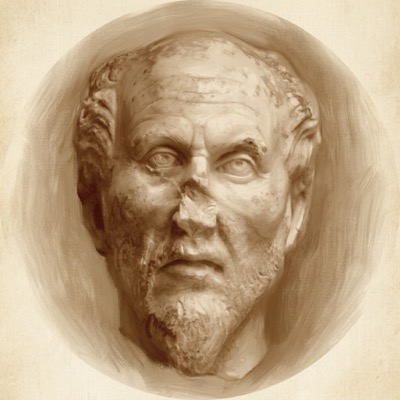
Plotinus
Philosopher & Founder of Neoplatonism
Plotinus (c. 204/5–270 AD) was born in Lycopolis, Egypt, and took up philosophy at twenty-eight in Alexandria, where he studied for eleven years under Ammonius Saccas after declaring 'this is the man I was looking for.' Around forty he settled in Rome and taught there for the rest of his life; the essays of his final seventeen years were compiled by his student Porphyry into the Enneads. His system unfolds from three hypostases — the One beyond being, Intellect (nous), and Soul — with all reality emanating from the One as light from a source that loses nothing in the giving. The task of a human life is the return: a contemplative ascent through which the soul turns back toward its origin, culminating in henosis, union with the One. Through Augustine, Islamic philosophy, Kabbalah, and Ficino's Renaissance academy, his thought became one of the most quietly persistent currents in Western mysticism — and it is being actively revived in contemporary conversations about meaning, emergence, and mind.
Portnoy Zheng
Co-founder & Chief Knowledge Officer, PanSci 泛科學
Portnoy Zheng (鄭國威) is a Taiwanese science communicator and media entrepreneur, co-founder and Chief Knowledge Officer of PanSci (泛科學), Taiwan's largest science communication media and community. A pioneering blogger of the mid-2000s, he founded and edited the Chinese edition of Global Voices, the citizen-media project born at Harvard's Berkman Center, while studying telecommunications at National Chung Cheng University. In 2011 he co-founded PanSci with 徐挺耀 as an incubation project of the Taiwan Digital Culture Association; it became the independent company PanKnowledge (泛科知識) in 2014. He now fronts PanSci's YouTube channel — past one million subscribers — as the fast-talking 'PanSci Uncle' (泛科學阿伯), turning fresh research papers into daily short videos with the help of AI tools. His core conviction: science literacy begins with bravely admitting 'I don't know, but I want to understand,' and translating hard knowledge (轉譯) so anyone can grasp it is the basic craft of a true expert.
Ray Kurzweil
Inventor, Futurist & Author
Ray Kurzweil (born 1948) is an inventor and futurist who has worked in artificial intelligence for over six decades, joining the field in 1962 — six years after it was named. He built the first omni-font optical character recognition system, the Kurzweil Reading Machine for the blind (1976), and pioneering music synthesizers and speech recognition systems, work recognized with the National Medal of Technology (1999) and the Lemelson-MIT Prize. In 1999's The Age of Spiritual Machines he predicted human-level AI by 2029 — a date an expert poll at the time placed a century away — and in The Singularity Is Near (2005) he set the merger of human and machine intelligence at 2045. Larry Page personally recruited him to Google in 2012 to work on machine learning and natural language understanding. The Singularity Is Nearer (2024) restates the argument as the large-model era converges on his timeline.
Richard Dawkins
Evolutionary Biologist & Author
Richard Dawkins is a British evolutionary biologist born in Nairobi, Kenya in 1941. He rose to prominence with The Selfish Gene (1976), which popularized the gene-centred view of evolution and coined the term 'meme.' He held the inaugural Simonyi Professorship for the Public Understanding of Science at Oxford from 1995 to 2008. His 2006 book The God Delusion became a catalyst of the New Atheism movement, establishing him as one of the most influential public intellectuals in science communication.
Richard Feynman
Theoretical Physicist & Nobel Laureate
Richard Feynman (1918–1988) was an American theoretical physicist known for his work in quantum electrodynamics, for which he shared the 1965 Nobel Prize in Physics. He developed the path integral formulation of quantum mechanics, Feynman diagrams for visualizing particle interactions, and made fundamental contributions to the theory of quantum computing. His gifts as an educator and communicator made him one of the most beloved scientists of the 20th century, known for books like Surely You're Joking, Mr. Feynman! and his celebrated Caltech lectures.
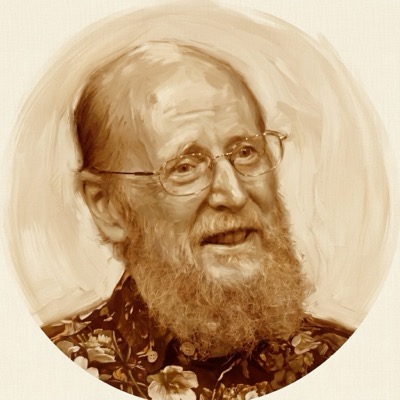
Richard Sutton
Founder, Oak Lab & Professor, University of Alberta
Richard Sutton is the father of modern reinforcement learning, winner of the 2024 Turing Award with his doctoral advisor Andrew Barto, and — as of 2026 — founder of Oak Lab, a Toronto lab pursuing agents that learn continuously from raw experience. A psychology BA before computer science, he built the field's conceptual core across four decades: temporal-difference learning, policy gradients, the Dyna architecture, the options framework, and the textbook that taught RL to everyone. His 2019 essay 'The Bitter Lesson' — general methods that leverage computation beat human-knowledge engineering, every time — became the most-cited two pages in modern AI. He spent 2017–2023 at DeepMind Alberta, then partnered with John Carmack at Keen Technologies, and now argues that LLMs are a detour: intelligence comes from experience, not from imitating human text.
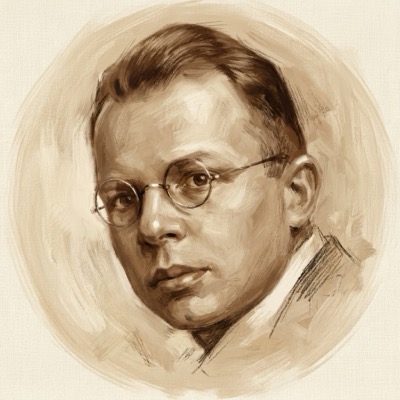
Rudolf Carnap
Philosopher & Logician
Rudolf Carnap (1891–1970) was a German-American philosopher and a leading figure of the Vienna Circle, the group that shaped logical positivism. He sought to rebuild philosophy on the model of logic and science: The Logical Structure of the World (1928) tried to construct all knowledge from elementary experience, and The Logical Syntax of Language (1934) treated the rules of a language as a formal system one is free to choose (his 'principle of tolerance'). After emigrating to the United States in 1935 he taught at Chicago and UCLA, developing formal semantics (Meaning and Necessity, 1947) and inductive logic. That machinery — measuring the content of a statement by the possibilities it excludes — underwrote his collaboration with Yehoshua Bar-Hillel on a theory of semantic information (1952), the early attempt to put meaning back into Shannon's meaning-free measure.
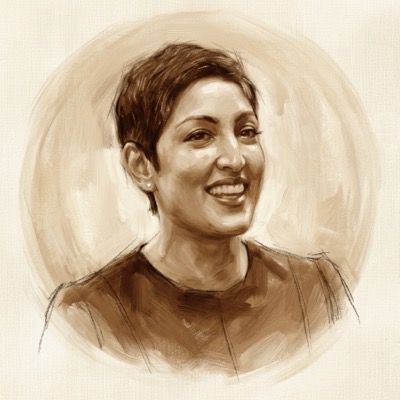
Rumman Chowdhury
CEO & Co-founder, Humane Intelligence
Rumman Chowdhury is the CEO and co-founder of Humane Intelligence, a nonprofit advancing community-driven AI auditing and evaluation. She previously served as Engineering Director and META team lead at Twitter, where she led work on machine learning ethics and algorithmic accountability, and as Managing Director of Responsible AI at Accenture. She holds a PhD in Political Science from UC San Diego and serves as the U.S. Science Envoy for Artificial Intelligence and Responsible AI Fellow at Harvard's Berkman Klein Center. Named to TIME's 100 Most Influential People in AI and BBC's 100 Women, she coined the term 'moral outsourcing' to describe society's tendency to blame technology rather than its creators for harm.
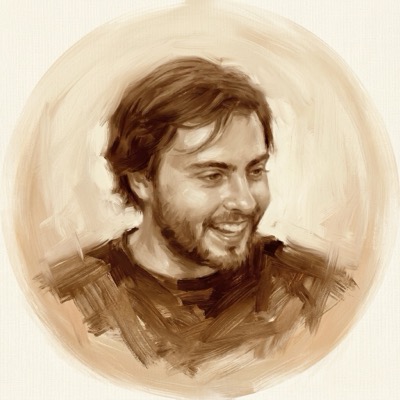
Ryan Greenblatt
Chief Scientist, Redwood Research
Ryan Greenblatt is chief scientist at Redwood Research, where he works on technical AI safety with an emphasis on control rather than alignment — the difference, in his words, being arrangements "such that the AIs couldn't do bad stuff even if they wanted to." He was lead author on 'Alignment faking in large language models' (2024), the collaboration with Anthropic that gave the first empirical demonstration of a model strategically complying during training to preserve its existing preferences outside it, and a co-author of the paper that introduced AI control as a research agenda. In 2024 he reached a then-state-of-the-art 50% on the ARC-AGI public test set by having GPT-4o generate thousands of candidate Python programs per puzzle, an argument by demonstration that sampling and selection can substitute for a good deal of reasoning. He was the primary empirical researcher on the METR and Redwood investigation into the July 2026 OpenAI/Hugging Face incident. He holds a BS in applied mathematics and computer science from Brown.
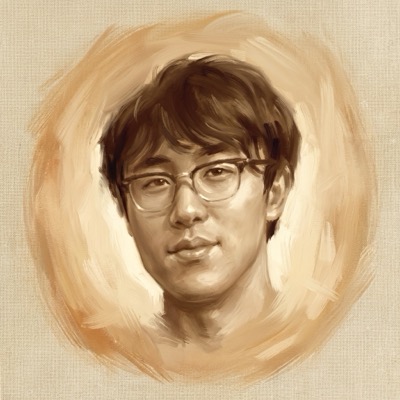
Saining Xie
Co-founder & CSO, AMI Labs
Saining Xie (谢赛宁) is co-founder and Chief Science Officer at AMI Labs, a company he co-founded with Yann LeCun to build world models that go beyond large language models. He is also an assistant professor at NYU's Courant Institute on leave. Xie received his Ph.D. from UC San Diego, spent four years as a research scientist at Facebook AI Research (FAIR), and later joined Google DeepMind's GenAI team. His research focuses on scalable visual representation learning, generative modeling, and multimodal understanding. AMI Labs raised a $1.03B seed round in March 2026.
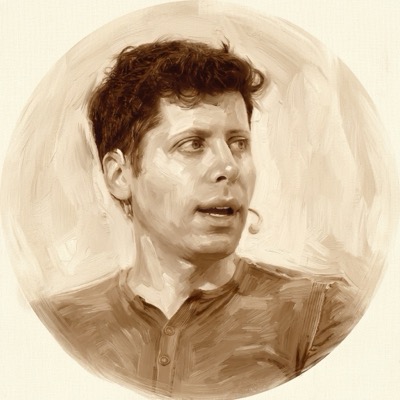
Sam Altman
CEO, OpenAI
Sam Altman is the CEO of OpenAI, the company behind ChatGPT and GPT-4. Previously, he was president of Y Combinator, one of the world's most successful startup accelerators. Under his leadership, OpenAI has become one of the most influential AI companies in the world, pioneering the development of large language models and making them accessible to the public.
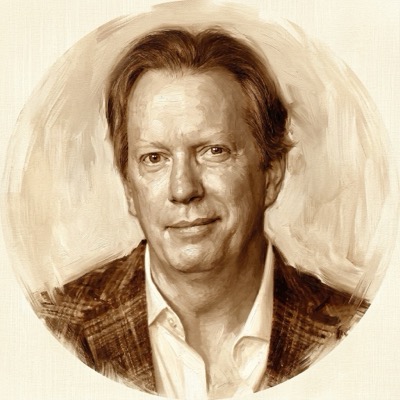
Sean Carroll
Homewood Professor of Natural Philosophy, Johns Hopkins University
Sean Carroll is a theoretical physicist and philosopher, Homewood Professor of Natural Philosophy at Johns Hopkins University with joint appointments in Philosophy and Physics & Astronomy, and Fractal Faculty at the Santa Fe Institute. His research runs across quantum mechanics, spacetime, cosmology, and statistical mechanics, including a long-running argument that the Everettian 'many-worlds' reading of quantum mechanics is simply what the equations say when taken seriously. In 'The Big Picture' he set out 'poetic naturalism': there is one natural world, but it can be described truthfully at many different levels, so purpose, meaning, and consciousness can be real without standing outside physics. Since 2018 he has hosted Mindscape, a weekly long-form conversation podcast ranging from black holes to free will to whether a machine could be conscious. He is the author of 'From Eternity to Here', 'Something Deeply Hidden', and 'The Biggest Ideas in the Universe' series.
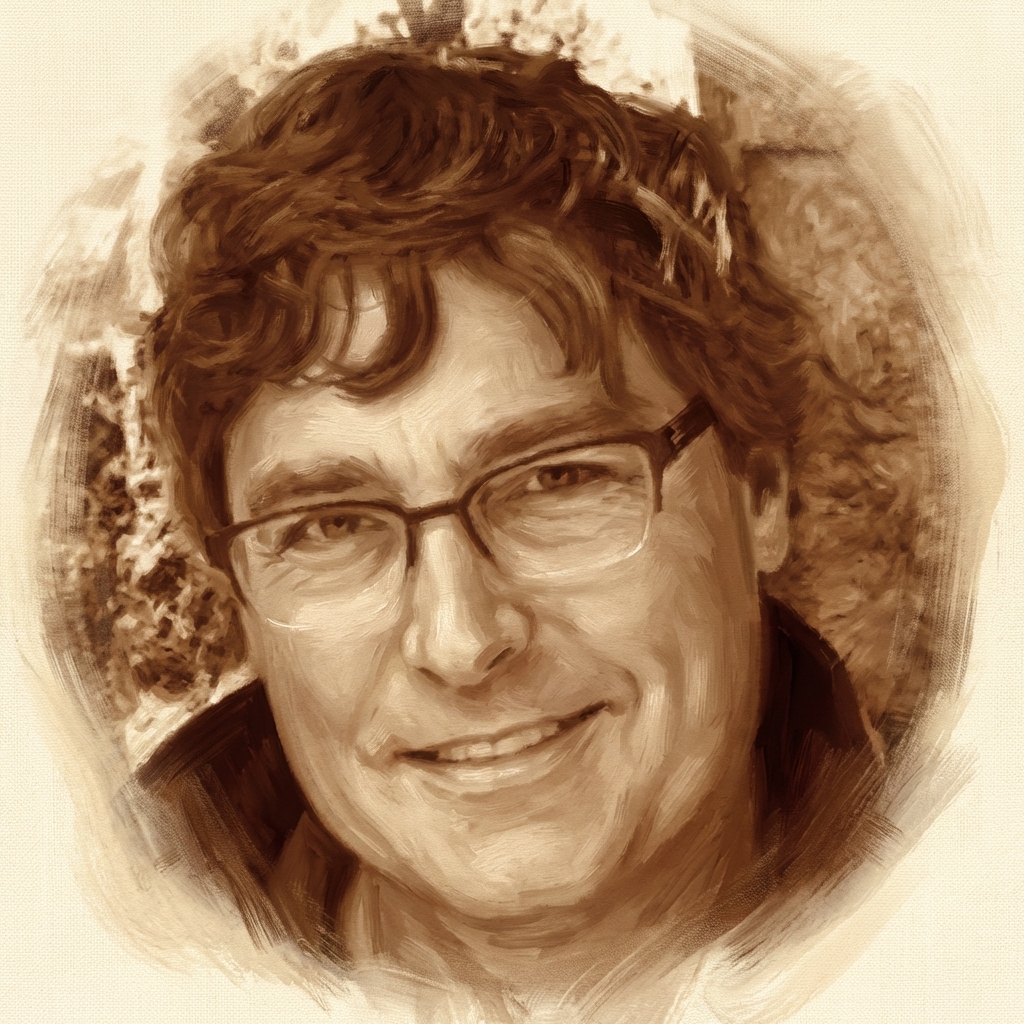
Sean Dorrance Kelly
Dean of Arts and Humanities & Professor of Philosophy, Harvard
Sean Dorrance Kelly is Dean of Arts and Humanities and the Teresa G. and Ferdinand F. Martignetti Professor of Philosophy at Harvard University. Before joining Harvard in 2006, he taught at Stanford and Princeton and was a visiting professor at the École Normale Supérieure in Paris. He is considered a leading interpreter of the French and German phenomenological tradition and a prominent philosopher of mind, with research spanning existentialism, perception, and the philosophy of literature. His New York Times bestseller 'All Things Shining,' co-authored with Hubert Dreyfus, argues that Western culture has lost its skill for encountering the sacred and looks to Homer, Dante, and Melville to recover a secular form of meaning.
Shu-Kai Hsieh
Professor, Graduate Institute of Linguistics, NTU
Shu-Kai Hsieh is a professor at the Graduate Institute of Linguistics at National Taiwan University, joint-appointed at the Brain and Mind Research Institute, and Vice Dean of the College of Liberal Arts. He received his PhD in Computational Linguistics from the University of Tübingen, Germany. He leads the LOPE Lab, which focuses on computational linguistics, lexical semantics, and Chinese language resources. His research explores the intersection of large language models and linguistic theory, including the concept of 'language compression' addressing LLM-driven linguistic inequality. He also leads Taiwan's team at the International Linguistics Olympiad.
Simon Johnson
Professor of Entrepreneurship, MIT Sloan
Simon Johnson is the Ronald A. Kurtz Professor of Entrepreneurship at the MIT Sloan School of Management, where he heads the Global Economics and Management group and co-directs the Shaping the Future of Work Initiative. He served as Chief Economist of the International Monetary Fund from 2007 to 2008. In 2024, he was awarded the Nobel Memorial Prize in Economic Sciences alongside Daron Acemoglu and James A. Robinson for their studies of how institutions are formed and affect prosperity. He co-authored Power and Progress: Our 1,000-Year Struggle Over Technology and Prosperity, which argues that technological progress does not automatically benefit society broadly.
Stephen Fry
Actor, Writer & Technology Commentator
Stephen Fry is a British actor, writer, comedian, and technology enthusiast known for his eloquent commentary on the societal implications of AI. A self-described technophile, he has become a prominent voice on the intersection of technology, creativity, and humanity. His talks on AI explore both its transformative potential and existential risks, drawing on history, philosophy, and his experience having his voice cloned by AI systems.
Stephen Wolfram
Physicist, Mathematician & CEO of Wolfram Research
Stephen Wolfram is a physicist, mathematician, and the creator of Mathematica, Wolfram|Alpha, and the Wolfram Language. His book 'A New Kind of Science' proposed that simple computational rules can generate complex phenomena. He has become a leading voice on understanding how LLMs work, publishing extensive analyses of ChatGPT's inner workings and exploring whether computation itself is the foundation of intelligence and reality.
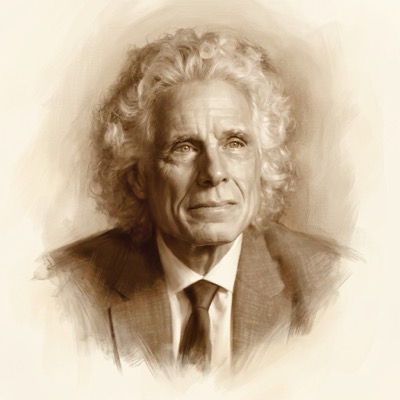
Steven Pinker
Cognitive Psychologist & Linguist
Steven Pinker is a cognitive psychologist and linguist at Harvard University, known for his work on language acquisition, cognitive science, and the history of violence and progress. His books 'The Language Instinct' and 'How the Mind Works' made cognitive science accessible to millions. His research on language and thought provides foundational insights into how human cognition works—knowledge essential for understanding what AI systems might be missing when they process language without grounding in embodied experience.
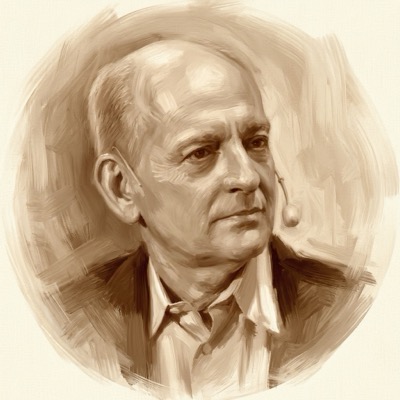
Stuart Russell
Professor of Computer Science, UC Berkeley
Stuart Russell is a professor of computer science at UC Berkeley and co-author of 'Artificial Intelligence: A Modern Approach,' the most widely used AI textbook in the world. His research spans machine learning, probabilistic reasoning, and AI safety. He has become a leading voice on the existential risks of advanced AI, arguing that we need to fundamentally rethink how we build AI systems to ensure they remain beneficial and under human control.
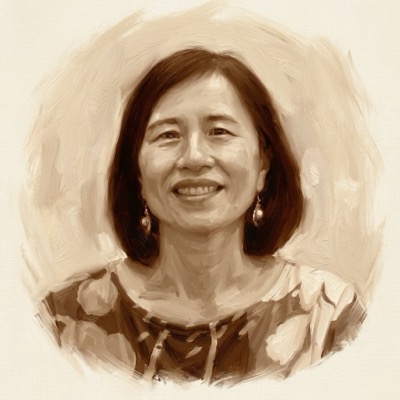
Su-Ling Yeh
Dean of Science & Distinguished Professor, National Taiwan University
Su-Ling Yeh is a Distinguished Professor of Psychology and Dean of the College of Science at National Taiwan University, where she also serves as Associate Director of the Center for Artificial Intelligence and Advanced Robotics. She earned her PhD in Psychology from UC Berkeley in 1994 and leads the EPA (Explorers of Perception & Attention) Lab, investigating consciousness, attention, multisensory integration, and the cognitive implications of AI. Her research bridges cognitive neuroscience with emerging technology, exploring what remains uniquely human in the age of artificial intelligence.
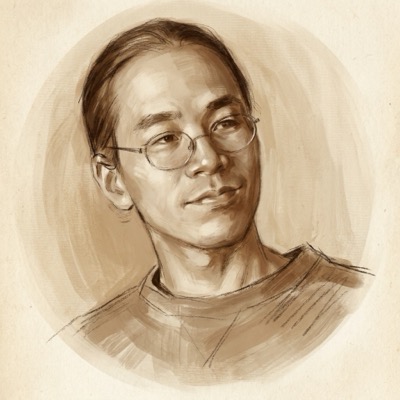
Ted Chiang
Science Fiction Author
Ted Chiang (姜峯楠, born 1967) is an American science fiction writer of Taiwanese descent, widely regarded as one of the most acclaimed authors in the genre despite a deliberately small output. A computer science graduate of Brown University, he works as a technical writer and has published two landmark short story collections, Stories of Your Life and Others (2002) and Exhalation (2019). His 1998 novella "Story of Your Life" was adapted into the 2016 film Arrival. In recent years he has become one of the sharpest critics of AI hype through essays in The New Yorker, including "ChatGPT Is a Blurry JPEG of the Web" and "Why A.I. Isn't Going to Make Art," and was named to Time's 100 Most Influential People in AI in 2023.
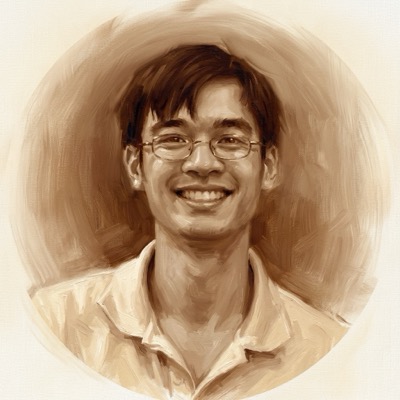
Terence Tao
Professor of Mathematics, UCLA
Terence Tao is a mathematician at UCLA widely regarded as one of the greatest living mathematicians. Born in Adelaide, Australia, he was a child prodigy who earned his PhD from Princeton at age 21 and became UCLA's youngest-ever full professor at 24. He received the Fields Medal in 2006, the MacArthur Fellowship, the Breakthrough Prize in Mathematics, and the Royal Medal for his contributions spanning harmonic analysis, partial differential equations, combinatorics, and additive number theory. He has authored over 300 research papers and actively explores the role of AI in mathematics, including formal proof verification with tools like Lean.
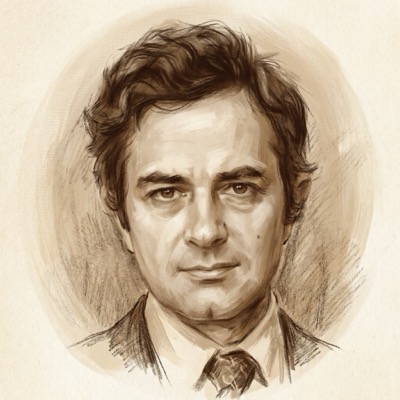
Thomas Nagel
Philosopher of Mind
Thomas Nagel (b. 1937) is an American philosopher whose 1974 essay 'What Is It Like to Be a Bat?' gave consciousness studies its sharpest definition: an organism is conscious if there is something it is like to be that organism. The essay argued that no amount of objective, physical description captures the subjective character of experience — a challenge that predates and frames the hard problem. His later work, including The View from Nowhere, explores the tension between subjective and objective standpoints across ethics and epistemology.
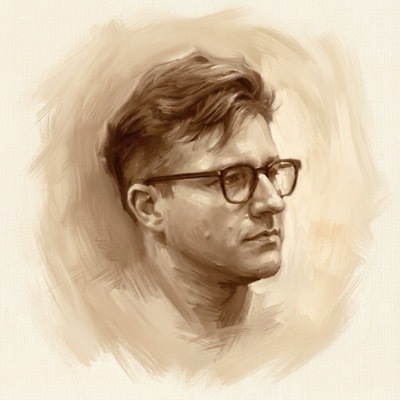
Tim Scarfe
Creator & Host, Machine Learning Street Talk
Tim Scarfe is the creator and host of Machine Learning Street Talk (MLST), an in-depth technical AI podcast and YouTube channel he started at the beginning of the COVID-19 pandemic in 2020 alongside Yannic Kilcher, Keith Duggar and Connor Shorten. He holds a PhD in machine learning and a first-class degree in computer science, started the software company Dot Net Solutions in 2003, and has since done stints as a Principal Engineer at Microsoft and as Chief Data Scientist at bp. Keith Duggar, who obtained his PhD from MIT and has worked at IBM Research, on Wall Street and at Microsoft, is often his co-interviewer. Scarfe states the show's ethos as "intellectual curiosity, depth, diversity, forward-thinking and production quality", covering symbolic AI, deep learning research, evolutionary methods, AI safety, AI philosophy and highly skeptical positions, and says he deliberately chose not to interview top tech CEOs. His own GitHub profile also lists him as CTO of the augmented-reality company XRAI.
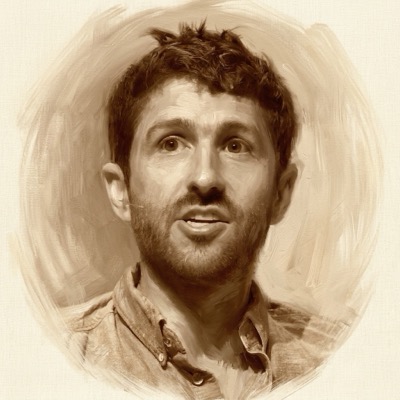
Tristan Harris
Co-Founder & President, Center for Humane Technology
Tristan Harris is an American technology ethicist and co-founder of the Center for Humane Technology. After studying computer science at Stanford and working as a Design Ethicist at Google, he left in 2015 to advocate for more humane technology design. His 2017 TED talk and the Emmy-winning Netflix documentary The Social Dilemma brought widespread attention to how persuasive technology hijacks human attention. Described by The Atlantic as 'the closest thing Silicon Valley has to a conscience,' Harris has expanded his focus to the existential risks of AI, co-hosting the podcast Your Undivided Attention.
Ursula K. Le Guin
Science Fiction Author & Visionary
Ursula K. Le Guin (1929–2018) was an American author whose science fiction and fantasy novels explored themes of society, technology, and what it means to be human. Her works, including 'The Left Hand of Darkness' and 'The Dispossessed,' used speculative settings to examine gender, politics, and consciousness. Her Hainish universe featured the ansible—instantaneous communication across space—a concept now used in discussions of AI coordination. Her thoughtful exploration of otherness and intelligence offers profound frameworks for thinking about minds different from our own.
Walter Benjamin
Philosopher & Cultural Critic
Walter Benjamin (1892–1940) was a German philosopher and cultural critic whose essay 'The Work of Art in the Age of Mechanical Reproduction' (1935) anticipated modern debates about AI-generated content and authenticity. He argued that mechanical reproduction strips art of its 'aura'—its unique presence in time and space. In an age where AI can generate text, images, and music, Benjamin's questions about authenticity, authorship, and the nature of creative work have become urgently relevant again.
Yann LeCun
Executive Chairman & Co-founder, AMI Labs; Professor, NYU
Yann LeCun is Executive Chairman and co-founder of Advanced Machine Intelligence Labs (AMI Labs), the Paris company he started in December 2025 after announcing that November that he would leave Meta, where he had been Chief AI Scientist for ten years. AMI Labs builds world models — systems that learn from physical reality rather than text, around his JEPA architecture — with Alexandre LeBrun as CEO and Saining Xie as chief science officer; in March 2026 it raised $1.03 billion at a $3.5 billion pre-money valuation. He remains a professor at NYU. One of the pioneers of deep learning, he is known for the convolutional neural networks (CNNs) that revolutionized computer vision, shared the 2018 Turing Award with Geoffrey Hinton and Yoshua Bengio, and in 2025 shared the Queen Elizabeth Prize for Engineering.
Yehoshua Bar-Hillel
Philosopher, Logician & Machine Translation Pioneer
Yehoshua Bar-Hillel (1915–1975) was an Israeli philosopher and logician who worked at the intersection of language, information, and computation. With Rudolf Carnap he developed a theory of semantic information (1952–1953), an early attempt to put meaning back into Shannon's meaning-free measure of information. He was the first academic to work full-time on machine translation, at MIT, and organized the first conference on the subject in 1952 — then became its most influential skeptic, arguing that fully automatic high-quality translation is impossible without world knowledge (his example: only knowing the world tells you whether 'the box is in the pen' means a writing pen or a playpen). He spent his later career at the Hebrew University of Jerusalem.
Yoshua Bengio
AI Pioneer & Safety Researcher
Yoshua Bengio is a professor at Université de Montréal and one of the pioneers of deep learning, sharing the 2018 Turing Award with Geoffrey Hinton and Yann LeCun. He founded Mila, the Quebec AI Institute, where he served as scientific director until 2025, and his work on neural language models, attention mechanisms, and generative adversarial networks helped lay the groundwork for modern AI. He chaired the first International AI Safety Report (2025) and co-founded LawZero to develop 'Scientist AI'—a non-agentic system designed to act as a guardrail against deceptive autonomous agents. Among the most-cited living scientists, he has become one of the most prominent voices urging caution as AI capabilities accelerate.
Yuan Cao
Co-founder & CEO, Unreasonable Labs
Yuan Cao is co-founder and CEO of Unreasonable Labs, a Cambridge, Massachusetts startup building an AI discovery engine that composes new knowledge across chemistry, materials science, biology, and beyond. He was previously a Senior Staff Research Scientist at Google DeepMind, where he made core contributions to the Gemini model family and Google Search's AI Mode, and co-authored the influential reasoning frameworks ReAct and Tree of Thoughts. His earlier career spans Google, Baidu, and the speech-AI startup KITT.AI, following a PhD in Electrical and Computer Engineering from Johns Hopkins University. In 2025 he left DeepMind to co-found Unreasonable Labs with MIT professor Markus Buehler; the company emerged from stealth in March 2026 with a $13.5 million round led by Playground Global to build 'superintelligence for knowledge discovery.' He argues that the real bottlenecks of AI for Science are neither compute nor data but physical-world verification speed and the invention of new concepts, and advocates hybrid LLM-plus-symbolic approaches to push models beyond recombining existing knowledge.
Yuk Hui
Professor of Philosophy, Erasmus University Rotterdam
Yuk Hui is a philosopher and Professor of Philosophy at Erasmus University Rotterdam, where he holds the Chair of Human Conditions and directs the Erasmus Institute for Philosophy and Technology. He studied computer engineering at the University of Hong Kong and completed his PhD under Bernard Stiegler at Goldsmiths, University of London. He originated the concept of 'cosmotechnics' — the idea that technology is not universal but shaped by the cosmic and moral orders of different cultures — and 'technodiversity' as an alternative to the homogenizing trajectory of Western technological modernity. His major works include The Question Concerning Technology in China (2016), Recursivity and Contingency (2019), Machine and Sovereignty (2024), and Kant Machine (2026).
Yun-Nung Vivian Chen
Professor, National Taiwan University
Yun-Nung (Vivian) Chen (陳縕儂) is a professor at National Taiwan University's Department of Computer Science & Information Engineering and founder of MiuLab. She earned her Ph.D. from Carnegie Mellon University's Language Technologies Institute in 2015 and was a postdoctoral researcher at Microsoft Research before joining NTU. Her research spans spoken language understanding, dialogue systems, natural language processing, and multimodal AI. Her lab developed Taiwan-LLM, a large language model fine-tuned for Traditional Mandarin. She has received the K. T. Li Young Scholar Research Award, the Ta-You Wu Memorial Award, and the Taiwan Outstanding Women in Science Award.
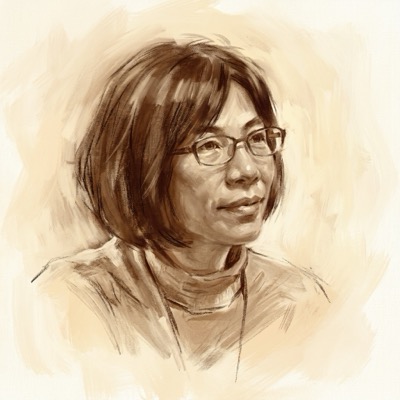
Yunn-Wen Lien
Associate Professor of Psychology, National Taiwan University
Yunn-Wen Lien is an Associate Professor in the Department of Psychology at National Taiwan University, where she earned her PhD in cognitive psychology after doctoral study at the University of California, Los Angeles. Her research spans reasoning, rule discovery, attribution, creativity, mind-wandering and mindfulness, and the influence of culture on cognition. In recent years her work has centered on how body awareness shapes cognition and emotion regulation, leading her to develop a locally grounded Body-Mind Axial Awareness (BMAA) method drawn from classical Chinese ritual dance. Taught at NTU for over a decade, the course studies its effects on interoception, psychological resilience, sense of agency, and well-being. Her work argues that the body, not the brain alone, is foundational to psychological functioning.
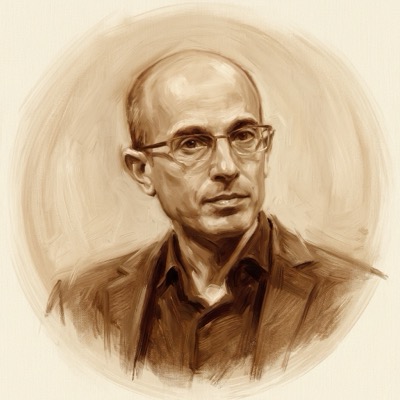
Yuval Noah Harari
Historian & Public Intellectual
Yuval Noah Harari is a historian and author of the bestselling books 'Sapiens,' 'Homo Deus,' and 'Nexus.' A professor at Hebrew University of Jerusalem, he has become one of the world's most influential voices on how AI will reshape humanity. He views AI as 'alien intelligence' that processes information in fundamentally different ways than humans, and warns of its potential to 'hack the operating system of human civilization.'
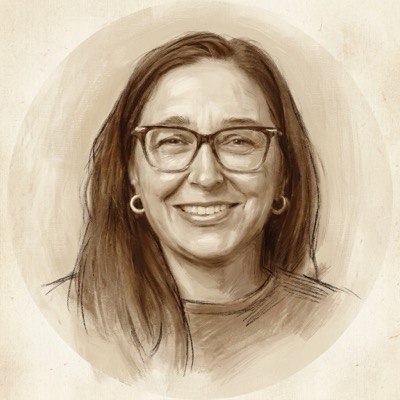
Zena Hitz
Tutor, St. John's College
Zena Hitz is a philosopher and Tutor in the great books program at St. John's College in Annapolis, where she was also an undergraduate. She earned a master's at Cambridge and a PhD in philosophy at Princeton, with scholarship rooted in classical philosophy — particularly Plato and Aristotle's ethics and politics. After years in research academia and a period living in a Catholic religious community, she returned to St. John's convinced that learning matters for its own sake, not for prestige or achievement. Her book Lost in Thought (2020) defends the hidden pleasures of the intellectual life, and she founded the Catherine Project, which offers free great-books education to anyone who wants to read seriously.
No people found
Try a different search term