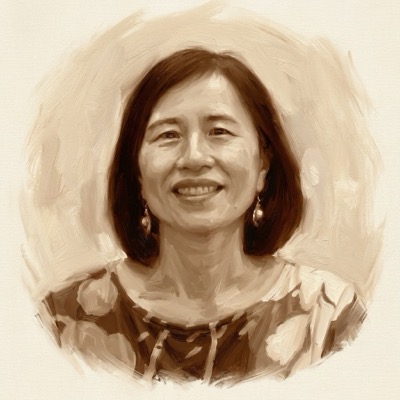
Su-Ling Yeh
Dean of Science & Distinguished Professor, National Taiwan University
Trace a path from Su-Ling Yeh →About
Su-Ling Yeh is a Distinguished Professor of Psychology and Dean of the College of Science at National Taiwan University, where she also serves as Associate Director of the Center for Artificial Intelligence and Advanced Robotics. She earned her PhD in Psychology from UC Berkeley in 1994 and leads the EPA (Explorers of Perception & Attention) Lab, investigating consciousness, attention, multisensory integration, and the cognitive implications of AI. Her research bridges cognitive neuroscience with emerging technology, exploring what remains uniquely human in the age of artificial intelligence.
Key Contributions
- Leads NTU's EPA Lab, studying perception, attention, consciousness, and multisensory integration
- Connects cognitive neuroscience with AI by asking what remains distinctive about human perception and awareness
- Serves as Dean of NTU's College of Science while also helping guide NTU's AI and robotics research infrastructure
- Received Taiwan's Ministry of Education Academic Award for research contributions in psychology and cognitive science
- Her work is a needed counterweight to model-centric AI discourse, though translating consciousness research into AI practice remains difficult
Videos & Interviews

Connections
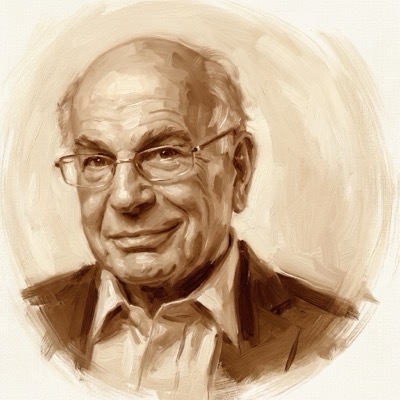
Daniel Kahneman
Influenced byPsychologist & Nobel Laureate
As a Berkeley doctoral student Yeh studied attention under Daniel Kahneman and Anne Treisman, and attention became the path by which her work reached consciousness. Decades later, Kahneman's split between the remembering self, which narrates, and the experiencing self, which feels, became the hinge of her public argument about AI: a machine may reach access consciousness and a remembering self, but not phenomenal consciousness or an experiencing self. The storyteller can be automated; the one who is in pain right now cannot.
case.ntu.edu.tw · case.ntu.edu.tw · lib.ntu.edu.tw
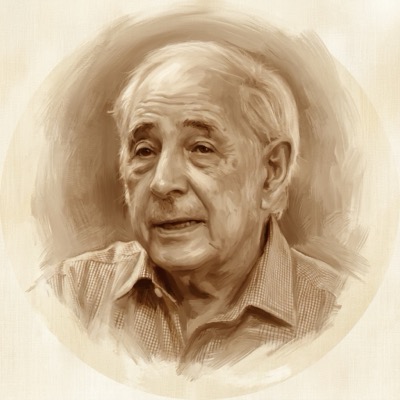
John Searle
Influenced byPhilosopher of Mind & Language
In her lectures on what stays human in the age of AI, Yeh rests her case on Searle's Chinese Room: a person matching Chinese notes against a lookup table can answer correctly without understanding a word. For her the room separates performance from experience, the line she draws between what AI can do and the experiencing self it cannot have. Searle built the argument against strong AI in 1980; she carries it into lecture halls full of people who now talk to such rooms every day.
case.ntu.edu.tw · Searle, 'Minds, Brains, and Programs', Behavioral and Brain Sciences 3 (1980)
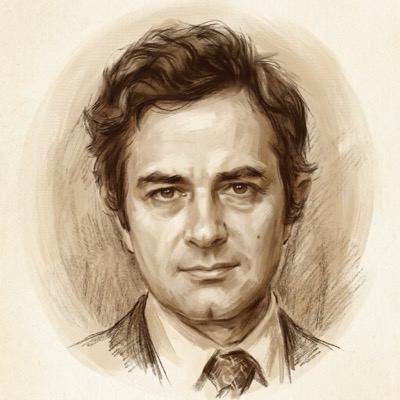
Thomas Nagel
Influenced byPhilosopher of Mind
When Yeh defines what AI lacks, she uses Nagel's definition. Consciousness is first-person subjective experience, what it is like to be something, and her lectures cite 'What Is It Like to Be a Bat?' (1974) as the starting point. Her lab then does what Nagel's essay could not: it measures how much the mind does with no one home, such as reading eye gaze, faces, and word meanings under suppression, to find where unconscious processing stops.
lib.ntu.edu.tw · case.ntu.edu.tw
Yunn-Wen Lien
KindredAssociate Professor of Psychology, National Taiwan University
This is a pairing, not a documented collaboration: no co-authored paper or co-taught course between them turned up. They are colleagues in NTU's psychology department, and both came out of the experimental study of attention and reasoning before turning toward awareness and well-being. Yeh argues that the experiencing self is what AI cannot reach. Lien's body-mind practice is a decade-long attempt to strengthen exactly that self.

