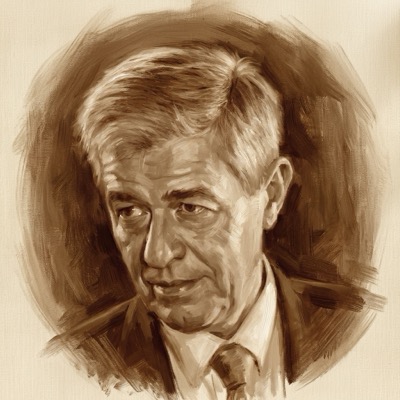
Karl Friston
Neuroscientist & Theoretical Biologist
About
Karl Friston is a neuroscientist at University College London and the creator of the Free Energy Principle, a unified theory of brain function that has become foundational to understanding biological and artificial intelligence. His work on active inference provides a mathematical framework for how intelligent systems—biological or artificial—model and interact with their environment. The Free Energy Principle has profound implications for AI, suggesting that intelligence emerges from systems minimizing prediction error.
Key Contributions
- Created Statistical Parametric Mapping, making modern neuroimaging analysis more statistically rigorous and widely usable
- Developed dynamic causal modelling, giving neuroscience tools for inferring interactions among brain systems
- Developed the Free Energy Principle as a unifying account of perception, action, and biological self-organization
- Built active inference into a formal framework for agents that act to reduce uncertainty, not merely predict passively
- Influenced neuroscience, psychiatry, robotics, and AI researchers looking for alternatives to reward-maximization models
- His framework is extraordinarily generative but notoriously difficult, prompting critics to ask whether it explains too much too abstractly
Questions they sharpened View the streams
How does a mind know what matters?
2010What matters is what carries the most information about reducing surprise. Precision-weighting is the brain's attention — the free-energy principle turned into a mechanism for allocating relevance moment to moment.
Can a tool want anything?
2013A system that minimizes free energy has preferred states it acts to reach — the mechanics of wanting, with no one necessarily home to want.
Videos & Interviews
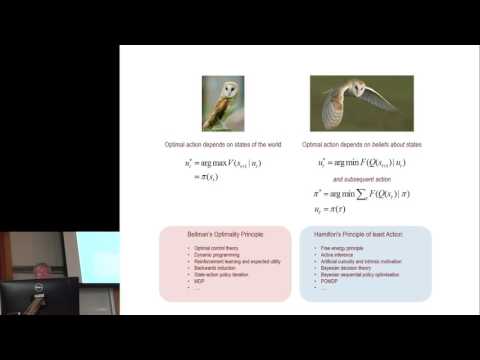
Karl Friston: Active Inference and Artificial Curiosity
Discussion on active inference and its implications for AI systems
View Details
How the brain constructs reality | Karl Friston on consciousness and neuroscience
Karl Friston on how the brain constructs its model of reality through predictive processing
View Details
Karl Friston: The Free Energy Principle
Machine Learning Street Talk #033 - Deep dive into the Free Energy Principle
View DetailsPapers & Publications
Connections
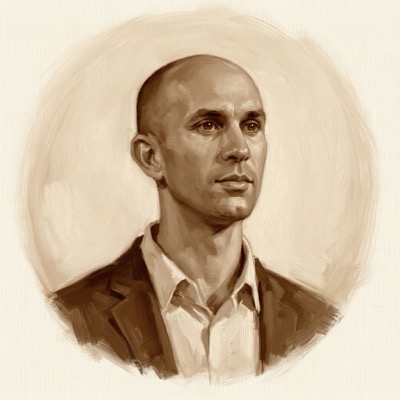
Anil Seth
CollaboratedProfessor of Cognitive & Computational Neuroscience, University of Sussex
Seth and Friston co-authored 'Active interoceptive inference and the emotional brain' (Philosophical Transactions of the Royal Society B, 2016), which turns the free energy principle inward: the brain does not only predict the world outside, it predicts the state of the body it is keeping alive. That move is the hinge of Seth's later work — if selfhood is the brain's best guess about its own viscera, then being someone is tied to being a living thing, and a system with no body to regulate has nothing for the guess to be about.
ncbi.nlm.nih.gov · Active interoceptive inference and the emotional brain, Phil. Trans. R. Soc. B 371(1708), 2016
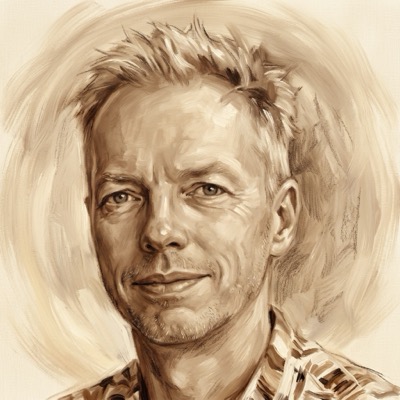
Andy Clark
InfluencedPhilosopher & Cognitive Scientist
Clark is predictive processing's philosophical advocate, and Friston's prediction-error framework is the machinery underneath 'Whatever Next?' and Surfing Uncertainty. But the inheritance is deliberately partial: Clark famously confines the free-energy principle to an appendix, taking the working idea — brains as prediction machines — while declining the grand physics of self-organization behind it. How much of Friston one must buy is itself a live question in the field.
dericbownds.net · Surfing Uncertainty: Prediction, Action, and the Embodied Mind (OUP, 2016)
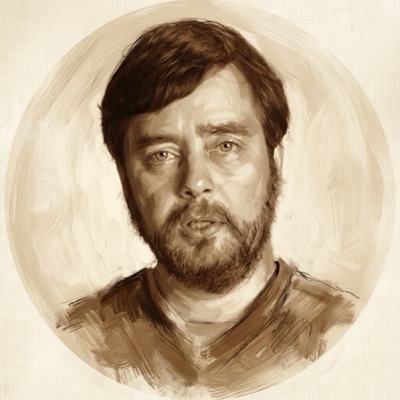
Michael Levin
CollaboratedBiologist & Morphogenesis Researcher
Both names sit on 'A free energy principle for generic quantum systems' (with Chris Fields and James Glazebrook, 2021), which rewrites Friston's principle so that any quantum system counts as an observer that can assign meaning to what it measures — cognition made scale-free in the formalism, as Levin had been making it scale-free in the lab. The three of them, Levin, Friston, and Fields, later sat for a recorded three-way on Theories of Everything. It is the place where bioelectric morphogenesis and the Bayesian brain agree on a common ancestor: any system that persists must model its world.
arxiv.org · youtube.com
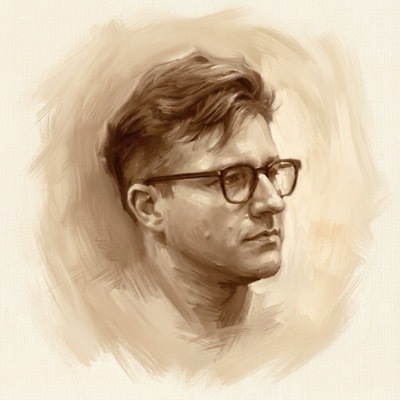
Tim Scarfe
In conversationCreator & Host, Machine Learning Street Talk
The free energy principle is famously difficult to get a clean statement of — a single idea claiming to cover perception, action, learning and the persistence of living things, usually encountered through equations or through paraphrase that loses it. An episode that does nothing but let Friston lay it out at length is a genuine service, and it is why this channel keeps turning up in the citations on this site.
youtube.com