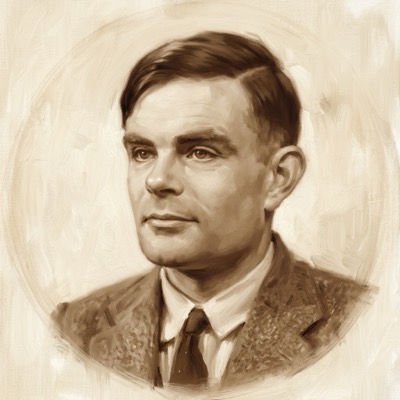
Alan Turing
Mathematician & Computer Science Pioneer
About
Alan Turing (1912–1954) was a British mathematician whose work laid the theoretical foundation for computer science and artificial intelligence. His concept of the 'Turing machine' formalized computation itself, while his 1950 paper 'Computing Machinery and Intelligence' introduced the famous 'Turing Test' for machine intelligence. During World War II, he led the team that cracked the Enigma code, helping end the war years earlier. His question 'Can machines think?' launched the field of AI and remains central to debates about artificial minds.
Key Contributions
- Formalized computation with the Turing machine, giving computer science a precise model of what algorithms can do
- Proved limits on computation through work on the Entscheidungsproblem, making undecidability a central idea in computer science
- Asked 'Can machines think?' in 1950 and proposed the imitation game, still the reference point for debates about machine intelligence
- Led key cryptanalytic work at Bletchley Park, including methods and machines used against German Enigma traffic
- Designed the Automatic Computing Engine, one of the early stored-program computer designs after World War II
- Explored morphogenesis with reaction-diffusion equations, showing his interest in computation extended into biology and pattern formation
- His postwar prosecution for homosexuality and later pardon made him a symbol of both scientific brilliance and state persecution
Questions they sharpened View the streams
What is computation?
1936Computation is what a universal machine can do: any procedure that can be written as steps can be mechanized — by one machine that can imitate them all.
Can machines think?
1950Replace the question with a game: if you cannot tell the machine from the person, what exactly is missing?
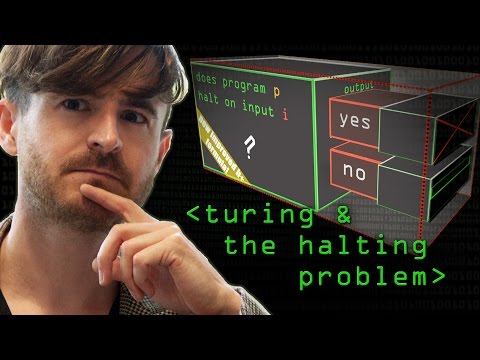
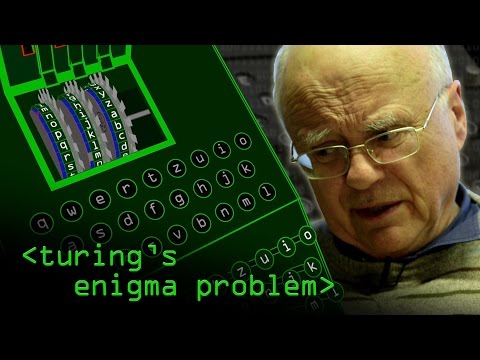
Videos & Interviews
Papers & Publications
On Computable Numbers, with an Application to the Entscheidungsproblem
1936Defined computability through the universal machine and proved the limits of what any mechanical procedure can decide.
Read PaperComputing Machinery and Intelligence
1950Replaced 'can machines think?' with the imitation game, founding the modern debate on machine intelligence.
Read PaperConnections
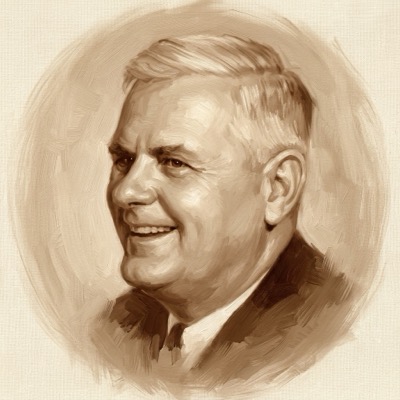
Alonzo Church
Influenced byMathematician & Logician
Turing came to Princeton in 1936 to write his doctorate under Church — the one man who had reached the same boundary first, and by a completely different road. Church's lambda calculus defined computation as pure substitution; Turing's machine defined it as a clerk with a tape. That the two turned out to describe exactly the same class of procedures became the Church–Turing thesis, the closest thing computer science has to a law of nature.
plato.stanford.edu · en.wikipedia.org · On Computable Numbers, with an Application to the Entscheidungsproblem (1936)
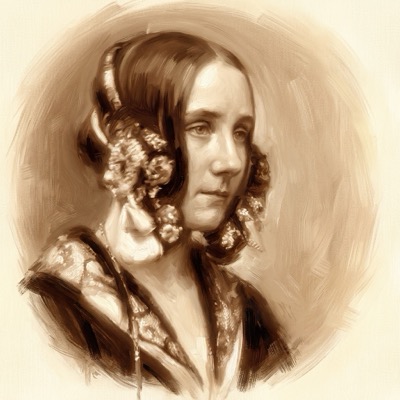
Ada Lovelace
DebatedMathematician & First Computer Programmer
In 1843 Lovelace wrote that the Analytical Engine 'has no pretensions to originate anything'; in 1950 Turing set that sentence down as objection six of nine and answered it by name. His reading was that the objection really means machines can never take us by surprise — and that they surprised him constantly. It is the strangest argument in this atlas: one party had been dead ninety-eight years, and it is still unsettled.
plato.stanford.edu · doi.org · fourmilab.ch
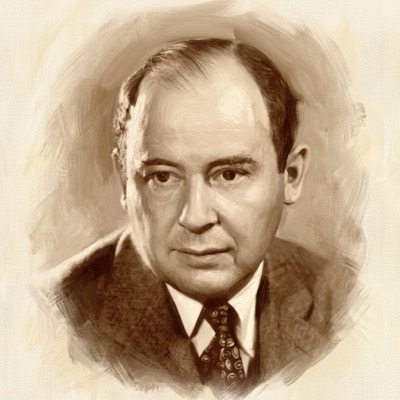
John von Neumann
InfluencedMathematician & Computer Architecture Pioneer
Von Neumann was at Princeton while Turing was, was intrigued enough by the universal machine to offer him a postdoctoral post, and later made the 1936 paper required reading for his own computer project at the Institute for Advanced Study. Stanley Frankel recorded von Neumann calling himself only 'the midwife' and insisting that 'the fundamental conception is owing to Turing.' The machine on your desk is still called a von Neumann architecture — a name he would have treated as a misattribution.
plato.stanford.edu · plato.stanford.edu · en.wikipedia.org
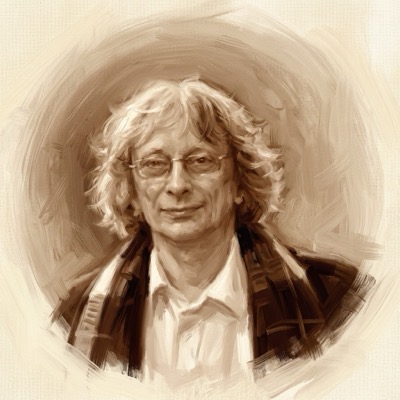
David Deutsch
InfluencedPhysicist & Pioneer of Quantum Computation
Deutsch's universal quantum computer is Turing's universal machine carried into physics, and he defends the inheritance in both directions. On what a mind can compute he is uncompromising: there is no model of computation more powerful than the universal Turing machine, and since we can simulate one by doing mental arithmetic, 'we are all the same, and so is the chess engine, and so is the LLM' — what differs is only the program. On the imitation game he defends Turing against his admirers: Turing never meant it as a test of general intelligence but as an argument aimed at people who thought the thing impossible, an intuition pump to show their view was not self-consistent.
youtube.com