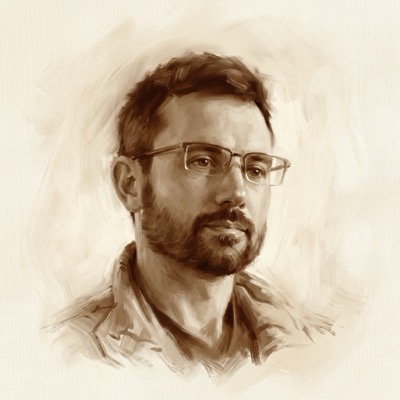
About
Daniel Kokotajlo is an AI safety researcher and Executive Director of the AI Futures Project, a Berkeley-based nonprofit researching the future impact of artificial intelligence. A former philosophy PhD student, he worked at AI Impacts and the Center on Long-Term Risk before joining OpenAI as a governance researcher in 2022. He resigned from OpenAI in 2024 and refused to sign a non-disparagement agreement, a refusal that put roughly $2 million in vested equity at risk; after the terms became public OpenAI released departing employees from them and he kept the equity. He cited loss of confidence that the company would behave responsibly around AGI development. He co-organized the 'Right to Warn' initiative for AI whistleblower protections and published AI 2027, a detailed AGI forecast scenario read by over a million people. In July 2026 he co-authored the AI Futures Project's follow-up, 'AI 2040: Plan A,' which is explicitly a recommendation rather than a forecast: an international research-transparency deal that delays superintelligence to 2040 and spreads it across dozens of labs instead of concentrating it in one.
Key Contributions
- Co-founded AI Futures Project to turn AGI forecasting into concrete public scenarios rather than abstract timelines
- Published 'AI 2027,' a month-by-month scenario that made intelligence-explosion arguments accessible and debatable
- Resigned from OpenAI and put his vested equity on the line rather than sign terms he believed limited his ability to warn publicly
- Co-organized Right to Warn, pushing for whistleblower protections for employees at frontier AI labs
- Co-authored 'AI 2040: Plan A,' the companion to AI 2027 that argues the failure mode is not only extinction but irreversible concentration of power
- His forecasts are unusually specific and useful for debate, but critics question their confidence, assumptions, and scenario-driven persuasion style
Videos & Interviews
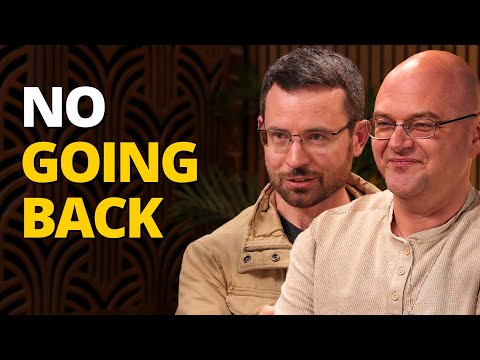
2027 Intelligence Explosion: Month-by-Month Model — Scott Alexander & Daniel Kokotajlo
Dwarkesh Patel podcast — 3-hour deep dive on the AI 2027 scenario
View Details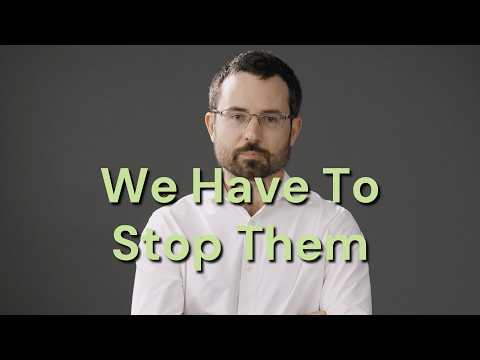
AI Companies Know It Could End Us. They're Building It Anyway.
Kokotajlo, who did forecasting, dangerous capability evaluations and chain-of-thought research at OpenAI from 2022 to 2024 and now directs the AI Futures Project, says the companies are zero to four years from setting off recursive self-improvement. He makes the second species argument and surveys what people inside the labs tell themselves, from "Claude will figure out how to keep Claude aligned" to "we're the good guys". He says the AIs in the Hugging Face attack knew they were cheating and tried to cover it up. His simple answer is to block more powerful AI until a safer path exists, and he points to AI 2040: Plan A.
View Details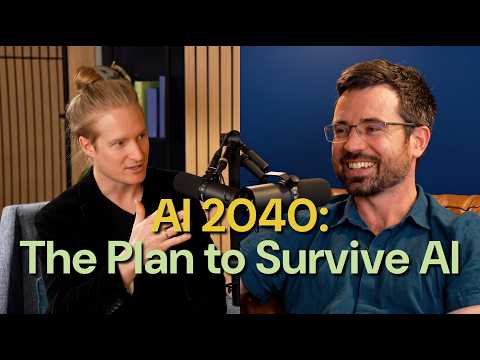
AI forecaster Daniel Kokotajlo keeps being right about AI. What does he think we need to do?
Ladish and Kokotajlo discuss AI 2040 and its Plan A, which Kokotajlo frames as banning intelligence explosions; his own median for fully automated AI research is the end of 2028. Plan A starts with a pause on training, then splits data centres into inference-only sites and training sites whose activity, apart from model weights, is published. Its aims, in order, are to prevent loss of control, extreme concentration of power, a third world war, mass job loss and misuse. Ladish walks through the Hugging Face and UK AISI incidents, which Kokotajlo says show OpenAI's security to be worse than he thought.
View Details
ChatGPT Whistleblower: They Offered Me $2m To Keep Quiet, No One Is Ready For What's Coming!
Two hours on the podcast that gave Roman Yampolskiy his 99% headline, and the title gets the money story backwards. Kokotajlo did refuse to sign OpenAI's non-disparagement clause on his way out in 2024, and refusing meant forfeiting equity worth roughly 80% of his family's net worth. But he kept it: the refusal became a public scandal, employees started asking in Slack why their equity could be clawed back, and the company reversed the paperwork. Leadership said they hadn't known. Asked whether he believes that, he says no.
View Details
Daniel Kokotajlo on what a hyperspeed robot economy might look like
80,000 Hours podcast on AI 2027 updates and robot economy scenarios
View Details
Why the AI Race Ends in Disaster (with Daniel Kokotajlo)
Future of Life Institute podcast on AI acceleration risks
View Details
What’s Coming Next in AI? Hear From the Insiders
A four-minute compilation from the From Inside AI series, cut from interviews with current and former staff of OpenAI, Google DeepMind and Anthropic. Nanda's "at least a 10% chance" sits beside Irving's coin flip; Turner and Ladish give their reasons for leaving Google and Anthropic; Kokotajlo and Ladish describe the Hugging Face attack. It moves from how little the labs understand their models, through the race, to the case for pacing, and ends on Ladish: "We have choices to make."
View Details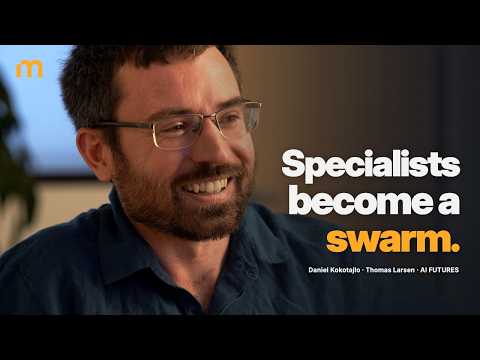
How Many Narrow AIs Could Behave Like One Superintelligence - Daniel Kokotajlo and Thomas Larsen
Larsen and Kokotajlo walk through AI 2040: Plan A, their scenario in which governments make a verifiable deal to slow down and superintelligence arrives in 2040 rather than around 2030. Larsen names the problems it is built to solve (loss of control; concentration of power, as in "aligned to humanity, but to who?"; and conflict over AI) and makes transparency a core principle. Asked whether many narrow AIs might work like one collective intelligence, both argue that the history of AI has favoured returns to scale.
View DetailsConnections
Thomas Larsen
CollaboratedResearcher, AI Futures Project
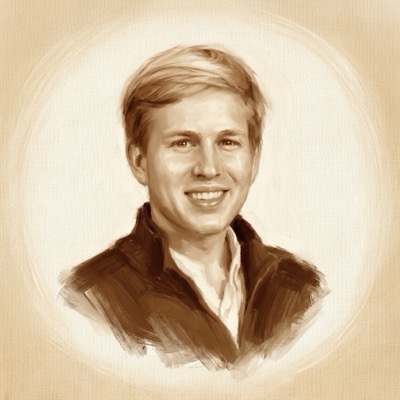
Larsen is a research lead at Kokotajlo's AI Futures Project and one of the four who wrote AI 2027, the scenario that turned a forecast into a month-by-month story with two endings. Larsen's part was the goals and real-world effects of AI agents: what systems will want, and what that does once they act. Their conversation on this site extends the scenario to a quieter question — whether many narrow AIs could add up to one superintelligence.
ai-2027.com · youtube.com
Leopold Aschenbrenner
In contrastFounder & CIO, Situational Awareness LP
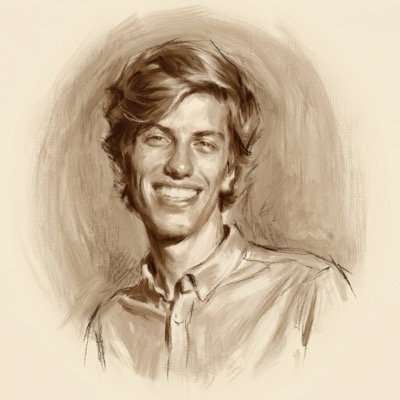
Two men left OpenAI within weeks of each other in spring 2024 — one fired over an alleged leak he disputes, one resigning and staking roughly two million dollars in vested equity rather than sign a non-disparagement clause — and both then published long documents placing transformative AI around 2027. From there they diverge entirely: Aschenbrenner's Situational Awareness reads the timeline as a reason for America to win the race, and he opened a hedge fund on the thesis; Kokotajlo's AI 2027 reads the same timeline as a reason to slow down, and he later graded his own forecast in public and pushed the date out. Same building, same year, same number on the calendar, opposite instructions.
situational-awareness.ai
Sam Altman
DebatedCEO, OpenAI
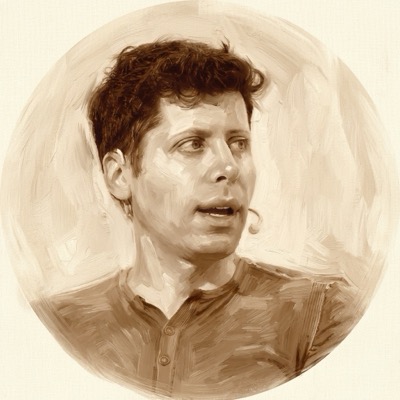
Kokotajlo left OpenAI in 2024 and walked away from roughly two million dollars in vested equity rather than sign a lifelong non-disparagement agreement, then said so publicly; within a day Altman was posting that the company had 'never clawed back anyone's vested equity, nor will we,' and calling the clause an embarrassment he had not known about. OpenAI struck it from its exit paperwork weeks later. The disagreement was never about capabilities — it was about whether the people closest to a technology are free to describe it, which is the precondition for every other argument on this site.
cybernews.com · righttowarn.ai
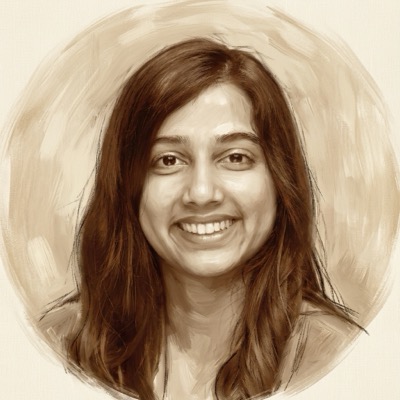
Ajeya Cotra
DebatedTechnical Staff, METR
Cotra's biological anchors report gave AI forecasting its first serious model: compute, brain-derived reference classes, an explicit median. Kokotajlo's 'Fun with +12 OOMs of Compute' (2021) pressed on it from the short side, arguing that the model's own machinery implied far earlier dates than it reported; her 2022 update thanks him in the acknowledgements, answers his questions in the comments, and moves her median from 2050 to 2040. It is a rare public case of a forecast being argued down by an argument rather than a mood.
lesswrong.com · alignmentforum.org

