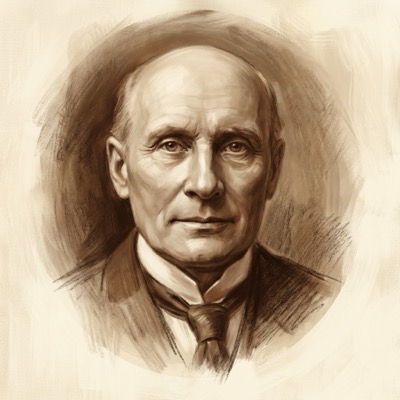
Alfred North Whitehead
Mathematician & Process Philosopher
Trace a path from Alfred North Whitehead →About
Alfred North Whitehead (1861–1947) was a British mathematician and philosopher who co-authored 'Principia Mathematica' with Bertrand Russell, one of the most important works in the foundations of mathematics. He later developed process philosophy, arguing that reality consists not of static objects but of dynamic processes of becoming. His critique of the 'fallacy of misplaced concreteness'—mistaking abstract models for concrete reality—offers a powerful lens for understanding AI's limitations. His process metaphysics challenges the mechanistic worldview that underlies most AI research, suggesting that experience and creativity are fundamental features of reality, not reducible to computation.
Key Contributions
- Co-authored Principia Mathematica with Bertrand Russell, one of the major projects of mathematical logic
- Wrote on algebra, logic, and mathematics education before turning fully toward metaphysics
- Developed process philosophy, replacing static substances with events, relations, and becoming
- Wrote Process and Reality and Science and the Modern World, giving philosophy of science an alternative to mechanistic metaphysics
- Coined the fallacy of misplaced concreteness, warning against mistaking abstractions for reality
- His process view is increasingly useful for AI and ecology, though the metaphysical system is notoriously difficult to enter
Questions they sharpened View the streams
Does reality descend or emerge?
1929Reality is not made of enduring things but of momentary occasions, each gathering the whole past and adding one drop of novelty. 'The many become one, and are increased by one' — the world is a creative advance from below, not a descent from above.
Where does agency come from?
1929The inert matter of the mechanists is an abstraction. Every actual occasion has a subjective aim; experience reaches all the way down.
Videos & Interviews

Alfred North Whitehead: His Life and Work
Matthew D. Segall traces Whitehead's life from mathematician to process philosopher, surveying the arc of his thought
View Details
Alfred North Whitehead's Strange Theory Of Reality
Matt Segall on Whitehead's process philosophy and his radical rethinking of what reality is
View Details
The Blind Spot in Perception: Cognitive Science, Asian Philosophy, and Mystical Insight
On the limits of perception and the convergence of Western and Eastern philosophical traditions
View Details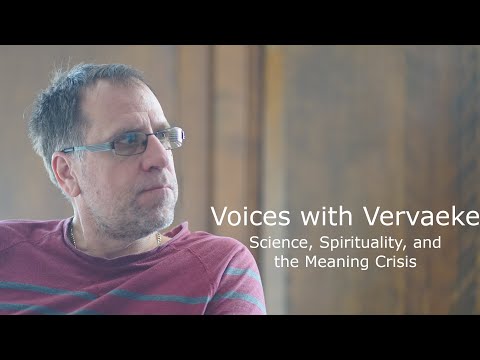
Emergence-emanation, Whitehead, Kastrup: a dialectic ontology w/ Matt Segall - Voices with Vervaeke
Segall and Vervaeke work the axis between emanation and emergence: does reality descend from the One, as Plotinus taught, or climb from below, as Whitehead's process philosophy suggests — and can a dialectical ontology hold both? A follow-up to their Whitehead dialogue, set between Vervaeke's conversations with Bernardo Kastrup.
View DetailsConnections

Matthew D. Segall
InfluencedAssociate Professor, CIIS
Segall has put Whitehead at the centre of his philosophical work: Physics of the World-Soul (2018, revised 2021) rereads Whitehead's philosophy of organism against relativity, quantum theory and evolution, and Crossing the Threshold (2023) sets him beside Schelling. On his own channel he walks through Whitehead's life from mathematician to process philosopher. He carries Whitehead's process view into today's arguments about mind, nature and machines.
ctr4process.org · youtube.com
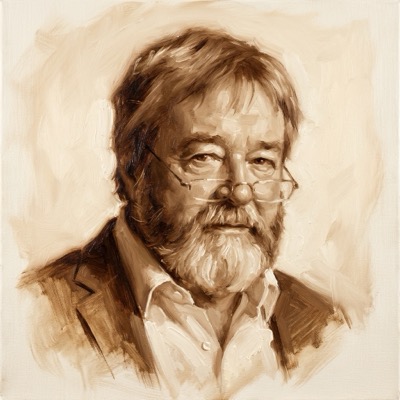
Iain McGilchrist
InfluencedPsychiatrist, Neuroscientist & Author
McGilchrist names the lineage in his own words: "I'm a process philosopher. I'm in the tradition of Whitehead and Schelling." His conviction that relations are prior to the things they relate, and that the world the right hemisphere attends to is flowing rather than fixed, is Whitehead's metaphysics of process given a neurological home. Reviewers of The Matter with Things list Whitehead among its forebears.
youtube.com · en.wikipedia.org
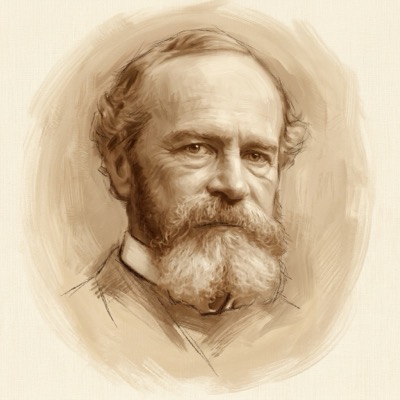
William James
Influenced byPhilosopher & Psychologist
The preface to Process and Reality (1929) says Whitehead is 'greatly indebted to Bergson, William James, and John Dewey', and that he wants to rescue their type of thought from the charge of anti-intellectualism. He took James's observation that experience arrives in 'buds or drops of perception' and built it into his epochal theory of time. His biographer Victor Lowe called the relation less influence than sympathy: Whitehead gave James's psychology a cosmology.
encyclopedia.whiteheadresearch.org · Alfred North Whitehead, Process and Reality (1929), Preface, p. xii; p. 68
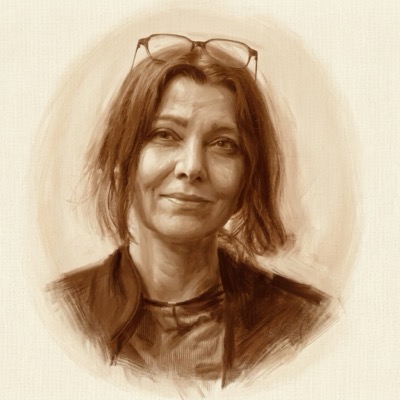
Elif Shafak
KindredNovelist & President, Royal Society of Literature
Shafak makes process philosophy's central move without its vocabulary. 'When you enter story land there's no us versus them,' she says — 'for a writer there can be no other. The other is my brother, the other is my sister, I am the other. So it dismantles dualities' — and she finds the same dismantling in mystics who never met across centuries and continents: 'whatever exists in me exists in the universe and vice versa,' each person a microcosm reflecting the macrocosm. That sits close to Whitehead's wager that relation is constitutive rather than incidental, every actual entity taking up the whole universe from its own standpoint; what he built as metaphysics against a world of separate substances, she reports as what the mystics kept saying and what fiction does to a reader.

