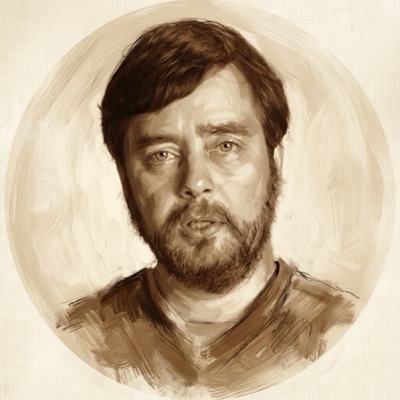
Michael Levin
Biologist & Morphogenesis Researcher
About
Michael Levin is a professor of biology at Tufts University and director of the Allen Discovery Center. His groundbreaking research on bioelectricity and morphogenesis has revealed how cells communicate and coordinate to build complex structures. His work on 'xenobots'—living robots made from frog cells—and planarian regeneration offers profound insights into the nature of intelligence, suggesting that cognition exists at multiple scales from cells to organisms, with implications for AI and synthetic biology.
Key Contributions
- Showed how bioelectric signals help coordinate morphogenesis, regeneration, and anatomical pattern memory
- Uses planaria and other model organisms to study how cells collectively solve problems across scales
- Connects developmental biology, cancer suppression, and regenerative medicine through top-down control of form across scales
- Co-created xenobots and anthrobots, living constructs that blur boundaries between organism, machine, and designed system
- Frames cognition as a multi-scale phenomenon, extending intelligence talk below brains to tissues and cellular collectives
- His ideas are provocative and productive, though critics can see the intelligence vocabulary as metaphorically stretched
Questions they sharpened View the streams
What is life?
Life is a gradient of problem-solving competence — every living thing has a cognitive light cone, a horizon of goals it can pursue.
Where does agency come from?
2019Agency is a gradient, not a switch. Cells bind into a collective that owns goals no single cell can hold — a limb, a set-point — and life keeps scaling up that cognitive light cone.
Can a tool want anything?
2022Wanting scales with the light cone. Even a single cell defends set-points — a target state it works to restore. Homeostasis is proto-wanting, and it runs continuously from there up to human goals.
Could a machine be alive?
2022Life isn't a substance, it's an organizational achievement. Xenobots — living robots built from frog cells — are neither the frog they came from nor machines we designed. 'Alive' is a gradient of problem-solving competence, and our machines may already sit somewhere on it.
How does a mind know what matters?
2022What counts as relevant is set by the size of the self. A cell's 'what matters' is a chemical gradient; ours spans decades and continents. Relevance isn't universal — it's indexed to the scope of the cognitive light cone doing the caring.
What is a self?
2022A self is the boundary of a cognitive light cone — the scope of what a system counts as 'me' and works to protect. Selves nest and merge: cells into tissues, tissues into you. The boundary is real, measurable, and not fixed.
What is agency?
2022The intentional stance turns out to be literally true further down than Dennett assumed. A cell is a tiny agent with goals it defends; agency is a measurable gradient of competence, not just a story we find it useful to tell.
What is consciousness?
2022Whatever consciousness turns out to be, it likely comes in degrees, not kinds. The cognitive light cone — the scope of goals a system can represent and pursue — scales continuously from cell to organism, and any line drawn for 'conscious' is a convention, not a joint in nature.
Videos & Interviews
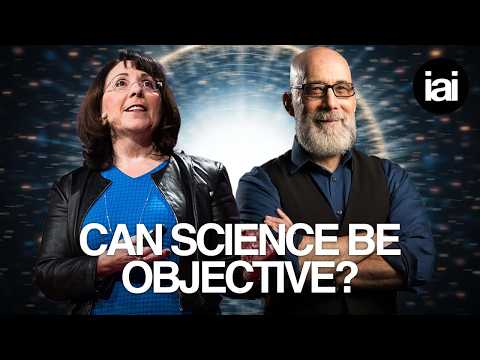
Is materialism holding science back? | Adam Frank, Lisa Feldman Barrett, Michael Levin
Adam Frank, Lisa Feldman Barrett, and Michael Levin discuss whether materialism limits how science understands mind, life, and experience.
View Details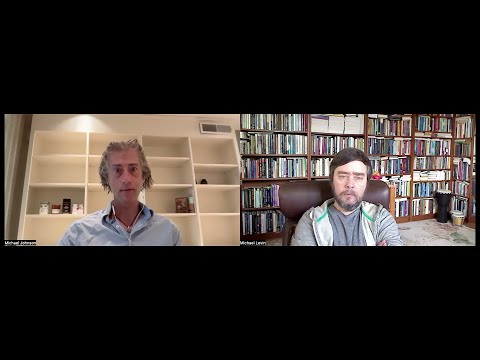
Discussion with Michael Johnson 1
First of two conversations on Michael Levin's channel, on vasocomputation, stress as cognitive glue, and computation and cognition in unconventional substrates. Johnson brings his hypothesis that tension in vascular smooth muscle latches Bayesian priors about the nervous system's appropriate range; Levin brings distributed stress minimization, stress reduction as the driving variable of anatomical homeostasis. Together they ask how neurons compete for blood flow, how the body punishes defectors, and why so much of that tension never gets released.
View Details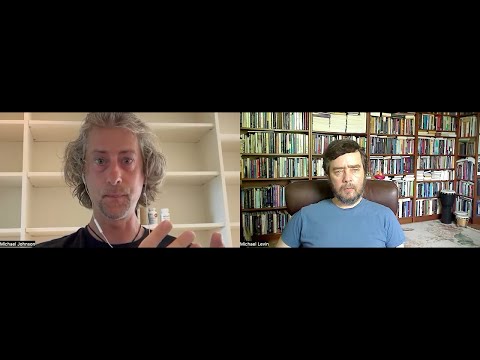
Discussion with Michael Johnson 2
Second conversation on Michael Levin's channel, covering the spectrum of consciousness down to the cell and below, implicit memory and cellular pixels of experience, Platonic space, symmetry breaking, and intrinsic versus extrinsic motivation. Johnson proposes meeting in the middle between Levin's thought and his own: both grant cells an inner perspective, so the question becomes what kind and how much. Levin offers his test for where a first-person view starts to matter, a bowling ball on a landscape versus a mouse, and the two ask whether the Platonic forms living systems tap into are symmetry groups.
View Details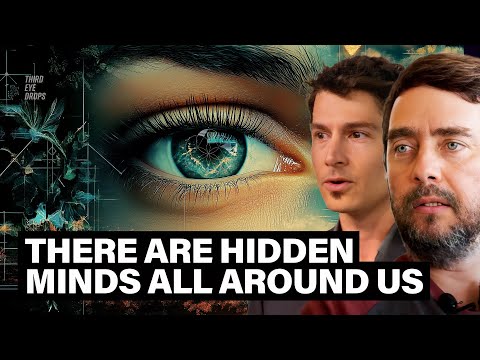
Hidden Consciousness & The Living Patterns That Shape Reality | Michael Levin & Matt Segall
A long-form dialogue (THIRD EYE DROPS, Mind Meld 424) between developmental biologist Michael Levin and process philosopher Matt Segall on hidden minds, the patterns that organize living form, and where cognition comes from.
View Details
Michael Levin: Biology, Life, Aliens, Evolution, Embryogenesis & Xenobots
Lex Fridman Podcast #325 - How cells think, bioelectricity, and the nature of intelligence
View Details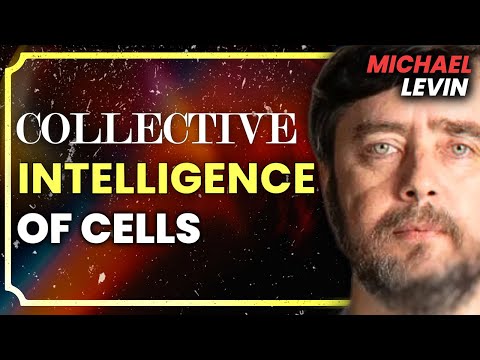
Michael Levin: Consciousness, Biology, Universal Mind, Emergence
Discussion on collective intelligence, cancer research, and the nature of mind
View DetailsPapers & Publications
Connections
Joscha Bach
In conversationAI Researcher & Cognitive Scientist
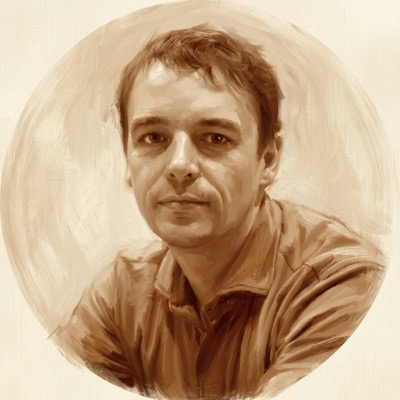
Bach and Levin have recorded hours of dialogue — a 2022 conversation on collective intelligence and morphogenesis, and a 2024 three-way with physicist Chris Fields. The affinity is structural: Levin finds cognition in tissues that have no neurons; Bach describes minds as self-organizing software running on whatever substrate will hold them. Between them, the question 'where does a mind begin?' loses its obvious answer.
youtube.com · drmichaellevin.org
Michael Edward Johnson
In conversationPhilosopher & Neuroscientist, Co-founder of the Qualia Research Institute
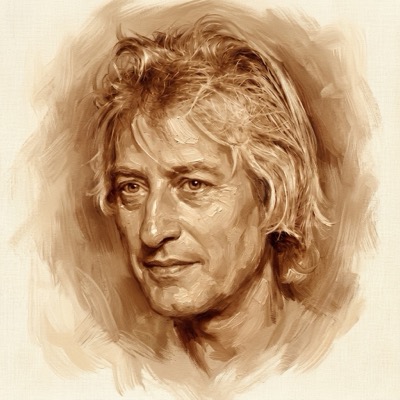
Two recorded sessions on Levin's channel in 2025. In the first, Johnson's vasocomputation, vascular muscle latching predictions about the nervous system's range, meets Levin's stress minimization as the driving variable of anatomical homeostasis, and they ask whether stress is the glue that binds cells into a self. In the second, both grant cells an inner perspective; Levin says he has no theory of consciousness of his own, Johnson brings the formalism, and the question shifts from whether to what kind and how much.
youtube.com · youtube.com
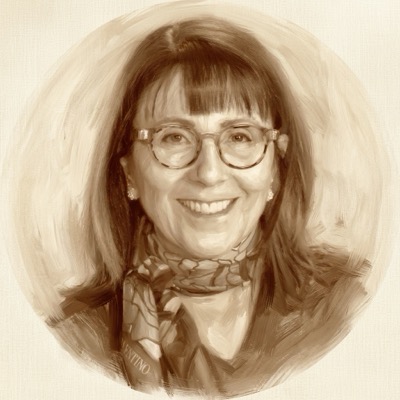
Lisa Feldman Barrett
In conversationDistinguished Professor of Psychology, Northeastern University
On an Institute of Art and Ideas panel asking whether materialism holds science back, Levin argued that strict physicalism 'has been dead for a really long time, and not because of any of this new biology but simply because of mathematics' — the value of e is a fact no physicist can change. Barrett, the panel's neuroscientist, answered from her own lab: 'I agree with this idea of a latent space,' she said, but wondered whether it comes from contextual coherence, since 'context is fully causal' and that already demands doing science differently, 'the way Mike does it or the way we do it.' A rare recorded moment of a biologist and a neuroscientist testing where the abstract realm they both need actually lives.
youtube.com

Karl Friston
CollaboratedNeuroscientist & Theoretical Biologist
Both names sit on 'A free energy principle for generic quantum systems' (with Chris Fields and James Glazebrook, 2021), which rewrites Friston's principle so that any quantum system counts as an observer that can assign meaning to what it measures — cognition made scale-free in the formalism, as Levin had been making it scale-free in the lab. The three of them, Levin, Friston, and Fields, later sat for a recorded three-way on Theories of Everything. It is the place where bioelectric morphogenesis and the Bayesian brain agree on a common ancestor: any system that persists must model its world.
arxiv.org · youtube.com