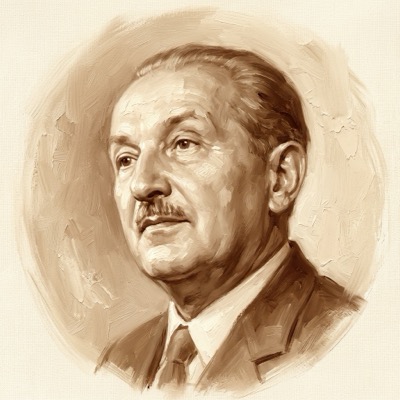
Martin Heidegger
Philosopher
About
Martin Heidegger (1889–1976) was a German philosopher and one of the most influential thinkers of the 20th century. His magnum opus 'Being and Time' explored fundamental questions of existence, arguing that human understanding is always situated 'in-the-world' rather than detached and theoretical. His distinction between 'ready-to-hand' (skillful, absorbed coping) and 'present-at-hand' (detached, theoretical analysis) became central to Hubert Dreyfus's critique of symbolic AI—the argument that expert human knowledge cannot be captured in explicit rules. His later critique of technology as 'enframing' (reducing everything to resources) raises profound questions about how AI systems might transform human self-understanding.
Key Contributions
- Wrote 'Being and Time,' framing human understanding as situated being-in-the-world rather than detached representation
- Developed Dasein, readiness-to-hand, and presence-at-hand, concepts later used to critique rule-based AI
- Showed how skilled tool use often disappears into practical activity until breakdown makes it explicit
- Made language, interpretation, and the history of Being central concerns for twentieth-century continental philosophy
- Critiqued modern technology as enframing, a way of revealing the world primarily as resources to be ordered
- His philosophy is indispensable for AI critique, but his Nazi involvement makes any intellectual legacy morally and historically fraught
Questions they sharpened View the streams
Connections
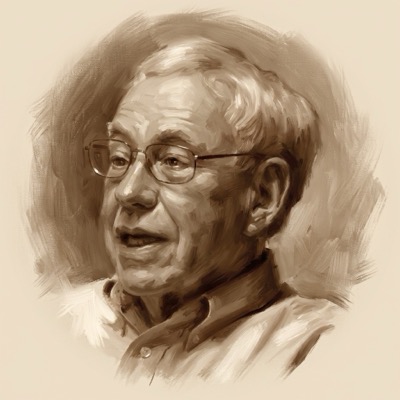
Hubert Dreyfus
InfluencedPhilosopher & AI Critic
Dreyfus's critique of AI is Heidegger converted into an engineering objection: intelligence is skilled coping in a world already meaningful, not the manipulation of context-free facts. His commentary Being-in-the-World (1991) was, for a generation of English-speaking philosophers, how Being and Time was read at all — an exegesis so distinctive that critics gave it a name, 'Dreydegger.'
en.wikipedia.org · Being-in-the-World: A Commentary on Heidegger's Being and Time, Division I (MIT Press, 1991)
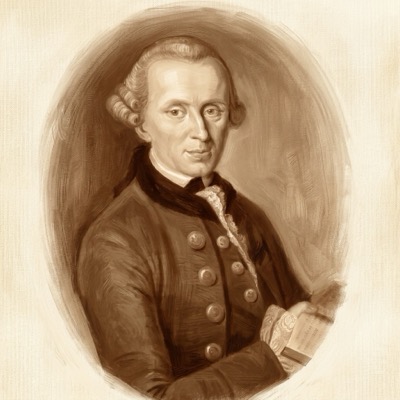
Immanuel Kant
Influenced byPhilosopher of the Enlightenment
The Kantian influence is pervasive throughout Being and Time, and Kant and the Problem of Metaphysics (1929) — written immediately after Heidegger's Davos encounter with Ernst Cassirer — can be read as supplementing that book's unfinished second part. Heidegger's interpretation placed unprecedented weight on the schematism, reading the first Critique as a treatise on human finitude; most Kant scholars, Cassirer first among them, rejected it, which tells you it was philosophy rather than exegesis.
en.wikipedia.org
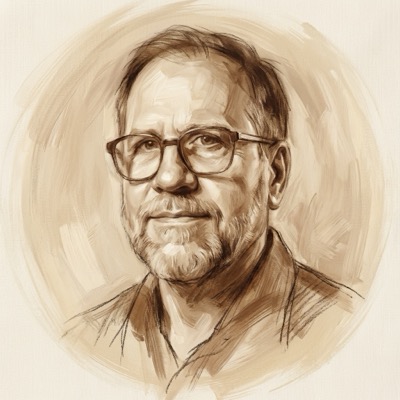
John Vervaeke
InfluencedCognitive Scientist & Philosopher
'He's had a huge influence on me in many ways,' Vervaeke told Lex Fridman — on 4E cognitive science, on the whole idea of the non-propositional that Heidegger and Merleau-Ponty made available. But asked for one idea, he chose the critique of onto-theology: the error of understanding Being in terms of a supreme being, which leaves us 'over-focused on particular beings' and disconnected from Being itself. That diagnosis is the spine of the meaning crisis as Vervaeke tells it — a culture that turned its deepest question into a question about one more thing.
youtube.com
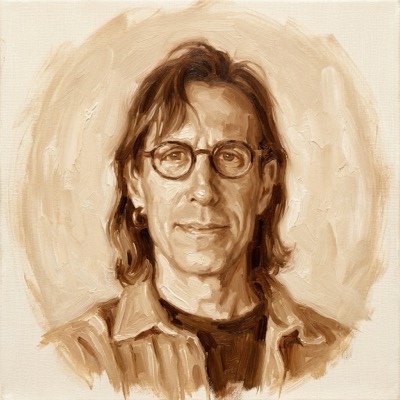
David Abram
InfluencedCultural Ecologist & Philosopher
In the book's chapter on time and space, Abram takes up Heidegger's account of temporality and folds it back into the land: the past sedimented beneath the ground, the future waiting beyond the horizon. It is a rare case of Heidegger's abstractions being returned, almost literally, to earth.
The Spell of the Sensuous (1996), ch. 6 — "Time, Space, and the Eclipse of the Earth"