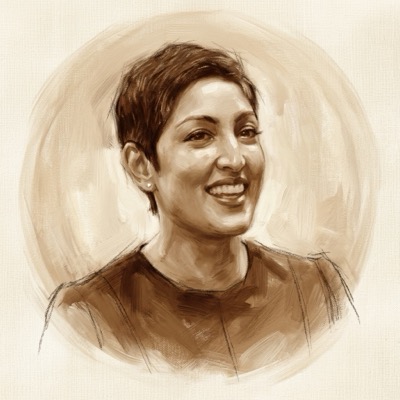
About
Rumman Chowdhury is the CEO and co-founder of Humane Intelligence, a nonprofit advancing community-driven AI auditing and evaluation. She previously served as Engineering Director and META team lead at Twitter, where she led work on machine learning ethics and algorithmic accountability, and as Managing Director of Responsible AI at Accenture. She holds a PhD in Political Science from UC San Diego and serves as the U.S. Science Envoy for Artificial Intelligence and Responsible AI Fellow at Harvard's Berkman Klein Center. Named to TIME's 100 Most Influential People in AI and BBC's 100 Women, she coined the term 'moral outsourcing' to describe society's tendency to blame technology rather than its creators for harm.
Key Contributions
- Founded Humane Intelligence to make AI red-teaming and auditing participatory rather than limited to labs and consultants
- Led Twitter's Machine Learning Ethics, Transparency and Accountability team before it was dissolved after the Musk acquisition
- Built responsible-AI practice in industry before the current generative-AI governance wave, including leadership at Accenture
- Popularized 'moral outsourcing' to describe blaming algorithms while ignoring the people and institutions deploying them
- Serves as U.S. Science Envoy for AI, connecting responsible-AI practice with international technology diplomacy
- Her work pushes AI accountability toward communities, though community audits still face hard questions about power, access, and enforcement
Videos & Interviews
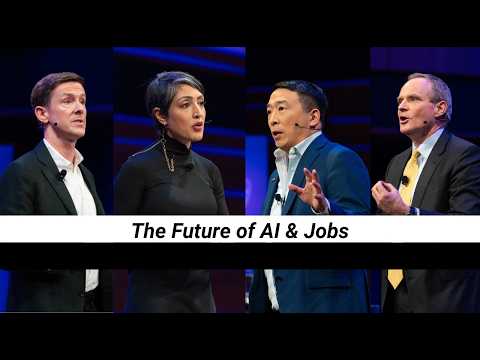
AI vs. Human Jobs Ft. Andrew Yang, Chris Hughes, Simon Johnson and Rumman Chowdhury
Panel discussion on AI's impact on employment and economic inequality
View DetailsMoral Outsourcing: Humanity in the Age of AI
TEDx talk on why we must not detach humans from the machines they create
View DetailsConnections
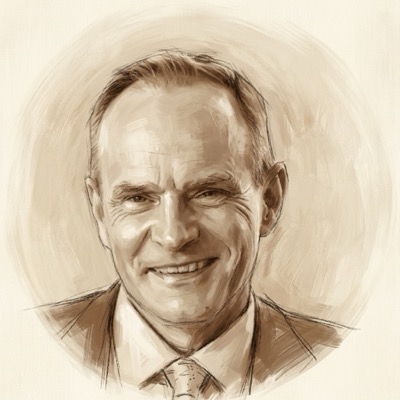
Simon Johnson
DebatedProfessor of Entrepreneurship, MIT Sloan
On an Open to Debate stage asking whether AI will make work obsolete, Johnson argued yes and Chowdhury — once his student at MIT — argued no. The disagreement turned out narrower than the motion: Johnson granted that the people raising capital are exaggerating what AI can do, and Chowdhury granted that the labour damage is real, warning that a fixation on total obsolescence is 'waiting for a volcano to explode' while ignoring 'the house that's on fire right now' — clerical and administrative jobs held mostly by women. The argument was never about whether to worry, but about which worry would move policy. The debate is on this site.
youtube.com

Emily Bender
KindredComputational Linguist
A shared refusal rather than a documented collaboration. Chowdhury's 'moral outsourcing' names the habit of treating AI as an agent so that, when harm comes, the algorithm takes the blame and the people who built and deployed it step aside. Bender reaches the same point as a linguist: a chatbot's 'I' is a design choice, because there is no I inside, and boosters and doomers alike share the premise that AI is a powerful, inevitable thing. Read together, they suggest the first act of accountability is grammatical — stop letting 'the AI' be the subject of the sentence.
en.wikipedia.org · ted.com · voicesofvr.com
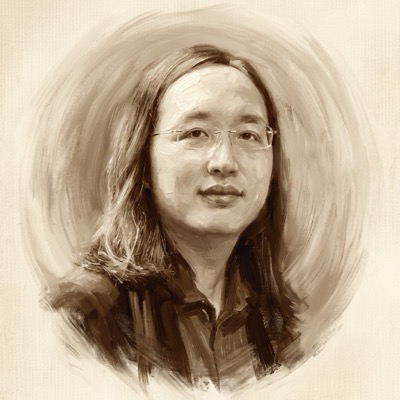
Audrey Tang
KindredCyber Ambassador-at-large, Taiwan
Two answers, from opposite sides of the Pacific in 2023, to the question of who gets to judge an AI system. Chowdhury's Humane Intelligence opened red-teaming to the public, starting with the largest generative-AI red-teaming exercise yet held, at DEF CON 31; Tang's digital ministry joined the Collective Intelligence Project's Alignment Assemblies so Taiwanese citizens could deliberate on what AI should and should not do. One gathers people to find a model's failures, the other to say what it ought to serve — both treat evaluation as something a public does, not a service it buys.
humane-intelligence.org · moda.gov.tw

Yoshua Bengio
CollaboratedAI Pioneer & Safety Researcher
Co-authors of 'International Institutions for Advanced AI' (2023), an eleven-author paper sketching governance functions that could be performed at an international level, from supporting access to frontier AI systems to setting international safety standards. It is a thin thread — one paper among many signatures — but it puts one of the field's foremost safety voices and one of its sharpest critics of present-day harms on the same page about one thing: governance has to be built across borders.
arxiv.org

