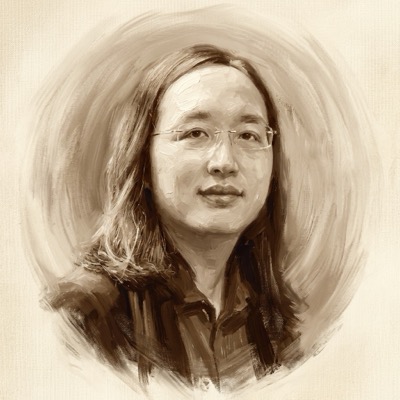
Audrey Tang
Cyber Ambassador-at-large, Taiwan
About
Audrey Tang (唐鳳) is a Taiwanese software programmer, civic hacker, and politician born in 1981. A child prodigy who began coding at age eight and left formal schooling at fourteen, Tang revitalized the Perl and Haskell programming languages and co-created EtherCalc. After the 2014 Sunflower Movement, Tang entered government as Taiwan's youngest-ever cabinet minister and first Digital Minister, pioneering initiatives like vTaiwan and the 'humor over rumor' strategy that shaped Taiwan's acclaimed COVID-19 response. Named one of TIME's 100 Most Influential People in AI in 2023, Tang now serves as Taiwan's Cyber Ambassador-at-large, advocating for digital democracy worldwide.
Key Contributions
- Contributed to open-source software communities, including Perl, Haskell, Pugs, and EtherCalc before entering government
- Helped turn Taiwan's civic-hacker culture into public infrastructure through vTaiwan, g0v, and participatory digital tools
- Used open data and civic tech during COVID-19, including mask-availability systems and rapid rumor-response practices
- Served as Taiwan's first Digital Minister and later Cyber Ambassador-at-large, making digital democracy part of Taiwan's global identity
- Promotes plurality and AI-assisted deliberation as a practical alternative to engagement-maximizing social platforms
- Her work is globally influential, though critics question how well Taiwan's consensus methods scale to more polarized societies
- Received the 2025 Right Livelihood Award 'for advancing the social use of digital technology to empower citizens, renew democracy and heal divides'
Notable Projects
Videos & Interviews
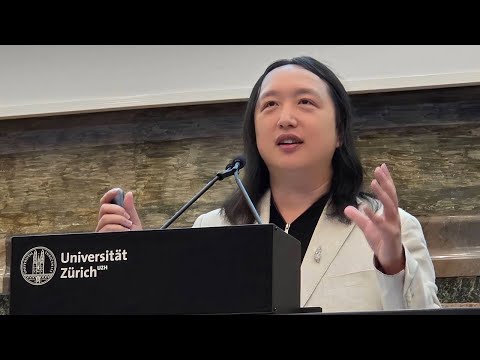
2025 Right Livelihood Lecture
Audrey Tang's Right Livelihood Award lecture on digital democracy and plurality.
View Details數位公民 — Audrey Tang Keynote at Monterrey Tech, Mexico City (2026)
唐鳳在蒙特雷科技大學墨西哥城校區發表「照護六原則」演說,談AI治理、數位民主與公民科技。
View Details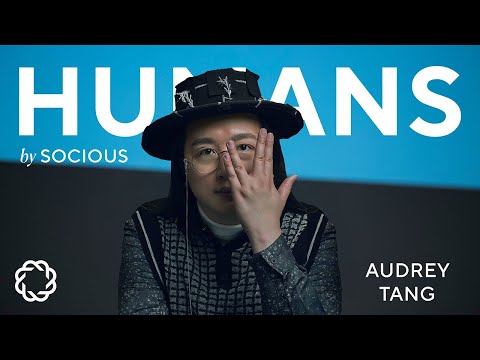
Audrey Tang: How Sleep Fuels Plurality and Digital Democracy
Conversation on sleep, plurality, and the intersection of personal well-being with digital democracy.
View Details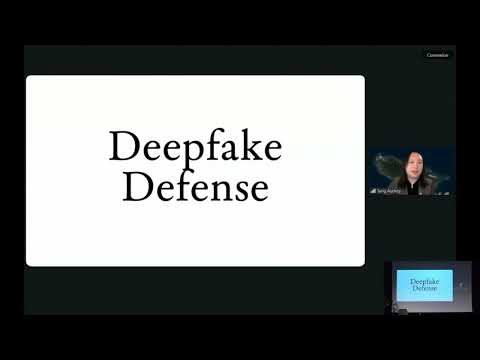
Cyber Ambassador Audrey Tang - Towards Plurality - Closing Keynote at Mila AI Policy Conference 2026
Closing keynote on plurality and AI policy at the Mila AI Policy Conference.
View Details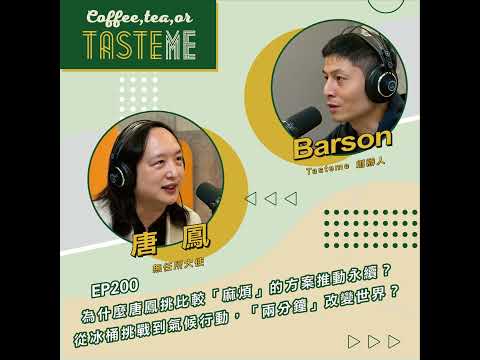
EP200 l【無任所大使 唐鳳 x Barson】為什麼唐鳳挑比較「麻煩」的方案推動永續?從冰桶挑戰到氣候行動,「兩分鐘」改變世界?
唐鳳與Barson對談永續行動、氣候變遷與數位民主。
View Details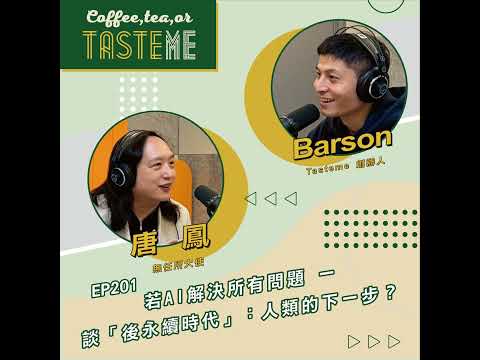
EP201 l【無任所大使 唐鳳 x Barson】若AI解決所有問題 一 談「後永續時代」:人類的下一步?
唐鳳與Barson探討AI解決問題後的後永續時代與人類未來。
View Details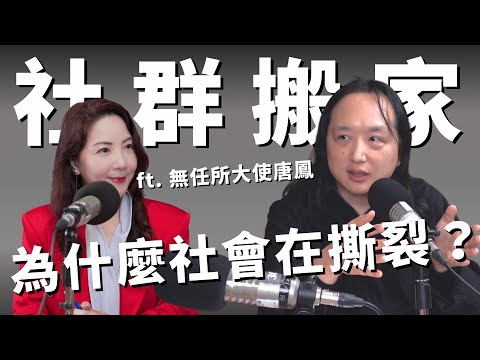
打破平台與演算法壟斷!唐鳳用「數位遷徙自由」逃離社群極化,百萬KOL也能「一鍵搬家」其他平台?專訪唐鳳(無任所大使)
專訪唐鳳談數位遷徙自由、打破平台壟斷與社群極化。
View Details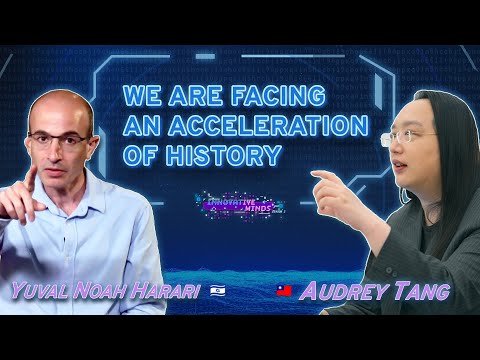
Liberalism in the AI Revolution: Yuval Noah Harari & Audrey Tang | #InnoMinds S2EP3 (Part 2)
Dialogue with Yuval Noah Harari on liberalism, AI, and the future of democratic governance.
View DetailsPapers & Publications
AI and Democracy: The Right to Refuse Optimization
2026Essay in The Humanist Review's inaugural issue, arguing that the real danger is not machines becoming human-like but humans reshaping themselves into forms machines can measure and optimize.
Read PaperSafer sovereignty with data as soil
2026Essay proposing 'bounded stewardship' and a five-layer sovereignty stack for AI deployment — data residency, access, inference, actuation, and exit.
Read PaperConnections
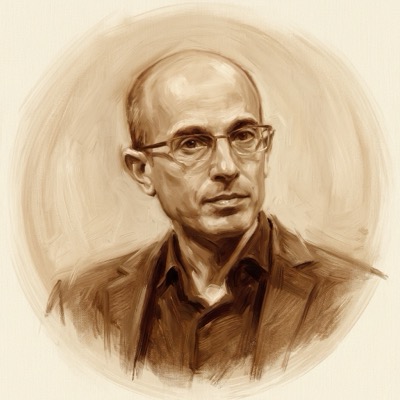
Yuval Noah Harari
In conversationHistorian & Public Intellectual
On the InnoMinds stage Tang opened by quoting back 'what Yuval said to me three years ago': the key is to create stories that serve us without being enslaved by them. Then she showed what that looks like as engineering — Polis, community notes, algorithms tuned to surface the bridge-makers rather than the outraged. Harari answered on his own ground: ethics is ultimately about suffering, and as far as we know AI cannot suffer. A historian and an engineer agreeing on the diagnosis and dividing on the instrument, narrative on one side and infrastructure on the other.
youtube.com
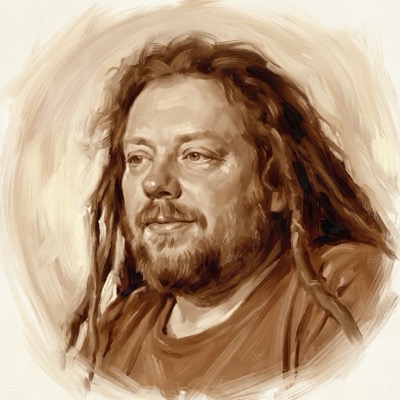
Jaron Lanier
CollaboratedComputer Scientist, VR Pioneer & Tech Philosopher
In 2024 Lanier, Allison Stanger, and Tang co-wrote a proposal to sunset Section 230's liability shield for algorithmic amplification while protecting citizens' direct speech — 'algorithmic amplification is a product, not a public service.' Lanier's blurb for Plurality calls it 'a peek at the humanistic high tech future we suspected was possible,' and elsewhere he names Tang and Glen Weyl as the idea's finest exponents while adding that they do not all agree and should not. The pairing is data dignity meeting plurality: a man who wants people paid for what the models learned from them, beside a woman who put ten years of her own meetings in the public domain so the models could learn her outright.
ash.harvard.edu · dl.acm.org · plurality.net · youtube.com
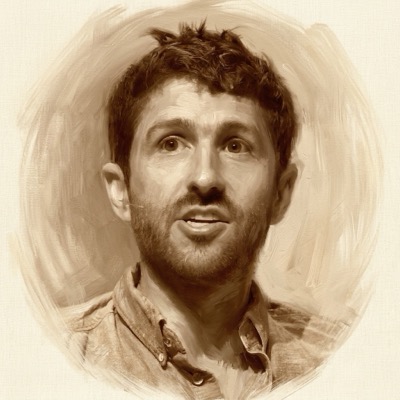
Tristan Harris
In conversationCo-Founder & President, Center for Humane Technology
Harris and Aza Raskin brought Tang onto Your Undivided Attention in February 2024, election season, to ask how a democracy stays standing under deepfakes and information warfare. Her answer was Taiwan's method in miniature: she had pre-bunked the threat 'by filming myself being deepfaked,' and 'simply investing in increasing that bit rate so the citizen can speak their mind and build bridges together does wonders.' Harris diagnoses the attention economy from outside the state; Tang is the rare interlocutor who ran the counter-experiment from inside one.
humanetech.com · centerforhumanetechnology.substack.com
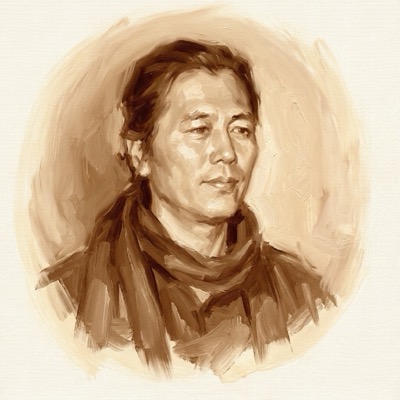
Byung-Chul Han
In contrastPhilosopher & Cultural Theorist
Read as interpretation. Han's The Transparency Society (2012) holds that total visibility is not freedom but a subtler discipline — the exposed self polices itself. Tang has published transcripts of some two thousand of her official meetings over ten years, and when asked whether she ever wished to be wrong in private, answered with arithmetic: two hours a day documented, twenty-two including sleep not, 'and I think that is a good balance.' The pairing is the sharpest test of Han's thesis — one thinker sees the transparent subject as a captive, the other treats transparency as something a person can ration, and thereby own.
youtube.com · Byung-Chul Han, The Transparency Society (2012)