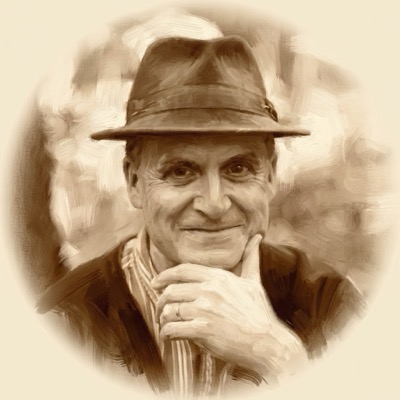
Evan Thompson
Philosopher of Mind & Cognitive Science
About
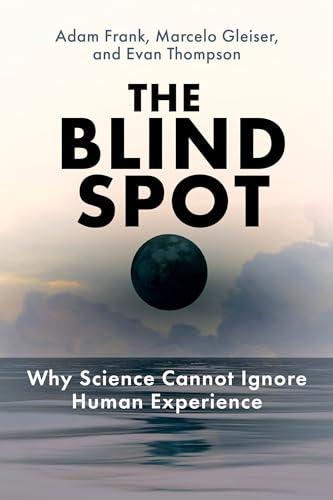
Evan Thompson is a professor of philosophy and Distinguished University Scholar at the University of British Columbia, and a Fellow of the Royal Society of Canada. With Francisco Varela and Eleanor Rosch, he co-authored The Embodied Mind, the foundational text of enactivism in cognitive science. His subsequent works — Mind in Life, Waking, Dreaming, Being, and Why I Am Not a Buddhist — weave together phenomenology, neuroscience, and Asian philosophical traditions to argue that consciousness cannot be understood apart from lived experience. His most recent book, The Blind Spot (2024, with Adam Frank and Marcelo Gleiser), challenges science's tendency to ignore the experiential ground from which it operates.
Key Contributions
- Co-authored 'The Embodied Mind,' helping launch enactivism as a bridge between cognitive science, phenomenology, and Buddhist thought
- Developed the life-mind continuity thesis in 'Mind in Life,' arguing cognition grows out of living self-organization
- Wrote 'Waking, Dreaming, Being,' connecting neuroscience, meditation, dream research, and phenomenology
- Wrote 'Why I Am Not a Buddhist,' criticizing Buddhist exceptionalism while still taking contemplative traditions seriously
- Co-authored 'The Blind Spot,' arguing that science forgets the lived experience from which inquiry begins
- His work resists both reductive neuroscience and romantic spirituality, a balance that makes it valuable but hard to categorize
Questions they sharpened View the streams
Books

Videos & Interviews
Moving Beyond the Blind Spot: Seeing what we don't see with Evan Thompson and Andrea Hiott
Conversation on the blind spot of science and why lived experience must be central to understanding
View Details
The Blind Spot in Perception: Cognitive Science, Asian Philosophy, and Mystical Insight
Conversation with John Vervaeke exploring how cognitive science, philosophy, and mysticism converge
View Details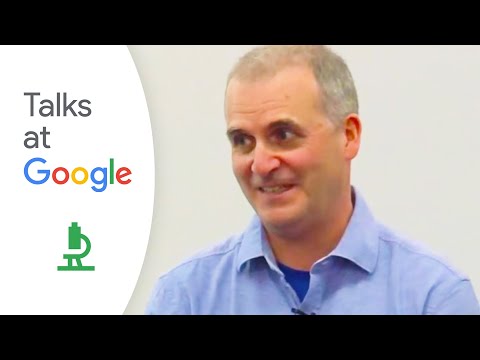
Waking, Dreaming, Being | Dr. Evan Thompson | Talks at Google
Talk on self and consciousness through neuroscience, meditation, and philosophy
View DetailsConnections
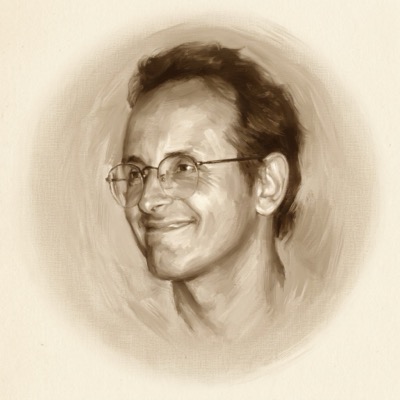
Francisco Varela
CollaboratedBiologist, Philosopher & Neuroscientist
They met at a Lindisfarne conference in 1977 and later worked together at CREA in Paris; with Eleanor Rosch they wrote The Embodied Mind (1991), the book that made enactivism a serious option inside cognitive science rather than a critique from outside it. Varela brought autopoiesis and the biology of the living, Thompson the phenomenological training to ask what experience is actually like. After Varela's death in 2001, Thompson carried the program forward alone in Mind in Life.
en.wikipedia.org · en.wikipedia.org · The Embodied Mind: Cognitive Science and Human Experience (MIT Press, 1991)
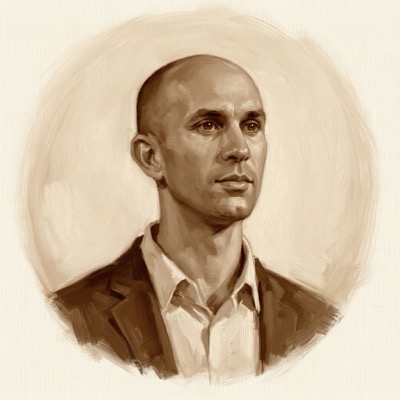
Anil Seth
DebatedProfessor of Cognitive & Computational Neuroscience, University of Sussex
In 'Reality is not a controlled hallucination' (March 2026) Thompson names Seth as the popularizer of a thesis he considers "bad philosophy" wearing the clothes of new science — one that "traces back to Hermann von Helmholtz" and remains "debatable philosophy from the nineteenth century." His central charge is a category error: perception belongs to the whole animal engaging its world, not to the organ doing the modelling. "Thinking that perception happens inside the brain is like thinking that flying happens inside the bird's wings." Seth has not published a reply. The disagreement is sharper for how much they share. Both tie mind to being a living body; both reject the brain-as-computer picture. They split on where experience happens — in the model the brain builds, or in the traffic between a creature and its surroundings — and that is exactly the question you must answer before you can say what, if anything, is missing in a system with no surroundings to engage.
iai.tv
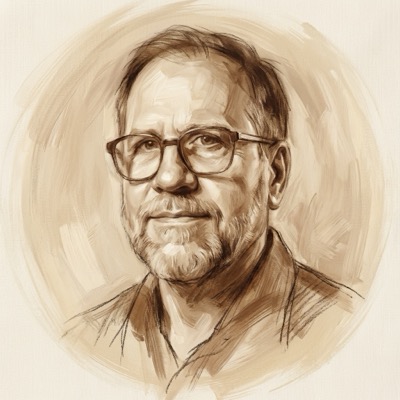
John Vervaeke
In conversationCognitive Scientist & Philosopher
Their recorded dialogue on The Blind Spot — on this site — meets at the place both careers point: cognitive science keeps deleting the experience it depends on. Thompson arrives via enactivism and Asian philosophy, Vervaeke via relevance realization and the practices he calls ecologies; both hold that knowing is participatory before it is propositional.
youtube.com
David Abram
KindredCultural Ecologist & Philosopher
A natural next step for readers moved by Abram: Thompson carries the same Merleau-Pontian inheritance into cognitive science, where 'life-mind continuity' does with rigor what Abram does with lyric. Both insist that mind is something living bodies do with a world — not something housed behind the eyes.