
Sean Dorrance Kelly
Dean of Arts and Humanities & Professor of Philosophy, Harvard
Trace a path from Sean Dorrance Kelly →About
Sean Dorrance Kelly is Dean of Arts and Humanities and the Teresa G. and Ferdinand F. Martignetti Professor of Philosophy at Harvard University. Before joining Harvard in 2006, he taught at Stanford and Princeton and was a visiting professor at the École Normale Supérieure in Paris. He is considered a leading interpreter of the French and German phenomenological tradition and a prominent philosopher of mind, with research spanning existentialism, perception, and the philosophy of literature. His New York Times bestseller 'All Things Shining,' co-authored with Hubert Dreyfus, argues that Western culture has lost its skill for encountering the sacred and looks to Homer, Dante, and Melville to recover a secular form of meaning.
Key Contributions
- Co-authored 'All Things Shining' with Hubert Dreyfus, arguing that modern life has lost practices for encountering meaning and the sacred
- Interprets French and German phenomenology for questions about perception, skill, literature, and attention
- Connects philosophy of mind with lived practices rather than treating cognition as detached information processing
- Led Harvard's Philosophy Department and later Arts and Humanities division, shaping institutional space for humanistic inquiry
- His public philosophy is unusually readable, though its recovery of meaning through classics can strike critics as selective or nostalgic
Questions they sharpened View the streams
Books

Videos & Interviews

Being in the World (Full Documentary)
Award-winning documentary featuring Dreyfus on Heidegger, embodiment, and skilled coping
View Details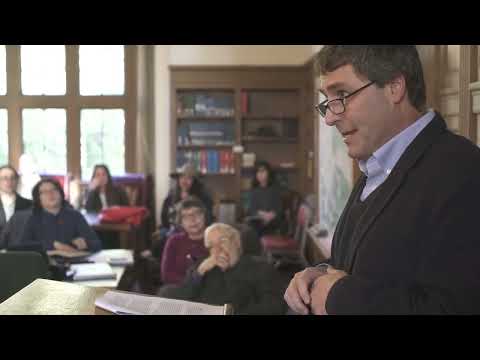
Celebrating Hubert Dreyfus: Sean Kelly -- "The Teacher" (part 1)
Sean Kelly's tribute to Dreyfus as a teacher and mentor at the memorial celebration
View Details
Sean Kelly: Existentialism, Nihilism, and the Search for Meaning | Lex Fridman Podcast #227
Harvard philosopher Sean Kelly on existentialism, nihilism, phenomenology, and the search for meaning in a secular age — drawing on his work with Hubert Dreyfus in 'All Things Shining.'
View DetailsConnections

Hubert Dreyfus
CollaboratedPhilosopher & AI Critic
The two wrote All Things Shining (2011) together: an argument that the secular West has lost the skill of being drawn out by what shines, and that meaning is something cultivated in craft and shared moments rather than manufactured inside an isolated self. Kelly also appears in the Being in the World documentary, and his memorial tribute to Dreyfus — on this site — is titled simply 'The Teacher.'
en.wikipedia.org · All Things Shining: Reading the Western Classics to Find Meaning in a Secular Age (Free Press, 2011)
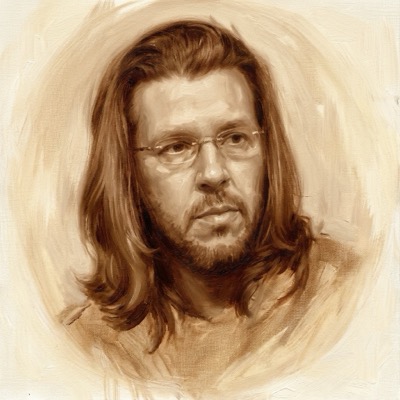
David Foster Wallace
In contrastNovelist & Essayist
Kelly reads Wallace as the great observer of the present: the writer who saw that our core temptation is diversion through entertainment, the other face of the optimizing age Heidegger described. But he parts with Wallace's cure. The Kenyon speech's freedom to choose how we see a situation is, for Kelly, too much freedom, because the story has to be true; and The Pale King's tax examiner, levitating with bliss at the dullest task imaginable, is 'unlivable.' The Wallace he would keep is the one who wrote about Roger Federer: peak moments when a body like ours transcends its limits.
Sean Kelly: Existentialism, Nihilism, and the Search for Meaning, Lex Fridman Podcast #227, 2:07:47–2:28:16 · youtube.com · Hubert Dreyfus & Sean Dorrance Kelly, All Things Shining (2011), ch. 2, "David Foster Wallace's Nihilism"

Elif Shafak
KindredNovelist & President, Royal Society of Literature
All Things Shining, which Kelly wrote with Hubert Dreyfus, argues that a secular West did not outgrow the sacred so much as lose the practices for meeting it. Shafak names the same condition from the other side and supplies practices: she wants neither 'the absolute certainty of the religious' nor 'the absolute certainty of atheism' but 'secular acts of faith' — moving to a country where you may not be happy, writing a novel that may mean nothing to anyone, falling in love without knowing — and she separates spirituality from religiosity precisely because organised religion 'divides humanity into boxes of us and them.' Kelly reads the lost skill back out of Homer and Melville; she finds it on the thin line between faith and doubt that her mystics walked, 'sometimes zigzagging.'
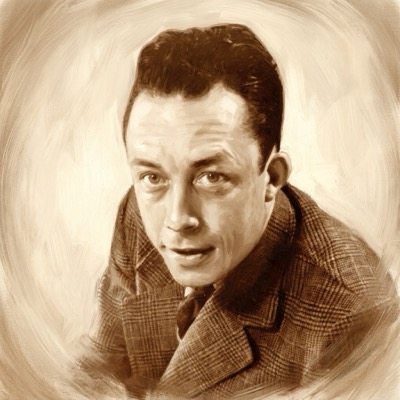
Albert Camus
In contrastWriter & Philosopher of the Absurd
An opposition Kelly names himself. For years he would not teach The Myth of Sisyphus because of its opening question, and when he finally did he found Camus right about the day that goes by like a conveyor belt and wrong about what it reveals. His essay on aliveness is, he tells Lex Fridman, 'secretly a criticism of Camus': the deadened day is not the truth of a life but the felt absence of something we recognise in the moments we are most alive.
youtube.com

