
Leopold Aschenbrenner
Founder & CIO, Situational Awareness LP
About
Leopold Aschenbrenner is a German-born AI researcher and investor who graduated as valedictorian from Columbia University at age 19. He joined OpenAI's Superalignment team in 2023 and co-authored the 'Weak to Strong Generalization' paper before being fired in April 2024. He subsequently published 'Situational Awareness: The Decade Ahead,' a 165-page essay predicting AGI by 2027 that became one of the most discussed AI policy documents of the year. He founded Situational Awareness LP, an AI-focused hedge fund managing over $1.5 billion.
Key Contributions
- Published 'Situational Awareness: The Decade Ahead,' a widely read argument for short AGI timelines and national-security preparation
- Co-authored OpenAI's weak-to-strong generalization work, testing whether weaker models can supervise stronger ones
- Turned from OpenAI researcher to AI-focused investor, founding Situational Awareness LP after his dismissal from OpenAI
- Pushed compute security, lab security, and U.S.-China competition into the center of AGI policy debate
- His writing is influential but polarizing, criticized for deterministic timelines and for framing AI primarily through national-security competition
Videos & Interviews

Connections
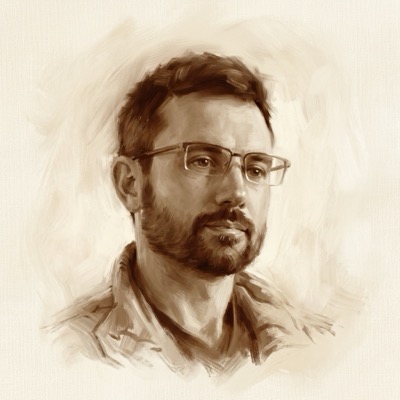
Daniel Kokotajlo
In contrastExecutive Director, AI Futures Project
Two men left OpenAI within weeks of each other in spring 2024 — one fired over an alleged leak he disputes, one resigning and forfeiting roughly two million dollars rather than sign a non-disparagement clause — and both then published long documents placing transformative AI around 2027. From there they diverge entirely: Aschenbrenner's Situational Awareness reads the timeline as a reason for America to win the race, and he opened a hedge fund on the thesis; Kokotajlo's AI 2027 reads the same timeline as a reason to slow down, and he later graded his own forecast in public and pushed the date out. Same building, same year, same number on the calendar, opposite instructions.
situational-awareness.ai
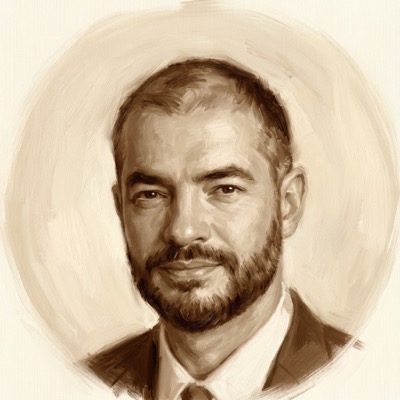
Ilya Sutskever
CollaboratedCo-founder, Safe Superintelligence Inc.
Both appear on 'Weak-to-Strong Generalization' (December 2023), the first public output of OpenAI's Superalignment team — Aschenbrenner sixth on the list, Sutskever near its end in the position of the team's co-lead. The paper asks the question the company was betting its safety case on: can a weaker supervisor still elicit the good behaviour of a model stronger than itself? Within five months Aschenbrenner had been fired, Sutskever had left, and the team was dissolved. The question remains open.
arxiv.org

Donella Meadows
In contrastEnvironmental Scientist & Systems Thinker
The sharpest available contrast in how to read an exponential. Situational Awareness argues from trend lines — count the orders of magnitude and believe the straight line on the log plot — while The Limits to Growth is a book-length argument that exponentials inside finite systems bend, through delayed feedback, usually by overshoot. Whether AI's curves are the kind that keep going or the kind that fold back is precisely the question that separates these two shelves.
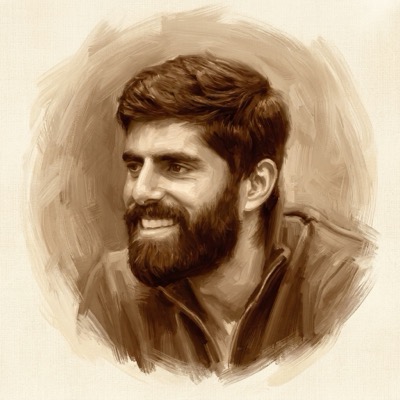
Dwarkesh Patel
In conversationHost, Dwarkesh Podcast
Their four-hour conversation is where Situational Awareness stopped being a document and became an argument people had to answer — trendlines, compute clusters, the case for treating the next orders of magnitude as a national-security question, and Aschenbrenner's account of leaving OpenAI. Patel's interviewing style is the reason it works: he had read the thesis closely enough to press on its weakest joints rather than nod through them.
youtube.com