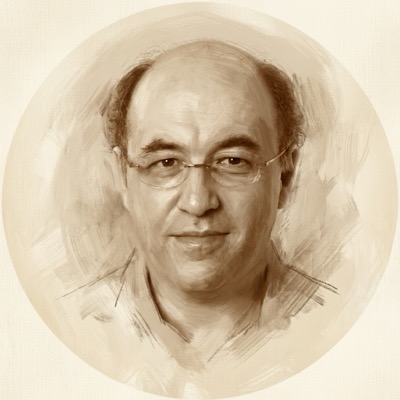
Stephen Wolfram
Physicist, Mathematician & CEO of Wolfram Research
Trace a path from Stephen Wolfram →About
Stephen Wolfram is a physicist, mathematician, and the creator of Mathematica, Wolfram|Alpha, and the Wolfram Language. His book 'A New Kind of Science' proposed that simple computational rules can generate complex phenomena. He has become a leading voice on understanding how LLMs work, publishing extensive analyses of ChatGPT's inner workings and exploring whether computation itself is the foundation of intelligence and reality.
Key Contributions
- Created Mathematica and the Wolfram Language, making symbolic computation and computational notebooks mainstream tools
- Built Wolfram|Alpha, a computational knowledge engine that answered queries by computing over curated data
- Advanced cellular-automata and complex-systems work before turning it into the broader program of A New Kind of Science
- Wrote A New Kind of Science, arguing that simple programs can generate complexity across nature and mathematics
- Popularized computational irreducibility, a useful limit concept for prediction, explanation, and AI expectations
- His ChatGPT essays clarified LLM mechanics for many readers, though his broader computational worldview can read as overly totalizing
Videos & Interviews
Stephen Wolfram: ChatGPT and the Nature of Truth, Reality & Computation
Lex Fridman Podcast #376 - How LLMs work, computational irreducibility, and the nature of intelligence
View Details
What Is ChatGPT Doing...and Why Does It Work?
Stephen Wolfram's deep technical explanation of how large language models function
View DetailsConnections
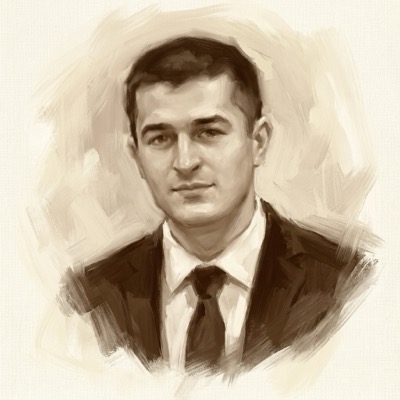
Lex Fridman
In conversationResearch Scientist, MIT; Host of the Lex Fridman Podcast
Wolfram's fourth appearance, recorded weeks after he plugged Wolfram Language into ChatGPT, and he frames the pairing exactly: the language model is wide and shallow, computation is deep. The stretch worth hearing is the turn to inner life. Fridman says he tends to believe a large language model will have experience; when Wolfram objects that a model saying it is afraid only learned the word from the internet, Fridman turns it back on him — 'where did you get it, Stephen?' — and calls him 'a large language model in that biological neural network of yours.' He closes by thanking Wolfram for A New Kind of Science, which inspired 'this one little kid in me' to pursue AI.
youtube.com
David Deutsch
In contrastPhysicist & Pioneer of Quantum Computation
Asked whether the universe might be running on a cellular automaton in Wolfram's manner, Deutsch answered that it is computational 'but in the opposite way round from what that theory says.' The wonder, on his account, is that the laws of physics permit universal computers to be built inside the universe, so that a part can simulate the whole. Put the computer outside instead and the insight collapses: nothing says that outer machine is a Turing machine, the regress explains nothing, and it destroys the account of computation and physics we already have. Two computational cosmologies that agree the universe computes and divide entirely over where the machine stands.
youtube.com

