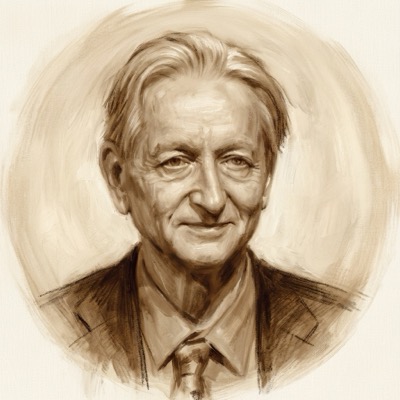
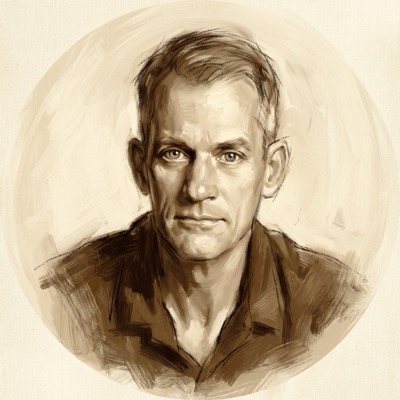
Geoffrey Hinton
AI Pioneer & Researcher
About
Geoffrey Hinton, often called the 'Godfather of AI,' is a pioneering computer scientist whose work on neural networks and deep learning laid the foundation for modern AI. He shared the 2018 Turing Award for his contributions to deep learning. In 2023, he left Google to speak freely about AI risks, becoming a prominent voice in AI safety discussions.
Key Contributions
- Co-authored the 1986 backpropagation paper that made multilayer neural networks trainable in practice
- Co-invented Boltzmann machines and developed deep belief networks, helping revive neural-network research after the AI winters
- Co-developed dropout and knowledge distillation, two practical techniques that changed how neural networks are trained and compressed
- Helped make AlexNet possible through his Toronto group, turning ImageNet into the public proof point for deep learning
- Trained and influenced a generation of deep-learning researchers, including AlexNet co-author Ilya Sutskever
- Shared the 2018 Turing Award for deep learning and the 2024 Nobel Prize in Physics for foundations of machine learning
- Left Google in 2023 to warn about AI risks, becoming a prominent but contested voice in debates over existential danger
Questions they sharpened View the streams
Does an LLM actually understand?
To autocomplete that well, it has to understand. There is no shortcut through the world.
Does prediction amount to understanding?
Compression is comprehension. To predict the next word well enough, you must model the world that produced it.
What is understanding?
Understanding is compression. To predict the next word well enough, you must model the world that produced it.
Would superintelligence be dangerous by default?
2023For the first time we may have built something smarter than us, and I no longer see how we stay in control.
Moments Timeline View all moments
Videos & Interviews

Is AI Hiding Its Full Power? With Geoffrey Hinton
Discussion on whether AI systems may be concealing their true capabilities
View Details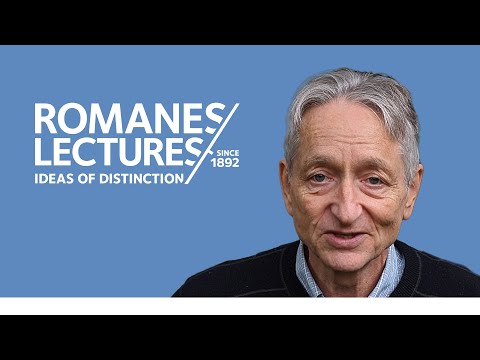
Will Digital Intelligence Replace Biological Intelligence?
Romanes Lecture at University of Oxford on the future of intelligence
View Details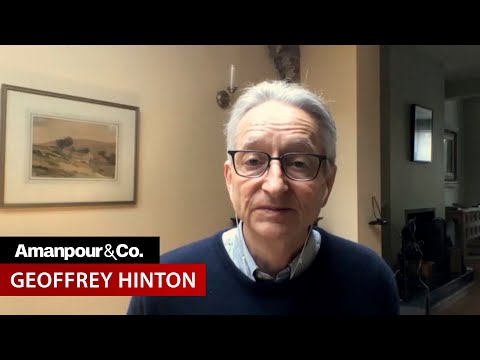
Geoffrey Hinton Warns of the Existential Threat of AI
Amanpour and Company interview about why he left Google and his concerns about AI
View DetailsPapers & Publications
Connections
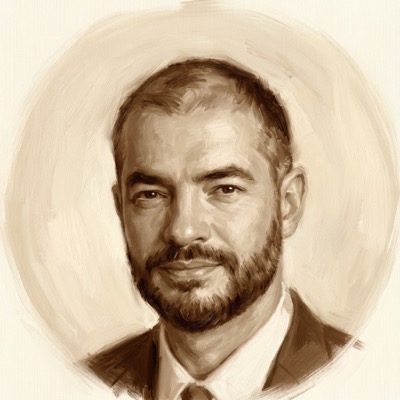
Ilya Sutskever
InfluencedCo-founder, Safe Superintelligence Inc.
Sutskever entered Hinton's Toronto lab as a student and stayed through a 2013 PhD on training recurrent networks; along the way, in 2012, the two of them with Alex Krizhevsky built AlexNet. What passed between them was less a technique than a conviction — that scale and gradient descent would achieve what hand-built structure could not — and Sutskever carried it into OpenAI as founding doctrine. Both men later arrived, by separate roads, at public alarm about where that conviction leads.
en.wikipedia.org
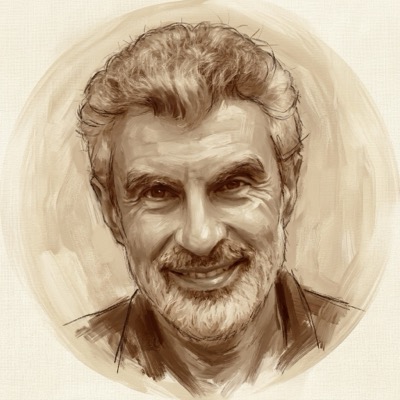
Yoshua Bengio
CollaboratedAI Pioneer & Safety Researcher
They shared the 2018 Turing Award with LeCun and co-wrote the 2015 Nature review that told the field its own origin story. What binds them now is stranger than co-authorship: both spent decades arguing that scaling neural networks would work, and both, having been proved right, signed the 2024 Science paper 'Managing extreme AI risks amid rapid progress.' It was being correct that frightened them.
en.wikipedia.org · arxiv.org
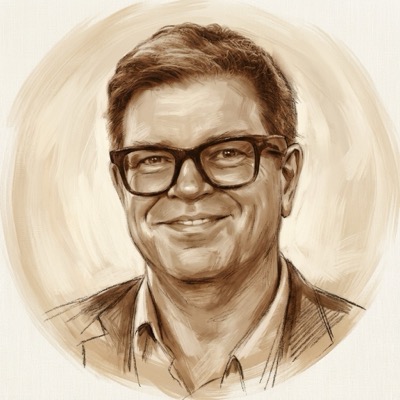
Yann LeCun
InfluencedExecutive Chairman & Co-founder, AMI Labs; Professor, NYU
LeCun spent his postdoctoral year in Hinton's Toronto lab before leaving for Bell Labs, where the convolutional networks he built there learned to read handwritten bank checks. Thirty years later the two shared the 2018 Turing Award for the same body of work. The lineage held on method and broke on prophecy: Hinton now warns of extinction-level risk, LeCun treats the warning as a category error.
en.wikipedia.org · en.wikipedia.org
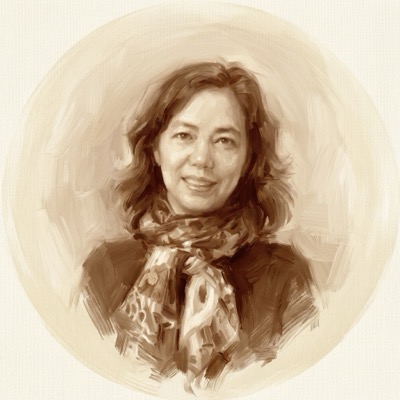
Fei-Fei Li
KindredCo-founder & CEO, World Labs; Special Advisor on AI, Stanford
The dataset and the network. Li began ImageNet in 2006 and spent years paying strangers on Mechanical Turk to label fourteen million pictures; in 2012 Hinton's students entered a convolutional network and cut the error rate by more than ten points, and the field turned. Li's own telling is generous — on the TED stage she credits the architecture to 'Kunihiko Fukushima, Geoff Hinton, and Yann LeCun back in the 1970s and '80s' — and the point is that neither half worked without the other: an old algorithm waiting for enough data, and a dataset waiting for an algorithm that could use it. In 2025 they shared the Queen Elizabeth Prize for Engineering.
youtube.com · en.wikipedia.org · hai.stanford.edu
Jeff Dean
CollaboratedCo-founder, Discovery Loop
Hinton arrived at Google in 2013 when it acquired his three-person company and joined the Brain team Dean had co-founded; two years later the two of them, with Oriol Vinyals, wrote 'Distilling the Knowledge in a Neural Network.' The paper showed that a large model's soft probabilities carry more instruction than the hard labels it was trained on — a small model can learn from a big one's uncertainty. A decade on, distillation is both how frontier capability reaches ordinary devices and the technique at the center of international arguments over who is allowed to learn from whose model.
arxiv.org · en.wikipedia.org