
About
Yuval Noah Harari is a historian and author of the bestselling books 'Sapiens,' 'Homo Deus,' and 'Nexus.' A professor at Hebrew University of Jerusalem, he has become one of the world's most influential voices on how AI will reshape humanity. He views AI as 'alien intelligence' that processes information in fundamentally different ways than humans, and warns of its potential to 'hack the operating system of human civilization.'
Key Contributions
- Wrote 'Sapiens' and 'Homo Deus,' bringing long-run history and speculative futures into mainstream public debate
- Used '21 Lessons for the 21st Century' to turn globalization, nationalism, biotech, and AI into an accessible civic agenda
- Made AI a central theme of 'Nexus,' arguing that information networks can reshape institutions as much as technology itself
- Frames AI as 'alien intelligence,' emphasizing that it can act in culture and politics without thinking like humans
- Warns that synthetic media and AI persuasion could destabilize democracy by flooding public life with machine-generated intimacy
- His sweeping historical style reaches huge audiences, but historians and technologists often criticize it as overgeneralized and rhetorically dramatic
Questions they sharpened View the streams
Books

Videos & Interviews

Liberalism in the AI Revolution: Yuval Noah Harari & Audrey Tang | #InnoMinds S2EP3 (Part 2)
Dialogue with Yuval Noah Harari on liberalism, AI, and the future of democratic governance.
View Details
AI and the Future of Humanity | Yuval Noah Harari at the Frontiers Forum
Frontiers Forum 2023 - How AI has 'hacked the operating system of human civilization'
View DetailsConnections
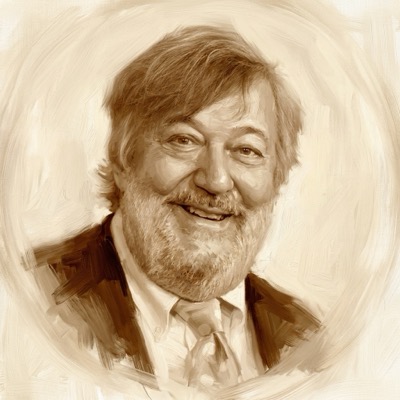
Stephen Fry
In conversationActor, Writer & Technology Commentator
In June 2025 Fry and Harari sat down in London to ask how one controls an alien intelligence — Harari's preferred reading of the acronym AI. Their common ground was story: Harari's claim that humans took the planet by cooperating through shared fictions, set beside Fry's lifelong work as a reteller of myths, turned the question from what machines can compute to what happens when they can tell stories too.
singjupost.com
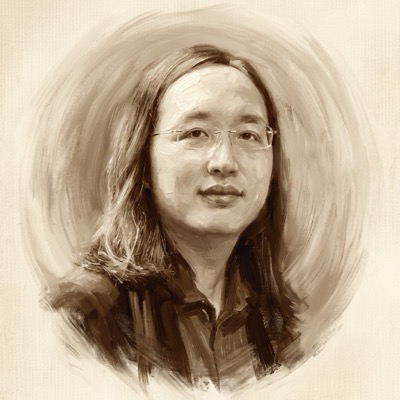
Audrey Tang
In conversationCyber Ambassador-at-large, Taiwan
On the InnoMinds stage Tang opened by quoting back 'what Yuval said to me three years ago': the key is to create stories that serve us without being enslaved by them. Then she showed what that looks like as engineering — Polis, community notes, algorithms tuned to surface the bridge-makers rather than the outraged. Harari answered on his own ground: ethics is ultimately about suffering, and as far as we know AI cannot suffer. A historian and an engineer agreeing on the diagnosis and dividing on the instrument, narrative on one side and infrastructure on the other.
youtube.com

Daniel Susskind
KindredEconomist, King's College London & Oxford
Harari warned that automation could produce people with no economic role at all; Susskind's A World Without Work takes the same prospect and asks the economist's follow-up questions — how income would be shared, and where meaning would come from, once paid work no longer supplies it. Read together, the historian names the danger and the economist begins drafting the institutions.
thefuturist.co · danielsusskind.com

Azeem Azhar
In conversationFounder, Exponential View
Harari was the third guest on Azhar's Exponential View podcast, in February 2017, talking through Homo Deus. Read beside The Exponential Age, the pairing is interpretive but close: both write big-picture histories in which technology outruns the institutions meant to hold it, Harari from the long arc of the species, Azhar from the curve of the last fifty years.
producthunt.com

