
About
Grant Sanderson is a mathematician and the creator of 3Blue1Brown, a YouTube channel renowned for its visually stunning explanations of mathematical concepts. His series on neural networks and transformers has become essential viewing for anyone seeking to understand how AI and large language models work. Using his custom animation engine Manim, he makes complex topics like attention mechanisms and GPT architectures accessible to millions.
Key Contributions
- Created 3Blue1Brown, making visual mathematical explanation a serious educational genre rather than a gimmick
- Built Manim, the animation engine behind his videos and a tool adopted by other math educators
- Produced neural-network, transformer, and attention videos that became common entry points for understanding LLM mechanics
- Helped normalize collaborative online math culture through projects such as the Summer of Math Exposition
- Shows how careful visualization can preserve rigor while lowering the intimidation barrier around abstract ideas
- His polished explanations are powerful, though any short visual account risks hiding the messy details of research practice
Videos & Interviews
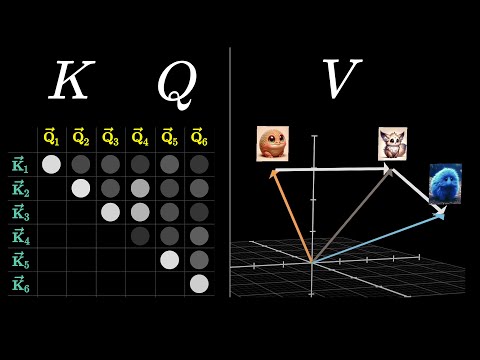
Attention in Transformers, Step-by-Step | Deep Learning Chapter 6
Clear visualization of the attention mechanism powering LLMs
View Details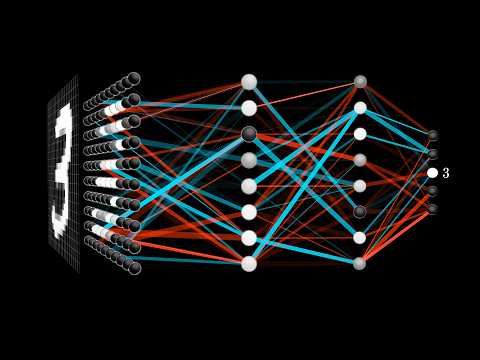
But what is a neural network?
Deep Learning Chapter 1 - Foundational explanation of neural networks with beautiful animations
View Details
Reinventing Entropy | Compression is Intelligence Part 1
Grant Sanderson explores Shannon entropy, compression, and the link between information theory and intelligence.
View Details
There's never been a better time to go into math
Grant Sanderson on the future of mathematics, addressed to students who wonder whether it is still worth entering a field that machines are learning to do. He starts from how mathematics actually works, then takes three machines in turn: one that proves, one that conjectures, and one that builds theory, asking what each would leave for people. He also takes the hard case, an AI better at all of it, and still argues that this is the best time to begin.
View Details
Transformers, the Tech Behind LLMs | Deep Learning Chapter 5
Visual introduction to transformers and large language models
View Details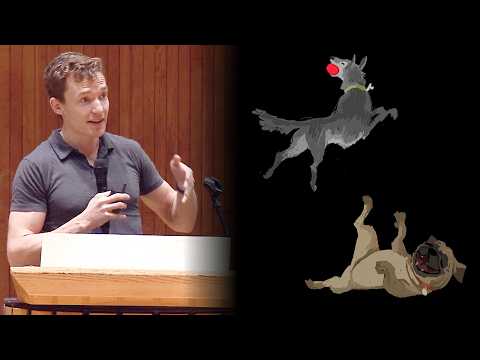
The collie and the pug | HackMIT keynote 2026
Nine minutes, built on one parable. Two dogs are adopted together; the pug tells the border collie his urge to chase is obsolete, since the owners will always feed them, and in old age points out he was right — the collie never once needed to run. The collie answers: "I was not running because that's what I needed to do to live, I was living to run." Sanderson's point is that building something and understanding it used to be coupled, and agentic coding is pulling them apart. As abundance that is remarkable — the only rate limiters left are "your own appreciation for what actually adds value to other people's lives and maybe your token budget" — but as education it is a loss, because a project used to be the best excuse to learn the principles underneath it. He tells it through his own Manim, the animation library behind 3Blue1Brown, which began at a Stanford hackathon and was never a product: an old car in the garage he tunes for the pleasure of knowing why each pixel is the colour it is. Over the past year the tools got good even at what he is expert in, and he decided that for this one project he would rather go slower and stay the collie. He takes on the objection that English is just another layer of abstraction, like Python over C: you still learn Python better for having written C, and the last jump drops the rigor that every layer of code kept. He declines to make it a verdict on the pug, who might spend his freedom on poetry and mathematics, and asks the room only to choose deliberately. But the collie's answer reaches past the hackathon. For as long as there have been dogs and people, necessity answered what we did and why; once the food is guaranteed, it stops answering, and each of us is left with the collie's question — not what we need to do to live, but what we are living for.
View DetailsConnections

Stephen Welch
CollaboratedCreator, Welch Labs
In the summer of 2025 Sanderson handed his own channel to Welch: the 3Blue1Brown video on how diffusion models actually generate images and video was produced by Welch Labs, with Sanderson giving editorial feedback over several months. He introduced Welch as 'a true kindred spirit of 3blue1brown on YouTube'. The pairing is the obvious one, made official — two channels that explain mathematics by animating it until the idea can be seen rather than taken on trust.
3blue1brown.substack.com · x.com

Terence Tao
CollaboratedProfessor of Mathematics, UCLA
Their two-part 3Blue1Brown video on the cosmic distance ladder retells how people measured the Earth, Moon, Sun, planets, and stars with nothing but geometry and patience, each rung resting on the one below. Tao supplies the reasoning, from a public lecture he has given for years and a book in progress with Tanya Klowden; Sanderson supplies the pictures. It shows what each does best: Tao seeing the chain of inference, Sanderson making it visible.
3blue1brown.com · terrytao.wordpress.com
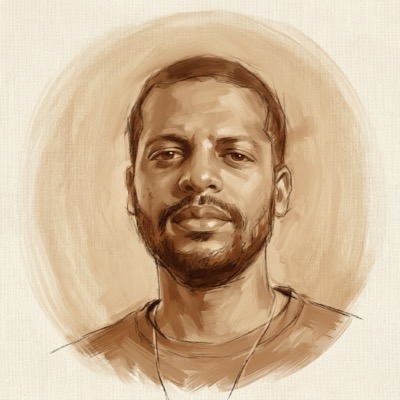
Jelani Nelson
KindredTheoretical Computer Scientist, Anthropic; Professor, UC Berkeley (on leave)
Two kinds of on-ramp into the same mathematics. Nelson built AddisCoder, a summer program teaching algorithms and programming to Ethiopian high school students that grew from one classroom into a national program; Sanderson built 3Blue1Brown, which gives millions of strangers a way into hard ideas through animation. Read together, both work from the premise that rigor is not the barrier — the missing ramp is. Sanderson also signed the 2021 open letter Nelson co-wrote against limiting advanced math in California's schools.
sites.google.com · youtube.com

