About
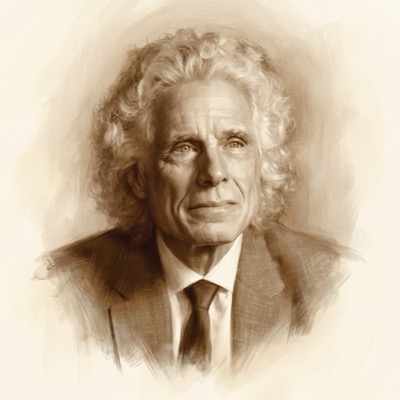
Steven Pinker is a cognitive psychologist and linguist at Harvard University, known for his work on language acquisition, cognitive science, and the history of violence and progress. His books 'The Language Instinct' and 'How the Mind Works' made cognitive science accessible to millions. His research on language and thought provides foundational insights into how human cognition works—knowledge essential for understanding what AI systems might be missing when they process language without grounding in embodied experience.
Key Contributions
- Wrote The Language Instinct and How the Mind Works, bringing cognitive science and linguistics to a mass audience
- Advanced research on language acquisition, visual cognition, and how minds represent rules and categories
- Wrote The Blank Slate, challenging strong social-construction accounts of human nature and reopening nature-nurture arguments
- Defends Enlightenment values, reason, and measurable human progress in books such as The Better Angels of Our Nature and Enlightenment Now
- Shapes public arguments about AI by emphasizing continuity with human cognition, statistics, and language rather than mystique
- His progress narrative is influential but polarizing, criticized for selective metrics and for underweighting power, inequality, and ecological risk
Videos & Interviews

Sean Carroll, Daniel Dennett, & Steven Pinker: AI, Parapsychology, Panpsychism, & Physics Violations
A wide-ranging discussion with physicist Sean Carroll, philosopher Daniel Dennett, and cognitive scientist Steven Pinker on AI, parapsychology, panpsychism, and what would count as a violation of physics.
View Details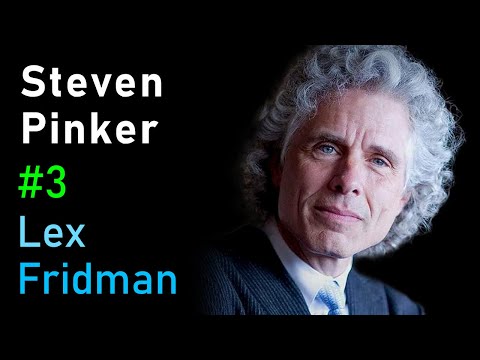
Steven Pinker: AI in the Age of Reason
Lex Fridman Podcast #3 - Discussion on language, AI, and human rationality
View Details
Steven Pinker: Linguistics, Style, and Writing in the 21st Century
Talks at Google on how language reveals the nature of human thought
View DetailsConnections

Gary Marcus
InfluencedCognitive Scientist, AI Critic & Author
Marcus did his PhD at MIT under Pinker, and their 1992 monograph on overregularization asked why children who once said 'went' start saying 'goed'. Their answer, that the mind applies a rule and stores exceptions as memorized words, set them against the connectionist networks of the day. It is the argument Marcus has carried into the age of large language models: statistics over patterns is not the same as knowing a rule.
en.wikipedia.org · Marcus, G., Pinker, S., Ullman, M., Hollander, M., Rosen, T. J. & Xu, F. (1992). Overregularization in language acquisition. Monographs of the Society for Research in Child Development 57(4) · scholar.harvard.edu · x.com

Jonathan Rauch
In conversationSenior Fellow, Brookings Institution
In July 2021 Brookings put Rauch's The Constitution of Knowledge beside Pinker's forthcoming Rationality for an evening, and Pinker opened by declaring 'no collusion': the two had reached strikingly similar conclusions from very different starting points. They agree that individuals are poor at finding truth and that civilisation does well anyway, because of institutions and norms by which the whole is smarter than any of its parts. Pinker arrived from the psychology of bias; Rauch from the institutions that correct for it.
youtube.com · x.com
Daniel Dennett
In conversationPhilosopher & Cognitive Scientist
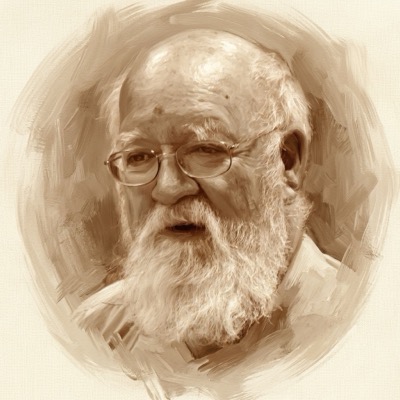
How the Mind Works opens with one of Dennett's thought experiments, a robot sent to fetch its battery from a room with a ticking bomb, which fails three ways: it misses that the bomb is on the wagon, it gets lost in implications that don't matter, and it can't tell which ones do. Pinker uses it to show that common sense is the hard part, and both men treat the mind as a design to reverse-engineer, with nothing added on top. They talked it over with Sean Carroll in a recorded panel that is on this site.
youtube.com · stanford.edu

Lex Fridman
In conversationResearch Scientist, MIT; Host of the Lex Fridman Podcast
Episode three, recorded in 2018 when the show was still the Artificial Intelligence Podcast. Fridman reads Pinker the tweet Elon Musk aimed at him — 'if even Pinker doesn't understand the difference between narrow AI ... and general AI ... humanity is in deep trouble' — and Pinker answers that both standard fears are incoherent: takeover confuses intelligence with a will to power that natural selection happened to bundle into us, and the paperclip scenario imagines a system brilliant enough to cure cancer but too stupid to know that killing everyone is not what we meant, which he calls 'artificial stupidity.' What lifts it above a sparring match is that Fridman takes a side, as an engineer of autonomous vehicles who finds it 'a little bit offensive' to suggest engineers would be clueless enough not to build in safety.
youtube.com

