Terence Tao
Professor of Mathematics, UCLA
About
Terence Tao is a mathematician at UCLA widely regarded as one of the greatest living mathematicians. Born in Adelaide, Australia, he was a child prodigy who earned his PhD from Princeton at age 21 and became UCLA's youngest-ever full professor at 24. He received the Fields Medal in 2006, the MacArthur Fellowship, the Breakthrough Prize in Mathematics, and the Royal Medal for his contributions spanning harmonic analysis, partial differential equations, combinatorics, and additive number theory. He has authored over 300 research papers and actively explores the role of AI in mathematics, including formal proof verification with tools like Lean.
Key Contributions
- Won the 2006 Fields Medal for work spanning harmonic analysis, PDEs, combinatorics, and number theory
- Co-proved the Green-Tao theorem, showing arbitrarily long arithmetic progressions in the primes
- Made major contributions to compressed sensing, dispersive PDEs, random matrices, and additive combinatorics
- Built an unusually open mathematical practice through his blog, lecture notes, expository writing, and collaborative problem solving
- Experiments publicly with proof assistants and AI tools such as Lean, Claude, and formalization workflows
- His AI optimism is grounded in practice, but he repeatedly stresses that current systems still need mathematical judgment and verification
Videos & Interviews
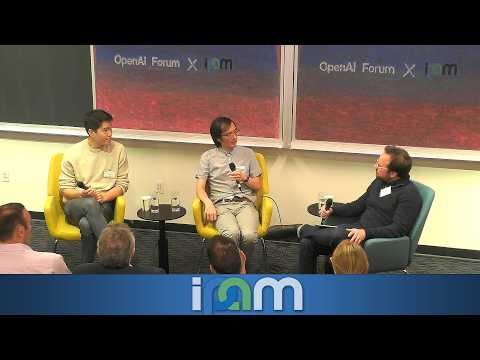
Terence Tao and Mark Chen - Fireside Chat with James Donovan - IPAM at UCLA
Fireside chat exploring the future of AI in mathematics at the OpenAI × UCLA IPAM convening
View Details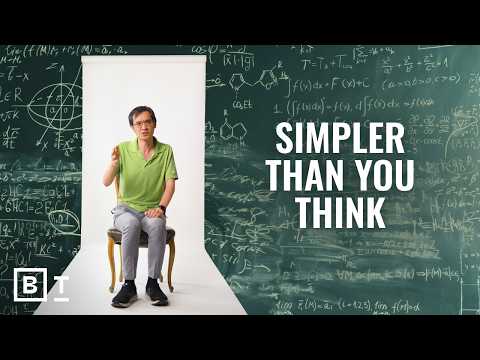
The world's greatest mathematician explains 6 essential concepts of math | Terence Tao
A Big Think full interview in which Tao — who says he has never had a single eureka moment — breaks mathematics down to six essential ideas: numbers, algebra, geometry, probability, analysis, and dynamics. The closing chapter on AI carries his sharpest image: science is a hike toward a waterfall, where getting lost is how you find the other waterfalls, and AI tools 'can be like helicopters that fly you directly there' — you arrive efficiently and learn nothing about the trail. His worry is precise: AI can speed up every individual step, 'but science as a whole may not necessarily accelerate just because every single component gets faster' — the danger is optimizing the wrong thing.
View Details
Formalizing a proof in Lean using Claude Code
Tao demonstrates using Claude Code to formalize a mathematical proof in the Lean proof assistant
View Details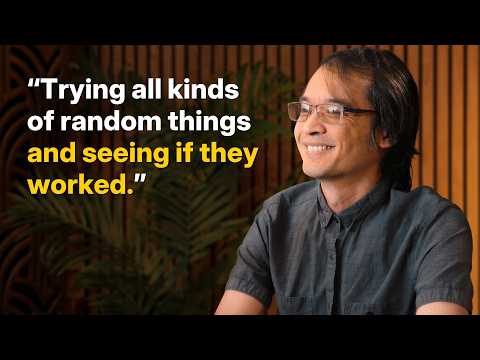
Terence Tao – AI is still brute force but it will revolutionize experimental math
Tao on how AI, despite being brute force, will transform experimental mathematics
View Details
The Potential for AI in Science and Mathematics
Oxford Mathematics public lecture on how AI could transform scientific and mathematical research
View DetailsConnections
Dwarkesh Patel
In conversationHost, Dwarkesh Podcast
Patel got the most precise statement anyone has of what today's models cannot yet do in mathematics. They can jump, Tao said, but not reach a handhold, hold it, pull others up and jump again: 'there isn't this cumulative process which is built up interactively. It seems to be a lot more trial and error and just repetition: brute force.' Pressed on whether a model that solves a problem thereby understands more mathematics, he said no — not even if it works on the problem without solving it. He also brought the ledger: of roughly eleven hundred Erdős problems, some fifty had fallen to AI assistance, and the low-hanging fruit was gone.
youtube.com
Mark Chen
In conversationChief Research Officer, OpenAI
By the IPAM fireside on this site it was their third conversation in as many years, and the moderator opened by reminding Tao of his earlier verdict on what the models were worth to mathematics: something like a very ineffective graduate student. That is the value of the series — Chen comes from a lab building models trained to reason, Tao from a practice where a proof is either checked or it is nothing, and the annual re-run turns a disagreement into a measurement. Tao's interest is unusually concrete: he uses these systems and reports what they get wrong.
youtube.com
François Chollet
KindredAI Researcher & Creator of Keras
An interpretive pairing of two people who measure the same thing from opposite ends of the discipline. Chollet built ARC to catch the difference between a skill a system has acquired and one it merely holds, insisting that intelligence is efficiency at acquiring new skills rather than breadth of stored ones. Tao, from inside working mathematics, reports the same gap empirically: a model can solve the problem and come away understanding no more mathematics than before. One designed a benchmark to expose the absence of cumulative learning; the other keeps running into it, problem by problem, with the Erdős list as his tally sheet.
youtube.com · youtube.com