
Lisa Feldman Barrett
Distinguished Professor of Psychology, Northeastern University
Trace a path from Lisa Feldman Barrett →About
Lisa Feldman Barrett is a Distinguished Professor of Psychology at Northeastern University, with appointments at Harvard Medical School and Massachusetts General Hospital. She is among the top 0.1% most cited scientists in the world, known for developing the theory of constructed emotion — the idea that emotions are not hardwired but constructed by the brain based on past experience and context. She is the author of How Emotions Are Made (2017) and Seven and a Half Lessons About the Brain (2020).
Key Contributions
- Developed the theory of constructed emotion, challenging the idea that emotions are universal hardwired modules
- Argues that brains predict and construct affective experience from body budgets, concepts, and context
- Built interdisciplinary affective-science work that connects psychology, neuroscience, physiology, and culture
- Wrote 'How Emotions Are Made' and 'Seven and a Half Lessons About the Brain,' translating affective science for general readers
- Her work matters for AI because emotion labels are not neutral ground truth; they are culturally and contextually constructed
- The theory is influential but contested by researchers who defend basic-emotion or more biologically fixed accounts
Videos & Interviews
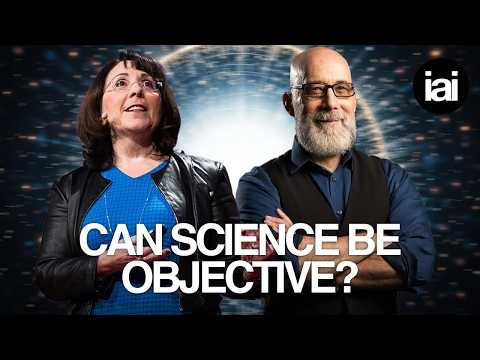
Is materialism holding science back? | Adam Frank, Lisa Feldman Barrett, Michael Levin
Adam Frank, Lisa Feldman Barrett, and Michael Levin discuss whether materialism limits how science understands mind, life, and experience.
View Details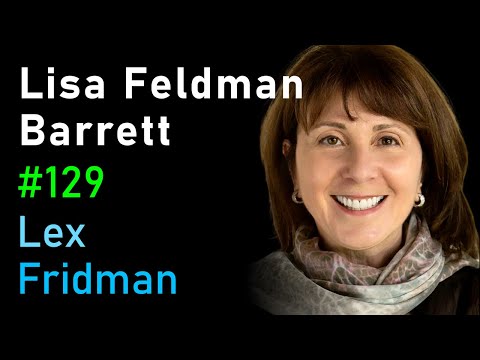
Lisa Feldman Barrett: Counterintuitive Ideas About How the Brain Works | Lex Fridman Podcast #129
Wide-ranging conversation on how the brain constructs emotions, the nature of affect, and why classical theories of emotion are wrong
View Details
The brain myth that won't die | Lisa Feldman Barrett
Talk debunking persistent misconceptions about how the brain works and why they matter
View DetailsConnections
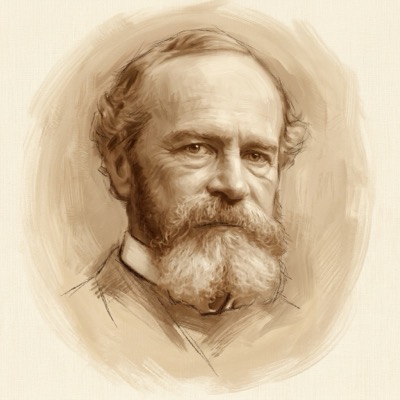
William James
Influenced byPhilosopher & Psychologist
Barrett claims James as a forerunner of psychological construction: he warned that 'there is no definite affection of "anger" in an "entitative" sense', and that naming a group of phenomena tempts us to suppose an entity behind them. She also marks where she parts from him — James is perhaps the one constructionist who reduced emotion to its bodily component. That makes him her ancestor and her foil at once, which is how the James–Lange theory usually enters arguments about whether a machine could have feelings.
affective-science.org

Michael Levin
In conversationBiologist & Morphogenesis Researcher
On an Institute of Art and Ideas panel asking whether materialism holds science back, Levin argued that strict physicalism 'has been dead for a really long time, and not because of any of this new biology but simply because of mathematics' — the value of e is a fact no physicist can change. Barrett, the panel's neuroscientist, answered from her own lab: 'I agree with this idea of a latent space,' she said, but wondered whether it comes from contextual coherence, since 'context is fully causal' and that already demands doing science differently, 'the way Mike does it or the way we do it.' A rare recorded moment of a biologist and a neuroscientist testing where the abstract realm they both need actually lives.
youtube.com
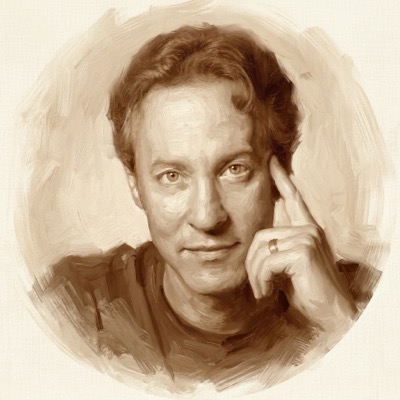
David Eagleman
In conversationNeuroscientist, Stanford University
In January 2025 Eagleman brought Barrett onto Inner Cosmos to ask whether emotions happen to you or are bodily signals your brain interprets; her answer, that emotions are constructed rather than universal reflexes, extends a picture he has argued for years. The brain runs an internal model and the senses mostly fact-check it, a phrase Eagleman has credited to Barrett. For both, feeling and seeing come from the same predictive brain.
iheart.com · jordanharbinger.com
Lex Fridman
In conversationResearch Scientist, MIT; Host of the Lex Fridman Podcast
Fridman opens by recalling that he once invited Barrett to his MIT AGI series and, instead of a lecture, held a conversation with her in front of the class — 'one of the early moments that led me to start this very podcast.' This is the overdue sequel, and it carries an argument aimed squarely at his field: the brain does not classify, so classification models will not tell you what it is doing; it constructs categories on the fly from past experience, and emotions are among them. It ends on Barrett describing empathy as metabolically expensive foraging, which depleted brains stop doing.
youtube.com

