
Hubert Dreyfus
Philosopher & AI Critic
About
Hubert Dreyfus (1929–2017) was an American philosopher at UC Berkeley whose critique of artificial intelligence profoundly shaped the field. Drawing on phenomenologists like Heidegger and Merleau-Ponty, he argued in 'What Computers Can't Do' (1972) and 'What Computers Still Can't Do' (1992) that human intelligence depends on embodied, situated expertise that cannot be captured by rule-based symbolic AI. His critique of 'Good Old-Fashioned AI' (GOFAI) proved prescient, and his emphasis on embodiment, intuition, and the role of the body in cognition continues to challenge assumptions about what AI can achieve.
Key Contributions
- Wrote 'What Computers Can't Do,' arguing that symbolic AI ignored embodied skill, background practices, and situated coping
- Used Heidegger and Merleau-Ponty to challenge the assumption that expertise is stored as explicit rules
- Developed the Dreyfus skill-acquisition model with Stuart Dreyfus, from novice rule-following to expert intuitive action
- Interpreted Heidegger for English-speaking philosophy through works such as 'Being-in-the-World'
- Forced AI researchers to confront tacit knowledge and embodiment long before those became mainstream cognitive-science themes
- His critique was prescient about GOFAI's limits, though connectionism and modern ML complicated some of his stronger claims
Questions they sharpened View the streams
Books


Videos & Interviews
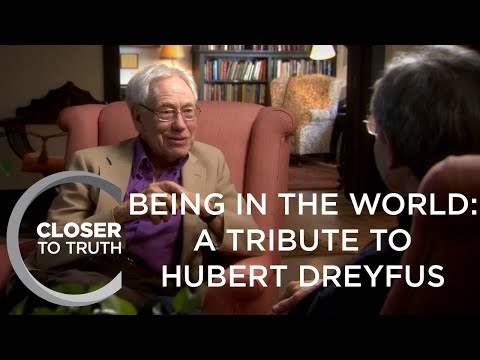
Being in the World: A Tribute to Hubert Dreyfus | Closer To Truth
Closer to Truth tribute exploring Dreyfus's lasting impact on philosophy and AI critique
View Details
Being in the World (Full Documentary)
Award-winning documentary featuring Dreyfus on Heidegger, embodiment, and skilled coping
View Details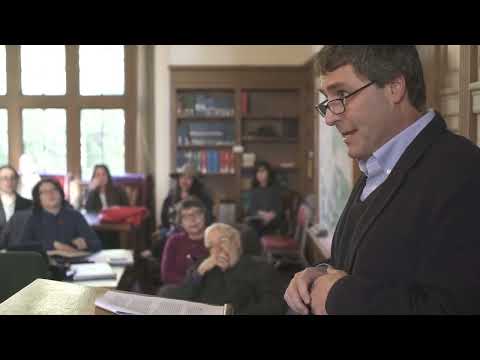
Celebrating Hubert Dreyfus: Sean Kelly -- "The Teacher" (part 1)
Sean Kelly's tribute to Dreyfus as a teacher and mentor at the memorial celebration
View Details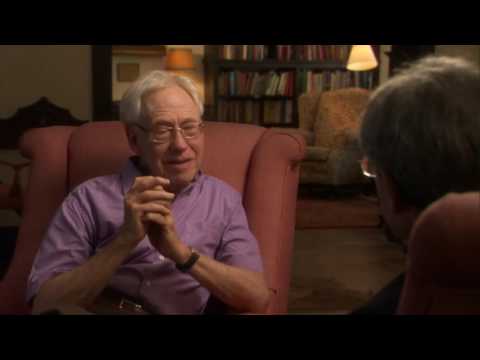
Hubert Dreyfus - Why is Consciousness so Baffling?
Closer to Truth interview on the hard problem of consciousness and phenomenological approaches
View DetailsConnections
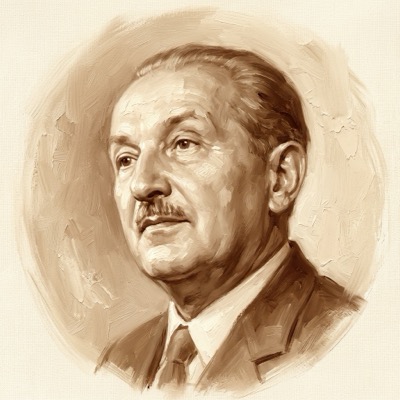
Martin Heidegger
Influenced byPhilosopher
Dreyfus's critique of AI is Heidegger converted into an engineering objection: intelligence is skilled coping in a world already meaningful, not the manipulation of context-free facts. His commentary Being-in-the-World (1991) was, for a generation of English-speaking philosophers, how Being and Time was read at all — an exegesis so distinctive that critics gave it a name, 'Dreydegger.'
en.wikipedia.org · Being-in-the-World: A Commentary on Heidegger's Being and Time, Division I (MIT Press, 1991)

Sean Dorrance Kelly
CollaboratedDean of Arts and Humanities & Professor of Philosophy, Harvard
The two wrote All Things Shining (2011) together: an argument that the secular West has lost the skill of being drawn out by what shines, and that meaning is something cultivated in craft and shared moments rather than manufactured inside an isolated self. Kelly also appears in the Being in the World documentary, and his memorial tribute to Dreyfus — on this site — is titled simply 'The Teacher.'
en.wikipedia.org · All Things Shining: Reading the Western Classics to Find Meaning in a Secular Age (Free Press, 2011)

John Searle
In contrastPhilosopher of Mind & Language
A reading of two Berkeley colleagues who attacked the same target from incompatible directions. Searle grants that a program might pass the Turing Test and denies it would understand anything — syntax never becomes semantics. Dreyfus denies the earlier step: a system fed only explicit rules could never cope well enough to get that far, because expertise is not rules. One argument concedes the behavior and withholds the mind; the other says the behavior was never coming.
plato.stanford.edu
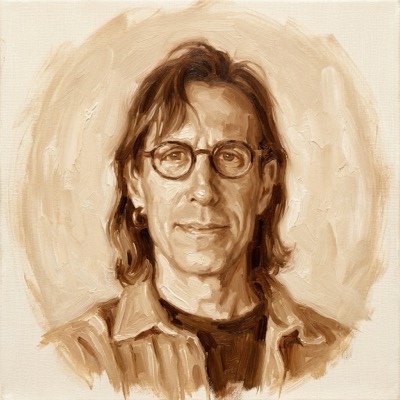
David Abram
KindredCultural Ecologist & Philosopher
A resonance rather than a documented exchange: both argue from Merleau-Ponty that intelligence is inseparable from embodiment. Dreyfus aimed the argument at symbolic AI — computers fail at what bodies know; Abram aimed it at alphabetic writing itself. Read together, they bracket the question this site keeps asking about minds made of text.