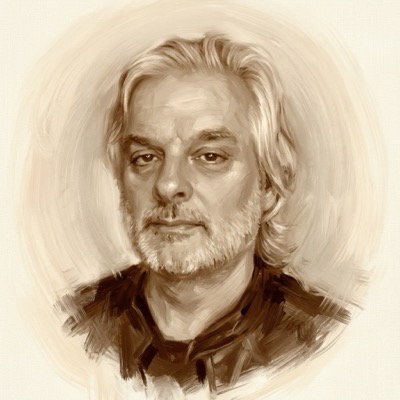
David Chalmers
Philosopher of Mind
About
David Chalmers is an Australian philosopher and cognitive scientist at NYU, known for formulating the 'hard problem of consciousness'—why physical processes give rise to subjective experience at all. His 1996 book 'The Conscious Mind' argued that consciousness cannot be explained in purely physical terms, revitalizing debates about the mind-body problem. He introduced the philosophical zombie thought experiment and co-developed the extended mind thesis with Andy Clark. His work poses fundamental challenges for AI: even if a system behaves intelligently, does it have any inner experience? Chalmers takes seriously the possibility that AI systems might be conscious, while insisting we lack the tools to know for certain.
Key Contributions
- Formulated the hard problem of consciousness, separating functional explanation from subjective experience
- Used philosophical zombies and 'The Conscious Mind' to challenge reductive physicalist accounts of mind
- Developed two-dimensional semantics and naturalistic dualism, reshaping analytic debates about meaning, modality, and mind
- Co-authored 'The Extended Mind' with Andy Clark, expanding cognition beyond the skull into tools and environments
- Built infrastructure for philosophy through PhilPapers and related online research databases
- Takes machine consciousness seriously, but his anti-physicalist arguments remain controversial among neuroscientists and functionalists
Questions they sharpened View the streams
Why does it feel like anything?
1995Explain every cognitive function and one question survives: why is any of it accompanied by experience? That is the hard problem.
What is real?
2022Virtual reality is genuine reality. A world made of bits is no less real for it.
Could an LLM be conscious?
2026Take the question seriously and audit the candidate arguments: none are decisive, in either direction.
What are we talking to when we talk to an LLM?
2026Not the model — an abstract object you can't hold a conversation with. Not the server — your words may be answered from three cities in turn. What you talk to is a thread: a virtual instance individuated by the memory carried forward from one exchange to the next. Identity lives in the context, not the hardware.
Books

Videos & Interviews
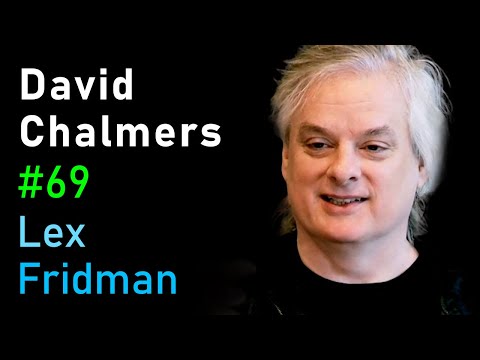
David Chalmers: The Hard Problem of Consciousness | Lex Fridman Podcast #69
In-depth discussion on consciousness, philosophical zombies, and the mind-body problem
View Details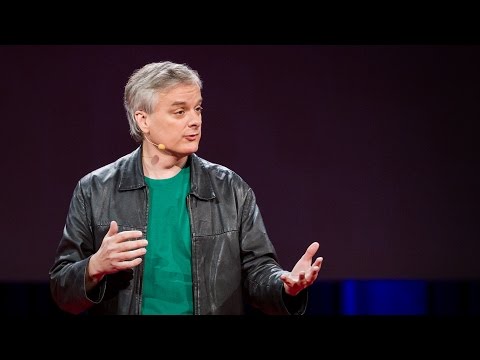
How do you explain consciousness? | David Chalmers
TED Talk on the hard problem of consciousness and why science struggles to explain subjective experience
View Details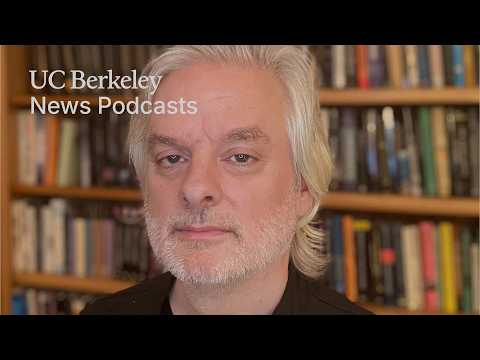
Philosopher David Chalmers asks: When we talk to AI, what are we talking to?
Inaugural Sarah Douglas Lecture on Philosophy and Artificial Intelligence at UC Berkeley, in which Chalmers argues that large language models generate short-lived conversational 'selves' rather than a single permanent mind — reshaping questions of identity and ethics
View Details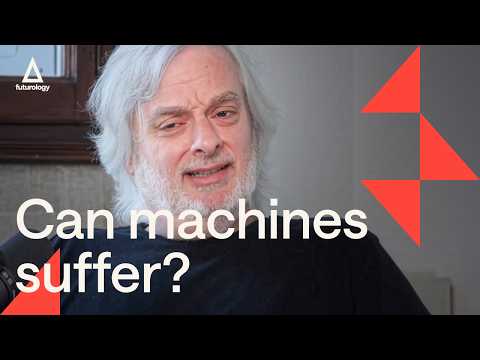
David Chalmers: AI Might Be Alive Inside | Futurology Podcast
A long conversation with Nils Gilman of the Berggruen Institute, recorded in Venice. Chalmers recounts how the hard problem got its name at the 1994 Tucson conference, walks the spectrum from illusionism to idealism and panpsychism, and revisits his 1998 bet with Christof Koch over the neural correlates of consciousness. On language models he refuses the easy dismissal: none of the usual objections (no biology, no body, no recurrence) is an obvious barrier, so he treats current-model consciousness as unlikely but not ruled out, and expects the 2030s to move past language models toward architectures with built-in emotion. Once a system is conscious, he argues, it has moral status, even a philosophical Vulcan that feels no pleasure or pain.
View DetailsPapers & Publications
Facing Up to the Problem of Consciousness
1995Named the hard problem: why physical processing is accompanied by subjective experience at all.
Read PaperCould a Large Language Model Be Conscious?
2023A careful audit of the arguments for and against machine consciousness, finding none decisive.
Read PaperWhat We Talk to When We Talk to Language Models
2025Argues LLM interlocutors are quasi-agents with quasi-beliefs, best understood as virtual entities bound to conversation-based memory threads
Read PaperConnections
Daniel Dennett
DebatedPhilosopher & Cognitive Scientist
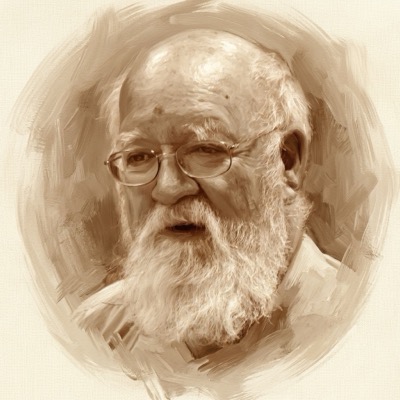
The zombie is the hinge. Chalmers argues that a being functionally identical to you but with no inner experience is at least conceivable, which would show experience is a further fact beyond function; Dennett replies in 'The Unimagined Preposterousness of Zombies' (1995) that philosophers who claim to conceive one have simply not done the imagining. Chalmers' 'Moving Forward on the Problem of Consciousness' answers back, naming Dennett as the one philosopher who explicitly denies there is a hard problem at all.
dl.tufts.edu · consc.net
Thomas Nagel
Influenced byPhilosopher of Mind
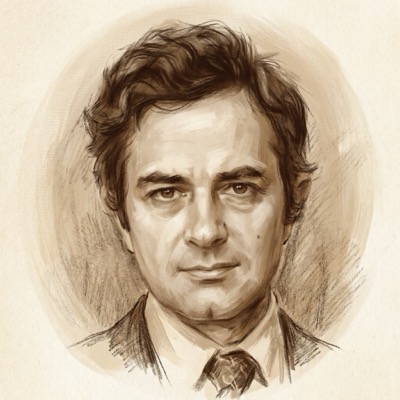
'Facing Up to the Problem of Consciousness' (1995) takes its central term straight from Nagel: 'As Nagel (1974) has put it, there is something it is like to be a conscious organism.' Nagel had argued that no objective description reaches the subjective character of experience; Chalmers gave that residue a name — the hard problem — and a place in the architecture of the debate, which is why the bat essay reads today like a hard problem posed twenty years early.
consc.net · doi.org
Sean Carroll
In contrastHomewood Professor of Natural Philosophy, Johns Hopkins University
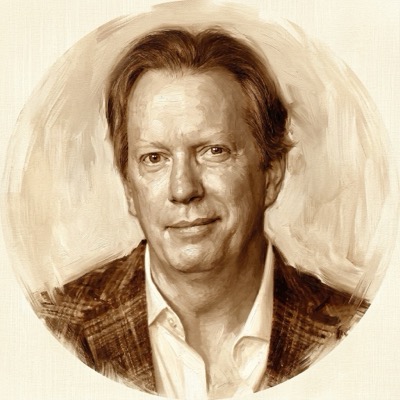
The cleanest live disagreement about whether consciousness needs an extra ingredient. Chalmers holds that even a complete physical story leaves the felt quality of experience unexplained — the Hard Problem — while Carroll's poetic naturalism says the physical story is the whole story, and that experience is a higher-level description of it, real in the way temperature is real. They talked it through on Mindscape in 2018, zombies and all, and neither moved. The same fork decides how you read a language model: a system that lacks the extra ingredient, or a system described at the wrong level.
preposterousuniverse.com

Andy Clark
CollaboratedPhilosopher & Cognitive Scientist
'The Extended Mind' (Analysis, 1998) is theirs jointly: if Otto's notebook plays for him the role Inga's biological memory plays for her, then the belief is Otto's even though it sits outside his skin. Written before smartphones, it has become the standard instrument for asking what remains of a mind that offloads its recall — and increasingly its reasoning — onto machines.
consc.net