
Barbara Liskov
Computer Scientist & Programming Pioneer
About
Barbara Liskov is an American computer scientist at MIT who has made fundamental contributions to programming language design, software engineering, and distributed systems. She developed the Liskov Substitution Principle, a cornerstone of object-oriented programming that states objects of a subtype should be substitutable for objects of their base type. Her work on CLU introduced data abstraction and iterators, concepts now standard in modern programming. She received the 2008 Turing Award for her practical and theoretical advances in programming language design.
Key Contributions
- Designed CLU, bringing data abstraction, iterators, and exception handling into practical programming-language design
- Formulated the Liskov Substitution Principle, a durable test for behavioral compatibility in object-oriented systems
- Built influential systems such as Venus, Argus, and Thor, connecting programming-language ideas to operating systems, distributed computing, and databases
- Advanced distributed systems through replication and Byzantine fault tolerance research
- Received the 2008 Turing Award for making abstraction a concrete tool for building reliable software
- Her work is foundational precisely because it is quiet infrastructure: ideas many developers use without knowing their source
Videos & Interviews
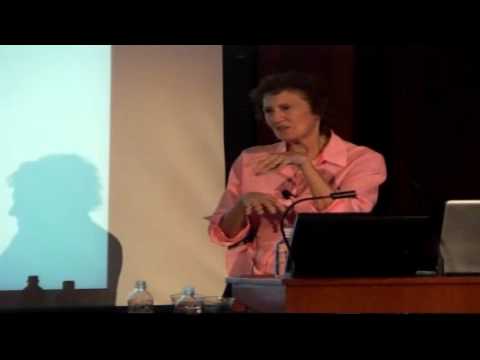
Barbara Liskov: Programming the Turing Machine
Liskov's Turing Award lecture on the evolution of programming languages
View Details
The Power of Abstraction | Barbara Liskov
Lecture on data abstraction and its impact on software engineering
View Details
Turing Award Winner: Data Abstraction, Dijkstra, Distributed Systems | Barbara Liskov
Liskov reflects on data abstraction, Dijkstra's influence, and her work in distributed systems
View Details