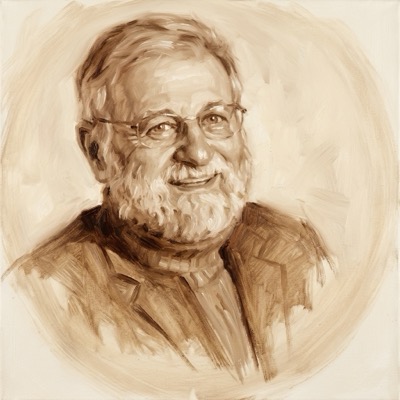
About
Donald Arthur Norman is an American cognitive scientist, design theorist, and author who coined the term 'user experience' while at Apple in the early 1990s. He is best known for The Design of Everyday Things (1988), which introduced affordance-based thinking to design. He co-founded the Nielsen Norman Group with Jakob Nielsen and directs The Design Lab at UC San Diego. His work bridges cognitive science, human-computer interaction, and industrial design, shaping how an entire discipline thinks about usability.
Key Contributions
- Wrote 'The Design of Everyday Things,' turning doors, switches, mappings, and feedback into everyday lessons for HCI
- Popularized affordances and signifiers in design, adapting Gibson's ecological psychology for product teams
- Helped coin and institutionalize 'user experience' while at Apple's Advanced Technology Group
- Co-founded Nielsen Norman Group, bringing usability testing and research methods into mainstream product practice
- Wrote on emotional design, showing that usability also depends on affect, pleasure, and trust
- Later criticized narrow human-centered design when it ignores systems, sustainability, and the social costs of optimizing for individual users
Videos & Interviews
Don Norman: 3 ways good design makes you happy
TED talk on the three emotional cues — visceral, behavioral, reflective — that well-designed products must hit
View Details
It's not you. Bad doors are everywhere.
Vox documentary on 'Norman Doors' — doors whose design tells you to do the opposite of what you should
View DetailsConnections

James J. Gibson
Influenced byPsychologist & Founder of Ecological Psychology
Norman took 'affordance' from Gibson's ecological psychology into design in 1988, and narrowed it on the way: Gibson meant what the environment actually offers an animal, noticed or not, while Norman's readers took it to mean the action possibilities a user can see. By 2013 he conceded the drift and split the idea in two, affordances for what is possible and signifiers for where to act. The repair is itself a lesson in how a concept changes when it moves between disciplines.
Donald Norman, The Psychology of Everyday Things (1988); revised as The Design of Everyday Things (2013) · en.wikipedia.org

John Maeda
In conversationCVP Engineering, GitHub Design & Microsoft CoreAI Design
In 2012 PARC put the two on one stage for a dialogue on design and innovation, and Norman's own write-up records the result: he wanted to talk about complex design, interaction and planning, while Maeda, then president of RISD, wanted to talk about the beauty of fonts, of knives, of the office chair. 'So we failed to connect.' Fourteen years later Maeda closed a talk on AI and product design with Norman's gulfs of execution and evaluation, arguing that agents collapse the first and make the second the whole job, which reads like the conversation finally arriving where Norman wanted it.
jnd.org · goodreads.com · youtube.com

