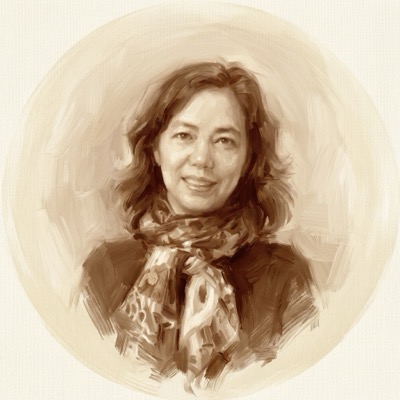
Fei-Fei Li
Co-founder & CEO, World Labs; Special Advisor on AI, Stanford
About
Fei-Fei Li is a computer scientist at Stanford University and co-founder and CEO of World Labs, the spatial-intelligence company she started in 2024 to build models that perceive, generate, and reason about 3D worlds; its Marble model turns images or text into explorable 3D scenes, and the company raised $1 billion in February 2026. She created ImageNet, the visual database that sparked the deep learning revolution in computer vision when AlexNet's victory in the 2012 ImageNet Challenge demonstrated the power of deep neural networks. She co-founded the Stanford Human-Centered AI Institute (HAI) in 2019 and co-directed it until May 2026, when she became co-chair of its advisory council and Stanford's university-wide Special Advisor on AI. In 2025 she shared the Queen Elizabeth Prize for Engineering with Hinton, LeCun, Bengio, Hopfield, Huang, and Dally.
Key Contributions
- Created ImageNet, the large labeled image dataset that made the 2012 AlexNet breakthrough measurable and reproducible
- Pioneered large-scale visual recognition research by pairing computer vision with web-scale data and human annotation
- Co-founded Stanford HAI, making 'human-centered AI' an institutional agenda rather than just a slogan
- Co-founded AI4ALL, expanding AI education and participation for underrepresented students
- Served as Chief Scientist at Google Cloud AI during the Project Maven controversy, a lasting case study in AI, labor, and military use
- Helped move AI ethics and diversity into mainstream AI discourse while ImageNet itself became part of debates over dataset bias and labels
- Co-founded World Labs in 2024 to pursue spatial intelligence, arguing that language is not the whole of intelligence and that the next frontier is models that inhabit 3D worlds
- Shared the 2025 Queen Elizabeth Prize for Engineering for the engineering foundations of modern machine learning
Videos & Interviews
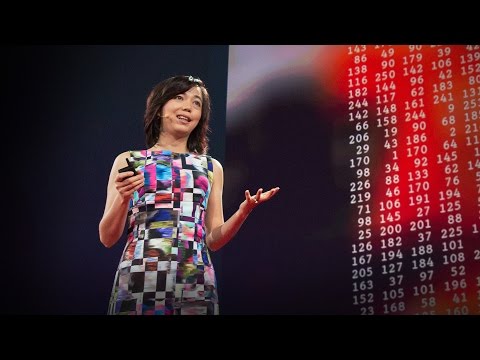
Fei-Fei Li: How we teach computers to understand pictures
TED Talk on ImageNet and teaching AI to see and understand the visual world
View Details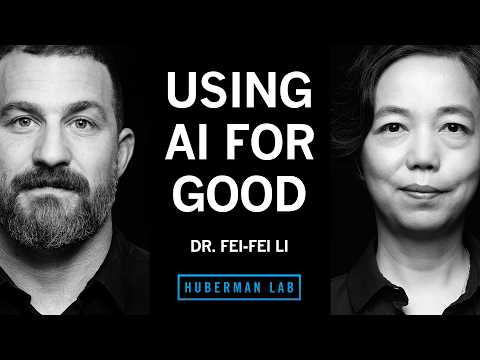
Using AI to Increase Your Intelligence & Enrich Humanity | Dr. Fei-Fei Li
A two-hour conversation between Li and neuroscientist Andrew Huberman on using AI to extend rather than replace human capability — not just retrieving information, but genuinely increasing intelligence and creativity. Li brings her ImageNet-to-World-Labs arc to a question Huberman approaches from the brain's side: what human-AI collaboration looks like when it is designed around the human. A good entry point to her case for human-centered AI, made for an audience that mostly hears about AI as either magic or menace.
View Details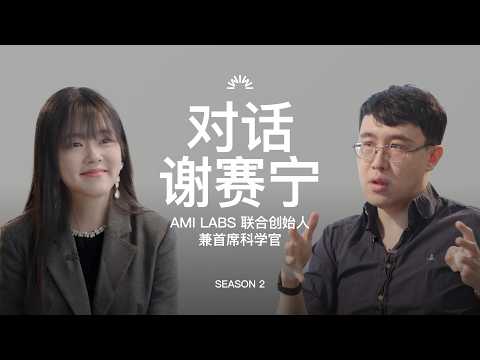
A 7-hour marathon interview with Saining Xie: World Models, AMI Labs, Yann LeCun, Fei-Fei Li, and 42
Wide-ranging conversation covering world models, the founding of AMI Labs, and reflections on AI research
View DetailsConnections
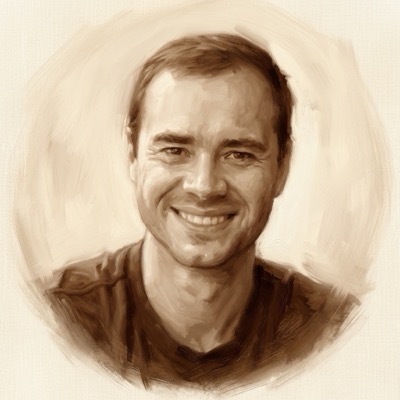
Andrej Karpathy
InfluencedAI Researcher & Educator
Karpathy took his Stanford PhD under Li with a thesis on connecting images and natural language — the problem ImageNet had made tractable, and the one that would reappear, transformed, inside multimodal models a decade later. He also inherited her conviction that teaching is part of research rather than a duty beside it: CS231n, which he helped build and teach, became the on-ramp for one generation of deep-learning engineers, as his lectures and nanoGPT are for the next.
en.wikipedia.org · en.wikipedia.org
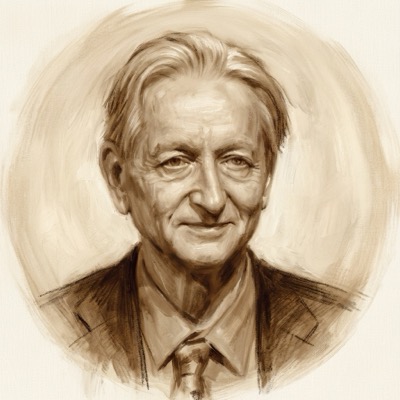
Geoffrey Hinton
KindredAI Pioneer & Researcher
The dataset and the network. Li began ImageNet in 2006 and spent years paying strangers on Mechanical Turk to label fourteen million pictures; in 2012 Hinton's students entered a convolutional network and cut the error rate by more than ten points, and the field turned. Li's own telling is generous — on the TED stage she credits the architecture to 'Kunihiko Fukushima, Geoff Hinton, and Yann LeCun back in the 1970s and '80s' — and the point is that neither half worked without the other: an old algorithm waiting for enough data, and a dataset waiting for an algorithm that could use it. In 2025 they shared the Queen Elizabeth Prize for Engineering.
youtube.com · en.wikipedia.org · hai.stanford.edu

Yann LeCun
KindredExecutive Chairman & Co-founder, AMI Labs; Professor, NYU
A convergence that mostly goes unremarked: the two figures most identified with computer vision's deep-learning era both concluded that language models had left something essential out, and both founded companies to prove it — Li's World Labs on spatial intelligence in 2024, LeCun's AMI Labs on world models in 2025. Vision researchers were always working with a world that had to be inhabited rather than described. The wager is that the next paradigm comes from that habit of attention.
arxiv.org
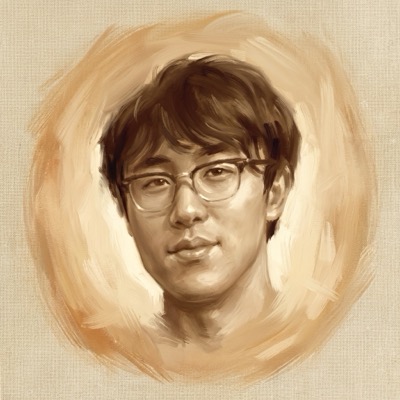
Saining Xie
CollaboratedCo-founder & CSO, AMI Labs
Both names sit on Cambrian-S (November 2025), the NYU paper that frames spatial supersensing as four stages beyond language — naming what is seen, remembering a stream, inferring the 3D world behind the pixels, predicting it — with LeCun beside them on the author list. In his seven-hour interview Xie says Li 'helped us with a great deal of valuable advice' on it, and names her among the people who 'paved the road' for Chinese vision researchers before him. It is the rare edge where the two rival world-model bets, AMI Labs and World Labs, share a byline.
arxiv.org · youtube.com