About
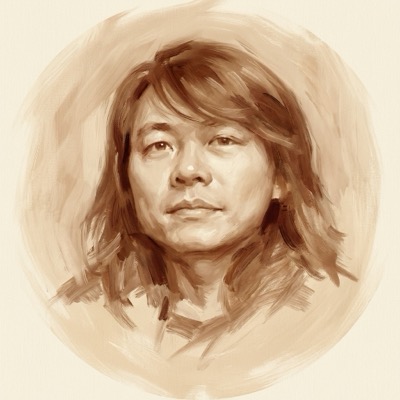
Yuk Hui is a philosopher and Professor of Philosophy at Erasmus University Rotterdam, where he holds the Chair of Human Conditions and directs the Erasmus Institute for Philosophy and Technology. He studied computer engineering at the University of Hong Kong and completed his PhD under Bernard Stiegler at Goldsmiths, University of London. He originated the concept of 'cosmotechnics' — the idea that technology is not universal but shaped by the cosmic and moral orders of different cultures — and 'technodiversity' as an alternative to the homogenizing trajectory of Western technological modernity. His major works include The Question Concerning Technology in China (2016), Recursivity and Contingency (2019), Machine and Sovereignty (2024), and Kant Machine (2026).
Key Contributions
- Developed cosmotechnics, arguing that technology is always shaped by cosmology, culture, and forms of life
- Argues for technodiversity against the assumption that all societies must follow one universal technological path
- Wrote The Question Concerning Technology in China, putting Chinese and European philosophy of technology into direct conversation
- Extended philosophy of technology through cybernetics and recursion in works such as Recursivity and Contingency
- Offers AI debates a way to ask not only what systems can do, but what worlds and values they encode
- His work is conceptually rich, though its abstraction can make practical governance implications hard to specify
Videos & Interviews

Connections
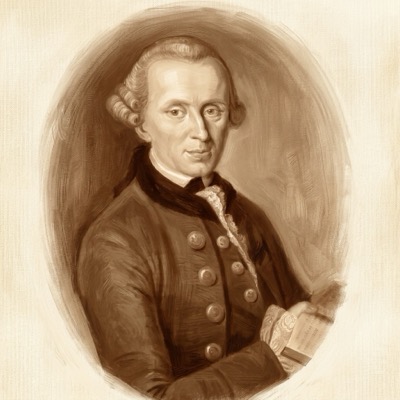
Immanuel Kant
Influenced byPhilosopher of the Enlightenment
Kant Machine: Critical Philosophy after AI (2026) is the terminus of a long engagement: Hui transposes Kant's founding questions from the human subject to the machine, asking whether an AI can be critical in Kant's sense — aware of its own limits, legislating for itself, capable of judgment rather than mere execution. The thread runs back through Recursivity and Contingency, which reread the third Critique's account of the organism for the age of cybernetics and neural networks.
digitalmilieu.net · amazon.com
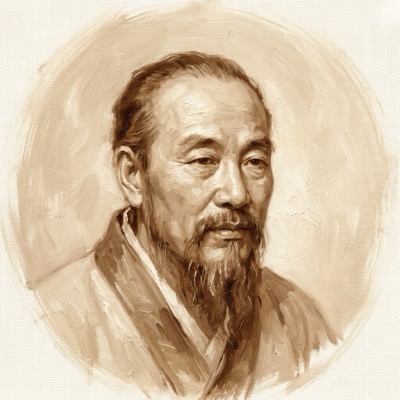
Zhuangzi
Influenced byDaoist Philosopher of the Warring States
In 'Cosmotechnics as Cosmopolitics' Hui returns to the Zhuangzi's Cook Ding, whose knife has not been changed in nineteen years because it 'seeks the void and enters it with ease,' and who says that what he loves is Dao, more splendid than his skill. Hui reads the parable as a unity of Dao and qi, the cosmic order and the tool, that the Greek idea of technē never named. It is a seed of his larger claim: there is more than one way for a culture to have technology, and so more than one way to build AI.
e-flux.com · Yuk Hui, The Question Concerning Technology in China: An Essay in Cosmotechnics (Urbanomic, 2016)
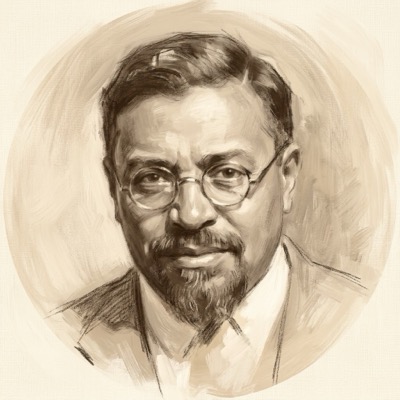
Norbert Wiener
Influenced byMathematician & Founder of Cybernetics
Recursivity and Contingency (2019) reads cybernetics as the hinge of a long history of the organic, and Wiener sits at its center: Hui calls decisive Wiener's claim that technical objects are becoming organic, and his declaration that the mechanist–vitalist controversy had become a badly posed question. He also tells readers not to get stuck in Wiener's late skepticism about his own epistemological breakthroughs — on this reading, the field's founder was too quick to doubt what he had opened.
networkcultures.org · en.wikipedia.org

