About
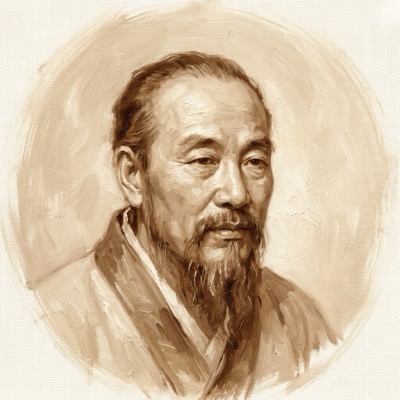
Zhuangzi ('Master Zhuang'), personal name Zhuang Zhou, lived in the 4th century BC during China's Warring States period, traditionally dated c. 369–286 BC; later biographers place him in the town of Meng in the state of Song as a minor official, but these details come from the Han dynasty and cannot be confirmed. The book that bears his name survives in a 33-chapter edition made around AD 300 by Guo Xiang, who cut it down from 52 chapters; only the seven 'Inner Chapters' are traditionally credited to Zhuangzi himself — and even that remains a scholarly hypothesis — while the outer and miscellaneous chapters are by disciples and later hands. Its second chapter, on making all things equal, argues that judgments of right and wrong depend on where one stands, and ends with the butterfly dream: Zhuang Zhou wakes unsure whether he was a man who dreamed he was a butterfly or is a butterfly now dreaming he is a man. Sima Qian records that he turned down an offer of office from King Wei of Chu to keep his freedom. Read alongside Laozi as a founding text of Daoism, the Zhuangzi also shaped Chan Buddhism, which became Zen in Japan.
Key Contributions
- Told the butterfly dream, unsettling the line between dreaming and waking and between one self and another
- Argued in 'On Making All Things Equal' (Qiwulun) that judgments of this and that depend on one's standpoint
- Opened his book with 'Free and Easy Wandering' (Xiaoyaoyou), an ideal of freedom from fixed purposes and conventional measures of use
- Debated his friend Hui Shi over whether one can know the happiness of fish, a classic exchange on knowing other minds
- Told of Cook Ding, whose knife stays sharp for nineteen years because it follows the ox's natural seams — an image of skill become Dao
Connections
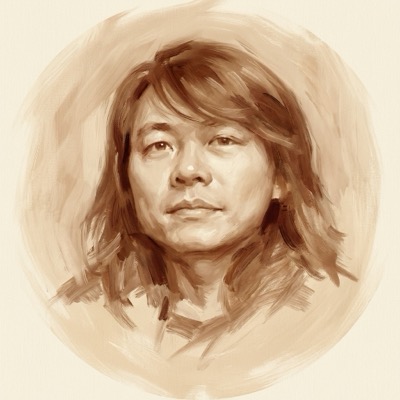
Yuk Hui
InfluencedProfessor of Philosophy, Erasmus University Rotterdam
In 'Cosmotechnics as Cosmopolitics' Hui returns to the Zhuangzi's Cook Ding, whose knife has not been changed in nineteen years because it 'seeks the void and enters it with ease,' and who says that what he loves is Dao, more splendid than his skill. Hui reads the parable as a unity of Dao and qi, the cosmic order and the tool, that the Greek idea of technē never named. It is a seed of his larger claim: there is more than one way for a culture to have technology, and so more than one way to build AI.
e-flux.com · Yuk Hui, The Question Concerning Technology in China: An Essay in Cosmotechnics (Urbanomic, 2016)
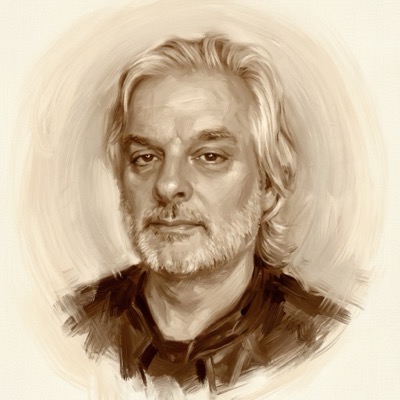
David Chalmers
KindredPhilosopher of Mind
Chalmers puts Zhuangzi's butterfly dream among the first illustrations of Reality+ (2022), as an ancestor of the simulation hypothesis: if a dream can pass for waking life, how would we know we are not in a virtual world now? Zhuangzi left the question open and let the self drift between man and butterfly; Chalmers answers that virtual reality is genuine reality, only differently built. Two and a half millennia apart, they put the same question to whatever minds we make next.
consc.net · carnegiecouncil.org
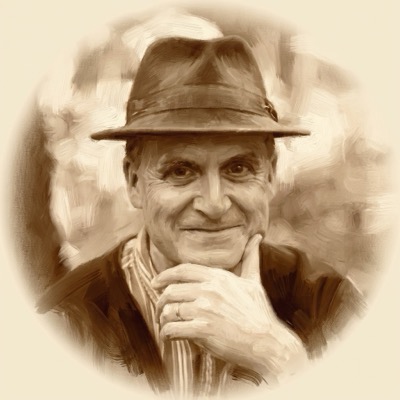
Evan Thompson
InfluencedPhilosopher of Mind & Cognitive Science
Thompson has said that reading Laozi at twelve, and then Zhuangzi, is what first got him interested in philosophy. The trace is easy to read in Waking, Dreaming, Being, which treats the line between dreaming and waking as something to investigate rather than assume — the question the butterfly dream first posed. A self that can wake up inside a dream looks less like a thing than a process, which is the ground on which questions about machine selves are now argued.
scienceandnonduality.com
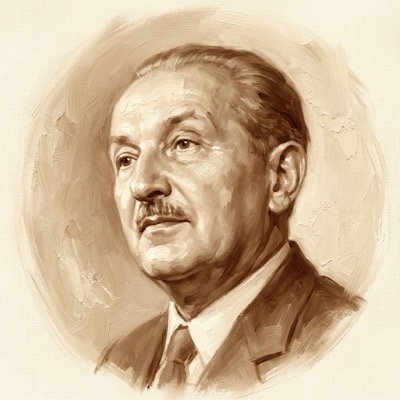
Martin Heidegger
InfluencedPhilosopher
Heidegger became absorbed in the Zhuangzi in the 1930s, and in the Country Path Conversations written at the end of the war in 1945 he retells its exchanges on the use of the useless. For a thinker who saw modern technology turning everything into standing resource, Zhuangzi's insistence that what serves no purpose has its own necessity offered another measure of what a thing is for. Scholars still argue over how deep the Daoist debt runs; one recent volume calls it 'forgotten'.
en.wikipedia.org · David Chai (ed.), Daoist Resonances in Heidegger: Exploring a Forgotten Debt — https://www.grahamparkes.net/wp-content/uploads/2023/04/Parkes_-_Thoughts_on_the_Way_2.pdf

