About
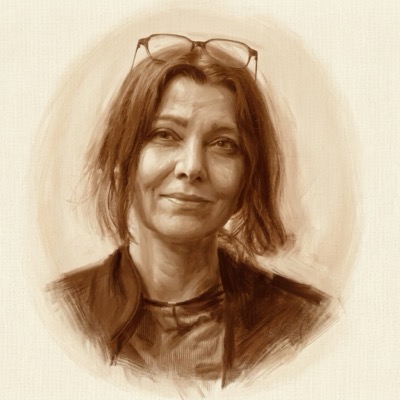
Elif Shafak (born 1971 in Strasbourg) is a British-Turkish novelist and essayist who writes in both Turkish and English, the author of twenty-one books translated into nearly sixty languages, and since December 2025 the President of the Royal Society of Literature. In 2006 she was prosecuted under Article 301 of the Turkish penal code for sentences spoken by Armenian characters in The Bastard of Istanbul — a trial in which fictional people were defended in a real courtroom — and was acquitted; she has lived in London since 2013. Her subject is what an archive leaves out: she describes the novelist as a linguistic and cultural archaeologist, digging through layers of memory and amnesia, stories and silences. Against what she calls an age of clashing certainties, she argues that meaning is not delivered by an author but made between reader and text — no two readings are ever the same — and that a writer's job is to open a space of plurality rather than to preach. Her objection to large language models follows from that practice rather than from any technical claim: the knowledge they present is "tilted in one direction," a Eurocentric and text-bound canon treated as the main source of knowledge, while the oral traditions she works from are "being erased as we're speaking."
Key Contributions
- Wrote twenty-one books in Turkish and English, translated into nearly sixty languages; 10 Minutes 38 Seconds in This Strange World was shortlisted for the 2019 Booker Prize
- Prosecuted in 2006 under Article 301 for "insulting Turkishness" over words spoken by characters in The Bastard of Istanbul, and acquitted — her lawyers defending fictional people in a real courtroom
- Elected President of the Royal Society of Literature in December 2025, succeeding Bernardine Evaristo
- Calls the novelist a linguistic and cultural archaeologist, arguing that a writer must listen for silences and amnesia, not only for stories
- Rejects "the singularity of meaning": readers are not passive, no two readings are ever the same, and the author's task is to open a space of plurality rather than to preach
- Argues that large language models tilt knowledge toward a Eurocentric, text-bound canon while the oral storytelling of minorities is "erased as we're speaking" — and that the subject is "way too important to leave it to a few companies"
- Holds that faith without doubt is a dogma — distrusting absolute certainty in the religious and the atheist alike — and distinguishes chronos, the measurable time of clocks, from kairos, the deep cyclical time she believes storytellers work in
Videos & Interviews
Author Elif Shafak on the power of storytelling | Tortoise ThinkIn
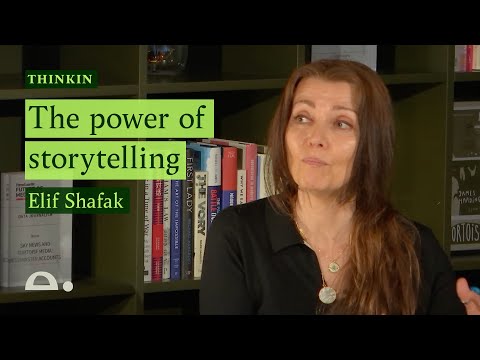
A Tortoise ThinkIn with James Harding, run as a newsroom conversation rather than an interview, so half the hour belongs to the room — a Cypriot whose family was split by the partition, a Turkish woman with a Greek grandmother from Istanbul, a man pressing her on whether "populism" is just what being unheard sounds like. The spine is a distinction she draws early between information, knowledge and wisdom. She recalls the techno-optimism of the early 2000s, when a young couple in Egypt named their child after Facebook, and says what went wrong is that "we relied too heavily on information": scrolling "gives me the illusion that I know something about the subject," and "we forgot to say I don't know" — the point where Socrates began. Wisdom, in her account, is the stage that needs empathy, not more data. Asked whether social media also gave voice to people who had none, she concedes it at once, speaking as a woman from the Middle East, and then refuses to hand the subject over: "technology is too complicated... let's leave it to people who know the subject. Let's not do that." AI is never named. The hour is here for its account of what a mind loses when it mistakes information for knowledge, from someone who writes out of the silences official archives keep.
View Details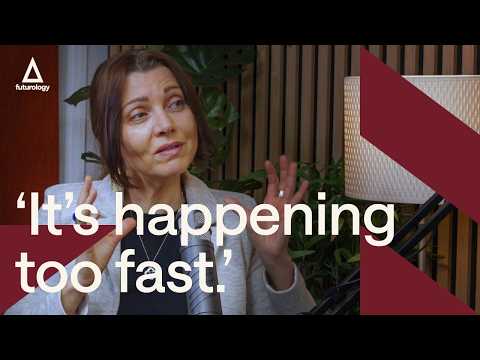
Novelist Elif Shafak on Why We Need Faith to Face the Future
The interview where she is asked about large language models directly, and answers at length. Her objection is not about capability: within these models "the knowledge that is being presented is tilted in one direction," a Eurocentric and West-centric literature treated as the main source of knowledge, "whereas the knowledge of many minorities, people from different parts of the world, all that oral storytelling that I was talking about — that is being erased as we're speaking." She reaches for Benjamin's angel of history to describe being pushed forward faster than the moment can be processed, and recalls the tech optimism of twenty years ago, when a young Egyptian couple named their newborn daughter Facebook — a teenager now, and she wonders what world was handed to her. The lesson she draws from that swing is against swinging again: Gramsci's pessimism of the intellect held together with optimism of the will, medicine credited without hedging, and a flat refusal to let the subject be delegated — "it's way too important to leave it to a few companies or to a few decision makers in a few companies."
View Details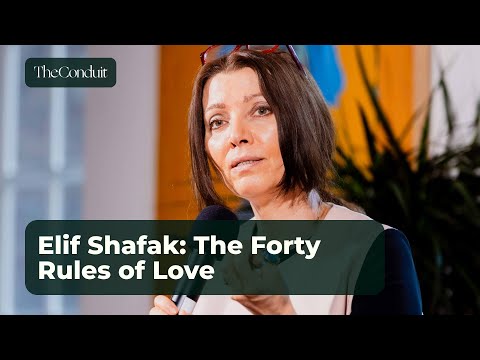
Elif Shafak: The Forty Rules of Love
An on-stage conversation revisiting the novel sixteen years after it was written — a book within a book, Ella Rubenstein reading a manuscript about Shams of Tabriz and Rumi, the two timelines mirroring each other across centuries. Shafak says she followed intuition rather than a plan and "never knew quite what I was doing until I finished the novel." The sharpest passage is on certainty: she is not religious, has "too much doubt" for that, and what frightens her is absolute conviction in either direction — "faith without doubt is a dogma," but someone certain of their atheism to the point that not a speck of faith remains has lost "the magic of life" too. She names three reconnections she thinks the moment demands — with other people across borders, with nature, and with an inner garden she deliberately refuses to give a name — and cites a Yazidi teaching that in April you tread the earth gently because the earth is pregnant, offered not as charming folklore but as what a culture produces when it treats nature as an equal rather than as material. There is no mention of AI anywhere in the hour. Its value here is the epistemic stance underneath: doubt held as a discipline, in a register the field rarely borrows from.
View Details
How to Unlock Your Imagination as a Writer (Elif Shafak Interview)
Perell asks about craft and Shafak keeps answering about attention. She declines the label magical realism on the grounds that Istanbul does not sort itself into boxes — a moment of sorrow with absurdity underneath it, or the reverse — and offers instead that a novelist is "a bit like a linguistic cultural archaeologist," digging "through layers of memory and amnesia, stories and silences." The through-line is what goes unrecorded: she listens to how people say things as much as what they say, distrusts heroes in favour of the moment a timid person turns brave, and separates chronos, the measurable time of clocks, from kairos, the deep cyclical time she thinks storytellers actually work in. On meaning she is blunt — "we live in an age of clashing certainties," readers are not passive, no two readings are ever the same, and a writer who preaches has failed. AI appears once, an hour in and in passing: large language models being used to trace how animals communicate, offered as evidence that nature knows more than we do. That single line is the whole of it, and the interview is better for not reaching. What it is instead is an hour on the faculty this site keeps approaching from the other side — how a mind attends to what was never said.
View DetailsConnections
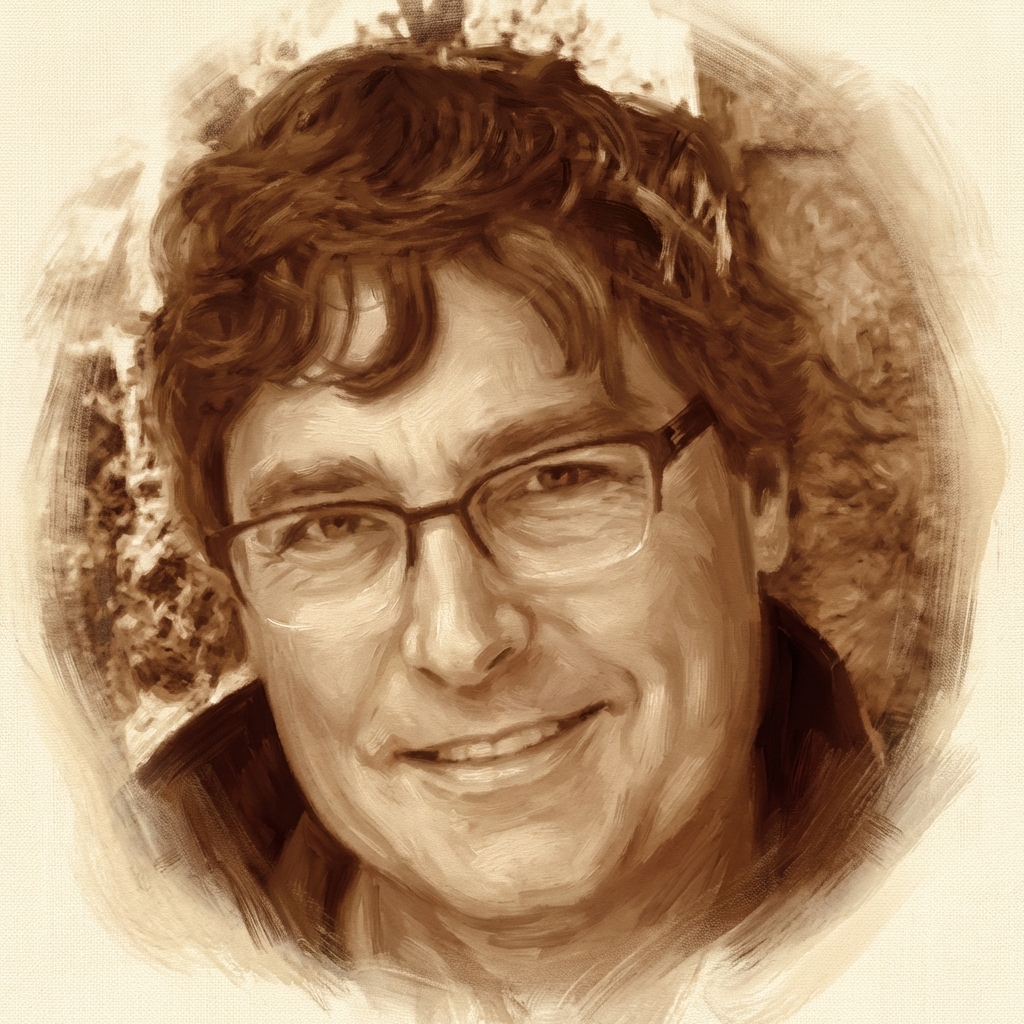
Sean Dorrance Kelly
KindredDean of Arts and Humanities & Professor of Philosophy, Harvard
All Things Shining, which Kelly wrote with Hubert Dreyfus, argues that a secular West did not outgrow the sacred so much as lose the practices for meeting it. Shafak names the same condition from the other side and supplies practices: she wants neither 'the absolute certainty of the religious' nor 'the absolute certainty of atheism' but 'secular acts of faith' — moving to a country where you may not be happy, writing a novel that may mean nothing to anyone, falling in love without knowing — and she separates spirituality from religiosity precisely because organised religion 'divides humanity into boxes of us and them.' Kelly reads the lost skill back out of Homer and Melville; she finds it on the thin line between faith and doubt that her mystics walked, 'sometimes zigzagging.'
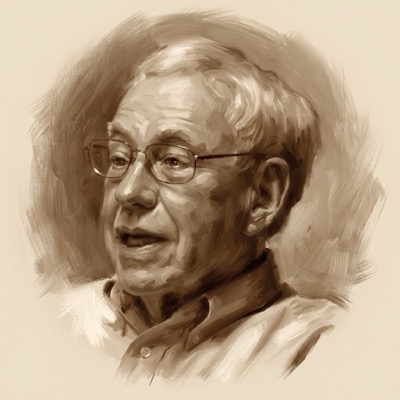
Hubert Dreyfus
KindredPhilosopher & AI Critic
Dreyfus spent a career arguing that the knowing that matters is know-how — absorbed, skilful, never fully available as a set of propositions — and in All Things Shining that the sacred is met in practice rather than held as doctrine. Shafak describes writing in exactly that register: she follows an intuition, says she 'never knows quite what she is doing until the novel is finished,' and calls continuing a book that may mean nothing to anyone a secular act of faith. Dreyfus aimed the claim at symbolic AI and its rules; she states it from inside the craft, which makes her an unusually direct witness for the thing he argued against machines.
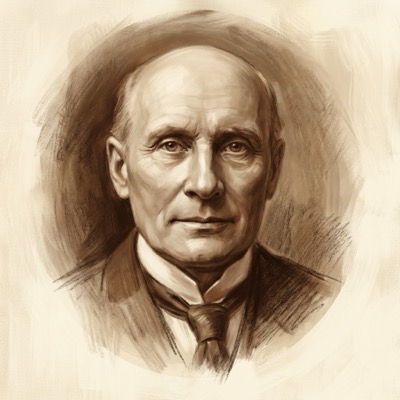
Alfred North Whitehead
KindredMathematician & Process Philosopher
Shafak makes process philosophy's central move without its vocabulary. 'When you enter story land there's no us versus them,' she says — 'for a writer there can be no other. The other is my brother, the other is my sister, I am the other. So it dismantles dualities' — and she finds the same dismantling in mystics who never met across centuries and continents: 'whatever exists in me exists in the universe and vice versa,' each person a microcosm reflecting the macrocosm. That sits close to Whitehead's wager that relation is constitutive rather than incidental, every actual entity taking up the whole universe from its own standpoint; what he built as metaphysics against a world of separate substances, she reports as what the mystics kept saying and what fiction does to a reader.
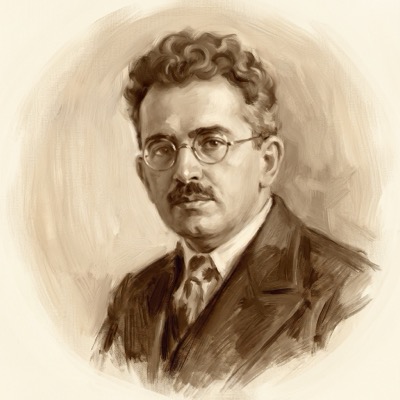
Walter Benjamin
KindredPhilosopher & Cultural Critic
Asked what large language models might eventually reveal to us about ourselves, Shafak reaches for Benjamin's angel of history — the Klee painting — to describe feeling 'catapulted into the future,' pushed forward too fast to process the moment being lived. It is his figure borrowed for a technological present he did not live to see, by a novelist whose own charge against these models is that they erase oral traditions as fast as they absorb written ones. Between his aura and her silences the pair marks the same anxiety twice: what a new medium takes away while it is busy giving.
youtube.com

