What is a self?
The cuts
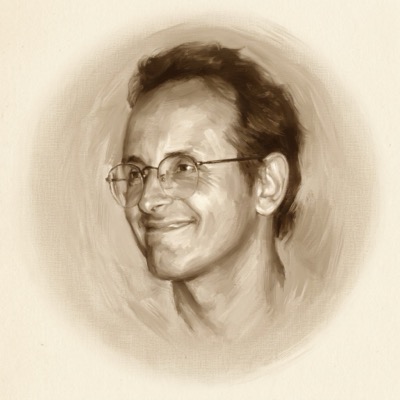
The self is a virtual center — a coherent pattern with no central controller, produced moment to moment by the very processes it seems to command. A meshwork of selfless selves that behaves as one.
Made 'no-self' a scientific hypothesis rather than a mystical claim: selfhood as an emergent, ongoing enactment, borrowed from immunology, phenomenology, and Buddhist practice at once.
The Embodied Mind: Cognitive Science and Human Experience1991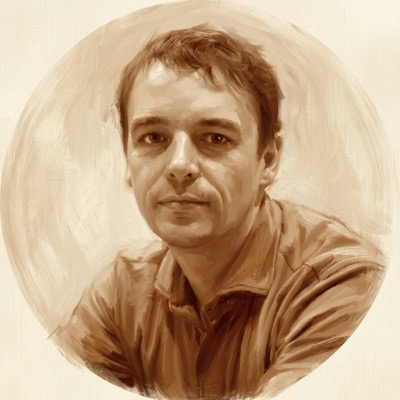
You are a story the brain tells itself — a self-model it builds to organize perception and action. Useful, revisable, and not identical to the system that runs it. The 'I' is content, not the computer.
Recast the self as a construct with an engineering rationale: a model a mind needs in order to act coherently, which explains why it feels central without being fundamental.
We Are All Software2024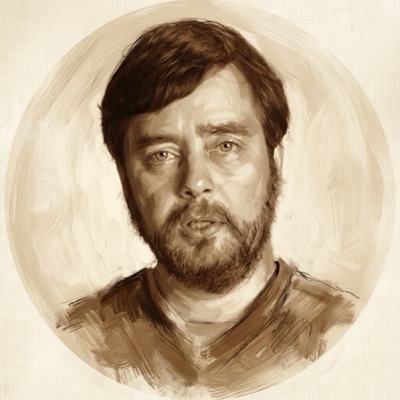
A self is the boundary of a cognitive light cone — the scope of what a system counts as 'me' and works to protect. Selves nest and merge: cells into tissues, tissues into you. The boundary is real, measurable, and not fixed.
Made selfhood continuous and composable — not a human all-or-nothing but a scale of ownership that can grow, shrink, split, and fuse across biological levels.
Technological Approach to Mind Everywhere (TAME)2022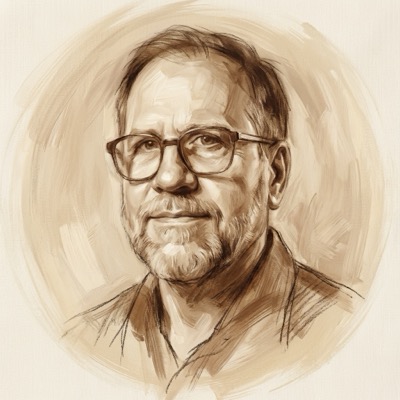
The self isn't a thing you have but a relationship you're in — an agent fitted to its arena. The grasping ego that fears its own dissolution is not the whole of it; wisdom is loosening that identification without losing the person.
Distinguished the ego to be seen through from the self to be cultivated, giving the ancient project of self-transcendence a cognitive-science footing.
Awakening from the Meaning Crisis2019The tensions
Ask what a self is and the confident answers thin out. Not the body — its matter turns over completely and the self persists. Not a soul-like core — no one has found the controller the word seems to promise. Varela drew the radical conclusion inside cognitive science: there is a self, but it is virtual, a stable pattern with no one at the center, produced by the same living processes it appears to govern. A meshwork of selfless selves that acts as one.
The three voices this landscape leans on each pick up that thread. Bach: the self is a model the mind builds of itself, content the system runs rather than the system itself. Levin: a self is the boundary of a cognitive light cone — the scope of what a system defends as “me,” and it can nest, split, and merge across scales. Vervaeke: the self is less a thing than a relationship, an agent fitted to its arena, with an ego that can be seen through and a person still to be cultivated.
If the self is a virtual center that minds construct, the machine question turns strange: a system might build one, or wear a convincing mask of one, or have a boundary of concern with no inner center at all — and telling these apart may be the hardest case of the problem. It is not settled here.