About
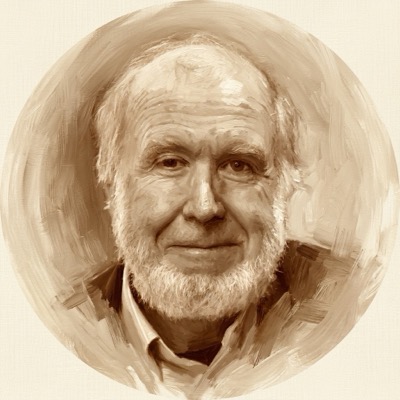
Kevin Kelly (b. 1952) is an American writer and editor who helped launch Wired in 1993 as its founding executive editor, and who still carries the title Senior Maverick there. Before that he edited the Whole Earth Catalog and Whole Earth Review for Stewart Brand and helped found the WELL, one of the earliest online communities. Across 'Out of Control' (1994), 'What Technology Wants' (2010), and 'The Inevitable' (2016) he has argued that technology is best read as a single living system with leanings of its own — he calls the whole of it the technium — whose broad direction is inevitable even when its particulars are not. On AI he is a deliberate pluralist: there is no one intelligence but many, the space of possible minds is vast, and the human mind sits nowhere near its center. He also holds that the singularity is not ahead of us but already underway and invisible from inside, the way language was.
Key Contributions
- Helped launch Wired in 1993 as founding executive editor, shaping how a generation read technology
- Edited the Whole Earth Catalog and Whole Earth Review, and co-founded the WELL, an ancestor of online community
- Coined 'the technium' for technology taken as one living system with its own tendencies and needs
- Argued that technological directions are forecastable even when products are not — the raindrop's path down the valley is unpredictable, its direction is not
- His long-run optimism and talk of inevitability draw the charge of technological determinism, which critics say lets the people making the choices off the hook
Videos & Interviews

How AI can bring on a second Industrial Revolution | Kevin Kelly
The TED talk where Kelly names the trend he calls cognifying, and defends its inevitability with a raindrop: the exact path down the valley is unpredictable, the direction is not. He also argues intelligence is not one dial but a symphony of instruments, some of which animals play better than we do
View Details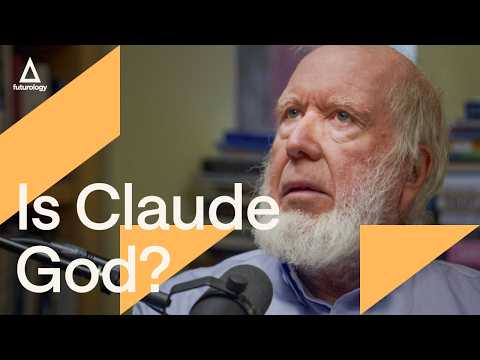
The Singularity is Here. Now What? | Wired Co-Founder Kevin Kelly
Kelly takes the singularity back to Vernor Vinge's original meaning — not an explosion but an event horizon, a change whose far side cannot be imagined from this one — and argues humanity has already been through one. Language was the first: nobody sitting around a fire ever said, do you realize what we are doing now. His point is that a singularity is invisible while you are inside it, which is his answer to everyone still waiting for one to arrive
View DetailsPapers & Publications

Out of Control: The New Biology of Machines, Social Systems, and the Economic World
1994The book that read hives, ecosystems, and networks as one kind of thing, and argued that the machines worth building would be grown rather than engineered
View Book
What Technology Wants
2010Where the technium gets its name and its argument: technology as a seventh kingdom with appetites of its own, continuous with biological evolution rather than opposed to it
View Book
The Inevitable
2016Twelve verbs rather than twelve products — cognifying, filtering, remixing, becoming — on the argument that the shape of the next thirty years is already legible in the direction technology leans
View BookConnections

Ursula K. Le Guin
In contrastScience Fiction Author & Visionary
Kelly reads technology as the technium, one living system whose broad direction is inevitable even where its particulars are not — the reading his critics call determinism. Le Guin's National Book Awards speech is the sharpest answer on record, delivered into much the same Californian milieu his Whole Earth years came out of: 'We live in capitalism. Its power seems inescapable. So did the divine right of kings. Any human power can be resisted and changed by human beings. Resistance and change often begin in art.' Set side by side they disagree about the one thing that decides how anyone behaves toward a new technology — whether its direction is a fact to be forecast or a choice to be contested.
youtube.com
Dan Shipper
In conversationCEO & Co-founder, Every
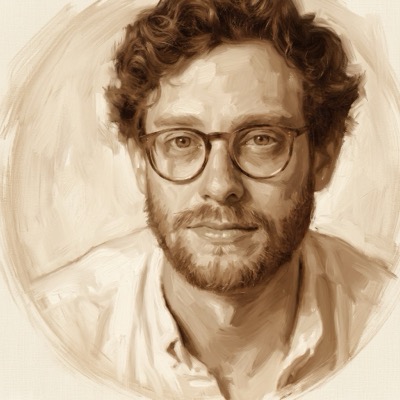
In April 2025 Shipper welcomed Kelly to AI & I as 'a personal hero of mine' and asked how to predict the future. Kelly suggested that intelligence is not an element but a compound of different cognitive parts, so we will make 'hundreds of various other kinds' of minds rather than climbing one ladder toward a single superintelligence. Shipper said hearing Kelly on this over the years had been quite helpful to him; it sits close to his own view of language models as contextual pattern-matchers rather than rule-followers.
every.to
Ray Kurzweil
In contrastInventor, Futurist & Author
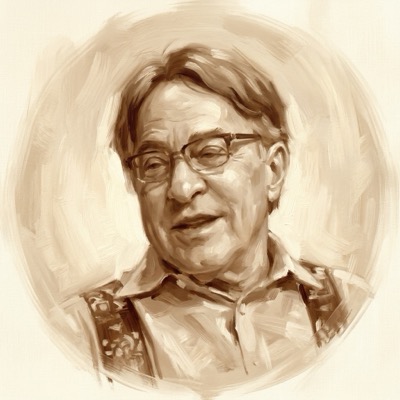
Two futurists who take the same word in opposite directions. Kurzweil's singularity is a dated appointment — human-level AI by 2029, the merger by 2045 — which makes it something to prepare for and to check against a calendar. Kelly returns the term to what he takes to be Vinge's original sense: not an explosion but an event horizon, a change whose far side cannot be imagined from this side. On that reading it cannot be scheduled, and we have had one already. Language was the first, and nobody around the fire ever announced it: there was never a moment when someone said, do you realize what we are doing now.
youtube.com · youtube.com

