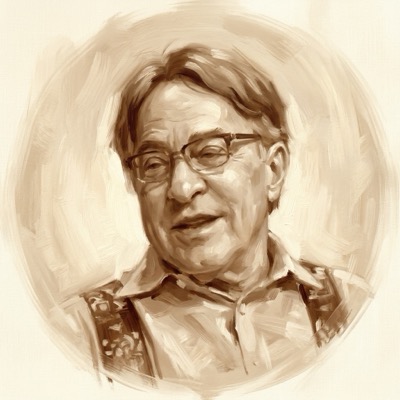
Ray Kurzweil
Inventor, Futurist & Author
About
Ray Kurzweil (born 1948) is an inventor and futurist who has worked in artificial intelligence for over six decades, joining the field in 1962 — six years after it was named. He built the first omni-font optical character recognition system, the Kurzweil Reading Machine for the blind (1976), and pioneering music synthesizers and speech recognition systems, work recognized with the National Medal of Technology (1999) and the Lemelson-MIT Prize. In 1999's The Age of Spiritual Machines he predicted human-level AI by 2029 — a date an expert poll at the time placed a century away — and in The Singularity Is Near (2005) he set the merger of human and machine intelligence at 2045. Larry Page personally recruited him to Google in 2012 to work on machine learning and natural language understanding. The Singularity Is Nearer (2024) restates the argument as the large-model era converges on his timeline.
Key Contributions
- Predicted human-level AI by 2029 in The Age of Spiritual Machines (1999), when a Stanford-convened expert poll averaged a hundred years out
- Defined the modern idea of the technological singularity in The Singularity Is Near (2005), dating the merger of human and machine intelligence to 2045
- Invented the first omni-font optical character recognition system and the Kurzweil Reading Machine (1976), which read printed text aloud to blind users
- Founded Kurzweil Music Systems, whose K250 synthesizer (1984) was among the first to convincingly reproduce acoustic instruments
- Joined Google in 2012, personally recruited by Larry Page to bring natural language understanding to the company
Videos & Interviews

Ray Kurzweil: Singularity, Superintelligence, and Immortality | Lex Fridman Podcast #321
Kurzweil opens with the prediction that defines him: computers pass the Turing test by 2029, the singularity arrives in 2045. He recounts making the 2029 call in The Age of Spiritual Machines in 1999 — when Stanford convened an international conference of AI experts to assess it, and the average poll answer was a hundred years. From there the conversation ranges over brain-computer interfaces, nanotechnology, mind uploading and digital afterlife, the simulation hypothesis, and mortality — the full Kurzweil worldview, delivered as the large-model era began catching up with his timeline.
View Details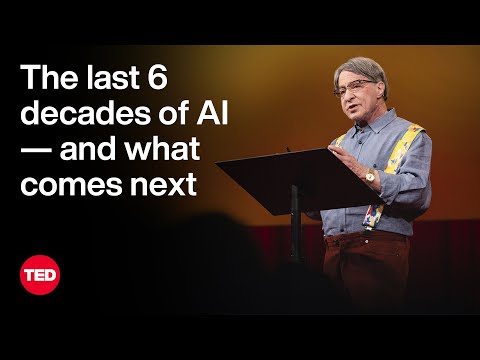
The Last 6 Decades of AI — and What Comes Next | Ray Kurzweil | TED
A thirteen-minute TED talk compressing sixty-one years in AI — 'a record,' he notes, having joined the field in 1962, six years after it got its name, when the polite consensus was that it would never happen. He retells how he arrived at 2029 for human-level AI, then extends the exponential curves forward: longevity escape velocity somewhere between 2029 and 2035, and nanobots connecting our brains to the cloud — thinking, he argues, that will make us thousands of times more intelligent.
View DetailsConnections
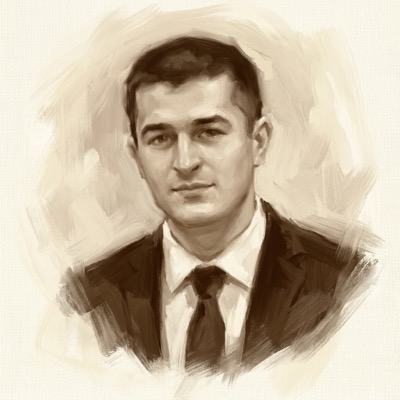
Lex Fridman
In conversationResearch Scientist, MIT; Host of the Lex Fridman Podcast
Eighteen years after The Singularity Is Near, Fridman sits Kurzweil down with his own prediction and asks whether he still holds it. He does: 2045, intelligence multiplied many millions of times over, and a future he grants is very hard to imagine from here. The value of the episode is the interval — a forecast being audited against the years that have since elapsed, by its author, out loud.
youtube.com
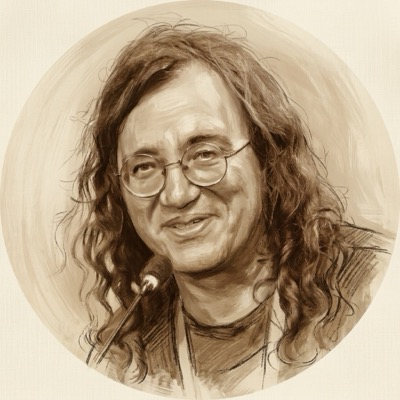
Ben Goertzel
DebatedFounder & CEO, SingularityNET
They share the near date and split on what follows it. On Machine Learning Street Talk — the interview on this site — Goertzel names 'the big disagreement I had with Ray': both say human-level AGI around 2029, but Kurzweil's 2045 singularity is, in Goertzel's words, 'overfit to having humans do the invention.' Once the AGI itself invents chips and networks, Goertzel argues, the exponent changes and superintelligence follows in years, not decades — a quarrel about whether the curve that made the prediction survives its own fulfillment.
youtube.com
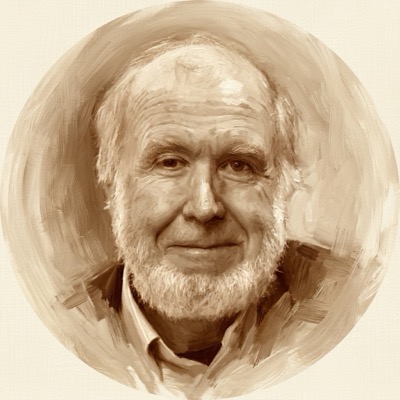
Kevin Kelly
In contrastFounding Executive Editor, Wired
Two futurists who take the same word in opposite directions. Kurzweil's singularity is a dated appointment — human-level AI by 2029, the merger by 2045 — which makes it something to prepare for and to check against a calendar. Kelly returns the term to what he takes to be Vinge's original sense: not an explosion but an event horizon, a change whose far side cannot be imagined from this side. On that reading it cannot be scheduled, and we have had one already. Language was the first, and nobody around the fire ever announced it: there was never a moment when someone said, do you realize what we are doing now.
youtube.com · youtube.com

Gary Marcus
DebatedCognitive Scientist, AI Critic & Author
Marcus's New Yorker review of How to Create a Mind — 'Ray Kurzweil's Dubious New Theory of Mind' (2012) — is the sharpest published attack on Kurzweil as theorist rather than forecaster: the pattern recognition theory of mind, Marcus argued, echoes the 1980 neocognitron and Jeff Hawkins's hierarchical temporal memory, and similar implementations had 'often performed poorly.' His demand — validate theories of mind with working models, not propositions — is the same standard he would later hold against the scaling era, aimed in the opposite direction.
newyorker.com · en.wikipedia.org