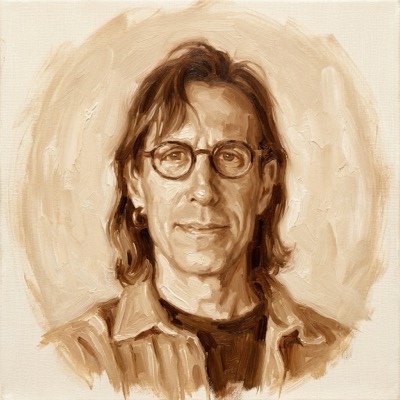
David Abram
Cultural Ecologist & Philosopher
About
David Abram is an American cultural ecologist and philosopher, born in New York in 1957. He graduated summa cum laude from Wesleyan University, earned his PhD from SUNY Stony Brook in 1993, and has held posts including senior visiting scholar in ecology and natural philosophy at Harvard Divinity School and the Arne Næss Chair of Global Justice and Ecology at the University of Oslo. His first book, The Spell of the Sensuous (1996), argued that human language grew out of bodily, sensory reciprocity with a living landscape — and that alphabetic writing began pulling language out of the land into a closed circuit of signs. He coined the phrase 'the more-than-human world', now standard vocabulary across the environmental humanities. A sleight-of-hand magician since high school, he traveled through Sri Lanka, Indonesia, and Nepal studying with traditional magic practitioners — an apprenticeship that shaped his account of perception as participation.
Key Contributions
- Wrote The Spell of the Sensuous (1996), the landmark account of how perception and language bind humans to a living landscape — winner of the Lannan Literary Award for Nonfiction
- Coined 'the more-than-human world', a phrase that reframed how ecology, anthropology, and the environmental humanities talk about nature
- Traced language's origins to sensory participation with animate nature, arguing that alphabetic writing began sealing language into a self-referential system of signs
- Apprenticed as a sleight-of-hand magician with traditional practitioners in Sri Lanka, Indonesia, and Nepal, grounding his philosophy of perception in practice
- Wrote Becoming Animal: An Earthly Cosmology (2010), runner-up for the PEN Edward O. Wilson Award and finalist for the Orion Book Award
- Founded the Alliance for Wild Ethics (2006); in essays like 'Magic and the Machine' he asks what digital technologies borrow from — and drain out of — animate perception
Books

Videos & Interviews
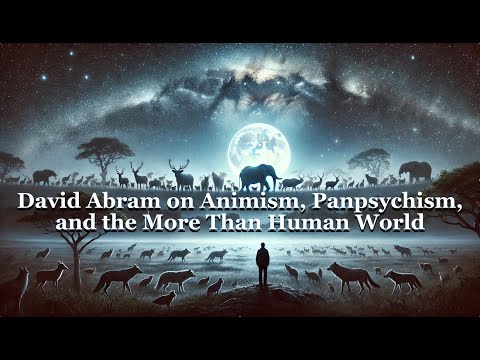
David Abram and Matt Segall on Animism, Panpsychism, and the More than Human World
Abram and process philosopher Matt Segall compare two ways of describing a living world: animism, rooted in the felt experience of a landscape that gazes back, and panpsychism, the metaphysical claim that experience goes all the way down. Along the way they circle the questions this site keeps returning to — whether mind requires a body, what language does to perception, and how a culture of screens might recover its senses.
View Details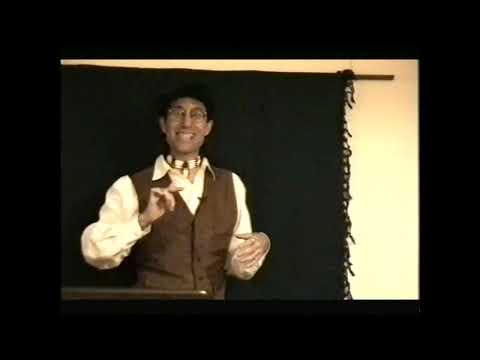
David Abram: The Spell of the Sensuous
A talk drawing on Abram's landmark book of the same name. The Spell of the Sensuous argues that perception is inherently participatory — the senses evolved in reciprocity with an animate earth — and that alphabetic writing quietly redirected that reciprocity from the living landscape onto the page. For a site about minds made entirely of text, it's the sharpest counterpoint on offer: an account of intelligence that begins in the body's exchange with wind, ground, and weather.
View Details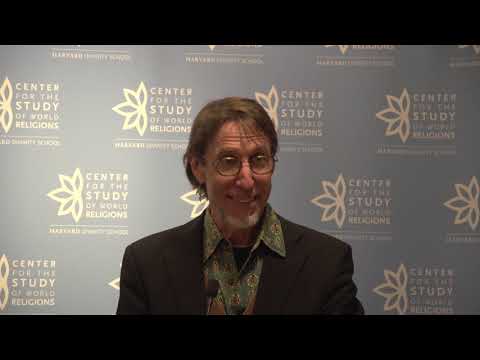
The Commonwealth of Breath: Climate and Consciousness in a More-than-Human World
In this Harvard Divinity School lecture, Abram reframes both climate and consciousness through the oldest shared medium: air. Breath, he argues, is what mind looked like before we relocated it inside the skull — an invisible commons circulating between beings — and the climate crisis is what happens when a culture forgets that it lives immersed in something it did not make.
View DetailsConnections
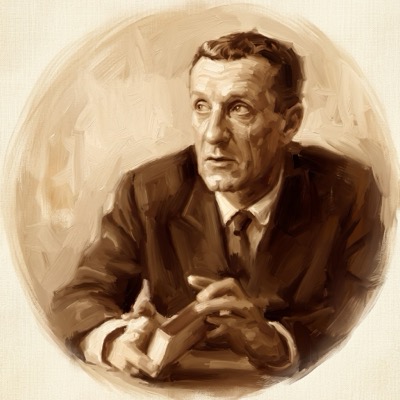
Maurice Merleau-Ponty
Influenced byPhenomenologist & Philosopher
Abram built The Spell of the Sensuous directly on Merleau-Ponty's phenomenology of perception — taking his account of the body's silent conversation with things and extending it beyond the human, to landscape, weather, and animal life. His doctoral dissertation used Merleau-Ponty's phenomenology as its method, and his 1988 essay 'Merleau-Ponty and the Voice of the Earth' laid the book's groundwork.
davidabram.org · Merleau-Ponty and the Voice of the Earth, Environmental Ethics 10 (1988) · en.wikipedia.org
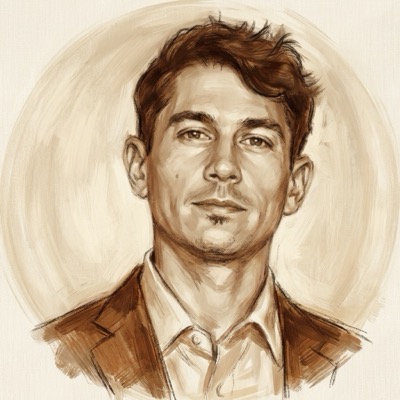
Matthew D. Segall
In conversationAssociate Professor, CIIS
Abram and process philosopher Matt Segall recorded a long dialogue comparing animism and panpsychism — two ways of describing a living world, one rooted in felt experience of a landscape that gazes back, the other a metaphysical claim that experience goes all the way down. The conversation is on this site.
youtube.com
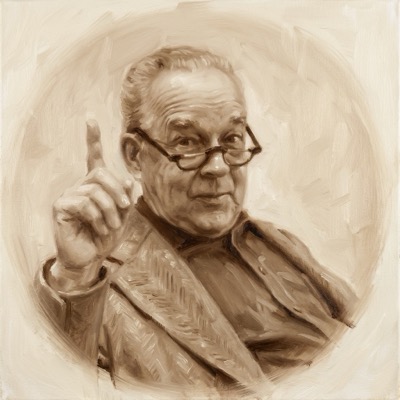
James J. Gibson
Influenced byPsychologist & Founder of Ecological Psychology
Abram's earliest published essay, 'The Perceptual Implications of Gaia' (1985), devotes a full section to Gibson's ecological psychology — perception not as inner representation but as a direct exchange between organism and world. Gibson supplies the empirical case for what Merleau-Ponty argued phenomenologically, and the affordance-rich world he described became the animate terrain of The Spell of the Sensuous.
davidabram.org · The Perceptual Implications of Gaia, The Ecologist 15(3), 1985
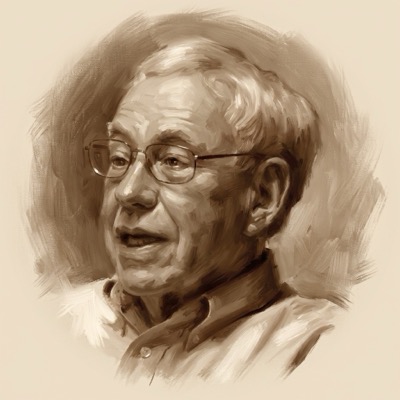
Hubert Dreyfus
KindredPhilosopher & AI Critic
A resonance rather than a documented exchange: both argue from Merleau-Ponty that intelligence is inseparable from embodiment. Dreyfus aimed the argument at symbolic AI — computers fail at what bodies know; Abram aimed it at alphabetic writing itself. Read together, they bracket the question this site keeps asking about minds made of text.