
About
Donald Hoffman is professor emeritus in the Department of Cognitive Sciences at UC Irvine, where he earned his doctorate in computational psychology from MIT in 1983 under David Marr and Whitman Richards. His interface theory of perception holds that perceptual experience does not match or approximate the properties of the objective world, but provides a simplified, species-specific interface. With Chetan Prakash, Kyle Stephens, Manish Singh and Chris Fields he proved the Fitness-Beats-Truth theorem, which shows that a strategy maximising expected fitness payoff — making no attempt to estimate the true state of the world — consistently outperforms one that tries to perceive reality accurately. From this he argues for conscious realism, a non-physicalist monism in which consciousness is fundamental and physical particles are icons inside a conscious agent's interface. He wrote Visual Intelligence (1998) and The Case Against Reality (2019).
Key Contributions
- Formulated the interface theory of perception: what we see is a species-specific interface, not an approximation of the world
- Co-proved the Fitness-Beats-Truth theorem, giving the claim a formal result rather than an intuition, and showing the advantage grows with the size of the perceptual space
- Proposed conscious realism, in which consciousness is fundamental and spacetime is not
- Wrote The Case Against Reality, which put evolutionary game theory and the hard problem of consciousness in the same argument for general readers
- Trained under David Marr, whose computational theory of vision his own work departs from at the foundations
- The leap from the formal theorem to conscious realism is where most of his critics part company: the mathematics does not carry you all the way to the metaphysics
Videos & Interviews
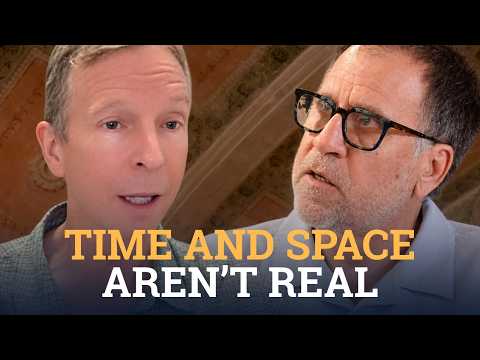
“Science Will Never Be Anywhere Near the Truth”: Donald Hoffman with John Vervaeke
A conversation from Wonderstruck's "What Is Reality?" symposium, recorded in Malta in June 2026. Hoffman lays out his interface theory of perception and the fitness-beats-truth argument: evolution tuned us to see what keeps us alive, not what is there. Vervaeke answers with relevance realization. They then ask why science can never close on a theory of everything, what the wisdom traditions add, and whether a mind needs a body, before audience questions press Hoffman on how his theory could turn out wrong.
View Details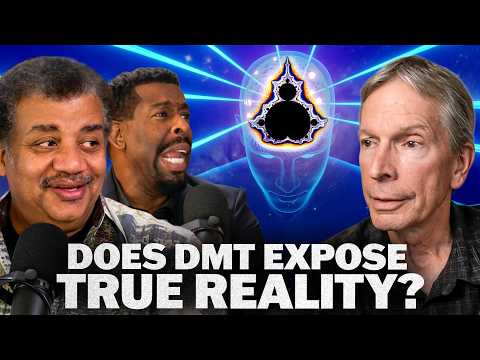
Is Reality Really Real? With Donald Hoffman
Did evolution never give us the ability to see reality as it actually is? Neil deGrasse Tyson, with Chuck Nice and Gary O'Reilly, sits down with cognitive scientist Donald Hoffman to ask what neuroscience, evolutionary game theory, and consciousness together suggest about the nature of reality — and whether perception was ever selected for accuracy in the first place.
View DetailsConnections

Joscha Bach
DebatedAI Researcher & Cognitive Scientist
In February 2022 Curt Jaimungal put them side by side for more than two hours and asked whether reality is computation or consciousness. Bach holds that minds are software running on a physical, and in principle computable, world. Hoffman holds the reverse order: spacetime and its objects are an interface, icons on a desktop, and 'conscious experiences' are 'the most basic ingredients of the world.' They disagree about what comes first, and both agree that the world we perceive is not the world itself.
youtu.be · listennotes.com · quantamagazine.org

John Vervaeke
In conversationCognitive Scientist & Philosopher
They have met on record twice: a two-hour Theories of Everything dialogue in 2023 that ended in a formal debate over whether spacetime is real, and a 2026 Wonderstruck conversation, on this site, recorded in Malta. Hoffman opens with the interface, evolution tuning perception for fitness rather than truth, and Vervaeke answers with relevance realization, which reads the same finding from the other side: a mind never takes in everything, only what matters to it. From there both turn on science itself, asking why it cannot close on a theory of everything and what the wisdom traditions hold that a theory cannot.
youtube.com · youtube.com
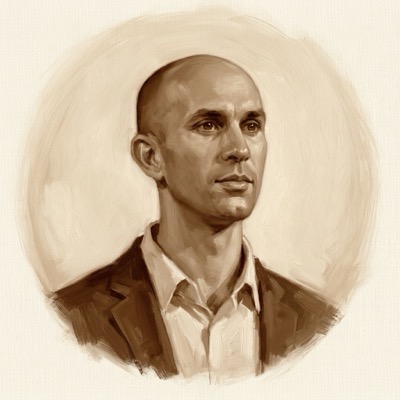
Anil Seth
In contrastProfessor of Cognitive & Computational Neuroscience, University of Sussex
Both say that what you perceive is not the world as it is, and they mean nearly opposite things by it. For Seth, perception is a 'controlled hallucination' kept 'yoked to the world' by constant correction; for Hoffman, evolution tunes perception for fitness rather than truth, and spacetime and brains are themselves only icons over a reality made of consciousness. Read side by side, they show where 'the brain constructs reality' stops being neuroscience and becomes metaphysics.
quantamagazine.org · technologyreview.com
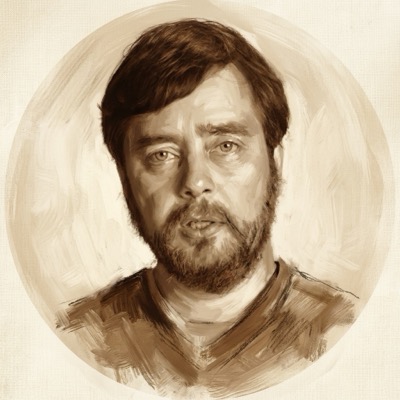
Michael Levin
In conversationBiologist & Morphogenesis Researcher
Levin's own record lists two 2024 working sessions with Hoffman and the evolutionary biologist Richard Watson on cognition and the theory of evolution, and in April 2026 his podcast carried Hoffman and Chetan Prakash presenting a multiscale logic of collective intelligence, with Levin and Chris Fields among the discussants. They come at it from opposite ends: Levin finds goal-directed problem-solving at every scale of living matter, building up from cells, while Hoffman starts from conscious agents and asks how bodies and spacetime appear beneath them. When Hoffman and Vervaeke reach collective intelligence in their conversation on this site, it is Levin's work they turn to.
drmichaellevin.org · Thoughtforms Life, "A Multiscale Logic of Collective Intelligence" (Hoffman & Prakash, with Chis-Ciure, Fields, Levin), 2026-04-11 · youtube.com

