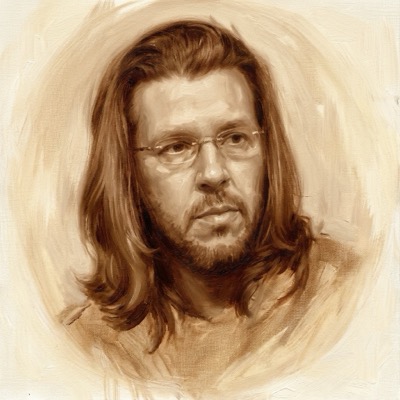
David Foster Wallace
Novelist & Essayist
Trace a path from David Foster Wallace →Portrait painted after an image by Steve Rhodes · CC BY 2.0
About
David Foster Wallace (1962–2008) was an American novelist, essayist and teacher, born in Ithaca, New York. He majored in English and philosophy at Amherst College, took an MFA at the University of Arizona, and published his first novel, The Broom of the System, in 1987. Infinite Jest (1996), set in a tennis academy and a halfway house, and the essays of A Supposedly Fun Thing I'll Never Do Again (1997) and Consider the Lobster (2005) pursued one question: what a culture built on entertainment and self-gratification leaves unfed. His 2005 Kenyon College commencement address, published as This Is Water, put it plainest: 'Everybody worships. The only choice we get is what to worship.' He held a MacArthur Fellowship, taught at Illinois State and Pomona College, and died by suicide in 2008 after decades of depression; his unfinished The Pale King (2011) was a Pulitzer finalist.
Key Contributions
- Wrote Infinite Jest (1996), a novel of addiction, entertainment and the hunger for something to devote oneself to
- Diagnosed television's ironic stance in 'E Unibus Pluram: Television and U.S. Fiction' (1993)
- Gave the 2005 Kenyon commencement address published as This Is Water, on choosing what you pay attention to
- Wrote essay collections A Supposedly Fun Thing I'll Never Do Again (1997) and Consider the Lobster (2005)
- Left The Pale King (2011), an unfinished novel about boredom and attention, a Pulitzer Prize finalist
Videos & Interviews

Connections

Sean Dorrance Kelly
In contrastDean of Arts and Humanities & Professor of Philosophy, Harvard
Kelly reads Wallace as the great observer of the present: the writer who saw that our core temptation is diversion through entertainment, the other face of the optimizing age Heidegger described. But he parts with Wallace's cure. The Kenyon speech's freedom to choose how we see a situation is, for Kelly, too much freedom, because the story has to be true; and The Pale King's tax examiner, levitating with bliss at the dullest task imaginable, is 'unlivable.' The Wallace he would keep is the one who wrote about Roger Federer: peak moments when a body like ours transcends its limits.
Sean Kelly: Existentialism, Nihilism, and the Search for Meaning, Lex Fridman Podcast #227, 2:07:47–2:28:16 · youtube.com · Hubert Dreyfus & Sean Dorrance Kelly, All Things Shining (2011), ch. 2, "David Foster Wallace's Nihilism"
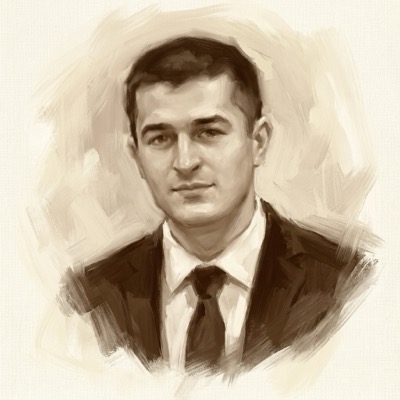
Lex Fridman
InfluencedResearch Scientist, MIT; Host of the Lex Fridman Podcast
'The key to life is to be unborable' is advice Lex gives young students, taken from Wallace's The Pale King, and he reaches for it again with John Vervaeke: 'I am, as David Foster Wallace said, unborable.' With Sean Kelly he sends listeners to Wallace's unedited German television interview, the one on this site, where the writer's sensitivity slowly draws out his interviewer: 'this little accidental view of this human being.'
youtube.com · youtube.com · youtube.com · David Foster Wallace, The Pale King (2011), §44

Hubert Dreyfus
In contrastPhilosopher & AI Critic
All Things Shining, written with Sean Kelly, gives Wallace its second chapter, as the writer who felt the sadness of a culture after God most sharply, and then turns down his answer: that each of us must make meaning by an act of will. The book's alternative is Dreyfus's lifelong theme, to be drawn out by a shining situation rather than to author its significance. By Kelly's own account the chapter was his passion, not Dreyfus's: 'Bert didn't care about it at all.'
Hubert Dreyfus & Sean Dorrance Kelly, All Things Shining (2011), ch. 2, "David Foster Wallace's Nihilism" · reasonandmeaning.com · youtube.com
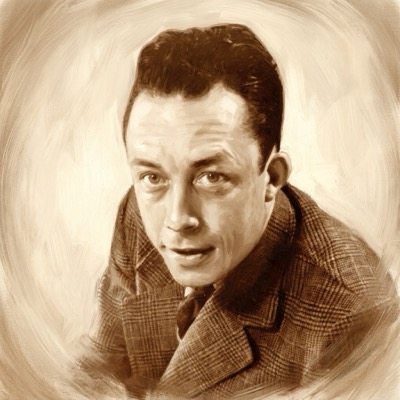
Albert Camus
KindredWriter & Philosopher of the Absurd
Camus opens The Myth of Sisyphus with the one serious philosophical problem and ends by asking us to imagine Sisyphus happy at his rock. Wallace's unfinished Pale King imagines a tax examiner so absorbed in the dullest work there is that he levitates. A pairing, not a lineage: both put the answer to meaninglessness inside the repetition rather than beyond it.

David Whyte
KindredPoet & Philosopher
Both make attention a moral act. Wallace told Kenyon's graduates that learning how to think means being 'conscious and aware enough to choose what you pay attention to'; Whyte asks for attention held 'until the name you've given to something breaks down and the essence speaks back.' Wallace speaks from inside the default self-centredness he is fighting, Whyte from its far side, where the one paying attention disappears.
fs.blog · youtube.com

