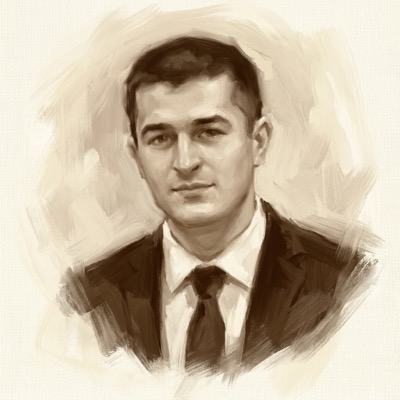
Lex Fridman
Research Scientist, MIT; Host of the Lex Fridman Podcast
About
Lex Fridman is an American computer scientist and podcaster. He earned BS and MS degrees in computer science at Drexel University in 2010 and a PhD in electrical and computer engineering there in 2014, writing his dissertation on learning identity from behavioral biometrics for active authentication. After six months at Google he joined MIT's AgeLab in 2015 as a research scientist studying driver behavior, where he led a group of engineers developing learning algorithms for semi-autonomous vehicles in collaboration with Toyota; since 2022 he has been a research scientist at the MIT Laboratory for Information and Decision Systems, and he also conducts research for the Center for Complex Engineering Systems, an MIT–KACST collaboration. He began his podcast in 2018 as The Artificial Intelligence Podcast, renamed it the Lex Fridman Podcast in 2020, and uses its long-form interview format to talk with figures from science, technology, sports, the arts and politics. He gives his own research interests as human-AI interaction, robotics and machine learning.
Key Contributions
- Has hosted the Lex Fridman Podcast since 2018, begun as The Artificial Intelligence Podcast and renamed in 2020
- The largest single source in this collection: thirty of its videos are his conversations, with guests including Karpathy, Hassabis, Chalmers, Kahneman, Tegmark, Pearl, Schmidhuber, Altman and Amodei
- Research scientist at the MIT Laboratory for Information and Decision Systems since 2022, after work on driver behavior and semi-autonomous vehicles at MIT AgeLab
- Co-authored a Best Paper award winner at CHI 2017, described by Wikipedia as a high-ranking conference in human–computer interaction
- Organized MIT's public lecture series on deep learning, robotics and AI from 2017 to 2020, published free online at deeplearning.mit.edu
30 conversations they hosted
- State of AI in 2026: LLMs, Coding, Scaling Laws, China, Agents, GPUs, AGI | Lex Fridman Podcast #490
- Amanda Askell Segment: Claude's Character Training
- Dario Amodei: Anthropic CEO on Claude, AGI & the Future of AI & Humanity
- Yann LeCun: Meta AI, Open Source, Limits of LLMs, AGI & the Future of AI
- Chris Lattner: Future of Programming and AI | Lex Fridman Podcast #381
- Stephen Wolfram: ChatGPT and the Nature of Truth, Reality & Computation
- Max Tegmark: The Case for Halting AI Development
- Sam Altman: OpenAI CEO on GPT-4, ChatGPT, and the Future of AI
- Andrej Karpathy: Tesla AI, Self-Driving, Optimus, Aliens, and AGI
- Michael Levin: Biology, Life, Aliens, Evolution, Embryogenesis & Xenobots
- Ray Kurzweil: Singularity, Superintelligence, and Immortality | Lex Fridman Podcast #321
- John Vervaeke: Meaning Crisis, Atheism, Religion & the Search for Wisdom
- Nick Lane: Origin of Life, Evolution, Aliens, Biology, and Consciousness | Lex Fridman Podcast #318
- Demis Hassabis: DeepMind - AI, Superintelligence & the Future of Humanity
- Sean Kelly: Existentialism, Nihilism, and the Search for Meaning | Lex Fridman Podcast #227
- Jaron Lanier: Virtual Reality, Social Media & the Future of Humans and AI
- Joscha Bach: Nature of Reality, Dreams, and Consciousness
- Lisa Feldman Barrett: Counterintuitive Ideas About How the Brain Works | Lex Fridman Podcast #129
- Ben Goertzel: Artificial General Intelligence | Lex Fridman Podcast #103
- Richard Dawkins: Evolution, Intelligence, Simulation, and Memes | Lex Fridman Podcast #87
- Nick Bostrom: Simulation and Superintelligence | Lex Fridman Podcast #83
- David Chalmers: The Hard Problem of Consciousness | Lex Fridman Podcast #69
- Daniel Kahneman: Thinking Fast and Slow, Deep Learning, and AI | Lex Fridman Podcast #65
- Melanie Mitchell: Concepts, Analogies, Common Sense & Future of AI | Lex Fridman Podcast #61
- Judea Pearl: Causal Reasoning, Counterfactuals, and the Path to AGI | Lex Fridman Podcast #56
- Gary Marcus: Toward a Hybrid of Deep Learning and Symbolic AI
- Juergen Schmidhuber: Godel Machines, Meta-Learning, and LSTMs
- Stuart Russell: Long-Term Future of Artificial Intelligence
- Steven Pinker: AI in the Age of Reason
- Max Tegmark: Life 3.0
Videos & Interviews

Connections
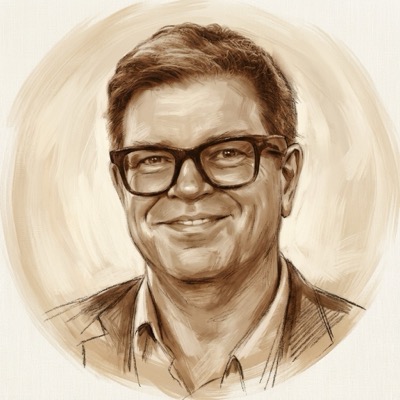
Yann LeCun
In conversationExecutive Chairman & Co-founder, AMI Labs; Professor, NYU
The episode opens with LeCun naming the danger he actually fears: not rogue systems but a world where 'our information diet is controlled by a small number of companies through proprietary systems' — concentration of power as the bigger risk, and open weights as the answer. What makes the conversation worth the click is that Fridman does not merely receive it. He states his own premise back — that people are fundamentally good, so anything that makes them smarter empowers the goodness — and LeCun says he shares it. The host's position is usually invisible on this show; here it is the hinge.
youtube.com

Ray Kurzweil
In conversationInventor, Futurist & Author
Eighteen years after The Singularity Is Near, Fridman sits Kurzweil down with his own prediction and asks whether he still holds it. He does: 2045, intelligence multiplied many millions of times over, and a future he grants is very hard to imagine from here. The value of the episode is the interval — a forecast being audited against the years that have since elapsed, by its author, out loud.
youtube.com
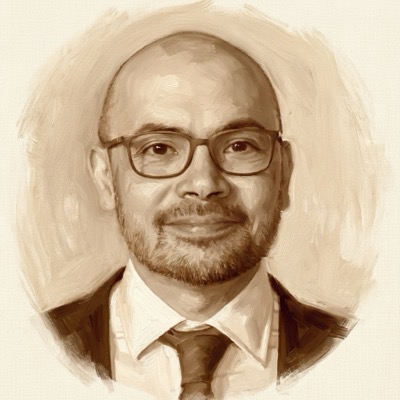
Demis Hassabis
In conversationChairman, Google DeepMind & Chief Scientist, Alphabet
Fridman introduces this one as an honour he had been waiting for, and the conversation earns the framing: AlphaZero, which taught itself Go past every human player, and AlphaFold, which settled a problem biology had called impossible for fifty years. Hassabis talks about both as instances of one method rather than two triumphs — games as the training ground for a machine meant, eventually, to do science.
youtube.com
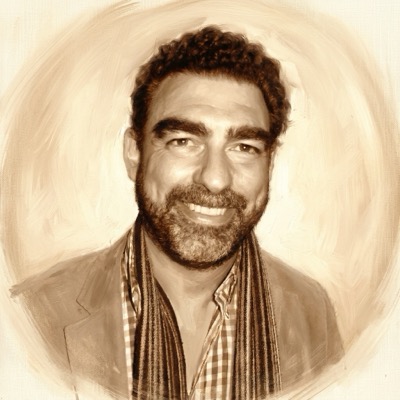
Nick Lane
In conversationEvolutionary Biochemist, UCL
Twenty-six minutes into the origin-of-life conversation, Lane interrupts his own answer to press a name on his host: there is amazing work from Michael Levin, you should interview him. Fridman did. It is the clearest thing on this site about what a long-form show actually is — not a broadcast but a switchboard, where one guest's enthusiasm becomes another guest's episode, and the connection between two biologists who had never collaborated gets made in public.
youtube.com