
Dana Gioia
Poet & Critic; Former Chairman, National Endowment for the Arts
About
Dana Gioia (born 1950) is an American poet and critic who spent fifteen years as a New York business executive — rising to vice president at General Foods — before leaving corporate life in 1992 to write full-time. His essay 'Can Poetry Matter?' (1991) argued that poetry had retreated from public life into an academic subculture, igniting a national debate and making him the most visible advocate for poetry as a public art. As chairman of the National Endowment for the Arts from 2003 to 2009 he launched Poetry Out Loud and The Big Read, bringing recitation and shared reading to millions, and he later served as California Poet Laureate, visiting all 58 counties of his home state. His central conviction — that poetry is enchantment, an art of sound, memory, and attention older than writing itself — gains fresh force in an age when machines generate fluent text on demand: his work asks what language does when it becomes memorable, musical, and shared.
Key Contributions
- Wrote 'Can Poetry Matter?' (1991), the essay that sparked a national debate about poetry's retreat from public life into an academic subculture
- Chaired the National Endowment for the Arts (2003–2009), launching Poetry Out Loud, The Big Read, and Shakespeare in American Communities
- Served as California Poet Laureate (2015–2019), the first state laureate to visit all 58 of California's counties
- Published poetry collections including Daily Horoscope, Interrogations at Noon (winner of the 2002 American Book Award), and 99 Poems
- Argues in 'Poetry as Enchantment' that poetry is an oral, bodily art of memory and attention older than literacy — not a puzzle to be decoded
Videos & Interviews
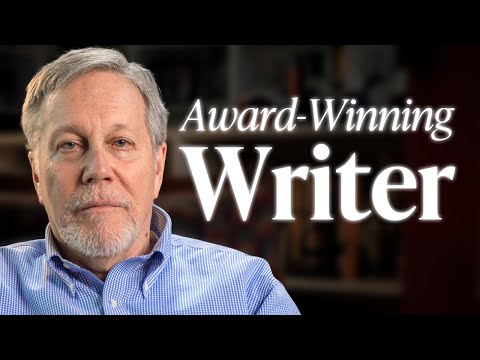
The Deepest Conversation You'll Ever Hear About Writing — Dana Gioia
A three-hour conversation with David Perell on the How I Write podcast, and the fullest self-portrait of Gioia's practice on record. He composes by saying lines aloud — reciting a moth quatrain born at 12:30 at night in the fog — and argues that being transfixed by a moment of your own life 'is what art is all about.' The centerpiece is his account of how poetry lost its audience: the New Critics figured out how to analyze poems correctly, 'and it killed the audience,' replacing recitation with visual analysis of the dead silent page. His own pedagogy inverts it — experience, perform, memorize, and only then analyze — and he describes students who memorized poems as 'awakening themselves to their own human capacity.'
View Details
What is Poetry? 10 observations about the art - (Dana Gioia)
The first talk in Gioia's introductory series on the art of poetry. In ten compact observations he lays out what poetry actually is: an art older than literacy, rooted in sound, rhythm, and memory rather than the printed page. Against the classroom habit of treating poems as puzzles to be decoded, he argues for poetry as a way of using language at its fullest — charged with music, emotion, and meaning at once.
View DetailsConnections
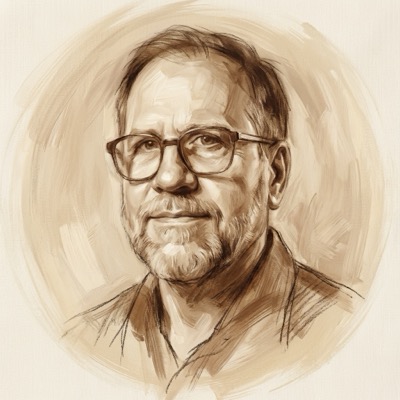
John Vervaeke
KindredCognitive Scientist & Philosopher
A convergence from opposite shores, down to the word. Vervaeke's project is called Awakening from the Meaning Crisis; Gioia, describing students who memorized poems in his classes, says they were 'awakening themselves to their own human capacity' — and his account of how criticism killed poetry's audience by replacing recitation with 'visual analysis of the dead silent page' is a case study in the loss Vervaeke diagnoses. What Vervaeke calls participatory knowing, Gioia calls enchantment: both insist that meaning is cultivated in the body — experienced, performed, memorized — and only secondarily analyzed.
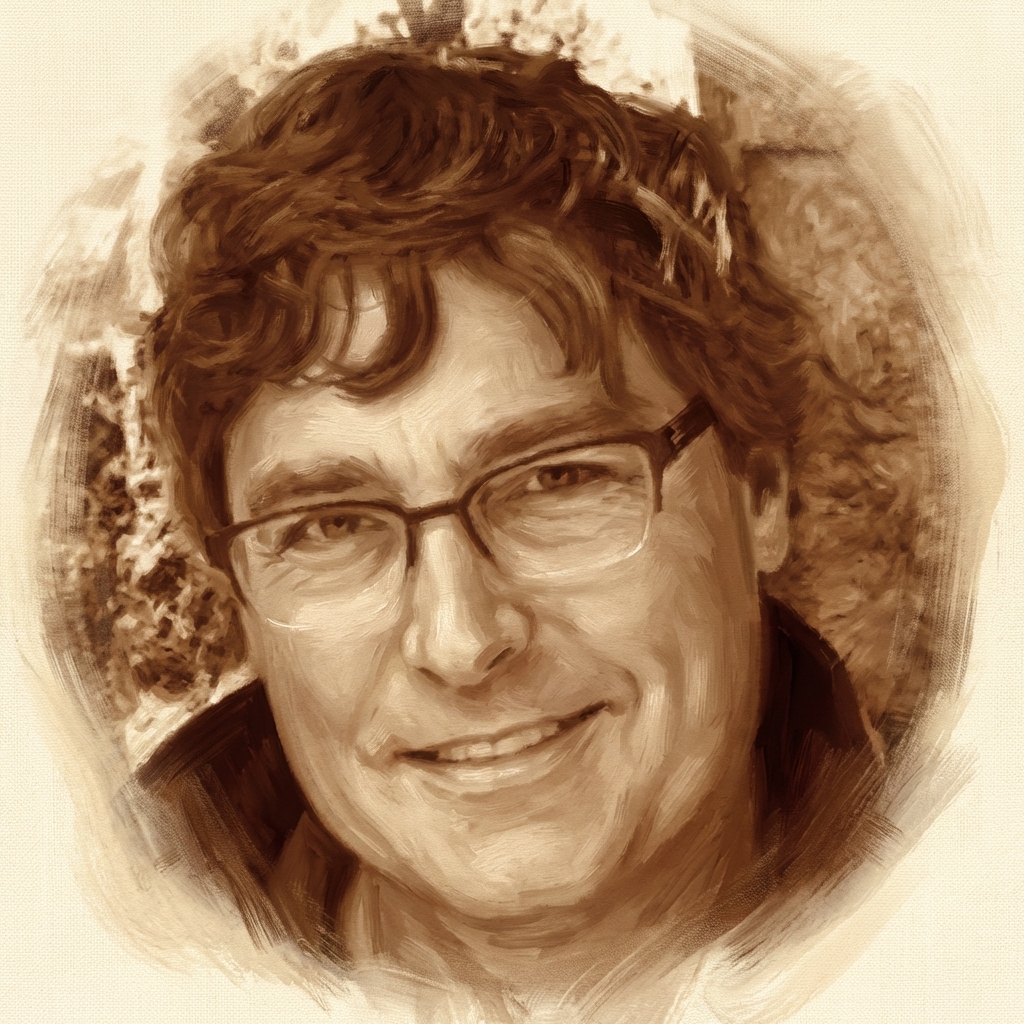
Sean Dorrance Kelly
KindredDean of Arts and Humanities & Professor of Philosophy, Harvard
All Things Shining and 'Can Poetry Matter?' are the same wager placed in different rooms: that a secular culture has not outgrown enchantment but lost the craft of meeting it, and that the old works — Homer and Melville for Kelly, the memorized poem for Gioia — are training manuals for that craft. Kelly recovers the skill by rereading the classics; Gioia built national programs to make the encounter public, one recitation at a time.
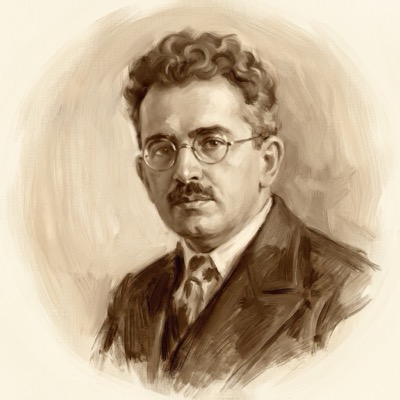
Walter Benjamin
KindredPhilosopher & Cultural Critic
Benjamin watched mechanical reproduction dissolve the artwork's aura — its unique presence in time and place — and asked what art becomes without it. Gioia's whole later career is a wager that aura survives in the one medium reproduction cannot reach: a voice reciting from memory, one body to another, which is what Poetry Out Loud stages at national scale. In an age of machine-generated text, their shared question — where does language keep its presence? — is open again.
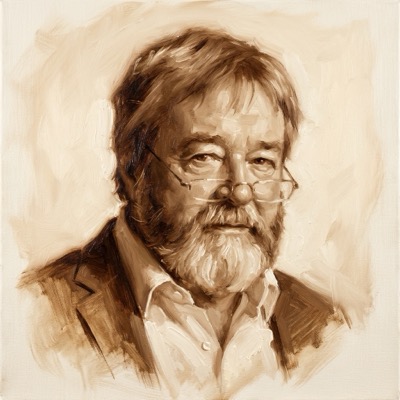
Iain McGilchrist
KindredPsychiatrist, Neuroscientist & Author
McGilchrist gives a neurological frame to what Gioia argues as a poet-critic: that poetry is language attended to as music, gesture, and embodied meaning, and that a culture which treats poems as puzzles to decode has handed the art to its narrower faculty. Gioia's ten observations on what poetry is read like field notes for McGilchrist's central claim — that some things appear only to a certain kind of attention.