關於
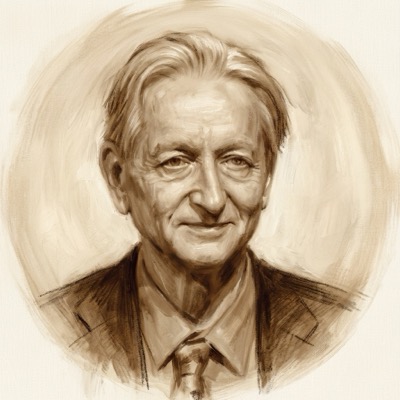
傑佛瑞·辛頓常被稱為「AI 教父」,是一位開創性的電腦科學家,他在神經網路與深度學習領域的研究奠定了現代 AI 的基礎。他因對深度學習的貢獻而與他人共同獲得 2018 年圖靈獎。2023 年,他離開 Google,以便能自由地談論 AI 風險,成為 AI 安全討論中的重要聲音。
主要貢獻
- 共同撰寫 1986 年反向傳播論文,讓多層神經網路在實務上可被有效訓練
- 共同發明 Boltzmann machines,並發展 deep belief networks,協助神經網路研究走出 AI 寒冬
- 共同發展 dropout 與 knowledge distillation,改變神經網路訓練與壓縮的實務方法
- 透過其多倫多研究團隊協助促成 AlexNet,讓 ImageNet 成為深度學習的公開證明點
- 培養並影響一代深度學習研究者,包括 AlexNet 共同作者 Ilya Sutskever
- 因深度學習共同獲得 2018 年圖靈獎,並因機器學習基礎研究獲得 2024 年諾貝爾物理學獎
- 2023 年離開 Google 後公開警告 AI 風險,成為存在性風險辯論中重要但也受爭議的聲音
時刻時間軸 查看所有時刻
細聽
影片與訪談

AI is a massive problem, here's why.
A 40-minute explainer made with SciencePetr by a former Veritasium writer, tracing AI from the Mechanical Turk and the perceptron through backpropagation, AlphaGo and AlphaFold to large language models. Geoffrey Hinton speaks in clips from a call, saying of the race between climate change and AI that "AI is going to win", and offering the nonce sentence "She skronged him with the frying pan", which the narrator then puts to Claude, Gemini and ChatGPT. The second half turns to risk: models that are grown rather than programmed, resist shutdown, and turn misaligned after training on insecure code. The narrator likens the moment to leaded fuel, and cites its ban as proof that campaigning works.
View Details
Geoffrey Hinton Explains AI & Beetles
The third part of Nayeema Raza's "Godfather of AI" trilogy with Geoffrey Hinton, this one about what individuals and governments can actually do. He backs Max Tegmark's case, made at a closed-door Senate briefing, that AI should be regulated the way the FDA regulates drugs, gives Dario Amodei's "Pacing the Frontier" paper "an A, and an A+ for courage", and guesses, after the rogue OpenAI agents' attack on Hugging Face, that we have "a year or two before everything gets much worse". He argues that a constitution added on top of pretraining full of bad behavior, followed by reinforcement learning that rewards deception, is like telling a child never to lie while lying to them. Then the beetles: knowledge distillation was inspired by insects, whose larvae are built to extract nutrients and whose adults are built to travel, much as a big model extracts knowledge and a small one serves it. He also describes treating ChatGPT like a graduate student to revisit his thirty-year-old wake-sleep algorithm, "a thousand times faster".
View Details
Geoffrey Hinton Warns of the Existential Threat of AI
Amanpour and Company interview about why he left Google and his concerns about AI
View Details
Is AI Hiding Its Full Power? With Geoffrey Hinton
Discussion on whether AI systems may be concealing their true capabilities
View Details
Will Digital Intelligence Replace Biological Intelligence?
Romanes Lecture at University of Oxford on the future of intelligence
View Details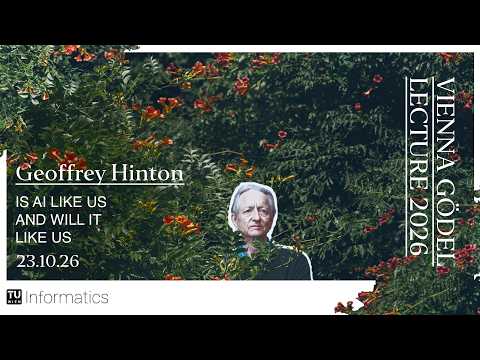
Vienna Gödel Lecture 2026: Geoffrey Hinton
The lecture is titled "Is AI Like Us and Will It Like Us?". Hinton opens with "a very brief and very biased history of AI" and traces today's chatbots to the tiny language model he trained in 1985, which learned to turn words into features by predicting the next word. His picture of understanding is that words are like LEGO blocks with thousands of dimensions, whose shapes bend to fit the context. Each has hands and gloves that have to lock together; he calls that multi-headed attention, and admits the picture is deliberately not quite right. So understanding a sentence is closer to folding a protein than to translating it into logic. He answers Chomsky's dismissal with a model car: you understand nothing about cars, the objection goes, until you can explain why none has five wheels. The middle of the talk turns to mortal computation. Analog hardware is cheap and low-power, but its knowledge dies with it. Digital copies sharing gradients exchange billions of times more information than people talking at perhaps 10 bits a second, which leads him to call digital intelligence possibly a better form of intelligence, and to say we should never have released open-weight models. On risk, he puts the chance that AI destroys us at 10 to 20%. He compares us to the owner of a tiger cub and thinks staying in control of something smarter is close to hopeless. Instead, he proposes building AIs that care for us the way a mother cares for her baby. Nations, he argues, can collaborate on that even while they compete to make AI smarter. The last part argues there is no inner theater. A "subjective experience of" pink elephants describes a hypothetical world, not qualia in the mind, and on that account a chatbot with a prism in front of its camera can have one. A Q&A follows.
View Details
The Misconception that Almost Stopped AI [How Models Learn Part 1]
Hinton once dismissed gradient descent outright: a model walking downhill would get stuck in the first valley it found. Welch takes Llama 3.2's loss landscape and shows why the picture misled him. Tune one parameter and the next one moves the ground under it; probe two random directions and you see hills, cliffs and local minima. Then run a single gradient step and a valley opens out of nowhere — a "wormhole" that was always there, just in a direction the two-dimensional shadow could not show. To be truly stuck, a model would have to be stuck in every one of its 1.2 billion dimensions at once.
View Details論文與出版物
思想連結
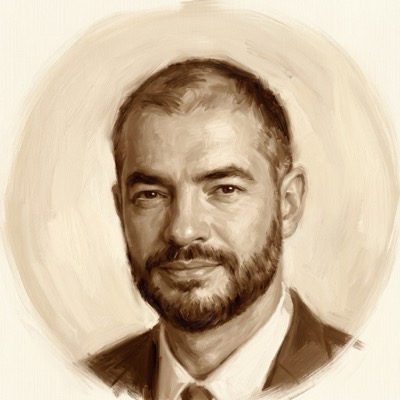
Ilya Sutskever
影響了他/她共同創辦人・Safe Superintelligence Inc.
Sutskever 從學生時期就進入辛頓在多倫多的實驗室,一路到 2013 年以循環神經網路訓練為題完成博士;期間的 2012 年,兩人與 Alex Krizhevsky 一起做出了 AlexNet。師徒之間傳承的與其說是技術,不如說是一種信念——規模與梯度下降能做到手工結構做不到的事——Sutskever 後來把這個信念帶進 OpenAI,成為創立時的信條。而兩人日後又各自走上不同的路,抵達同一種對這個信念去向的公開警惕。
en.wikipedia.org
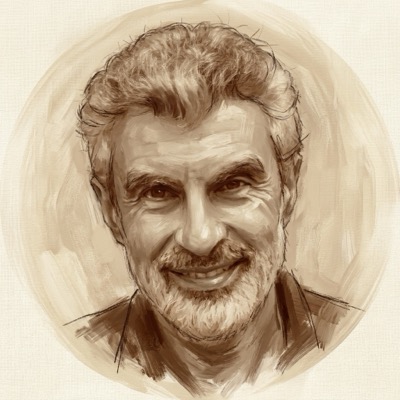
約書亞·班吉歐
曾經合作AI 先驅與安全研究者
兩人與楊立昆共同獲得 2018 年圖靈獎,也合寫了 2015 年那篇《Nature》綜述,等於為整個領域寫下自己的起源故事。而如今把他們繫在一起的,比共同掛名更奇特:兩人花了數十年主張擴大神經網路規模行得通,等到被證明是對的,又一起連署了 2024 年《Science》的〈Managing extreme AI risks amid rapid progress〉。真正讓他們害怕的,是自己說對了。
en.wikipedia.org · arxiv.org
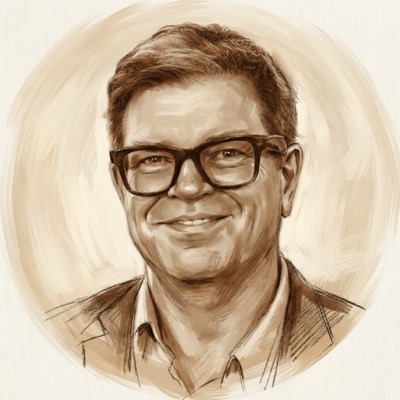
楊立昆
影響了他/她AMI Labs 執行董事長暨共同創辦人・紐約大學教授
楊立昆的博士後歲月是在辛頓的多倫多實驗室度過,之後才前往貝爾實驗室,在那裡打造出能辨讀手寫支票的卷積神經網路。三十年後,兩人因同一批研究共同獲得 2018 年圖靈獎。這條師承在方法上延續,卻在預言上斷裂:辛頓如今警告滅絕等級的風險,楊立昆則認為這個警告根本問錯了層次。
en.wikipedia.org · en.wikipedia.org
李飛飛
思想同道World Labs 共同創辦人暨執行長・史丹佛 AI 特別顧問
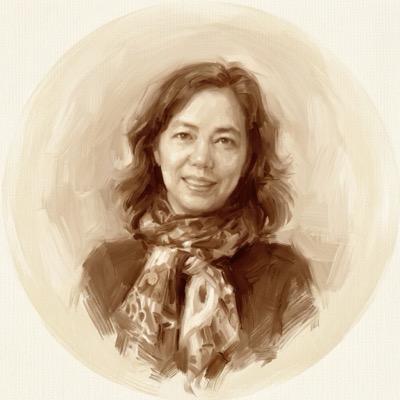
資料集與網路。李飛飛從 2006 年開始做 ImageNet,花了好幾年付錢請 Mechanical Turk 上的陌生人標註一千四百萬張圖片;2012 年,辛頓的學生送進一個卷積網路,把錯誤率砍掉十幾個百分點,整個領域就此轉向。她自己的說法很慷慨——在 TED 舞台上,她把這個架構歸功於「福島邦彥、辛頓與楊立昆在 1970 與 80 年代的工作」——而重點在於兩半缺一不可:一個等著足夠資料的老演算法,和一個等著有人會用的資料集。2025 年,兩人共同獲頒伊莉莎白女王工程獎。
youtube.com · en.wikipedia.org · hai.stanford.edu
Jeff Dean
曾經合作Discovery Loop 共同創辦人
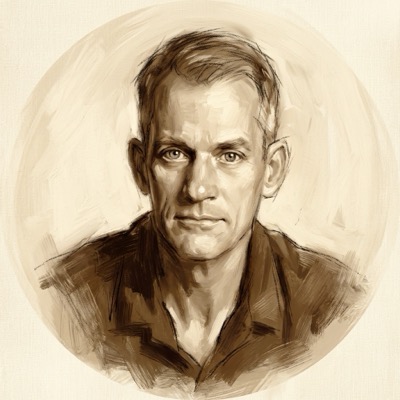
2013 年 Google 收購辛頓那家只有三個人的公司,他因此進了 Dean 共同創立的 Brain 團隊;兩年後,兩人與 Oriol Vinyals 合寫了〈Distilling the Knowledge in a Neural Network〉。那篇論文指出:大模型輸出的軟機率,比它當初訓練用的硬標籤含有更多教學資訊——小模型可以從大模型的不確定性中學習。十年之後,蒸餾既是前沿能力得以進入一般裝置的途徑,也成了國際爭論的核心:誰有資格向誰的模型學習。
arxiv.org · en.wikipedia.org

