About
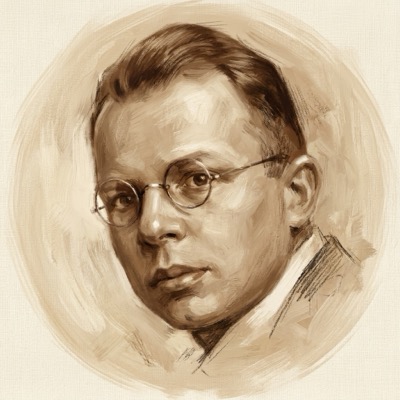
Rudolf Carnap (1891–1970) was a German-American philosopher and a leading figure of the Vienna Circle, the group that shaped logical positivism. He sought to rebuild philosophy on the model of logic and science: The Logical Structure of the World (1928) tried to construct all knowledge from elementary experience, and The Logical Syntax of Language (1934) treated the rules of a language as a formal system one is free to choose (his 'principle of tolerance'). After emigrating to the United States in 1935 he taught at Chicago and UCLA, developing formal semantics (Meaning and Necessity, 1947) and inductive logic. That machinery — measuring the content of a statement by the possibilities it excludes — underwrote his collaboration with Yehoshua Bar-Hillel on a theory of semantic information (1952), the early attempt to put meaning back into Shannon's meaning-free measure.
Key Contributions
- A central figure of the Vienna Circle and logical positivism
- Wrote The Logical Structure of the World (1928), a landmark program for grounding knowledge in logic
- Introduced the principle of tolerance in The Logical Syntax of Language (1934)
- Built formal semantics and inductive logic (Meaning and Necessity, 1947; Logical Foundations of Probability, 1950)
- Co-developed a theory of semantic information with Bar-Hillel (1952), measuring content by excluded possibilities
Questions they sharpened View the streams
Papers & Publications
Connections
Yehoshua Bar-Hillel
InfluencedPhilosopher, Logician & Machine Translation Pioneer
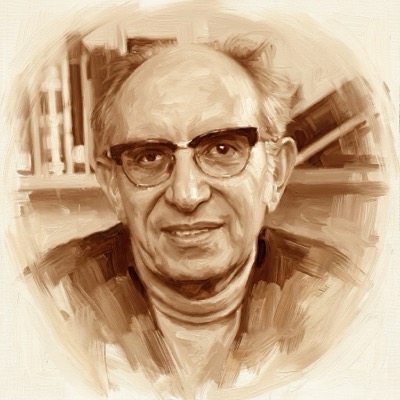
Bar-Hillel read Carnap's Logical Syntax of Language as a young man, corresponded with him through the 1940s, took a postdoctoral post under him in Chicago in 1950, and co-wrote the 1952 Outline of a Theory of Semantic Information, an attempt to give Shannon's meaning-free bits a measure of meaning. The disciple then carried Carnap's logic into machine translation and came back its sharpest skeptic. The line from one to the other runs from the hope that language can be fully formalized to the discovery of how much of it lives in knowledge of the world.
en.wikipedia.org · Carnap & Bar-Hillel, An Outline of a Theory of Semantic Information, MIT RLE Technical Report 247 (1952)
Martin Heidegger
DebatedPhilosopher
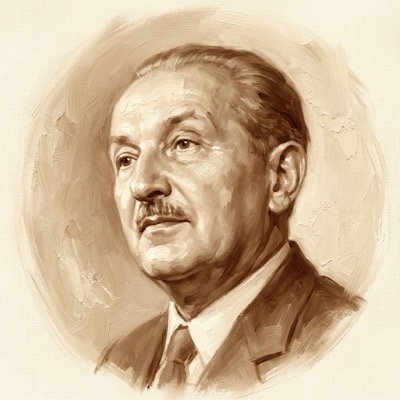
They walked together at Davos in 1929; within three years Carnap had published 'The Elimination of Metaphysics through Logical Analysis of Language', taking sentences from Heidegger's 'What Is Metaphysics?', above all 'the Nothing itself nothings', as specimens of grammatical form without meaning, and calling metaphysicians musicians without musical ability. Heidegger never answered in print, remarking privately that for Carnap truth had been diverted into certainty. It is the founding split between analytic and continental philosophy, and a large language model, fluent in grammatical form, puts both of their questions back on the table.
aeon.co · Carnap, "Überwindung der Metaphysik durch logische Analyse der Sprache", Erkenntnis 2 (1931/32)
Ludwig Wittgenstein
Influenced byPhilosopher of Language & Logic
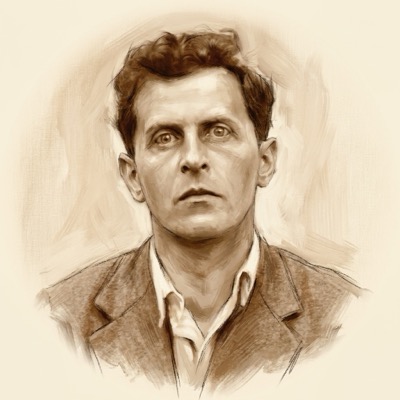
Carnap joined Schlick's circle just as it began another careful reading of the Tractatus, and took from it the idea that logical truths are tautologies, empty of empirical content — the piece logical empiricism needed to fit mathematics into an empiricist world. From 1927 to 1928 he sat in on the small meetings Wittgenstein allowed, and his autobiography calls Wittgenstein the thinker who most inspired him, while recording the gulf between them: Carnap approached problems as a scientist, Wittgenstein 'like a creative artist,' almost a seer. The most influential program to make philosophy a science grew from a book whose author never wanted it to be one.
en.wikipedia.org · plato.stanford.edu
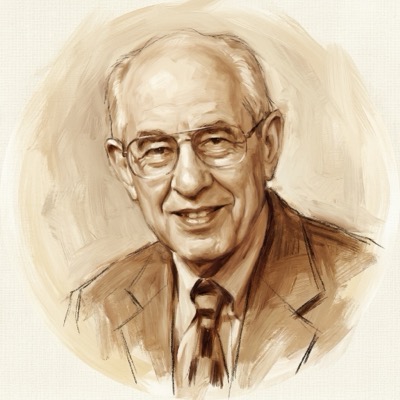
Hilary Putnam
DebatedPhilosopher of Mind, Language & Mathematics
In the 1963 Schilpp volume on Carnap, Putnam read Carnap's program of inductive logic as the design of a universal learning machine, and gave a diagonal proof that no computable confirmation function of Carnap's kind can learn every computable regularity. Carnap's reply conceded something real: that how scientists accept hypotheses may depend on which hypotheses happen to be proposed, and in what order. The exchange is an early, exact statement of a limit machine learning still lives inside, that every learner has an inductive bias and none learns everything.
plato.stanford.edu · Putnam, "'Degree of Confirmation' and Inductive Logic", in Schilpp (ed.), The Philosophy of Rudolf Carnap (Open Court, 1963), pp. 761–783 · Sterkenburg, "Putnam's Diagonal Argument and the Impossibility of a Universal Learning Machine", Erkenntnis (2019)
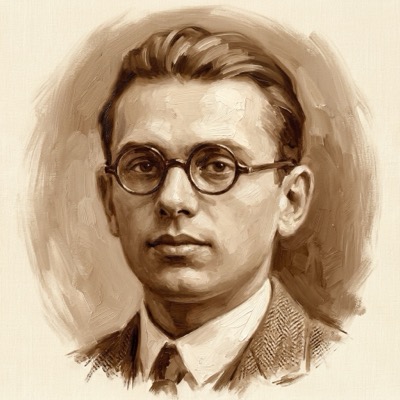
Kurt Gödel
InfluencedLogician & Mathematician
Gödel learned his logic from Carnap and Hans Hahn in Vienna and sat in the same Circle — then spent years showing where Carnap's program broke. He told Carnap that his criterion for analyticity was defective, since truth cannot be defined in a metalanguage faithfully representable in the object language, and he worked from 1953 to 1959 on a reply for the Carnap volume, 'Is Mathematics a Syntax of Language?', that he never published. The teacher wanted mathematics to be convention; the student was a realist about it, and the disagreement is still the fault line under formal approaches to meaning.
plato.stanford.edu · plato.stanford.edu · en.wikipedia.org

