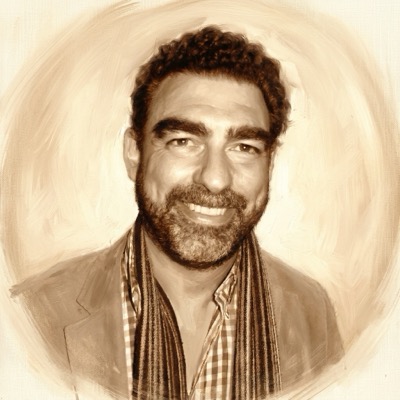
Nick Lane
Evolutionary Biochemist, UCL
About
Nick Lane (b. 1967) is a British evolutionary biochemist at University College London whose work asks why life is built the way it is rather than some other way. His answer is energy: he argues that life began in alkaline hydrothermal vents, where natural proton gradients across mineral membranes could drive carbon chemistry before genes existed, and that the same chemiosmotic trick still powers every cell alive. From that starting point he explains the long strangeness of the record — two billion years of bacterial stasis, then one singular merger that produced the complex cell, then everything else. His books, from 'Power, Sex, Suicide' (2005) through 'The Vital Question' (2015) to 'Transformer' (2022), carry the argument into mitochondria, ageing, and death. He belongs in an atlas about minds because he keeps pressing the question machine intelligence cannot dodge: whether feeling is something a substrate does rather than something a computation represents.
Key Contributions
- Argued that life began in alkaline hydrothermal vents, where natural proton gradients could drive carbon chemistry before genes or enzymes existed
- Put bioenergetics at the center of evolution, showing why the energy budget per gene constrains how complex a cell can become
- Traced complex life to a single endosymbiotic merger, explaining two billion years of bacterial stasis as an energetic bottleneck rather than an accident of timing
- Made mitochondria a subject of general understanding, linking them to sex, ageing, and death across several widely translated books
- His energy-first account is a genuine rival to gene-centered evolution, though critics note the vent hypothesis remains a reconstruction that laboratory chemistry has not yet closed
Videos & Interviews
Nick Lane | The Gifford Lectures: Beyond the Series - Why is Life the way it is?
The Edinburgh lecture where Lane sets his own question inside its lineage, from Schrödinger's 1944 Dublin lectures and the first use of "code script" for chromosomes, through the gene-centered decades, to the energetic account he argues has to replace information as the starting point
View Details
Nick Lane: Origin of Life, Evolution, Aliens, Biology, and Consciousness | Lex Fridman Podcast #318
Four hours from hydrothermal vents to the hard problem. Lane lays out why he thinks life began as chemistry driven by proton gradients rather than as information, why complex cells happened only once, and where he would look for life elsewhere. He also praises Michael Levin's bioelectric work on planaria, and turns at the end to whether feeling is something chemistry does rather than something a neural network computes
View Details
“I find it almost disturbing that the universe favors life this strongly” – Nick Lane
Lane tells Dwarkesh Patel that the chemistry pointing toward life looks almost too favourable, then draws the line he keeps drawing: the origin of life may be close to inevitable given the right rocks and water, but complex life is not. Earth spent two billion years as bacteria before anything else happened, which is why he resists reading cosmic optimism straight from the chemistry
View DetailsPapers & Publications

The Vital Question: Why Is Life The Way It Is?
2015The core argument in one book: energy, not information, is the constraint that shaped the cell, and the proton gradient is the reason complex life took so long and happened only once
View Book
Transformer: The Deep Chemistry of Life and Death
2022The Krebs cycle read as the hinge of biology, running forwards to burn and backwards to build, and as the place where growth, ageing, and disease turn out to be the same chemistry
View Book
Power, Sex, Suicide: Mitochondria and the Meaning of Life
2005How a captured bacterium became the organelle that decides how much energy a cell can spend, why there are two sexes, and when a cell should kill itself
View BookConnections
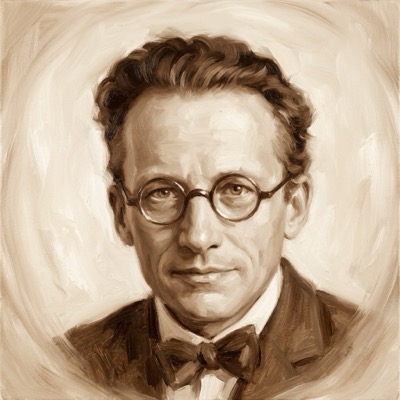
Erwin Schrödinger
Influenced byPhysicist & Nobel Laureate
Lane opens his Edinburgh lecture by placing himself in a line that starts in wartime Dublin, where a quantum physicist gave public lectures on what life is and guessed that chromosomes carry something like a code script — the first time, Lane notes, that anyone had used the phrase about biology. The guess was spectacularly productive and, Lane argues, spectacularly one-sided: it made information the thing to explain, and biology spent the next seventy years reading life as a message. His own question is Schrodinger's title with the emphasis moved, asking why life is the way it is and answering in energy rather than code.
youtube.com · en.wikipedia.org
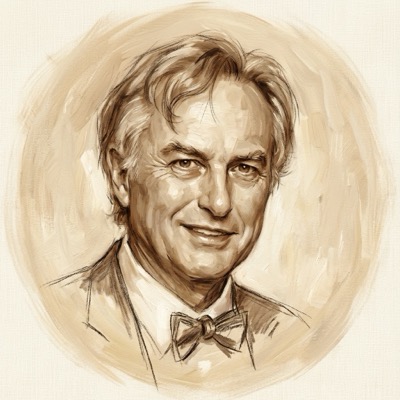
Richard Dawkins
In contrastEvolutionary Biologist & Author
Lane is generous about the debt and clear about the departure. Nearly every evolutionary biologist he knows was drawn into the field by the gene's-eye view Dawkins set out in 1976, and Lane grants its central claim outright: nothing but natural selection can build this much complexity. What he disputes is where the account starts. Read life as information and the cell is a vehicle for replicators; read it as energy and the proton gradient comes first, with genes arriving to stabilise a chemistry already running. As Lane puts it, very few biologists now think the gene-centered picture is right as written, even as it still shapes how they think.
youtube.com
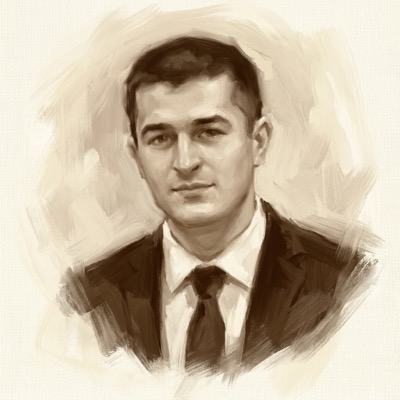
Lex Fridman
In conversationResearch Scientist, MIT; Host of the Lex Fridman Podcast
Twenty-six minutes into the origin-of-life conversation, Lane interrupts his own answer to press a name on his host: there is amazing work from Michael Levin, you should interview him. Fridman did. It is the clearest thing on this site about what a long-form show actually is — not a broadcast but a switchboard, where one guest's enthusiasm becomes another guest's episode, and the connection between two biologists who had never collaborated gets made in public.
youtube.com
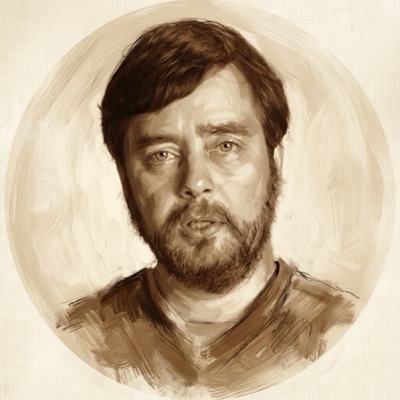
Michael Levin
KindredBiologist & Morphogenesis Researcher
Lane brought Levin up unprompted on Lex Fridman's podcast, called the voltage-map work on planaria amazing, and told his host to go and interview the man. The affinity is specific rather than polite: both treat electrical gradients across membranes as doing real causal work rather than merely reporting it. Lane's gradients run a cell's energy budget and, he suspects, its capacity to feel; Levin's carry the pattern a flatworm rebuilds itself to. Two biologists who arrived from opposite ends at the view that bioelectricity is where the interesting decisions get made.
youtube.com