Immanuel Kant
Philosopher of the Enlightenment
About
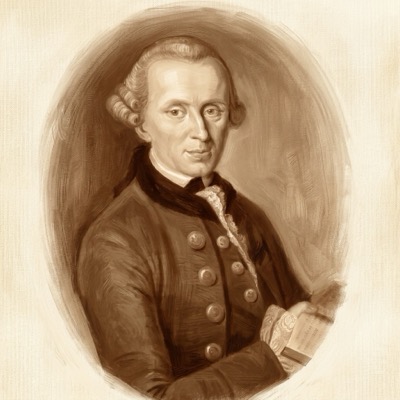
Immanuel Kant (1724–1804) spent his entire life in Königsberg, Prussia, teaching at its university and becoming its Full Professor of Logic and Metaphysics in 1770. His mature philosophy unfolds across three Critiques: the Critique of Pure Reason (1781) argues for a 'Copernican revolution' in which objects of experience conform to the mind's own forms of intuition rather than the mind passively mirroring an external world, leaving us knowledge only of appearances (phenomena) and not of things as they are in themselves (noumena). The Critique of Practical Reason (1788) grounds morality in reason, and the Critique of Judgment (1790) turns to aesthetics, arguing that judgments of beauty rest on a 'disinterested' pleasure — one detached from personal desire or use — that nonetheless claims universal assent from others. Famously disciplined in his habits, Kant reshaped nearly every subsequent branch of philosophy from a single, systematic body of work.
Key Contributions
- Argued for a 'Copernican revolution' in philosophy: objects of experience conform to the mind's forms of intuition, not vice versa
- Distinguished phenomena (appearances we can know) from noumena, or the thing-in-itself (which remains unknowable), in the Critique of Pure Reason (1781)
- Grounded moral philosophy in practical reason in the Critique of Practical Reason (1788)
- Argued in the Critique of Judgment (1790) that beauty is felt as disinterested pleasure that nonetheless claims universal assent
- Held the chair of Logic and Metaphysics at the University of Königsberg for the whole of his career
Questions they sharpened View the streams
Books

Connections
Yuk Hui
InfluencedProfessor of Philosophy, Erasmus University Rotterdam
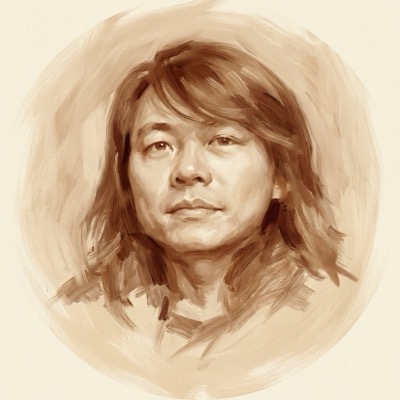
Kant Machine: Critical Philosophy after AI (2026) is the terminus of a long engagement: Hui transposes Kant's founding questions from the human subject to the machine, asking whether an AI can be critical in Kant's sense — aware of its own limits, legislating for itself, capable of judgment rather than mere execution. The thread runs back through Recursivity and Contingency, which reread the third Critique's account of the organism for the age of cybernetics and neural networks.
digitalmilieu.net · amazon.com
Martin Heidegger
InfluencedPhilosopher
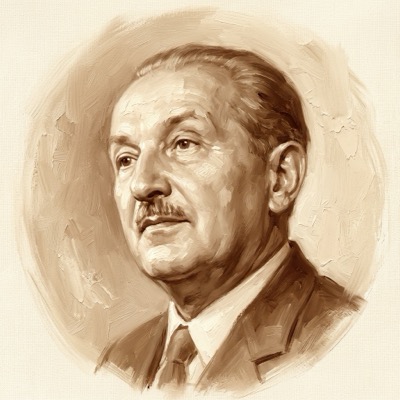
The Kantian influence is pervasive throughout Being and Time, and Kant and the Problem of Metaphysics (1929) — written immediately after Heidegger's Davos encounter with Ernst Cassirer — can be read as supplementing that book's unfinished second part. Heidegger's interpretation placed unprecedented weight on the schematism, reading the first Critique as a treatise on human finitude; most Kant scholars, Cassirer first among them, rejected it, which tells you it was philosophy rather than exegesis.
en.wikipedia.org

Andy Clark
KindredPhilosopher & Cognitive Scientist
When Clark describes perception as controlled hallucination — the brain meeting the world with predictions rather than passively receiving it — the field reached for Kant almost at once: Swanson's 'The Predictive Processing Paradigm Has Roots in Kant' (2016) maps top-down percept generation and hyperpriors onto the Critique's claim that experience conforms to the mind's own forms, and Clark himself calls the highest-level priors 'almost Kantian' expectations about the structure of the world. Two centuries apart, the same architecture: the world we inhabit is the one our minds are built to construct.
frontiersin.org

Saining Xie
KindredCo-founder & CSO, AMI Labs
In his seven-hour interview — on this site — Xie reaches for Kant's thing-in-itself, alongside Schopenhauer and the Diamond Sutra Kaiming He gave him, to explain research taste: what you see is not the essence, so break through a paper's surface and ask what actually lies beneath it. The reflex runs deeper than one citation — his world-model program is a wager that intelligence itself means modeling what hides behind appearances, a builder's answer to a question Kant ruled unanswerable.
youtube.com