About
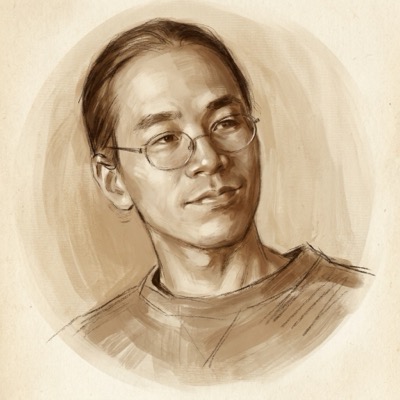
Ted Chiang (姜峯楠, born 1967) is an American science fiction writer of Taiwanese descent, widely regarded as one of the most acclaimed authors in the genre despite a deliberately small output. A computer science graduate of Brown University, he works as a technical writer and has published two landmark short story collections, Stories of Your Life and Others (2002) and Exhalation (2019). His 1998 novella "Story of Your Life" was adapted into the 2016 film Arrival. In recent years he has become one of the sharpest critics of AI hype through essays in The New Yorker, including "ChatGPT Is a Blurry JPEG of the Web" and "Why A.I. Isn't Going to Make Art," and was named to Time's 100 Most Influential People in AI in 2023.
Key Contributions
- Wrote "Story of Your Life" (1998), the basis for Denis Villeneuve's film Arrival (2016)
- Won four Nebula Awards, four Hugo Awards, and six Locus Awards
- Authored the genre-defining collections Stories of Your Life and Others and Exhalation
- Coined the influential critique of LLMs as "a blurry JPEG of the web" (The New Yorker, 2023)
- Named one of Time's 100 Most Influential People in AI (2023)
Books


Videos & Interviews

2025 DeMott Lecture: Ted Chiang
Ted Chiang's DeMott Lecture at Amherst College, asking whether human beings have free will — contrasting the fixed fate of Sophocles' Oedipus Rex with Scrooge's power to change course in Dickens' A Christmas Carol.
View Details
Ted Chiang: Beyond techno-utopias and techno-dystopias
Chiang argues for a more nuanced view of technology that resists both utopian and dystopian extremes.
View Details
Ted Chiang on Free Will, Time Travel, Many Worlds, Genetic Engineering, and Hard Science Fiction
A wide-ranging conversation on the philosophical and scientific ideas behind his fiction, including free will, determinism, and the implications of AI.
View DetailsAdaptations

Connections
Ursula K. Le Guin
KindredScience Fiction Author & Visionary
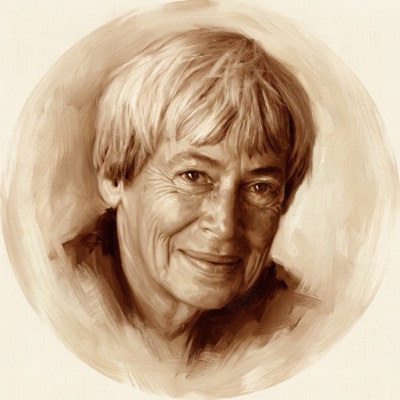
Accepting her National Book Award in 2014, Le Guin asked for 'writers who can remember freedom — poets, visionaries, the realists of a larger reality.' Critics have since made that phrase the standing description of Chiang; Public Books simply titled its essay on him 'Realist of a Larger Reality.' He has never claimed the lineage himself, which is part of why it holds — it is a judgment readers keep arriving at on their own. Both treat speculative fiction as a way of taking an idea seriously rather than decorating it, and this site reaches for both to ask the same thing: what a mind is, by building one that is not ours.
publicbooks.org · youtube.com
Leo Tolstoy
KindredNovelist & Moral Philosopher
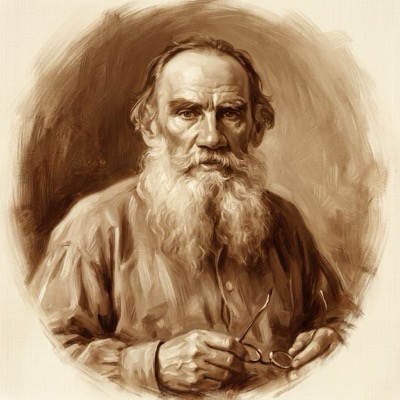
A resonance across a century rather than a citation. Tolstoy defined art as a feeling someone once lived and deliberately passes on to others; Chiang's 2024 essay 'Why A.I. Isn't Going to Make Art' argues that language requires an intention to communicate and that art is the sum of many such choices. Both put art on the sending side, in someone who meant it, which is why their answer to generated art is the same and is not settled by how good the output looks.
en.wikipedia.org · Ted Chiang, "Why A.I. Isn't Going to Make Art", The New Yorker, 31 Aug 2024
Jack Clark
KindredCo-founder & Head of Policy, Anthropic
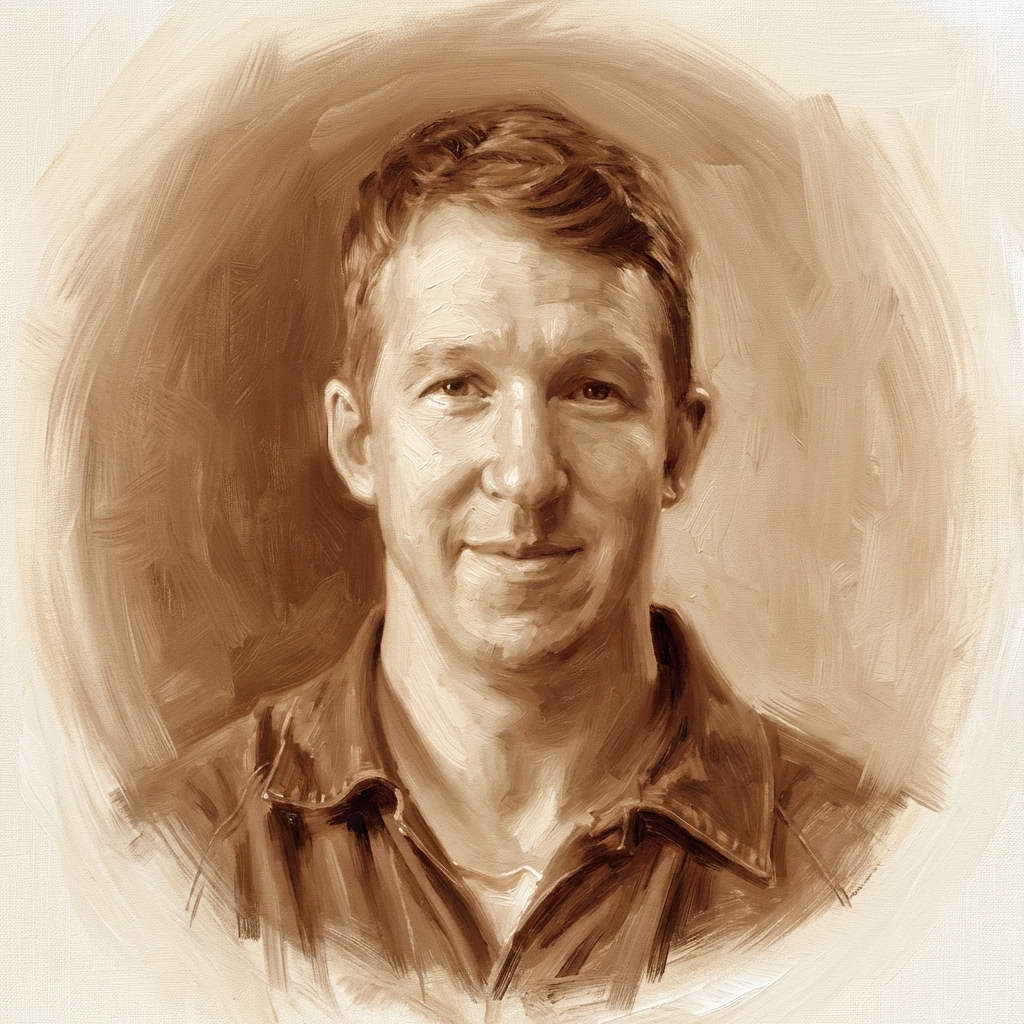
A pairing across a fence: Clark writes short science fiction inside Import AI, his policy newsletter, and lists writing those stories among his hobbies; Chiang writes the fiction that has done more than any argument to make people think carefully about machine minds. Both reached for stories because the honest form of the question — what is it like to live beside this — resists being turned into a forecast. They would answer it very differently, which is the point.
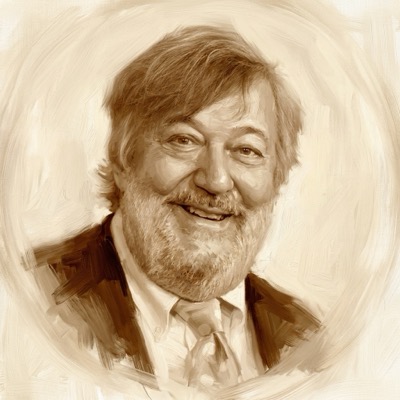
Stephen Fry
KindredActor, Writer & Technology Commentator
A pairing rather than a meeting: in 2023 Fry gave his voice — a voice he had just discovered cloned by AI — to Nick Cave's letter calling a ChatGPT song 'a grotesque mockery of what it is to be human.' Chiang's 2024 essay 'Why A.I. Isn't Going to Make Art' makes the same refusal in an engineer's terms. Cave and Chiang supply the argument; Fry, the performer whose own instrument had been copied, is the one who embodies it.
theredhandfiles.com · youtube.com

