Plotinus
Philosopher & Founder of Neoplatonism
About
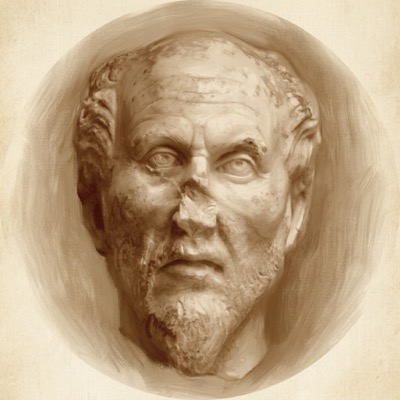
Plotinus (c. 204/5–270 AD) was born in Lycopolis, Egypt, and took up philosophy at twenty-eight in Alexandria, where he studied for eleven years under Ammonius Saccas after declaring 'this is the man I was looking for.' Around forty he settled in Rome and taught there for the rest of his life; the essays of his final seventeen years were compiled by his student Porphyry into the Enneads. His system unfolds from three hypostases — the One beyond being, Intellect (nous), and Soul — with all reality emanating from the One as light from a source that loses nothing in the giving. The task of a human life is the return: a contemplative ascent through which the soul turns back toward its origin, culminating in henosis, union with the One. Through Augustine, Islamic philosophy, Kabbalah, and Ficino's Renaissance academy, his thought became one of the most quietly persistent currents in Western mysticism — and it is being actively revived in contemporary conversations about meaning, emergence, and mind.
Key Contributions
- Founded Neoplatonism, the last great philosophical synthesis of antiquity, integrating Plato with Aristotelian and Stoic thought
- Developed the doctrine of the three hypostases: the One beyond being, Intellect (nous), and Soul
- Described reality as emanation — everything flows from the One like light from a source undiminished by the giving
- Made henosis, contemplative union with the One, the goal of philosophy: the soul's ascent back toward its origin
- Shaped Augustine, Pseudo-Dionysius, Islamic falsafa, Kabbalah, and Renaissance Platonism through the Enneads, compiled by Porphyry
Questions they sharpened View the streams
Videos & Interviews
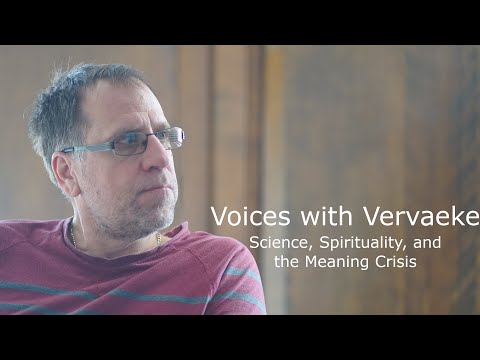
Emergence-emanation, Whitehead, Kastrup: a dialectic ontology w/ Matt Segall - Voices with Vervaeke
Segall and Vervaeke work the axis between emanation and emergence: does reality descend from the One, as Plotinus taught, or climb from below, as Whitehead's process philosophy suggests — and can a dialectical ontology hold both? A follow-up to their Whitehead dialogue, set between Vervaeke's conversations with Bernardo Kastrup.
View Details
Ep. 18 - Awakening from the Meaning Crisis - Plotinus and Neoplatonism
Vervaeke's Meaning Crisis episode devoted to Plotinus — how he wove Plato, Aristotle, and the Stoics into a single spiritual system in which all reality emanates from the One, and the philosophical life becomes the soul's contemplative ascent back toward its source.
View Details