關於
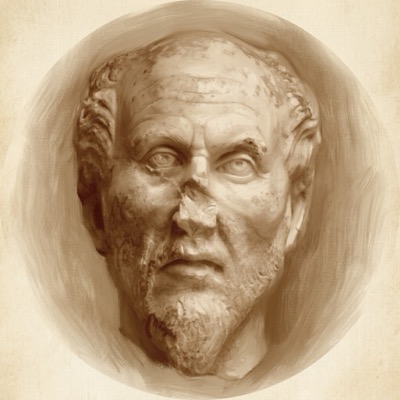
Plotinus (c. 204/5–270 AD) was born in Lycopolis, Egypt, and took up philosophy at twenty-eight in Alexandria, where he studied for eleven years under Ammonius Saccas after declaring 'this is the man I was looking for.' Around forty he settled in Rome and taught there for the rest of his life; the essays of his final seventeen years were compiled by his student Porphyry into the Enneads. His system unfolds from three hypostases — the One beyond being, Intellect (nous), and Soul — with all reality emanating from the One as light from a source that loses nothing in the giving. The task of a human life is the return: a contemplative ascent through which the soul turns back toward its origin, culminating in henosis, union with the One. Through Augustine, Islamic philosophy, Kabbalah, and Ficino's Renaissance academy, his thought became one of the most quietly persistent currents in Western mysticism — and it is being actively revived in contemporary conversations about meaning, emergence, and mind.
主要貢獻
- Founded Neoplatonism, the last great philosophical synthesis of antiquity, integrating Plato with Aristotelian and Stoic thought
- Developed the doctrine of the three hypostases: the One beyond being, Intellect (nous), and Soul
- Described reality as emanation — everything flows from the One like light from a source undiminished by the giving
- Made henosis, contemplative union with the One, the goal of philosophy: the soul's ascent back toward its origin
- Shaped Augustine, Pseudo-Dionysius, Islamic falsafa, Kabbalah, and Renaissance Platonism through the Enneads, compiled by Porphyry
影片與訪談
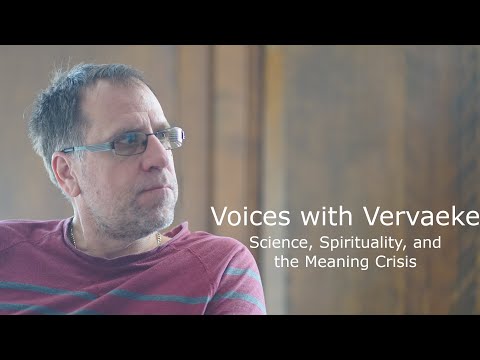
Emergence-emanation, Whitehead, Kastrup: a dialectic ontology w/ Matt Segall - Voices with Vervaeke
Segall and Vervaeke work the axis between emanation and emergence: does reality descend from the One, as Plotinus taught, or climb from below, as Whitehead's process philosophy suggests — and can a dialectical ontology hold both? A follow-up to their Whitehead dialogue, set between Vervaeke's conversations with Bernardo Kastrup.
View Details
Ep. 18 - Awakening from the Meaning Crisis - Plotinus and Neoplatonism
Vervaeke's Meaning Crisis episode devoted to Plotinus — how he wove Plato, Aristotle, and the Stoics into a single spiritual system in which all reality emanates from the One, and the philosophical life becomes the soul's contemplative ascent back toward its source.
View Details思想連結
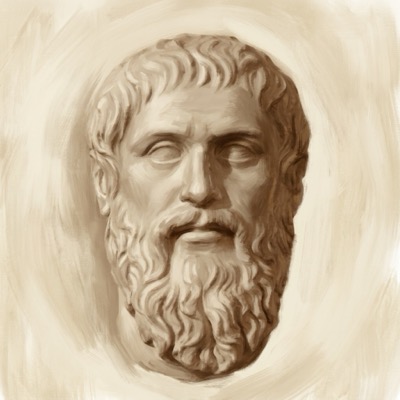
Plato
受其影響Philosopher of Classical Athens
普羅提諾並不認為自己創立了什麼;「新柏拉圖主義」是現代人加上的標籤。他把自己的工作理解為詮釋:柏拉圖早已奠定了根本,哲學家的任務是把它們完整地展開。超越存有的「太一」、靈魂轉身回望其源頭、藉沉思而上升——這些都把《理想國》的「善」與《會飲篇》的階梯,讀成同一套形上學。
plato.stanford.edu
John Vervaeke
影響了他/她認知科學家與哲學家
《Awakening from the Meaning Crisis》第 18 集整集獻給普羅提諾——Vervaeke 把他讀作古代世界的偉大綜合:理性與神祕的上升,被握持在同一種修習之中。當 Vervaeke 主張意義是透過「實踐的生態」而非信念來培養時,這個主張的形狀本身就是新柏拉圖式的;他自己在一集又一集中如此承認。
youtube.com
懷海德
思想對照數學家與過程哲學家
這是對兩套形上學的一種讀法:兩者都把創造性置於源頭,卻對它流動的方向意見相左。在普羅提諾那裡,萬物自太一向下流溢,而給出並不使它減損。在懷德海那裡,創造性才是終極者,神是它的第一個造物,而非它的根源。Segall 與 Vervaeke 對談時把兩者對照:Nous 對應懷德海所說神的原初性,世界靈魂對應其後得性——然後標出分歧所在:對懷德海而言,創造性「與物質的親近,不亞於它與太一的親近」。
youtube.com · footnotes2plato.substack.com
Matthew D. Segall
影響了他/她副教授・CIIS
Segall 讀普羅提諾,一如他讀一切:透過懷德海,而這讓閱讀成了改寫。在〈Plotinus Without Emanation〉(2025 年 4 月)——與 Pedro Brea、Jack Bagby 討論《九章集》第六卷的對話——他提出,太一的流溢是共同創造的:它的豐盈「因眾多者藉沉思回返於它而得以增益」。此後 Footnotes2Plato 一再回到普羅提諾,包括柏格森論普羅提諾的講稿,以及 2026 年一場關於普羅提諾與語言模型的對話。
footnotes2plato.com · footnotes2plato.substack.com · footnotes2plato.com · footnotes2plato.com

