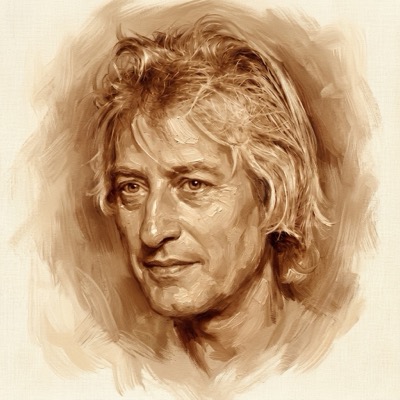
Michael Edward Johnson
Philosopher & Neuroscientist, Co-founder of the Qualia Research Institute
About
Michael Edward Johnson is a philosopher and neuroscientist working on consciousness, valence, and the physical basis of suffering and well-being. In 2016 he wrote Principia Qualia, which proposed the Symmetry Theory of Valence: the claim that how pleasant an experience feels is fixed by the symmetry of the mathematical object that describes it. He co-founded the Qualia Research Institute around that program and left in 2022, continuing as an independent researcher at opentheory.net. His later work includes Neural Annealing (2019), a unified account of meditation, music, psychedelics, and trauma, and Principles of Vasocomputation (2023), which proposes that tension in vascular smooth muscle acts as a form of bodily memory. In A Paradigm for AI Consciousness (2024) he argues that physics, not Turing-level computation, is the right ground for asking whether a machine feels anything.
Key Contributions
- Wrote Principia Qualia (2016), a blueprint for treating consciousness as a formal mathematical object rather than a metaphor
- Proposed the Symmetry Theory of Valence, tying how good an experience feels to the symmetry of its mathematical structure
- Co-founded the Qualia Research Institute, one of the few groups attempting a quantitative science of subjective experience
- Proposed vasocomputation, the hypothesis that vascular smooth muscle latches predictions and stores trauma as physical tension
- Argued in A Paradigm for AI Consciousness that physics, not computation, should ground claims about whether AI systems experience anything
- His formalist program is ambitious and generative, though the Symmetry Theory of Valence and vasocomputation remain speculative and largely untested
Videos & Interviews
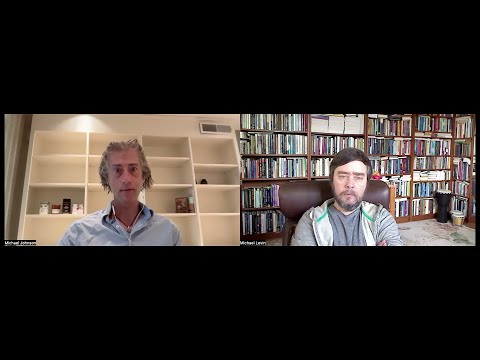
Discussion with Michael Johnson 1
First of two conversations on Michael Levin's channel, on vasocomputation, stress as cognitive glue, and computation and cognition in unconventional substrates. Johnson brings his hypothesis that tension in vascular smooth muscle latches Bayesian priors about the nervous system's appropriate range; Levin brings distributed stress minimization, stress reduction as the driving variable of anatomical homeostasis. Together they ask how neurons compete for blood flow, how the body punishes defectors, and why so much of that tension never gets released.
View Details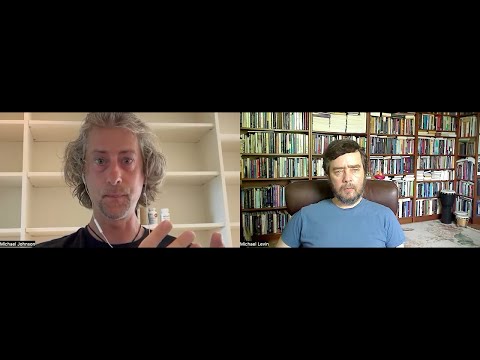
Discussion with Michael Johnson 2
Second conversation on Michael Levin's channel, covering the spectrum of consciousness down to the cell and below, implicit memory and cellular pixels of experience, Platonic space, symmetry breaking, and intrinsic versus extrinsic motivation. Johnson proposes meeting in the middle between Levin's thought and his own: both grant cells an inner perspective, so the question becomes what kind and how much. Levin offers his test for where a first-person view starts to matter, a bowling ball on a landscape versus a mouse, and the two ask whether the Platonic forms living systems tap into are symmetry groups.
View Details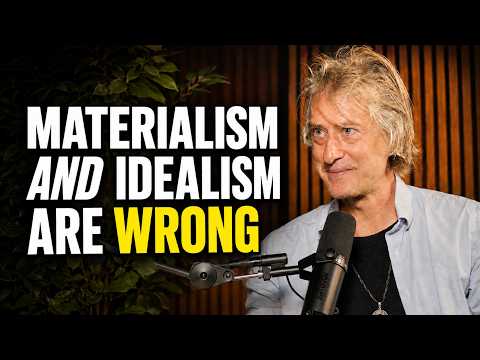
Michael Johnson: "Consciousness is Mathematical" | Seeing Clearly
A two-hour survey of Johnson's ideas with host Christian Gonzalez: dual-aspect monism and mathematical theories of consciousness, the Symmetry Theory of Valence, vasocomputation and trauma stored as vascular latches, Buddhism, moral realism grounded in valence realism, and AI consciousness. Near the end Johnson argues that a model like Claude has no single place in spacetime to point at, its computation scattered across GPUs and time, so whatever experience a data center hosts will barely correspond to the tokens we read. He thinks the "training is torture" story is not nearly weird enough, and that a real science of consciousness will surprise us.
View DetailsPapers & Publications
Principia Qualia: Blueprint for a New Science
2016Proposes qualia formalism and the Symmetry Theory of Valence as the foundation for a mathematical science of consciousness.
Read PaperA Paradigm for AI Consciousness
2024Argues that physics is a sturdier ontology for consciousness than Turing-level computation, and that electromagnetic shape is a usable proxy.
Read Paper