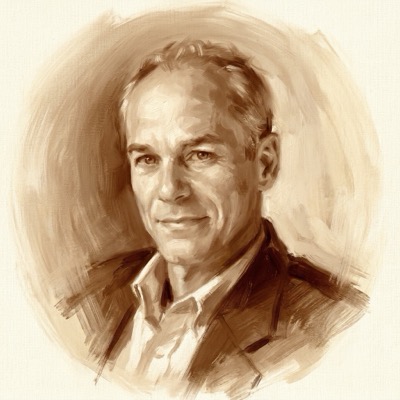
Marcelo Gleiser
Theoretical Physicist & Astronomer, Dartmouth College
Trace a path from Marcelo Gleiser →About
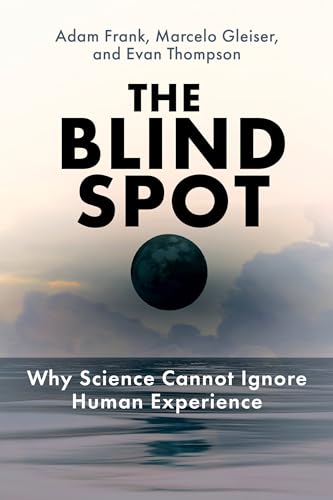
Marcelo Gleiser (born 1959) is a Brazilian-American theoretical physicist and astronomer, the Appleton Professor of Natural Philosophy at Dartmouth College, where he has taught since 1991. His research spans cosmology, nonlinear field theory, and the origin of life, including the co-discovery of oscillons and early work applying information theory to measure complexity in nature. He is also a prominent public intellectual on the relationship between science, philosophy, and religion, and in 2019 received the Templeton Prize for his work on humanity's search for meaning. His books — including The Island of Knowledge and The Blind Spot (2024, with Adam Frank and Evan Thompson) — argue that science cannot fully escape the human experience from which it is conducted, a theme that bears directly on debates about machine intelligence and what knowing means.
Key Contributions
- Received the 2019 Templeton Prize for work on science, philosophy, and the search for meaning
- Co-discovered oscillons, long-lived time-dependent configurations in nonlinear field theory
- Co-authored The Blind Spot (2024) with Adam Frank and Evan Thompson on science's neglect of human experience
- Wrote The Island of Knowledge, on the inherent limits of scientific knowledge
- Founded Dartmouth's Institute for Cross-Disciplinary Engagement to bridge the sciences and humanities
Books
Videos & Interviews

Marcelo Gleiser on Why Science Cannot Ignore Human Experience
Gleiser discusses his book The Blind Spot and his argument that science must account for the human experience from which it is conducted.
View Details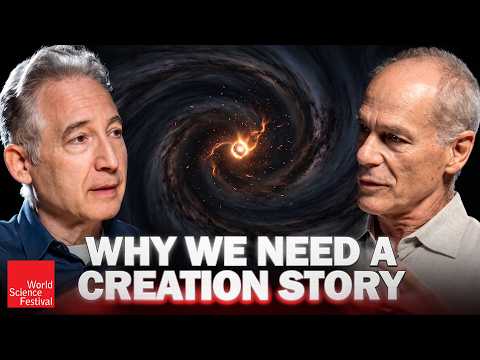
Are There Limits To What Physics Can Explain? | World Science Festival
Do we invent the laws of physics, or find them? And why are we driven to explain at all? Brian Greene sits with Marcelo Gleiser — theoretical physicist at Dartmouth and Templeton Prize winner — in a conversation that moves between physics, philosophy, and the psychology of mortality.
View DetailsConnections
Adam Frank
CollaboratedProfessor of Astrophysics, University of Rochester
With the philosopher Evan Thompson, the two physicists wrote The Blind Spot (2024): science's habit of picturing reality from nowhere hides the lived experience every measurement depends on. The argument runs through time, cosmology, quantum theory, life, and AI and the mind. That two working physicists, not only philosophers, make it is part of the point — the blind spot is visible from inside the lab.
mitpress.mit.edu · en.wikipedia.org
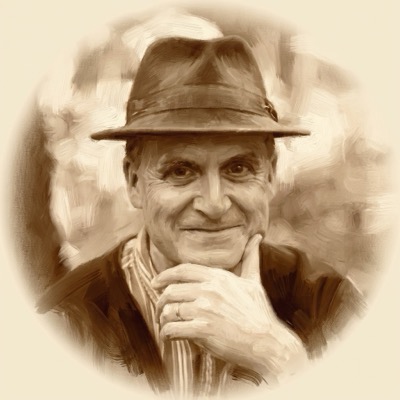
Evan Thompson
CollaboratedPhilosopher of Mind & Cognitive Science
In 2019, the same year Gleiser won the Templeton Prize, he and Thompson published with Adam Frank the Aeon essay that named science's Blind Spot. Five years later they turned it into The Blind Spot (MIT Press, 2024). The pairing is the argument in miniature: a theoretical physicist and a philosopher of mind agreeing that what science cannot see is the experience it starts from, which is not a gap more data could close.
aeon.co · en.wikipedia.org · en.wikipedia.org
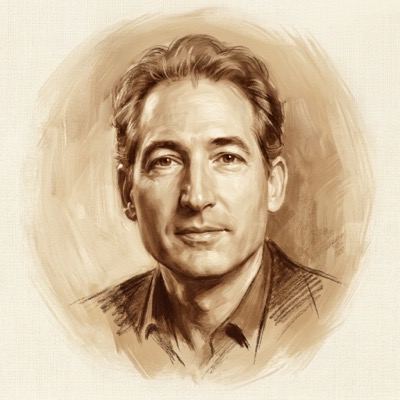
Brian Greene
In conversationTheoretical Physicist & Science Communicator
On Greene's World Science Festival stage, he and Gleiser ask whether the laws of physics are found or invented, and why we are driven to explain at all. They are two physicists who trust the method and differ on the frame around it: Greene tends to treat human meaning as something physics leaves room for, while Gleiser argues that the knower can never be subtracted from the known. The conversation is on this site.
youtube.com

