About
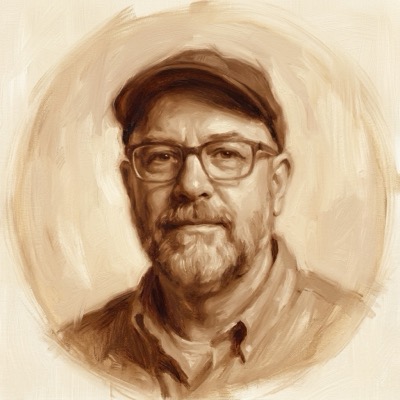
Adam Frank is an American physicist, astronomer, and writer, and a professor of astrophysics at the University of Rochester. His research focuses on computational astrophysics, star formation, stellar evolution, exoplanet atmospheres, and astrobiology. He is known for connecting scientific questions about planets, life, civilizations, climate, and human experience for a broad public audience. Frank is also a co-author of The Blind Spot: Why Science Cannot Ignore Human Experience and has written extensively for NPR and other public science venues.
Key Contributions
- Studies computational astrophysics, star formation, stellar evolution, and the dynamics of complex cosmic systems
- Developed astrobiology work on exoplanets, technospheres, climate futures, and the possibility of exo-civilizations
- Co-authored the Silurian hypothesis with Gavin Schmidt, asking what traces an earlier industrial civilization might leave
- Uses books and public writing, including NPR's 13.8/Cosmos and Culture lineage, to connect science with meaning and culture
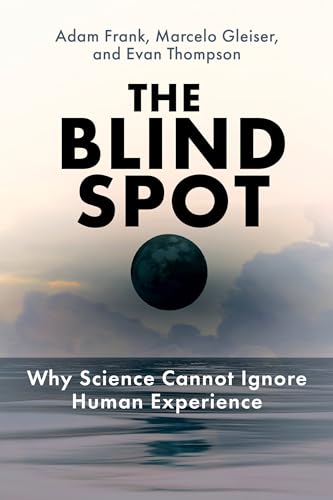
- Co-authored The Blind Spot, arguing that science cannot fully understand reality while ignoring lived experience
- His work usefully widens AI and science debates, though the cosmic scale can make practical implications feel speculative
Books
Videos & Interviews
Connections
Marcelo Gleiser
CollaboratedTheoretical Physicist & Astronomer, Dartmouth College
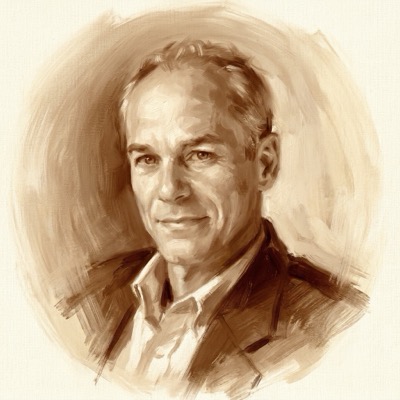
With the philosopher Evan Thompson, the two physicists wrote The Blind Spot (2024): science's habit of picturing reality from nowhere hides the lived experience every measurement depends on. The argument runs through time, cosmology, quantum theory, life, and AI and the mind. That two working physicists, not only philosophers, make it is part of the point — the blind spot is visible from inside the lab.
mitpress.mit.edu · en.wikipedia.org
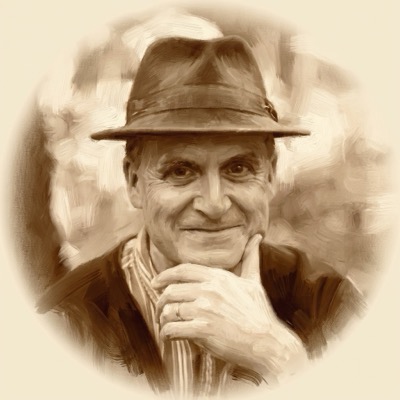
Evan Thompson
CollaboratedPhilosopher of Mind & Cognitive Science
Before the book there was an essay: in Aeon in January 2019, Thompson, Frank and Marcelo Gleiser named the Blind Spot. 'In the Blind Spot sits experience: the sheer presence and immediacy of lived perception.' The Blind Spot: Why Science Cannot Ignore Human Experience (MIT Press, 2024) worked the claim out at length, with the philosopher who had spent decades bringing phenomenology into cognitive science writing alongside an astrophysicist. Frank now carries the term into public debate as what 'my colleagues and I call the blind spot'.
aeon.co · en.wikipedia.org · lareviewofbooks.org · youtube.com
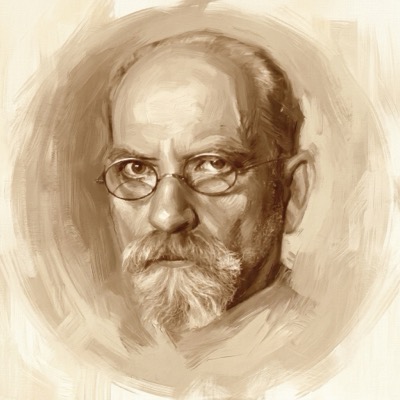
Edmund Husserl
Influenced byFounder of Phenomenology
The Blind Spot (2024), which Frank wrote with Marcelo Gleiser and Evan Thompson, takes its central diagnosis from Husserl's Crisis: modern science has quietly substituted its mathematical idealizations for the lived world, taking 'for true being what is actually a method.' Frank has said that phenomenology, 'initiated by Edmund Husserl', simply disappears from today's debates about science and philosophy. That a working astrophysicist reaches for Husserl is itself the argument: the experience that makes measurement possible cannot be left out of the account.
closertotruth.com · youtube.com
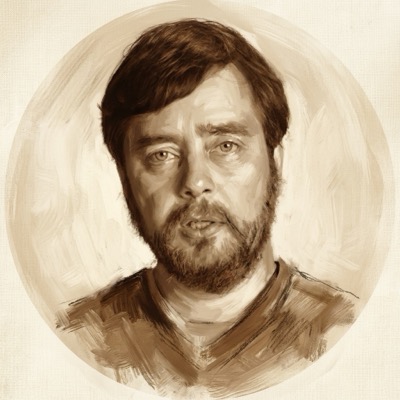
Michael Levin
In conversationBiologist & Morphogenesis Researcher
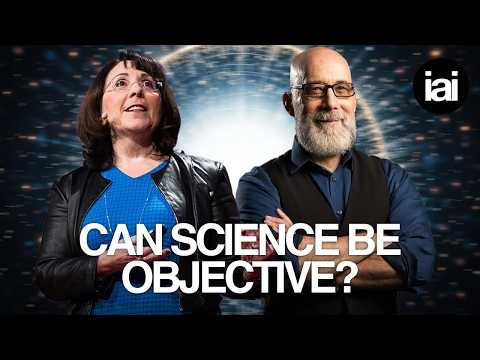
The same IAI panel put two escapes from materialism side by side. Frank's is the blind spot — the raw first-person experience that makes science possible and that its reigning philosophy cannot see, a case he builds with Husserl and Nagarjuna. Levin's is the math department: facts about number theory and fractals that physics neither finds nor can alter, from which he argues for a structured latent space that biology and cognition may also draw on. One route goes through experience, the other through abstraction, and both arrive at the claim that physicalism was never what science actually did.
youtube.com

