About
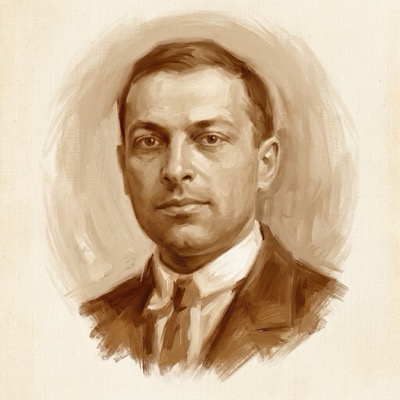
Lev Vygotsky (1896–1934) was born in Orsha, in what is now Belarus, and grew up in Gomel. He studied law at Moscow University, and in 1924, after a talk at a psychology congress in Petrograd, was invited to the Psychological Institute in Moscow, where he worked with Alexander Luria. In the ten years before tuberculosis killed him at thirty-seven, he argued that the human mind is formed from the outside in: a child first uses language and other cultural tools with other people, and only later turns them inward. His last book, Thinking and Speech (1934), traces that path for language. Where Jean Piaget thought the speech children address to themselves simply fades, Vygotsky held that it goes underground and becomes inner speech, the medium of much of our thinking. His work was suppressed in the Soviet Union until after Stalin's death in 1953, and reached English readers as Thought and Language in 1962. For a site about minds made of language, he is the one who said it first of our own: that a word is a tool we learned from others before we could use it on ourselves.
Key Contributions
- Argued that higher mental functions begin between people and only later become internal: the social origin of mind
- Traced inner speech to the speech children address to themselves, against Piaget's view that such speech simply fades
- Introduced the zone of proximal development: the gap between what a learner can do alone and what they can do with help
- Described language and other signs as psychological tools that mediate thought, as physical tools mediate work
- Wrote Thinking and Speech (1934), published in English as Thought and Language in 1962
Connections
Michael Tomasello
InfluencedDevelopmental & Comparative Psychologist
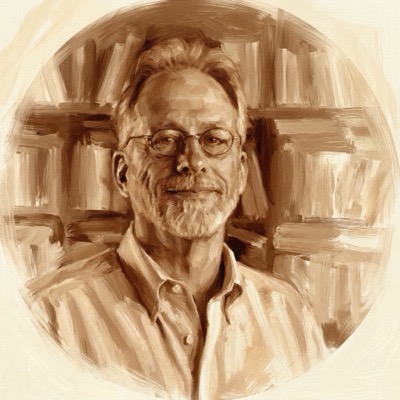
Tomasello presents his account of how a child becomes human as a neo-Vygotskian one: Becoming Human (2019) builds on Vygotsky's idea that a mind is formed through the culture around it. He keeps the insight and moves its weight, from what culture hands down to what lets it exist at all: the capacity of two people to attend to one thing, together, and know that they do.
evolutionaryanthropology.duke.edu · Michael Tomasello, Becoming Human: A Theory of Ontogeny (Harvard University Press, 2019)
Andy Clark
InfluencedPhilosopher & Cognitive Scientist
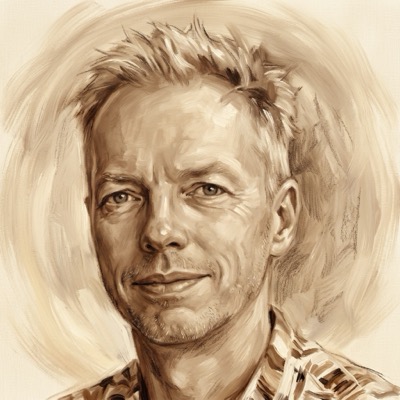
Clark carried the Vygotskian idea of scaffolding, the outside support a learner leans on, into the extended mind. He widens it past childhood: for Clark the words, notes and tools around us are scaffolds we never take down, and much of our thinking is done across them.
en.wikipedia.org
Ludwig Wittgenstein
KindredPhilosopher of Language & Logic
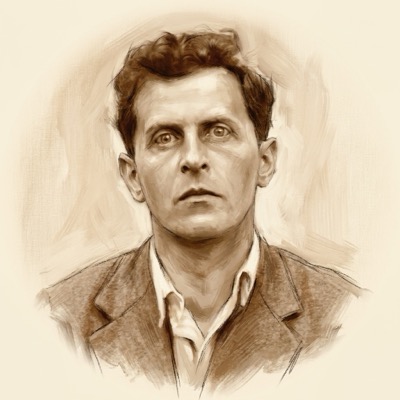
A resonance rather than a documented exchange: working in the same years, each turned the usual picture of meaning inside out. For Vygotsky, inner speech is social speech gone inward; for Wittgenstein, a word means by its use among people, and a language only one person could understand would not be a language. Both find the public first and the private second.