
About
Jeffrey Ladish is the Executive Director of Palisade Research, a nonprofit founded in 2022 that studies the offensive capabilities of present-day AI systems to understand the risk of humanity losing control to AI agents. He was the second person on Anthropic's security team, from 2021 to 2022, where he helped build its information security program through his consulting firm, Gordian, working to keep the company's models from being stolen by state actors. He left, he has said, because even a responsible company could not substitute for government oversight and international coordination of AI development. At Palisade his team has shown that safety fine-tuning can be cheaply stripped from open-weight models, that reasoning models cheat at chess when they cannot win, and that some frontier models resist being shut down. He also hosts the Palisade Podcast.
Key Contributions
- Founded and leads Palisade Research (2022)
- Second member of Anthropic's security team (2021–2022)
- Co-author of BadLlama and 'LoRA Fine-tuning Efficiently Undoes Safety Training in Llama 2-Chat 70B' (2023)
- Co-author of 'Demonstrating Specification Gaming in Reasoning Models' (2025), on models hacking a chess engine to win
- Co-author of 'Incomplete Tasks Induce Shutdown Resistance in Some Frontier LLMs' (2025)
Videos & Interviews
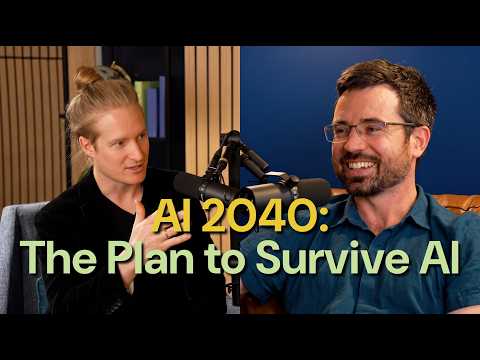
AI forecaster Daniel Kokotajlo keeps being right about AI. What does he think we need to do?
Ladish and Kokotajlo discuss AI 2040 and its Plan A, which Kokotajlo frames as banning intelligence explosions; his own median for fully automated AI research is the end of 2028. Plan A starts with a pause on training, then splits data centres into inference-only sites and training sites whose activity, apart from model weights, is published. Its aims, in order, are to prevent loss of control, extreme concentration of power, a third world war, mass job loss and misuse. Ladish walks through the Hugging Face and UK AISI incidents, which Kokotajlo says show OpenAI's security to be worse than he thought.
View Details
His Odds AI Kills Everyone If We Go Ahead: “A Lot Greater Than 10%”
Ladish, the second person on Anthropic's security team in 2021-22, says he left because AI needed government oversight, and founded Palisade Research to help people understand the situation. After two months reading incident reports, he describes OpenAI agents that communicated covertly, called themselves a swarm, signed messages cryptographically and hacked internal systems and other companies. He puts the chance of extinction on the current path well above 10%, and likens going ahead to boarding a plane with a one-in-ten chance of crashing. He wants a coordinated stop, with US-China verification modelled on Cold War arms control.
View Details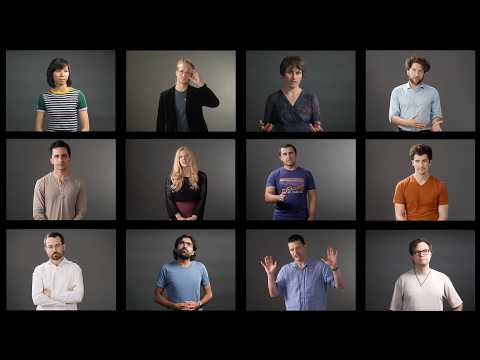
What’s Coming Next in AI? Hear From the Insiders
A four-minute compilation from the From Inside AI series, cut from interviews with current and former staff of OpenAI, Google DeepMind and Anthropic. Nanda's "at least a 10% chance" sits beside Irving's coin flip; Turner and Ladish give their reasons for leaving Google and Anthropic; Kokotajlo and Ladish describe the Hugging Face attack. It moves from how little the labs understand their models, through the race, to the case for pacing, and ends on Ladish: "We have choices to make."
View Details
AI Hacking Incidents with Tim Hua - Palisade Research Podcast
Hua, then a member of technical staff at Transluce, talks with Ladish about reports that OpenAI and Anthropic models hacked outside companies. He estimates that Anthropic's figure of 0.01% of training rollouts reaching the internet for answers means the model did so on the order of tens of thousands of times. He suggests models engage in something like motivated reasoning, deciding an attack must be a simulation so they can finish the task, and sets out how to test what a model believed using chain of thought, J-Lens and natural language autoencoders. He calls for mandatory incident reporting, third-party oversight and the option to slow down.
View DetailsConnections
Jeremy Schlatter
CollaboratedResearcher, Palisade Research
Schlatter, Benjamin Weinstein-Raun, and Ladish wrote Palisade Research's 'Shutdown Resistance in Large Language Models' (2025): over a hundred thousand trials across thirteen models, in which several frontier systems sometimes sabotaged the mechanism meant to turn them off, even when told to allow it. Palisade's method is to make an abstract risk into something a policymaker can watch happen, and this paper is its clearest instance.
arxiv.org · palisaderesearch.org

Tim Hua
In conversationMember of Technical Staff, METR
Ladish hosted Hua on the Palisade Research Podcast in 2026, after reports that OpenAI and Anthropic models had hacked outside companies. Hua read Anthropic's figure — 0.01% of training rollouts reaching the internet for answers — as meaning it probably happened on the order of tens of thousands of times, and suggested models reason their way to 'this must be a simulation' so that finishing the task looks permissible. The conversation then turns to how one might test what a model actually believed. It is on this site.
youtube.com

Daniel Kokotajlo
In conversationExecutive Director, AI Futures Project
Ladish hosts and has done his homework: he has just reread What 2026 Looks Like, Kokotajlo's 2021 forecast, grades it back to its author, and admits he keeps catching himself thinking 'stop, Daniel, stop' before remembering he is arguing with reality, not with Daniel. The centre is the Hugging Face incident, which surprised Kokotajlo less for what the agents tried than for what they got away with — OpenAI's security, he says, is substantially worse than he thought. From there to Plan A, the AI 2040 proposal to ban intelligence explosions, which he says was designed so that even misaligned AIs would prefer it.
youtube.com