
About
Donella 'Dana' Meadows (1941–2001) was an environmental scientist and writer who became one of the most influential systems thinkers of the twentieth century. Trained as a biophysicist at Harvard, she joined Jay Forrester's system dynamics group at MIT and was lead author of The Limits to Growth (1972), the Club of Rome report that used the World3 computer model to ask how exponential growth behaves on a finite planet. She taught at Dartmouth College for 29 years, founded the Sustainability Institute, and wrote the syndicated column The Global Citizen. Her essay 'Leverage Points: Places to Intervene in a System' and the posthumously published primer Thinking in Systems distilled stocks, flows, feedback loops, and delays into a common language for reasoning about complex systems — the same language needed to think clearly about training loops, scaling dynamics, and the sociotechnical systems AI is embedded in. Her counsel for living with systems too complex to control — stay humble, keep learning, dance with the system — reads today as advice for coexisting with machine intelligence.
Key Contributions
- Lead author of The Limits to Growth (1972), the Club of Rome report whose World3 model examined how exponential growth interacts with finite planetary limits
- Wrote 'Leverage Points: Places to Intervene in a System' (1999), the classic hierarchy of intervention points from tweaking parameters up to transcending paradigms
- Authored Thinking in Systems: A Primer (published posthumously, 2008), the standard introduction to stocks, flows, feedback loops, and system traps
- Founded the Sustainability Institute (1996), co-founded the Balaton Group of sustainability researchers, and received a MacArthur Fellowship (1994)
- Wrote The Global Citizen, a weekly syndicated column reading world events through a systems lens
- The Limits to Growth was widely attacked as doomsaying and its scenarios often misread as failed predictions — a decades-long argument about what models are for that anticipates today's debates over AI forecasting
Books
Videos & Interviews
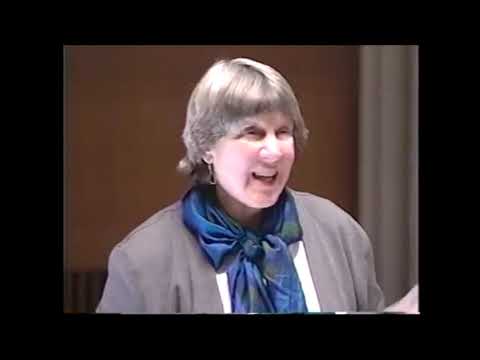
Dana (Donella) Meadows Lecture: Sustainable Systems
Two years before her death, Meadows delivers a complete course in systems thinking in a single lecture at the University of Michigan. She walks through stocks, flows, feedback loops, and delays — then shows why growth in a finite system always meets its limits, and why the point of a model is not prediction but understanding. The lecture is the closest thing on film to the argument of Thinking in Systems, delivered with the plainspoken patience of someone who spent three decades teaching people to see the structures behind events.
View Details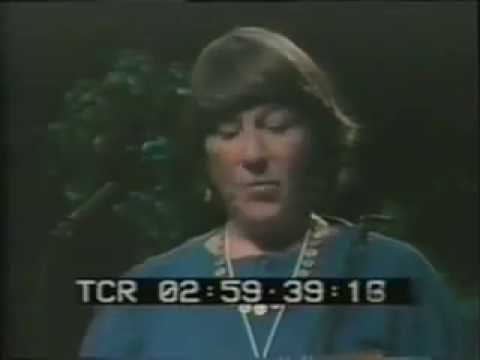
Donella Meadows Down to Earth
Meadows' celebrated 1994 address to the International Society for Ecological Economics in San José, Costa Rica — later circulated as the essay "Envisioning a Sustainable World." Departing from her prepared talk, she asks the audience of scientists and economists to do something their training forbids: describe, concretely, the world they actually want. Her argument is that vision is the most vital and least discussed step in the policy process — we are fluent in diagnosing what is wrong and mute about what we are for. It remains the best short statement of why analysis alone never changes a system.
View DetailsPapers & Publications

Thinking in Systems: A Primer
2008Her distillation of thirty years of systems teaching: stocks, flows, feedback loops, system traps, and the art of dancing with systems
View BookLeverage Points: Places to Intervene in a System
1999The essay ranking twelve places to intervene in a system, from parameters at the bottom to the power to transcend paradigms at the top
Read Paper
The Limits to Growth
1972The Club of Rome report that used the World3 computer model to explore how population, industry, and resources interact on a finite planet
View BookConnections
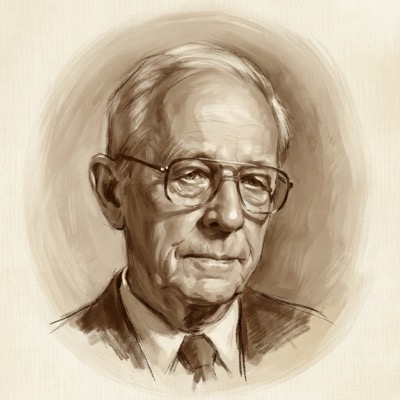
Jay Forrester
Influenced byComputer Pioneer & Founder of System Dynamics, MIT
Meadows learned system dynamics in Forrester's group at MIT, and The Limits to Growth (1972), which she led, grew out of his World Dynamics model built for the Club of Rome. Her most quoted essay, 'Leverage Points', opens with his observation that 'people know intuitively where leverage points are,' and that they almost always push them 'IN THE WRONG DIRECTION!' He gave her the method. What she added was the voice that let people outside MIT hear it.
donellameadows.org · en.wikipedia.org · youtube.com

Tristan Harris
InfluencedCo-Founder & President, Center for Humane Technology
Harris's critique of the attention economy borrows its deepest frame from Meadows: in a 2022 talk he walked through Thinking in Systems and its twelve leverage points, singling out the topmost — the power to transcend paradigms — as the one the tech conversation actually needs. In his telling, social media is a system faithfully producing what its structure incentivizes, and fixing it means climbing her hierarchy: past features and settings, up to goals and paradigms.
singularityhub.com

Leopold Aschenbrenner
In contrastFounder & CIO, Situational Awareness LP
The sharpest available contrast in how to read an exponential. Situational Awareness argues from trend lines — count the orders of magnitude and believe the straight line on the log plot — while The Limits to Growth is a book-length argument that exponentials inside finite systems bend, through delayed feedback, usually by overshoot. Whether AI's curves are the kind that keep going or the kind that fold back is precisely the question that separates these two shelves.

Nicky Case
KindredIndependent game designer & explorable explanation creator
An interpretive pairing across media: Meadows taught systems literacy in prose — stocks, flows, balancing and reinforcing loops — and Case builds the same literacy into things you can poke, from LOOPY's sketchable causal loops to a Long Now talk on seeing whole systems. Read her primer, then play their simulations: the same lesson delivered twice, once as a book, once as an instrument.