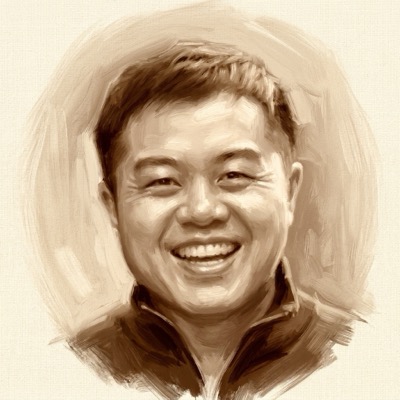
About
David Ha is co-founder and CEO of Sakana AI, the Tokyo lab betting that the future of AI looks like a school of fish — many small models cooperating, evolved rather than engineered — instead of one giant one. His path is one of the strangest in the field: eight years at Goldman Sachs Japan, rising to managing director and co-head of Japanese interest-rates trading, while writing an anonymous machine-learning blog as 'hardmaru' during the field's unfashionable years. The blog led to Google Brain in 2016, where he led the Brain team in Japan and co-authored World Models with Jürgen Schmidhuber — agents learning inside their own dreamed simulations. After a stint leading research at Stability AI, he founded Sakana in 2023 with Transformer co-inventor Llion Jones, later earning a PhD from the University of Tokyo and a place in the TIME 100 AI. With Jeff Clune he co-authored The AI Scientist, and the Sakana–Clune collaboration carried on into the Darwin Gödel Machine — systems that do, and rewrite, their own research.
Key Contributions
- Co-authored World Models (2018) with Jürgen Schmidhuber — agents that learn and plan inside their own generative dream of the environment
- Built sketch-rnn, hypernetworks, and Weight Agnostic Neural Networks at Google Brain, where he led the Brain research team in Japan
- Left a Goldman Sachs managing directorship for AI research, after years of writing the anonymous 'hardmaru' blog through the neural-network winter
- Co-founded Sakana AI (2023) with Llion Jones — a Tokyo frontier lab built on evolution and collective intelligence, named for schools of fish
- Co-authored The AI Scientist (2024) with Jeff Clune — AI running its own research loop; the Sakana–Clune collaboration continued into 2025's Darwin Gödel Machine
Videos & Interviews
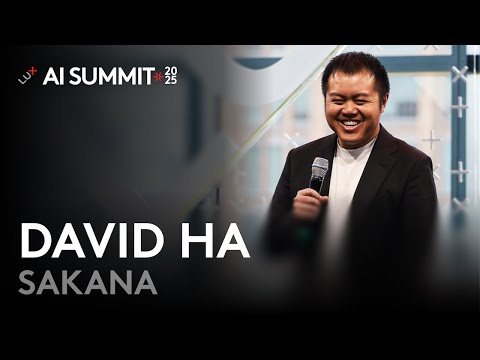
Sakana's David Ha on Building a Frontier AI Lab in Japan and the Future of R&D
Ten minutes on the bet underneath Sakana: that a frontier lab can grow outside the Bay Area, shaped by Japan rather than in spite of it — and that AI R&D itself is about to be transformed by AI that does research. The short companion piece to the hour-long retrospective: less how he got here, more where he thinks the field's center of gravity is allowed to be.
View Details
Research Retrospectives: An interview with David Ha, Co-founder and CEO of Sakana AI
Researchers Rosanne Liu and Laura Graesser walk Ha back through the whole improbable arc: the anonymous hardmaru blog written at night during a Goldman Sachs trading career, the leap to Google Brain, World Models and sketch-rnn, and the conviction — running under all of it — that the most interesting intelligence is evolved, collective, and a little bit playful. A rare interview aimed at researchers rather than markets, recorded in Sakana's first year.
View DetailsConnections
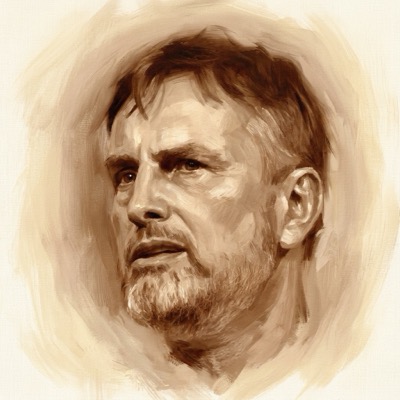
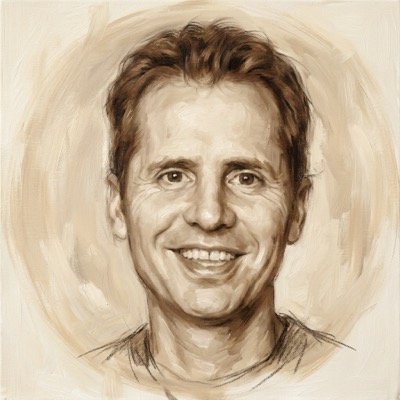
Jürgen Schmidhuber
CollaboratedDirector, KAUST AI Initiative & Scientific Director, IDSIA
World Models (2018) has exactly two authors: the trader-turned-researcher and the man who had sketched the controller–world-model idea in 1990 and waited three decades for compute to catch up. Their paper — an agent learning inside its own dreamed environment — is the rare collaboration where one author supplies the ancient blueprint and the other makes it run, and its fingerprints are on every 'world model' claim the field now makes.
arxiv.org
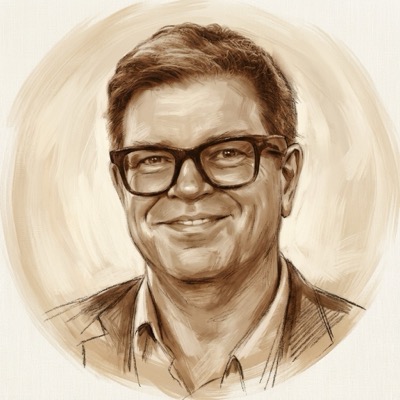
Jeff Clune
CollaboratedProfessor, University of British Columbia
The two senior authors of The AI Scientist (2024), the paper that turned 'AI doing AI research' from a slogan into a running system — and the collaboration between Sakana and Clune's lab carried on into the Darwin Gödel Machine, agents that rewrite their own code. Then each bet an institution on the idea: Clune co-founded Recursive, Ha steers Sakana. Two evolution-minded researchers who decided the next thing to evolve is research itself.
arxiv.org · arxiv.org
Yann LeCun
KindredExecutive Chairman & Co-founder, AMI Labs; Professor, NYU
Ha's World Models (2018) showed an agent learning to act inside its own dreamed simulation of the environment; LeCun's blueprint for autonomous intelligence puts exactly such a learned world model at the center of the architecture. They arrived by different roads — Ha through evolution and play, LeCun through self-supervised prediction — at the same conviction: intelligence models the world, not the words about it.
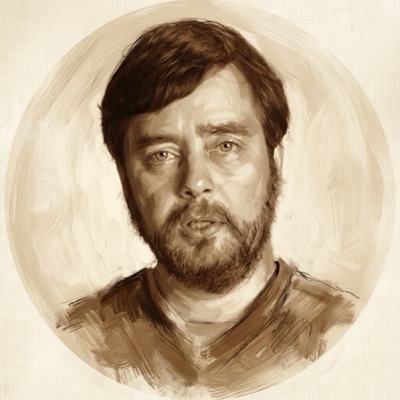
Michael Levin
KindredBiologist & Morphogenesis Researcher
Levin looks at an embryo and sees a collective — cells with no blueprint, solving problems together in anatomical space. Ha looked at the AI industry's monoliths and founded a lab named for schools of fish, betting that many small models cooperating can outdo one giant one. Both hold the same quiet heresy: intelligence was never located in an individual; it is what a well-coordinated collective does.